 Blaine Siding
 Building Decks for Birch Bay's Coastal Conditions
Birch Bay sits right on the water, and that changes what a deck has to survive compared to one built even a few miles inland. Salt-laden air moves in off the bay and settles on every horizontal surface. Driving rain off Georgia Strait hits decks sideways, not just from above. And Whatcom County's long, damp shoulder seasons give moss and algae months to take hold before summer sun ever dries things out. A deck built to a generic spec sheet will show its age here faster than the same deck would in a drier part of the state. We build decks in Birch Bay with that reality in mind from the first framing member to the last cap board.
This page covers what we actually do when we build or replace a deck for a Birch Bay home: the materials that hold up, the structural details that matter most near salt water, and how our process works from first call to final walkthrough.
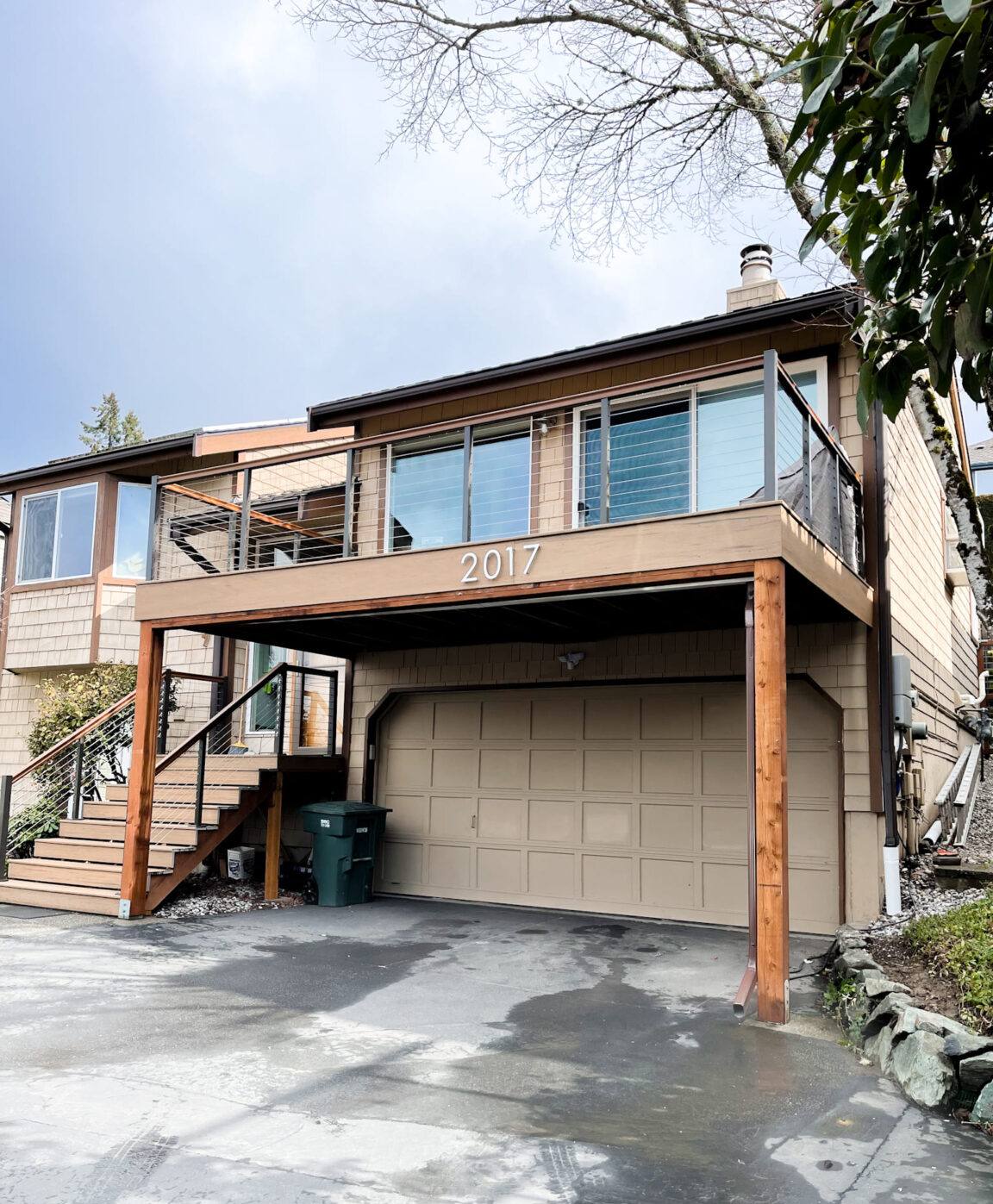
What Salt Air and Coastal Moisture Do to a Deck
Homeowners who've lived in Birch Bay a while already know the signs: fasteners that bleed rust streaks down composite boards, railing hardware that seizes up, and a green film on the north-facing stairs that never quite goes away. None of that is random bad luck — it's a predictable result of the environment, and it's avoidable with the right build.
Salt Air and Metal
Salt accelerates corrosion on anything less than fully rated stainless or coated fasteners. Standard galvanized screws and brackets that would last decades in an inland yard can start showing rust bleed within a few seasons this close to the water. That rust doesn't just look bad — it weakens the connection it's supposed to be holding.
Driving Rain and Water Intrusion
Wind-driven rain off the bay gets pushed into joints, ledger connections, and any gap where end grain is exposed. Water that gets trapped behind ledger boards or under poorly flashed stair stringers doesn't dry out quickly in our climate — it sits, and that's where rot starts, usually out of sight until it's a structural problem.
Moss, Algae, and Shade
Birch Bay's tree cover and marine layer keep a lot of deck surfaces damp well into the day, even on dry weeks. Moss and algae need exactly that: shade and moisture. Left unaddressed, they make boards slick and dangerous, and they hold moisture against the wood or composite surface longer than open sun-exposed sections.
Choosing Decking Material for a Bayfront or Near-Water Property
There's no single "best" decking material for every Birch Bay property — the right call depends on sun exposure, budget, and how much maintenance a homeowner actually wants to keep up with. Here's how the common options hold up in this specific environment.
| Material | Salt Air Resistance | Moss/Algae Behavior | Maintenance |
|---|---|---|---|
| Pressure-treated wood | Good if fasteners are corrosion-rated; wood itself handles salt fine | Prone to moss in shaded areas without regular cleaning | Annual cleaning, periodic re-sealing |
| Cedar | Naturally decay-resistant; still needs corrosion-rated hardware | Similar moss risk to PT wood in shade | Regular sealing to hold color and resist checking |
| Composite decking | Excellent — doesn't corrode or absorb salt | Can develop surface film in deep shade; cleans off easily | Occasional washing, no sealing or staining |
| PVC decking | Excellent — fully synthetic, no wood fiber to hold moisture | Lowest moss retention of the common options | Lowest overall — mostly rinsing |
For homes with heavy shade or close proximity to the water, we usually steer homeowners toward composite or PVC decking specifically because they don't give moss and algae organic material to grow into the way wood fibers can. That's not a knock on wood — a well-built cedar or PT deck, sealed and cleaned on schedule, performs well too. It's a matter of how much upkeep a homeowner wants to sign up for versus how much they're willing to pay upfront for a lower-maintenance material.
Structural Details That Matter More Near the Water
The parts of a deck nobody sees when it's finished are the parts that determine whether it's still solid in ten years. This is where a lot of the difference between a deck that lasts and one that doesn't gets decided.
Ledger Board Flashing
Where the deck attaches to the house is the single most common spot for hidden water damage. We flash ledger connections to shed water away from the house rim joist rather than trapping it, which matters more in Birch Bay's driving-rain conditions than it would somewhere drier.
Fastener and Hardware Selection
We use corrosion-rated fasteners and structural hardware suited to coastal exposure — this is a non-negotiable on any deck we build near the bay. Mixing standard galvanized hardware into a salt-air environment is a common cause of premature hardware failure, and it's an easy problem to prevent at build time and a hard one to fix after the fact.
Footings and Post Bases
Post bases that hold wood posts up off the concrete footing, rather than embedding them directly, keep end grain from sitting in standing water after heavy rain — a real concern given how much rain Whatcom County sees between fall and spring.
Air Gaps and Drainage
Proper board spacing and substructure ventilation let air move underneath the deck surface, which speeds drying after rain and helps discourage the kind of persistent dampness that feeds moss growth.
Railings, Stairs, and Hardware Choices
Railings and stair hardware take the brunt of salt air exposure because they're mostly metal and mostly vertical, catching wind-driven moisture directly. We spec corrosion-resistant railing systems and fastener hardware for Birch Bay builds, and we pay particular attention to any hardware that's structural — stair stringer connectors, post-to-frame brackets — since those are the last thing anyone wants failing quietly over a few seasons.
Stair treads deserve their own mention: shaded stairs on the north or east side of a home are usually the first place moss shows up because they get less direct sun to dry them out. Material choice and surface texture both play a role in how slick those treads get over time, and we'll talk through options during the estimate if your site has shaded stairs.
Our Deck-Building Process
Every Birch Bay deck project runs through the same core steps, though the details shift based on the site and what the homeowner wants.
- On-site assessment. We look at sun exposure, prevailing wind and rain direction, existing structure (if it's a replacement), and drainage around the footprint.
- Material and layout discussion. We walk through decking material, railing style, and layout options against the homeowner's budget and maintenance preference.
- Permitting. Deck projects in Whatcom County typically require permits depending on size and height — we handle that process rather than leaving it to the homeowner.
- Demolition (replacements only). Old decking, and any framing found to be compromised, gets removed and hauled off.
- Framing and structural work. Footings, posts, beams, and joists go in with corrosion-rated hardware and proper flashing at all ledger connections.
- Decking, railing, and stairs. Surface material and railing system get installed per the agreed plan.
- Final walkthrough. We go over the finished deck with the homeowner, including basic care guidance specific to the material chosen.
What a Correct Job Looks Like: A Checklist
Whether you're evaluating our proposal or checking a deck that's already built, these are the things worth confirming on any Birch Bay deck project:
- Ledger board is properly flashed where it meets the house, not just caulked
- Fasteners and structural hardware are corrosion-rated for coastal exposure, not standard galvanized
- Posts sit on bases that keep end grain off standing water, not buried directly in concrete
- Board spacing allows airflow and drainage underneath the deck surface
- Railing hardware matches the same corrosion-resistance standard as the structural fasteners
- Shaded stair treads and walking surfaces have been discussed for slip and moss resistance
- Permit was pulled where required by Whatcom County
Maintenance for Birch Bay Deck Owners
No deck material is fully maintenance-free in this climate, though composite and PVC come close. A few habits go a long way regardless of material:
- Rinse or sweep salt residue off the surface periodically, especially after storms with onshore wind
- Clean shaded sections more often than sun-exposed ones — that's where moss gets a foothold first
- Check railing and stair hardware annually for early rust or loosening rather than waiting for something to feel unstable
- Keep gutters and downspouts near the deck clear so runoff isn't dumping extra water onto or under the deck structure
- Re-seal wood decking on the schedule recommended for the specific product used, not a generic "once a year" guess
Why Hire a Crew That Already Works in Birch Bay
A deck built to a generic inland spec doesn't fail immediately — it fails slowly, in ways that are expensive to catch late. A crew that works this stretch of Whatcom County regularly already knows which hardware holds up against salt air, which corners of a lot tend to stay shaded and damp longest, and how driving rain off the bay behaves differently than a normal rainstorm. That's knowledge that shows up in the small decisions — flashing details, fastener specs, board spacing — that don't get noticed until they've either worked for years or failed early.
If you're planning a new deck or looking at replacing one that's showing its age, we're happy to come take a look and talk through what makes sense for your specific site. The estimate is free and there's no pressure to commit — just a straight assessment of what your deck needs to hold up in Birch Bay's conditions.