 Blaine Siding
 Why Custer's Climate Is Hard on Siding
Custer sits in an open, rural stretch of Whatcom County between Ferndale and Blaine, and that openness works against your siding more than most homeowners realize. There's less tree cover and fewer neighboring structures to break up wind coming off the Strait of Georgia and the Salish Sea, which means rain doesn't just fall here — it drives sideways into wall assemblies during winter storms. Add in the salt-laced air common to this part of Whatcom County and a moss and algae season that can run eight months or longer in a wet year, and you've got a combination that punishes cheap or poorly installed siding fast.
None of this is exotic weather. It's the same pattern that wears down siding across northwest Washington. But Custer's exposure — open farmland, fewer windbreaks, consistent marine moisture — tends to hit siding harder and sooner than in more sheltered parts of Blaine or Ferndale proper. That's the backdrop for every decision we make on a Custer siding job, from the water-resistive barrier underneath the cladding to the caulk joint at the top of a window trim board.
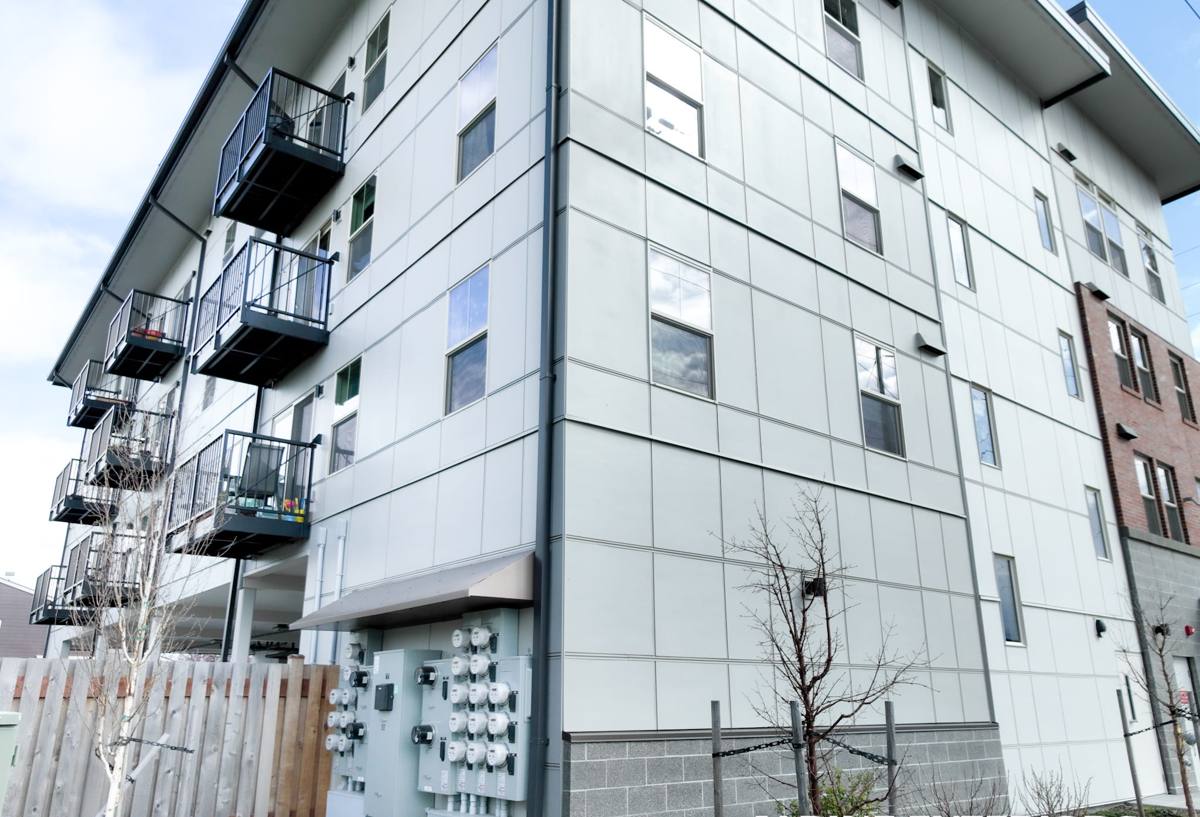
What Salt Air and Driving Rain Actually Do to Siding
It helps to understand the failure mode, not just the weather. Driving rain doesn't just wet the surface of a wall — it pushes moisture into any gap, seam, or fastener hole that isn't properly sealed or flashed. Once water gets behind the cladding, it's trapped against sheathing and framing, where it causes rot, mold, and structural damage long before anything looks wrong from the street. Salt air accelerates corrosion on fasteners, flashing, and any metal trim components, and it also breaks down cheaper paint films faster than inland climates do. Moss and algae thrive in the shaded, damp conditions common on north- and west-facing walls in this area, and once organic growth takes hold on a porous or poorly finished surface, it holds moisture against the material and speeds up deterioration.
Fiber cement handles this combination better than most siding materials because it doesn't rot, doesn't feed mold the way wood-based products can, and holds paint or factory finish far longer than vinyl or engineered wood in this kind of exposure. But fiber cement is only as good as its installation. The material resists moisture — it doesn't make a house immune to bad flashing or skipped caulking.
What Correct Fiber Cement Installation Involves
Clearances and Flashing
Every manufacturer's install guide specifies minimum clearances between the bottom edge of siding and grade, roof lines, decks, and patios — usually 6 inches from grade and 2 inches from horizontal surfaces like decks. In Custer's wetter conditions, we don't treat these as suggestions. We also flash every window and door opening, every horizontal joint, and every penetration (vents, hose bibs, light fixtures) so that water is directed out and away from the wall assembly rather than being relied on to just "not get in." This is the single biggest difference between a siding job that lasts 30-plus years and one that fails at year eight.
Fastening and Joints
Fiber cement needs to be fastened per the manufacturer's pattern — correct fastener type, spacing, and embedment depth — and butt joints need to be treated, not just butted together and caulked. In a high-wind, high-moisture area like Custer, loose or improperly fastened boards will work themselves free faster, and poorly treated joints become the first place moisture gets in.
Caulking and Paint Integrity
Every seam, joint, and trim intersection gets a high-quality, paintable exterior sealant rated for the movement and moisture exposure this climate delivers. If you're using a factory-finished product, the field-applied caulk and touch-up paint matter just as much as the factory coating — a gap or crack in the caulk line is exactly where salt-laden, wind-driven rain finds its way in.
Why We Install Only James Hardie in Custer
We standardized on James Hardie fiber cement because it's engineered specifically for climates like this one. Hardie's HardieZone system includes an HZ5 product line built for wetter, harsher exposures — denser formulation, better resistance to moisture-driven damage — which is a better match for Custer's open, rain-exposed lots than a generic fiber cement product not engineered for regional conditions. Hardie's ColorPlus factory finish is baked on under controlled conditions and backed by a real finish warranty, which matters in an area where field-applied paint takes a beating from salt air and constant damp cycles.
We also value that Hardie backs its products with a long, transferable limited warranty — useful if you sell the home down the road — and that the company has decades of real-world performance data in wet coastal climates, not just lab testing. We don't install LP SmartSide, vinyl, Cemplank, Allura, or unprimed wood siding, and we're upfront about why: those products each have real strengths, but none of them combine the fire resistance, moisture performance, and factory-finish durability that we've decided is the right standard for homes we put our name on in this part of Whatcom County.
How Fiber Cement Compares for a Custer Home
| Factor | Fiber Cement (James Hardie) | Vinyl | Wood / Engineered Wood |
|---|---|---|---|
| Moisture resistance | Excellent — non-organic, engineered for wet climates | Good surface resistance, but seams and panels can trap moisture behind them | Variable — vulnerable to rot if finish fails or water gets behind it |
| Salt air / coastal exposure | Strong; factory finish holds up well | Can become brittle and discolor over time | Finish breaks down faster; more frequent repainting |
| Moss and algae resistance | Good, especially with factory finish; cleans easily | Moderate; textured surfaces can hold growth | Lower; porous surfaces feed organic growth |
| Fire resistance | Non-combustible | Combustible | Combustible unless specially treated |
| Typical maintenance | Periodic wash, caulk checks, repaint on field-cut edges as needed | Low, but limited repair options if damaged | Regular repainting/staining and rot inspection |
Our Process on a Custer Project
We start with a walk-around assessment of the specific exposure your lot has — which walls take the brunt of the wind and driving rain, where moss has already established itself, and what condition the existing sheathing and water-resistive barrier are in once old siding comes off. That last part matters more than people expect: on rural, exposed lots, we sometimes find moisture damage behind old siding that wasn't visible from outside, and we address it before anything new goes up rather than covering it over.
From there, we install or repair the weather-resistive barrier and flashing details, then install the Hardie product to spec — correct clearances, correct fastening pattern, correctly treated joints. We finish with caulking, trim, and a final walkthrough where we go over care and maintenance specific to your home's exposure. We also clean up thoroughly, including disposal of old siding material.
What Maintenance Looks Like After Installation
Fiber cement is low-maintenance, not no-maintenance, especially in Custer's conditions. Expect to:
- Rinse siding periodically to remove salt residue and organic buildup before it takes hold, particularly on north- and west-facing walls
- Inspect caulk joints annually, especially after winter storm seasons, and re-caulk any cracked or separated seams
- Touch up paint on any field-cut edges that weren't factory-sealed
- Keep vegetation and irrigation spray pulled back from siding to reduce constant moisture contact
- Address moss or algae growth early with a gentle wash rather than letting it establish and hold moisture against the surface
Why Local Experience in Whatcom County Matters
Siding installed to a national spec sheet without accounting for local exposure is how a lot of homes end up with premature failures. A crew that already works in Custer and the surrounding Whatcom County area knows which walls typically take the worst of the driving rain, how much moss pressure to expect on shaded elevations, and how the salt air off the Strait of Georgia behaves differently a few miles inland versus right on the water. That local knowledge shapes real decisions — where we add extra flashing attention, which caulk products hold up best in this specific climate, and how we sequence a job around the wet season so materials aren't compromised before they're even installed.
It also means we're familiar with the permitting and inspection expectations for exterior work in this part of the county, so there are no surprises mid-project.
What to Look for in a Custer Siding Contractor
- Manufacturer-trained or manufacturer-certified installers, not just "experience with siding" in general
- A clear explanation of flashing and clearance details before work starts — not just a material and color choice
- Local references or project history in Whatcom County's coastal/marine climate specifically
- A written scope that covers sheathing and moisture barrier inspection, not just the visible siding install
- Straightforward answers about product warranties and what's covered versus what falls to routine maintenance
- Proper licensing, bonding, and insurance for exterior work in Washington State
If your Custer home's siding is showing moss staining, cracked caulk lines, or soft spots after a wet winter, it's worth having it looked at before another storm season adds to the damage. We're happy to walk your property, explain what we see, and put together a free, no-pressure estimate for James Hardie fiber cement siding built for this exact climate.