 Blaine Siding
 Composite Decking Built for Ferndale's Weather, Not Against It
Ferndale sits close enough to salt water and open weather systems off the Strait of Georgia that decks here take a beating most inland homes never see. Between the salt air drifting in off Bellingham Bay, the driving rain that comes sideways during winter storms, and a moss season that can stretch from October well into spring, a deck in this part of Whatcom County is under near-constant moisture pressure. Composite decking exists largely to solve that problem, but only when it's specified and installed correctly for the conditions it will actually face here.
This page covers what we look at, install, and warn homeowners about specifically for composite decking projects in Ferndale — not a generic rundown of composite decking in general.
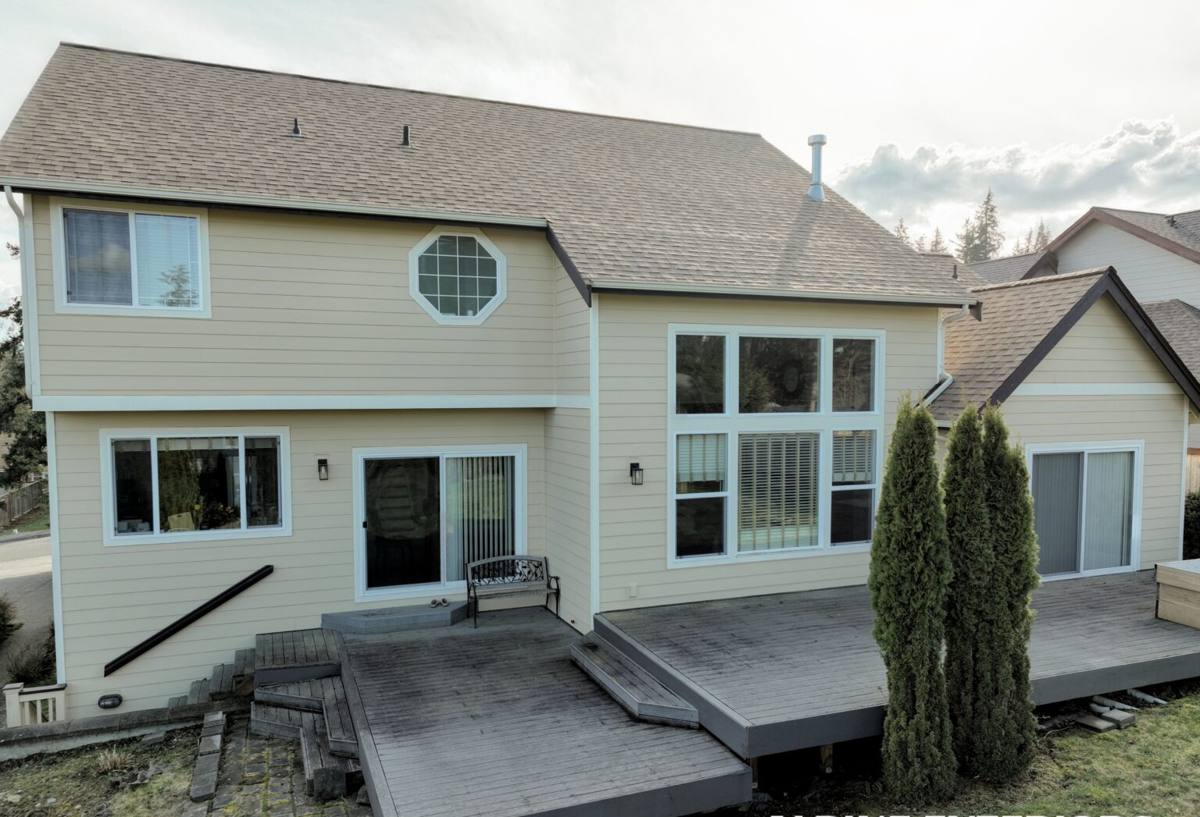
What Ferndale's Climate Actually Does to a Deck
A few things happen to decking materials in this specific environment that don't show up the same way in drier climates:
- Salt air corrodes hardware. Fasteners, joist hangers, and structural screws that aren't rated for coastal exposure can start rusting and staining boards years before the decking itself shows wear.
- Driving rain gets under boards, not just on top of them. Wind-driven rain pushes moisture sideways and up under deck boards and around fastener points, which is where rot and mold actually start on a wood deck.
- Moss doesn't wait for shade. In a marine climate like this, moss and algae will colonize any surface that stays damp for extended stretches — even boards that get partial sun. It's not just a north-side problem here.
- Freeze-thaw cycles, even mild ones, stress joints. Whatcom County doesn't get brutal winters, but repeated damp-cold-thaw cycles still work on fasteners and any spot where water can pool.
Composite decking handles most of this far better than wood, but "composite" isn't a single material — how it's built into the deck matters as much as what it's made of.
Why Composite Over Wood for a Ferndale Deck
We still build wood decks when a homeowner wants that look and understands the upkeep. But for most Ferndale properties, composite makes more sense once you account for the local climate:
- It doesn't absorb water the way real wood does, so it's far less prone to rot, splintering, and the soft, spongy spots that show up on old wood decking near the coast.
- It resists moss and algae growth better than wood, and what does grow on the surface rinses off more easily instead of staining into the grain.
- It doesn't need annual staining or sealing — a real advantage when the rainy season limits how many dry days you actually get to do that work.
- Color and texture stay consistent over time instead of graying unevenly the way exposed wood does under constant damp conditions.
The trade-off is upfront cost and the fact that composite still needs a correctly built substructure underneath it — it's not a maintenance-free material sitting on a maintenance-free frame.
What a Correct Composite Deck Build Involves
Most composite deck problems we get called out to fix in this area aren't failures of the decking itself — they're substructure or detailing mistakes made during installation. A correct build includes:
Framing and Substructure
Joists rated for the span and load, spaced to the decking manufacturer's specification (composite often needs tighter joist spacing than wood, especially near stairs and edges). In a wet climate, we also look hard at ledger board flashing where the deck attaches to the house — that connection point is one of the most common places for hidden water damage to start.
Joist Protection
Joist tape over the top of each joist keeps rain from soaking into the framing lumber through screw holes and board gaps. Skipping this is one of the most common corner-cutting moves we see, and it's invisible until the framing underneath starts failing years later.
Fasteners and Hardware
Coastal-rated, corrosion-resistant fasteners and hidden fastener systems appropriate for the board profile. Standard hardware that isn't rated for coastal exposure will rust and stain composite boards from underneath — a common cosmetic complaint that traces back to the wrong screws, not the decking.
Drainage and Airflow
Proper gap spacing between boards and adequate ventilation underneath the deck so moisture doesn't get trapped. Low decks close to grade need extra attention here, since poor airflow underneath is exactly what encourages moss and mildew to take hold on the underside of boards and framing.
Edge and Fascia Detailing
Picture-frame borders, stair nosings, and fascia boards are where water tends to collect if they're not detailed correctly. These are also the spots that take the most direct hit from driving rain, so we treat them as functional details, not just trim.
Composite Board Types: What the Differences Actually Mean
| Board Type | What It Is | How It Handles This Climate |
|---|---|---|
| Capped composite | Wood-plastic core wrapped in a protective polymer shell | Best moisture and stain resistance; handles moss, rain, and salt air the best of the composite options |
| Uncapped composite | Wood-plastic blend with no protective outer layer | More prone to surface moisture absorption and staining over time in a wet climate; lower upfront cost |
| PVC decking | Fully synthetic, no wood content | Excellent moisture resistance since there's no organic material to absorb water; can run warmer underfoot in direct sun |
We install capped composite for most Ferndale projects specifically because the extended damp season here makes the protective cap worth the cost difference over the life of the deck. We'll talk through the honest trade-offs for your specific situation — budget, sun exposure, and how the deck gets used — rather than pushing one product line by default.
Our Installation Process
- On-site assessment. We look at the existing structure (if replacing an old deck), grade and drainage around the footprint, sun/shade exposure, and how the deck ties into the house.
- Design and material selection. Board type, color, fastening system, and layout — including picture-framing and stair details if wanted.
- Permitting. Deck projects in Whatcom County often require permits depending on size and height; we handle that process as part of the job.
- Demo (if replacing). Old decking and, where needed, framing is removed and hauled off.
- Framing and structural work. Ledger flashing, joists, footings, and any structural repairs are addressed before a single composite board goes down.
- Joist tape and hardware installation. The protective and fastening layer that most affects long-term durability in this climate.
- Decking installation. Boards, fascia, stairs, and railing installed with correct spacing and hidden fastener systems.
- Final walkthrough. We go over the finished deck with you, including basic care specific to your board type.
Living With a Composite Deck During Moss Season
Composite decking is low-maintenance, not no-maintenance — especially somewhere with a moss season as long as this region's. A little seasonal attention keeps it looking right and prevents surface buildup that can eventually work into board texture:
- Sweep off leaves, needles, and organic debris regularly, especially in fall — trapped organic matter is what feeds moss and algae growth on any decking surface.
- Rinse the deck periodically through the wet months rather than letting grime sit and dry between rains.
- Use a soft-bristle brush and a composite-safe cleaner for spots where moss or algae have taken hold; avoid pressure washing at close range, which can damage the surface texture on some board types.
- Keep gutters and downspouts clear so runoff isn't dumping extra water directly onto the deck surface.
- Check railing posts and stair connections once a year for movement, even though composite boards themselves won't rot the way wood does.
- Trim back overhanging vegetation that keeps sections of the deck shaded and damp longer than the rest.
What Composite Decking Costs to Install
Every deck is different once you factor in size, height off grade, stairs, railing style, and board selection, but these are the general factors that move the price:
| Factor | Why It Affects Cost |
|---|---|
| Deck size and shape | Larger footprints and complex shapes (angles, multi-level) increase material and labor |
| Height off grade | Taller decks need more substantial footings, framing, and railing |
| Board type | Capped composite and PVC cost more upfront than uncapped composite |
| Railing system | Composite, aluminum, cable, and glass railing all price differently |
| Demo and disposal | Replacing an existing deck adds removal and haul-away costs |
| Site access | Difficult access can add labor time for material handling and equipment |
We don't quote decks over the phone with a flat number, because the variables above genuinely change the price. What we can say is that composite typically costs more upfront than pressure-treated wood but less over time once you factor out the staining, sealing, and board replacement that wood decks in this climate tend to need.
Why It Matters That We Already Work in Ferndale
A crew that only occasionally works this part of Whatcom County can still install composite decking competently, but they're often making climate-specific calls — joist spacing, fastener grade, drainage detailing — on the fly instead of from experience. We build and repair decks throughout the Blaine and Ferndale area regularly, which means we already know how this local combination of salt air, rain exposure, and moss season behaves on a deck over time, not just on the day it's installed. That shows up in the details: the hardware we spec, how we handle ledger flashing, and how we talk you through realistic maintenance expectations instead of an idealized version of "maintenance-free."
Get a Straightforward Estimate
If you're planning a new composite deck or replacing an aging wood deck in Ferndale, we're happy to come take a look, walk the site, and give you an honest read on what it'll take — no pressure, no inflated claims. Use the form below to request a free estimate.