 Blaine Siding
 Windows Built for Cherry Point's Shoreline Climate
Cherry Point sits right on the Salish Sea shoreline in Whatcom County, close enough to open water that homes here take a different kind of weather beating than houses even a few miles inland. Salt-laden air rides in off the water almost daily, driving rain comes in sideways during winter storms, and the long, wet stretch from fall through spring keeps everything damp long enough for moss and algae to take hold. Windows are one of the first parts of a house to show the wear from that combination, because they sit at the seams where the building envelope is most vulnerable.
A window that performs fine in a drier, more sheltered part of the county can fail early out here if it wasn't installed with this environment in mind. That's not a knock on any particular product — it's just the reality of building on an exposed coastline. Getting window installation right in Cherry Point means paying attention to materials, flashing, and sealing details that matter less somewhere with less salt exposure and less driving rain.
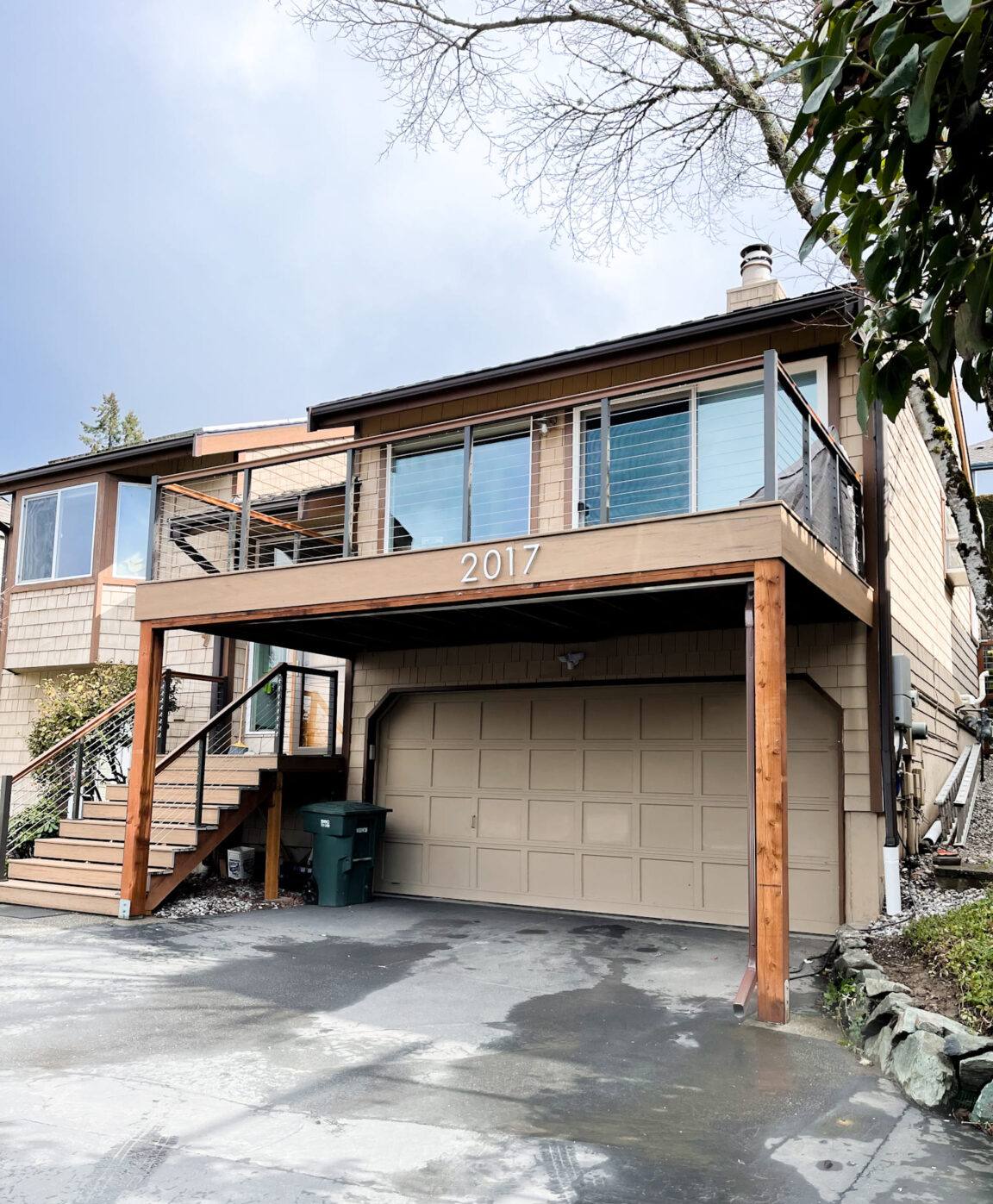
What Salt Air, Wind-Driven Rain, and Moss Season Do to Windows
Each of these factors attacks a window a little differently, and together they compound the damage over time.
Salt Air
Airborne salt is corrosive to metal hardware — hinges, locks, balances, and screws — and it can accelerate the breakdown of certain finishes and sealants faster than manufacturers' standard weathering estimates assume. Corroded hardware is often the first sign that a window near the water is aging faster than its counterpart inland.
Wind-Driven Rain
Rain that comes in at an angle, pushed by wind off the water, tests a window's flashing and sealing far harder than rain falling straight down. Any gap, poor overlap, or shortcut in the water management details around a window becomes an entry point, and once water gets behind the trim or into the wall assembly, the damage is often hidden until it's significant.
Moss and Algae
Whatcom County's long wet season gives moss and algae plenty of time to establish on sills, trim, and anywhere moisture sits without drying out fully between rains. Beyond the cosmetic issue, moss holds water against wood and painted surfaces, which shortens the life of both the window and the trim around it.
Signs Your Windows Are Losing the Battle
Homeowners in Cherry Point usually notice a handful of consistent warning signs before a window fails outright:
- Fogging or a hazy film between panes of a double-pane unit — the seal has failed and the gas fill is gone
- Windows that stick, drag, or won't stay open on their own, often from swollen wood or corroded hardware
- A cold draft near the frame even when the window is fully closed and latched
- Soft, discolored, or spongy wood at the sill or lower corners of the frame
- Visible rust or white corrosion buildup on hinges, cranks, or locks
- Moss or dark green growth building up in the sill track or along the bottom of the frame
- Condensation forming on the interior glass regularly, even in moderate weather
Any one of these on its own isn't necessarily an emergency, but a window showing two or three of them is usually past the point where repair makes more sense than replacement.
Choosing a Frame Material for a Salt-Air, High-Moisture Environment
Frame material matters more here than it would in a drier, more sheltered part of the region. Here's how the common options generally hold up under Cherry Point's conditions:
| Frame Material | Salt Air Resistance | Moisture Behavior | Maintenance Load |
|---|---|---|---|
| Vinyl | Good — won't corrode or rust | Won't rot; seams and welds are the weak point over decades | Low — occasional cleaning |
| Fiberglass | Very good — stable, low expansion/contraction | Excellent moisture and rot resistance | Low |
| Aluminum (uncoated or poorly coated) | Poor — prone to pitting and corrosion near salt water | Conducts cold, prone to condensation | Higher — finish maintenance matters |
| Wood or wood-clad | Fair, depends entirely on the cladding and finish maintenance | Vulnerable if finish fails or cladding is breached | Highest — regular finish upkeep required |
We don't install every material in every situation. On a shoreline-exposed job, we'll be direct with you about which frame materials carry a heavier maintenance burden here and which hold up with less attention, so you're choosing based on how the product actually behaves in this climate — not just how it looks in a showroom.
What a Correct Window Installation Actually Involves
The window unit itself is only part of the job. Most window failures we see in this area trace back to installation details, not the window product.
Flashing and Water Management
Proper flashing directs any water that gets past the exterior trim back out of the wall instead of letting it collect around the rough opening. On a driving-rain coastline like Cherry Point, this is not optional detailing — it's the difference between a window that stays dry for decades and one that quietly rots the framing behind it.
Sealing and Air/Water Barrier Continuity
The sealant and house wrap around a window need to tie into the rest of the wall's water and air barrier without gaps. A window can be perfectly installed on its own and still leak if it isn't properly integrated with the surrounding wall assembly.
Shimming, Fastening, and Fit
A window needs to be square, plumb, and properly shimmed and fastened according to the manufacturer's specifications for it to operate smoothly and seal correctly for its full service life. Rushed or undersized fastening shows up years later as sagging sashes and failed seals.
Our Window Installation Process
- On-site assessment. We look at your existing windows, the condition of the surrounding trim and sheathing, and how exposed each elevation of the house is to wind and rain.
- Material and product discussion. We talk through frame material, glass options, and trade-offs honestly, based on how each option performs in this specific climate and your budget.
- Removal and opening inspection. Once old windows come out, we check the rough opening and framing for hidden moisture damage before anything new goes in — this is often where problems from years of prior leaks turn up.
- Flashing and installation. New windows go in with proper flashing, shimming, and fastening, sealed and integrated with the existing water barrier.
- Interior and exterior finish work. Trim, caulking, and touch-up are completed so the finished job looks clean inside and out.
- Final walkthrough. We check operation on every window and walk through basic care with you before we consider the job done.
Homeowner Checklist: What to Look For Before You Hire
- Ask whether the crew has worked on homes in exposed, marine-adjacent locations before, not just typical inland jobs
- Confirm flashing and water management details will be addressed, not just the window swap itself
- Get clarity on what frame materials are recommended for your exposure and why
- Ask what happens if hidden rot or moisture damage is found once old windows come out
- Check that the installer will pull any required permits rather than leaving that to you
- Get a written scope that specifies flashing, sealing, and finish work, not just "install windows"
Why Local Experience in Cherry Point Matters
A crew that regularly works this stretch of Whatcom County's coastline already knows which elevations of a house typically take the worst of the wind-driven rain, how fast moss re-establishes on sills here compared to more sheltered neighborhoods, and which installation shortcuts simply don't survive a few winters this close to the water. That's not something you get from a crew that mostly works subdivisions further inland and treats every job the same way. Local experience shows up in the details — the flashing lap, the sealant choice, the attention paid to the side of the house that faces the weather — long before it shows up in a sales pitch.
Caring for New Windows Through Moss Season and Beyond
New windows installed correctly will hold up well here, but a little seasonal attention extends their life further. Rinsing sills and tracks periodically during the wetter months keeps moss and algae from establishing a foothold, and clearing debris from weep holes keeps water draining the way it's designed to. Hardware benefits from an occasional check and light lubrication, especially given how salt air accelerates corrosion. None of this is heavy maintenance — it's the same kind of periodic attention any exterior feature needs in this climate, and it goes a long way toward protecting the investment.
If your windows are showing their age, letting in drafts, or you're planning ahead for a home in the Cherry Point area, we're happy to take a look and walk you through your options. Reach out for a free, no-pressure estimate using the form below.