 Blaine Siding
 Why Siding Wears Out Faster in Cherry Point
Homes along the Cherry Point shoreline face a tougher climate than most people realize until they're standing on a ladder looking at failed caulk joints and swollen trim. This stretch of Whatcom County sits exposed to open water off the Strait of Georgia, which means salt-laden air moves through the area constantly — not just during storms. Salt air accelerates corrosion on fasteners, trim flashing, and any metal components tied into the siding system. Combined with wind-driven rain that gets pushed sideways into wall assemblies rather than simply running down them, siding here takes on moisture loads that inland Whatcom County homes never see.
Then there's the moss and algae problem. Cherry Point's tree cover, marine humidity, and long stretches of overcast, damp weather create ideal conditions for organic growth on north-facing and shaded wall sections. Moss holds moisture against the siding surface for extended periods, which is exactly the kind of sustained dampness that causes wood-based products to swell, delaminate, and rot from the inside out. None of this means a home here is doomed — it means the siding system has to be chosen and installed with this specific exposure in mind, not treated like a generic replacement job.
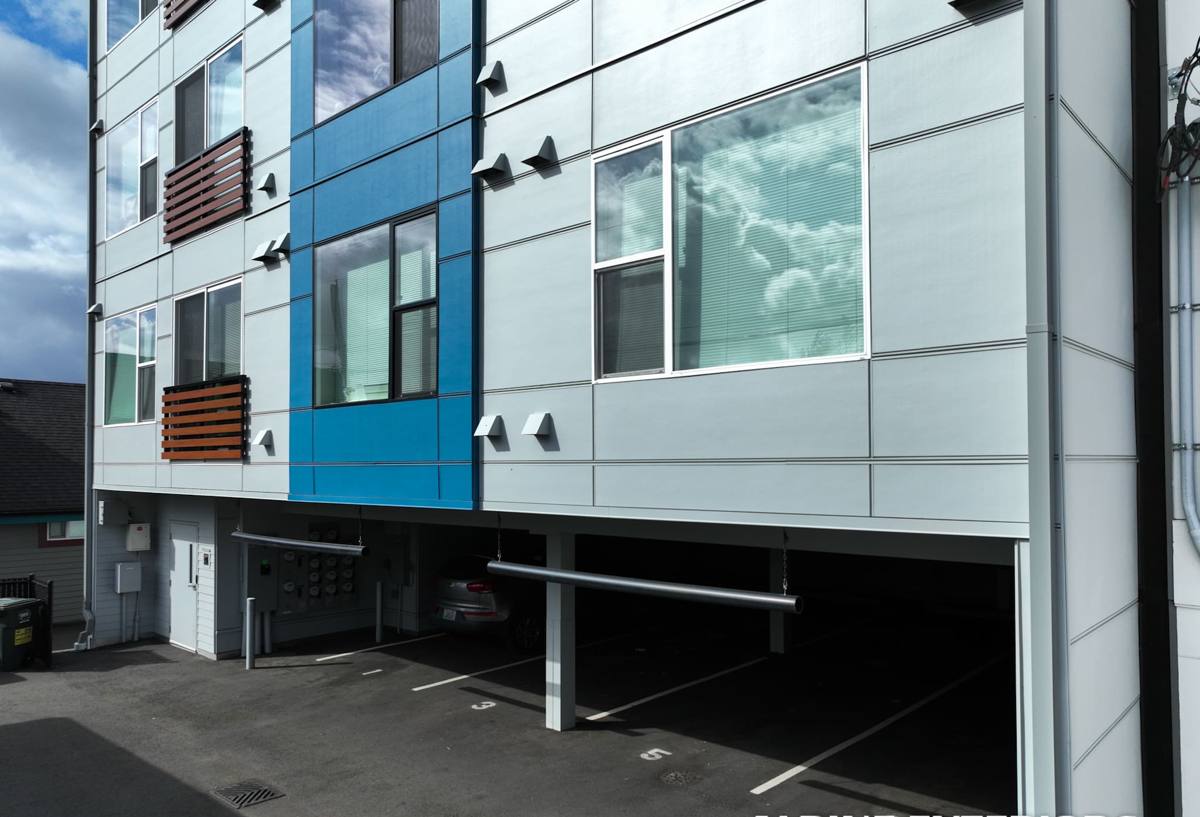
Signs Your Cherry Point Home Needs Replacement, Not Just Repair
A lot of siding problems start small and get patched piecemeal for years before anyone steps back and asks whether the whole system is failing. In a coastal environment like this one, that pattern tends to catch up with homeowners faster than they expect. Watch for these warning signs:
- Soft, spongy, or crumbling spots when you press on the siding, especially near the bottom courses and around windows
- Paint that won't hold — bubbling, peeling, or needing repainting every two to three years
- Visible warping, cupping, or gaps opening between boards
- Persistent moss or black streaking that returns within months of cleaning
- Soft trim boards or corner boards, particularly where they meet the roofline or foundation
- Interior signs — musty smells, discolored drywall, or damp insulation near exterior walls
- Siding that's original to a home built more than 20-25 years ago, especially wood or older composite products
One or two of these in isolation might mean a targeted repair is enough. Several of them together, especially combined with visible rot at seams or corners, usually means moisture has been getting behind the siding for a while — and that calls for a full replacement so the whole wall assembly can be corrected at once, not just the visible symptom.
Repair vs. Replace: A Practical Line
Repair makes sense when the damage is isolated — a cracked board from an impact, a failed piece of trim, a small area where flashing was installed wrong. Replacement is the right call when the damage is spread across multiple wall sections, when the underlying moisture barrier is compromised, or when the siding material itself (not just individual boards) is past its useful life. Patching a failing system just delays the larger project and lets moisture damage spread underneath boards that still look fine on the surface.
What a Correct Siding Replacement Actually Involves
Siding replacement is not just pulling off old boards and nailing up new ones. On a home exposed to Cherry Point's combination of salt air and driving rain, the parts nobody sees after the job is done matter more than the parts they do.
Moisture Management Comes First
Once the old siding is off, the sheathing underneath gets inspected for rot, soft spots, or water staining — any compromised sheathing gets repaired or replaced before anything new goes up. A weather-resistive barrier is installed correctly lapped so water sheds outward and downward, never trapped behind the cladding. Flashing at every window, door, and horizontal trim transition is critical here — this is where wind-driven rain finds its way in, and it's the single most common point of failure we see on older coastal installations. Kick-out flashing where roof lines meet walls, proper head flashing above windows, and correctly lapped step flashing all have to be done to spec, not approximated.
Fastening and Installation to Manufacturer Spec
Fastener choice and placement matter more here than in a drier inland climate. Corrosion-resistant fasteners, correct nailing patterns, and proper board spacing for expansion all affect how long the siding performs before joints open up or fasteners start bleeding rust streaks down the face of the home. Every manufacturer publishes exact installation specifications for a reason — deviating from them is one of the most common causes of premature siding failure, coastal exposure or not.
Why We Install Only James Hardie Fiber Cement
We made a deliberate decision to install James Hardie fiber cement siding exclusively, rather than offering a menu of vinyl, engineered wood, or other fiber cement brands. Fiber cement is non-combustible, holds paint far longer than wood-based alternatives, and doesn't absorb and swell with moisture the way engineered wood products can when a joint or a piece of flashing fails. James Hardie also engineers specific product lines for different climate exposures, backs them with a strong transferable warranty, and offers a factory-applied ColorPlus finish that holds color and resists the kind of paint failure salt air causes on field-painted siding. For a coastal Whatcom County home, that combination — non-combustible, engineered for moisture, factory-finished — is what we're willing to put our name behind.
Choosing the Right Hardie Product for a Coastal Home
James Hardie makes climate-engineered product formulations, and homes in marine, high-moisture regions like Cherry Point are typically matched with the HZ5 formulation, engineered specifically for wetter, more humid climates rather than the hotter, drier formulations sold in other parts of the country. Beyond the formulation, there's also a choice of profile and finish that affects both appearance and long-term performance:
| Product Style | Best Fit For | Coastal Consideration |
|---|---|---|
| HardiePlank lap siding | Most single-family homes, traditional or modern exteriors | Most common choice; wide color range in ColorPlus finish |
| HardieShingle | Accent areas, gables, cottage-style homes | Adds texture; still needs correct flashing at transitions |
| HardiePanel | Modern designs, garage walls, accent panels | Fewer horizontal joints, which reduces water entry points |
| ColorPlus factory finish | Any homeowner who wants to avoid repainting | Baked-on finish resists salt-air fading and peeling far better than field paint |
There's no single right answer for every home — it depends on the home's style, how much of the wall is shaded and exposed to moss growth, and what the homeowner wants to maintain over time. We walk through these options as part of the estimate, not as an upsell, but because the right profile genuinely performs differently in this climate.
Our Replacement Process, Start to Finish
Homeowners generally want to know two things: what's going to happen to their house, and how long it's going to take. Here's the sequence we follow on a typical Cherry Point replacement:
- On-site inspection and written estimate, including a look at trim, flashing, and any visible sheathing concerns
- Removal of existing siding and trim, with sheathing exposed for inspection
- Repair or replacement of any damaged sheathing before anything new is installed
- Installation of a correctly lapped weather-resistive barrier
- Flashing installed at every window, door, and roof-to-wall transition
- Siding installed to James Hardie's fastening and clearance specifications
- Trim, corner boards, and caulking completed
- Site cleanup and a final walkthrough with the homeowner
Timeline depends heavily on home size, how much sheathing repair is needed, and the weather window we're working with — but a typical single-family home in this area runs from several days to a couple of weeks once work begins.
What Affects the Cost of Siding Replacement in Cherry Point
Every home is different, but the following factors are what actually move the price up or down on a replacement project in this area:
| Cost Factor | Why It Matters |
|---|---|
| Total square footage of wall area | Larger homes and more complex rooflines mean more material and labor |
| Number of existing siding layers | Some older homes have siding installed over siding, which adds removal time |
| Sheathing condition | Rot found underneath old siding has to be repaired before new siding goes on |
| Siding profile chosen | Lap, shingle, and panel styles differ in material and labor cost |
| Trim and accessory work | Corner boards, window trim, and fascia detailing add to scope |
| Home height and access | Two-story walls, steep grades, and limited access affect labor time |
We give a firm, itemized estimate after seeing the home in person — not a phone-quote guess — because sheathing condition especially can't be assessed accurately from photos or a drive-by.
Why Local Experience with This Exposure Matters
A crew that mostly works inland or in drier parts of the state can still install siding competently, but they haven't necessarily built the habits that matter on a marine-exposed wall. Working Cherry Point regularly means knowing to spec corrosion-resistant fasteners as a default rather than an upgrade, planning flashing details around wind-driven rain rather than straight-down rain, and scheduling around the area's damp stretches so materials and substrates aren't installed wet. It also means recognizing moss and algae patterns on a wall and understanding whether they're cosmetic or a sign of a bigger moisture problem underneath. None of that shows up in a brochure — it shows up in how the job holds up five and ten years later.
Caring for Your New Siding After Installation
James Hardie siding with a ColorPlus finish is low-maintenance, not no-maintenance. In this climate, a few habits go a long way:
- Rinse the exterior periodically to remove salt residue and slow moss regrowth, especially on shaded or north-facing walls
- Keep gutters clear so water isn't overflowing down the face of the siding
- Check and re-caulk joints and trim transitions every few years as part of general upkeep
- Keep landscaping trimmed back from walls to reduce trapped moisture and shade that encourages moss
- Have any impact damage addressed promptly rather than left open to moisture
Because the color finish is factory-applied, you're not on a repainting cycle the way you would be with field-painted wood siding — that alone removes one of the biggest recurring maintenance costs homeowners in this area deal with.
If your siding is showing any of the signs above, or you just want an honest read on where your home stands, we're happy to come take a look. Estimates are free, there's no pressure, and you'll get a straight answer about whether you need a full replacement or something less.