 Blaine Siding
 Board & Batten Siding for Cherry Point Properties
Cherry Point sits right up against the Strait of Georgia, and that location shapes everything about how siding performs out there. Properties in this part of Whatcom County take wind and moisture straight off the water, often with less tree cover breaking up the exposure than you'd find further inland toward Blaine proper. Board and batten siding — with its vertical boards and raised battens covering the seams — has become a popular look for the rural, agricultural, and waterfront-adjacent homes and outbuildings in this area. It reads as clean, modern-farmhouse, or classic depending on color and trim choices, and it holds up visually in a way that suits open, exposed properties.
But board and batten is not a style you install the same way everywhere. It has more vertical seams than standard lap siding, and every one of those seams is a potential water entry point if it's not detailed correctly. On a property exposed to Cherry Point's wind-driven rain and salt air, those details aren't optional — they're the difference between siding that lasts decades and siding that starts failing at the seams within a few years.
Why Board & Batten Fits This Area
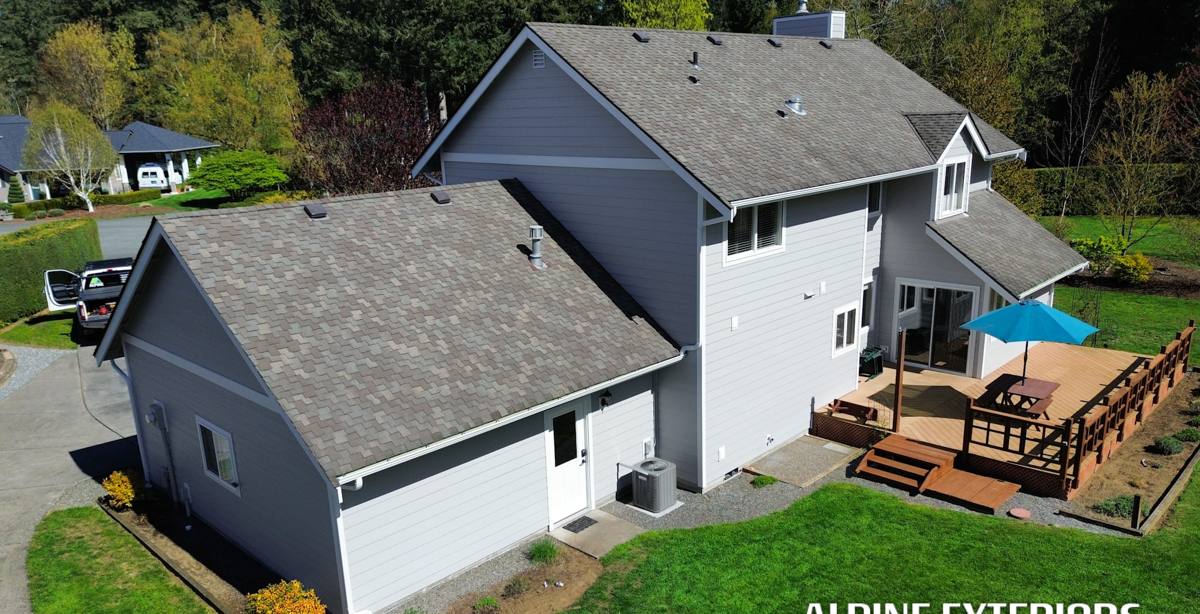
A lot of Cherry Point properties are rural or semi-rural — larger lots, agricultural buildings, homes with barn-style or farmhouse rooflines, and waterfront or near-waterfront parcels with open sightlines. Board and batten's strong vertical lines complement that kind of architecture better than horizontal lap siding does, and it's a common choice for accent walls, gables, and shop or outbuilding exteriors even on homes that use lap siding elsewhere.
It's also a style that shows flaws quickly if it's installed wrong. Because the vertical boards and battens create long, continuous sightlines, any warping, gapping, or moss streaking down from a failed seam is immediately visible from the road or the water side of the property. Homeowners in this area tend to notice siding problems faster than they would with lap siding — which is a good thing, but it also means the installation has to be right the first time.
What Cherry Point's Climate Does to Vertical Siding
Three conditions define siding performance out here, and each one interacts with board and batten's design in a specific way.
Salt Air
Airborne salt from the Strait accelerates corrosion on any exposed metal — fasteners, flashing, trim screws. Board and batten uses more individual fasteners per square foot than lap siding because both the boards and the battens need to be secured. If those fasteners aren't rated for a marine or coastal environment, corrosion shows up as rust streaking down the face of the siding within a few years, right along those clean vertical lines everyone can see.
Driving Rain
Wind off the water doesn't just fall as rain — it drives it sideways into wall assemblies. Vertical siding with battens has to shed that water down and out, not let it wick sideways under the battens into the seams. This is entirely dependent on how the assembly behind the siding is built, not on the siding material itself.
Moss Season
Western Whatcom County has a long, wet stretch — roughly fall through spring — where anything holding moisture stays damp for days at a time. North- and east-facing walls, and any wall shaded by trees or a neighboring structure, are prone to moss and algae growth. Moss on siding isn't just cosmetic; where it takes hold at a seam or batten edge, it holds moisture against the material and slows drying, which is exactly the wrong condition for board and batten if the assembly wasn't built to drain.
What a Correct Board & Batten Installation Involves
Weather-Resistive Barrier and Rainscreen
Every board and batten job starts behind the siding, not at it. A properly lapped weather-resistive barrier goes over the sheathing first, and on a wind-and-rain-exposed property like most in Cherry Point, we install a rainscreen gap behind the siding. That gap lets any water that does get past the face of the boards drain and dry instead of sitting against the wall assembly. Skipping this step is the single most common reason board and batten siding fails early — the boards themselves can be fine while the wall behind them rots.
Fastening in a Coastal Environment
Fasteners need to be corrosion-resistant and correctly spaced for both wind load and manufacturer specification. This matters more for board and batten than lap siding simply because there are more fasteners in play — battens are typically face-nailed or blind-nailed depending on width and manufacturer guidance, and getting that wrong either loosens the assembly over time or splits the material.
Seams, Gaps, and Long-Term Water Management
The batten's whole job is to cover the seam between two boards and manage the water that runs down it. Batten width, board spacing, and the gap left for material movement all have to be set correctly — too tight and the boards can buckle with seasonal expansion, too loose and water tracks behind the batten instead of over it. Caulking has a place at specific transitions, but it is not a substitute for correct spacing and flashing; caulk fails long before a properly built assembly does.
James Hardie's Board & Batten System
We install James Hardie fiber cement exclusively, and board and batten is one of the styles it handles well when installed to spec. Hardie's vertical siding panels are paired with HardieTrim battens to create the board and batten look, and both come with the factory-applied ColorPlus finish — meaning the color is baked on before the material ever reaches the property, not field-painted after installation.
That matters specifically in a moss-and-salt environment. A factory finish resists fading and holds up to washing far better than field-applied paint, and because the material is fiber cement rather than wood or vinyl, it doesn't rot, doesn't attract insects, and doesn't soften or warp from sustained moisture exposure the way some alternative board and batten materials do. It's also non-combustible, which matters to a growing number of homeowners in rural Whatcom County properties adjacent to open land.
Board & Batten Material Comparison
| Factor | James Hardie Fiber Cement | Vinyl Board & Batten | Wood Board & Batten |
|---|---|---|---|
| Moisture behavior | Does not rot or absorb water when installed correctly | Won't rot, but can warp or buckle in temperature swings | Absorbs moisture; prone to rot at seams and battens |
| Salt air / coastal exposure | Stable; fasteners are the main consideration | Can become brittle over time in coastal UV and salt exposure | Fasteners and wood both corrode/degrade faster |
| Moss & algae resistance | Factory finish resists staining; cleans easily | Can stain and is harder to clean without damage | Moss can take hold in grain and around fasteners |
| Maintenance | Occasional wash; no repainting for the life of the finish | Low, but cracks/holes are hard to patch invisibly | Regular repainting or restaining required |
| Fire resistance | Non-combustible | Combustible | Combustible |
| Typical lifespan when installed correctly | Multiple decades | 20–30 years, shorter in harsh coastal exposure | 15–25 years depending on maintenance |
Our Process for a Cherry Point Board & Batten Job
- On-site assessment of wall orientation, wind exposure, and existing moisture or moss patterns specific to the property
- Removal of old siding and inspection of the sheathing underneath for any hidden rot or damage
- Repair of any compromised sheathing before new material goes up — we don't cover over a problem
- Installation of weather-resistive barrier and rainscreen gap
- Installation of Hardie board and batten panels and trim with coastal-rated, correctly spaced fasteners
- Detailing at windows, corners, and roof transitions — the highest-risk points for water intrusion
- Final walkthrough covering care and what to watch for seasonally
Signs Your Current Board & Batten Siding Needs Attention
- Streaking or discoloration running down from batten seams, especially on north- or shaded-facing walls
- Soft spots, bubbling, or visible warping in the boards
- Moss or algae buildup that returns quickly after cleaning
- Rust streaks below fastener heads
- Gaps opening up between boards and battens, or battens that have started to pull away
- Paint that's chalking, peeling, or fading unevenly (a sign of a field-painted, non-factory finish breaking down)
Why Hiring a Crew That Already Works Cherry Point Matters
Board and batten hides mistakes for a while and then fails all at once — usually behind the wall, where nobody sees it until it's a real problem. A crew that already works this stretch of coastline knows which wall orientations on Cherry Point properties take the worst of the wind-driven rain, understands what fastener corrosion looks like a few years in, and builds in the rainscreen and flashing details that this specific climate requires rather than treating every job the same regardless of location. That local pattern recognition is the difference between a board and batten installation that's still doing its job in twenty years and one that needs seam repairs in five.
If you're considering board and batten siding for a home, addition, or outbuilding in Cherry Point, we're happy to walk the property with you, look at what the current siding or wall assembly is doing, and give you a straightforward, no-pressure estimate for a James Hardie installation built for this specific climate.