 Blaine Siding
 Metal Roofing in California Creek: Built for the Climate You Actually Live In
California Creek sits close enough to the water that homes here deal with a different set of roofing problems than houses ten or fifteen miles inland. Salt-laden air moves through the area regularly, rain comes in sideways more often than most homeowners expect, and the roof spends a good chunk of the year shaded and damp enough to grow moss. A metal roof can handle all of that better than most materials on the market — but only if it's specified and installed with this specific environment in mind. A generic install, using generic fasteners and generic flashing details, will show its weak points here faster than it would in a drier part of Whatcom County.
This page covers what a metal roof needs to hold up in California Creek specifically: the materials, the installation details that matter most, and what our process looks like from first estimate to finished job.
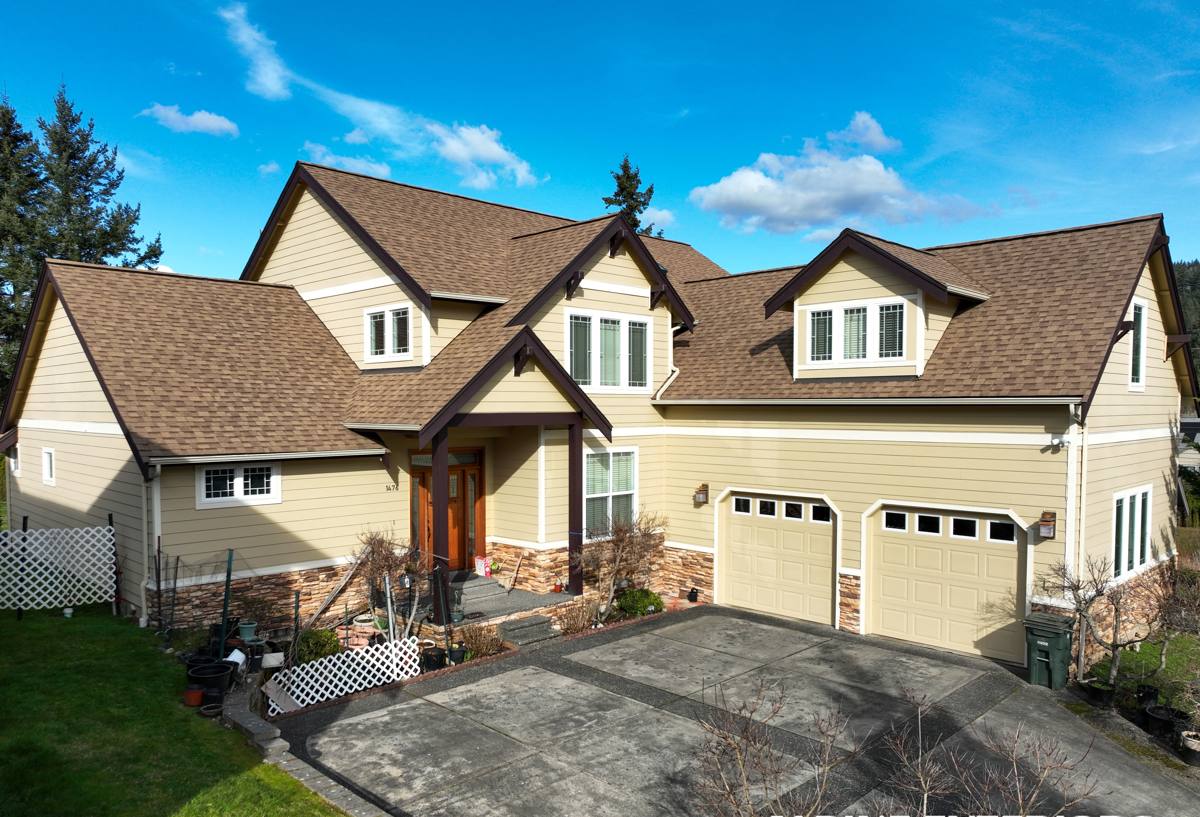
What This Climate Actually Does to a Roof
Three things drive almost every metal roofing decision we make in this neighborhood:
Salt Air
Airborne salt accelerates corrosion on any exposed metal fastener, cut edge, or lower-grade coating. It doesn't happen overnight, but over years it will find the weakest link in a roofing system — usually an exposed screw head, an unsealed cut edge, or a fastener that isn't rated for a marine-influenced environment.
Driving Rain
Wind-driven rain doesn't just fall straight down and run off — it gets pushed sideways and upward under laps, around penetrations, and into any gap that a fair-weather roof detail would get away with. Roofs here need underlayment, lap coverage, and flashing that assume water will be tested from more than one direction.
A Long Moss Season
Shade, moisture, and mild temperatures for much of the year add up to a moss-friendly roof. Moss holds moisture against roofing material, works into seams, and — on the wrong substrate — can shorten the life of the roof underneath it. Metal resists moss far better than composition shingles, but panel choice and roof pitch still matter.
What a Correct Metal Roof Installation Involves Here
Metal roofing is unforgiving of shortcuts in a way that asphalt shingles sometimes aren't. A shingle roof with a mediocre detail might leak slowly for years before anyone notices. A metal roof with the same mediocre detail tends to show a problem faster, because water finds the path of least resistance along smooth panel seams instead of soaking into a mat of shingles.
Underlayment and Deck Prep
We use a synthetic or self-adhering underlayment rated for the exposure the roof will actually see — not just whatever is cheapest. In driving-rain conditions, underlayment is the backup system that has to work if wind ever pushes water past the panel laps, so it isn't a place to cut corners. We also check the deck itself for soft spots or moisture damage before anything goes down, since a metal roof over a compromised deck just hides the problem longer.
Fasteners and Flashing
This is where salt-air performance is won or lost. We use fasteners and flashing rated for coastal-influenced environments, matched to the panel material so we're not creating a corrosion reaction between dissimilar metals. Every penetration — vents, chimneys, skylights — gets flashed with overlapping laps that shed water downhill, not just caulked and hoped for.
Ventilation
A well-ventilated attic keeps moisture from building up under the deck, which matters for the life of both the roof and the structure below it. In a damp climate, poor ventilation shows up as condensation and premature deck rot before it ever shows up as an obvious roof leak.
Choosing the Right Metal Panel for California Creek
Not every metal roofing system performs the same way in a marine-influenced climate. Here's how the common options compare for this specific area:
| Panel Type | Corrosion Resistance Here | Best Fit |
|---|---|---|
| Standing seam (concealed fastener) | Best — no exposed fastener heads for salt air to attack | Homes wanting the longest maintenance-free lifespan |
| Exposed-fastener panel | Good, if fasteners and washers are marine-rated and checked periodically | Budget-conscious projects, outbuildings, shops |
| Metal shingle / shake profile | Good, with more seams than standing seam | Homes wanting a traditional look with metal's durability |
Standing seam is generally our first recommendation for homes closest to the water, simply because it has the fewest weak points for salt air and driving rain to work on. That said, exposed-fastener panels are a perfectly reasonable choice for many California Creek properties when the budget or the building doesn't call for standing seam — the key is making sure the fastener spec matches the environment, not assuming a standard fastener package is good enough.
Coastal Corrosion: Why We Don't Cut Corners on Fasteners and Coatings
It's tempting to treat a fastener as a fastener, but in a salt-air environment the hardware is often the first thing to fail — not the panel itself. We spec fasteners and flashing rated for coastal exposure as a matter of professional standard, not as an upsell. Cheaper hardware might look identical on installation day and still show rust streaks or backing-out screws within a few years. That's a maintenance headache and, eventually, a leak point, so we'd rather spec it correctly the first time than have a homeowner deal with it later.
The same logic applies to cut panel edges. Any time a panel is field-cut, that exposed edge is more vulnerable to corrosion than the factory-coated surface. We seal and finish cut edges as standard practice, especially on roofs with more complex geometry where more cuts are unavoidable.
Moss, Debris, and Ongoing Maintenance
Metal roofing holds up to moss far better than shingles because there's no porous surface for spores to root into, and the smooth, sloped surface sheds moisture instead of trapping it. That said, "moss-resistant" isn't "moss-proof" — debris buildup in valleys, around chimneys, or against roof-to-wall transitions can still hold moisture long enough for growth to start, especially on shaded sections of a roof.
- Clear leaves, needles, and debris from valleys and low-slope sections at least once or twice a year
- Keep gutters clear so water isn't backing up against the roof edge
- Trim back overhanging branches that keep sections of the roof shaded and damp longer than necessary
- Do a visual check after major windstorms for lifted flashing or loose fasteners
- Have any early moss growth removed promptly rather than letting it establish
None of this is heavy maintenance compared to what a shingle roof needs — it's mostly just staying ahead of debris in a climate that produces a lot of it.
Our Process, Start to Finish
We walk every roof in person before quoting anything. Pitch, existing deck condition, penetrations, and how exposed the roof is to wind and salt air all factor into the recommendation and the price — a roof tucked behind trees and other structures doesn't need the same spec as one facing open water directly.
What to Expect
- On-site evaluation of the current roof, deck, and ventilation
- A written estimate with panel type, fastener spec, and underlayment clearly laid out — no vague line items
- Deck repair or replacement of any compromised sections before new roofing goes down
- Installation with attention to flashing, laps, and fastener spacing appropriate for a marine-influenced climate
- Final walk-through so you know what was done and what, if anything, needs periodic attention
Why It Matters to Hire a Crew That Already Works in California Creek
A roofing crew that mostly works inland doesn't always think about salt air, cut-edge corrosion, or moss cycles by default — it's not part of their day-to-day. Crews working regularly in Blaine and along this stretch of Whatcom County build those considerations into every estimate automatically, because we've seen what a roof looks like five or ten years in when those details were skipped. That local pattern recognition is the difference between a roof that's still performing well in twenty years and one that starts showing corrosion or leak issues far earlier than it should have.
Cost is always a fair question, and the honest answer is that it depends on panel type, roof complexity, pitch, and current deck condition — there's no accurate number without seeing the roof. What we can tell you up front is that we won't recommend a cheaper spec that we know won't hold up to this specific climate, because a callback for premature corrosion or a leak costs everyone more than doing it right the first time.
If you're weighing metal roofing for a home in California Creek, we're glad to come take a look and walk you through the options for your specific roof — no pressure, no obligation. The estimate form below is the easiest way to get that conversation started.