 Blaine Siding
 Why Blaine Harbor's Climate Is Tougher on Siding Than It Looks
Homes near Blaine Harbor sit at the edge of the Salish Sea, close enough to the water that salt-laden air is a daily fact of life, not an occasional event. That air carries moisture and fine salt particles that settle on exterior surfaces, work into fastener heads, and slowly break down finishes that weren't built to handle it. Add in wind-driven rain that comes off the water sideways rather than straight down, and you have a siding environment that's genuinely harder on a home than what you'd find a few miles inland in Whatcom County.
Then there's the moss. Blaine's long, wet shoulder seasons combined with tree cover and shaded north walls near the harbor create conditions where moss and algae can establish themselves on almost any surface that stays damp for more than a day or two. On siding, that's not just cosmetic — trapped moisture behind moss growth is one of the more common reasons we find hidden rot when we pull old siding off a Blaine Harbor home.
None of this means siding here is doomed. It means the material and the installation details matter more in this zip code than they do in a drier part of the state, and that's the lens we bring to every job in the area.
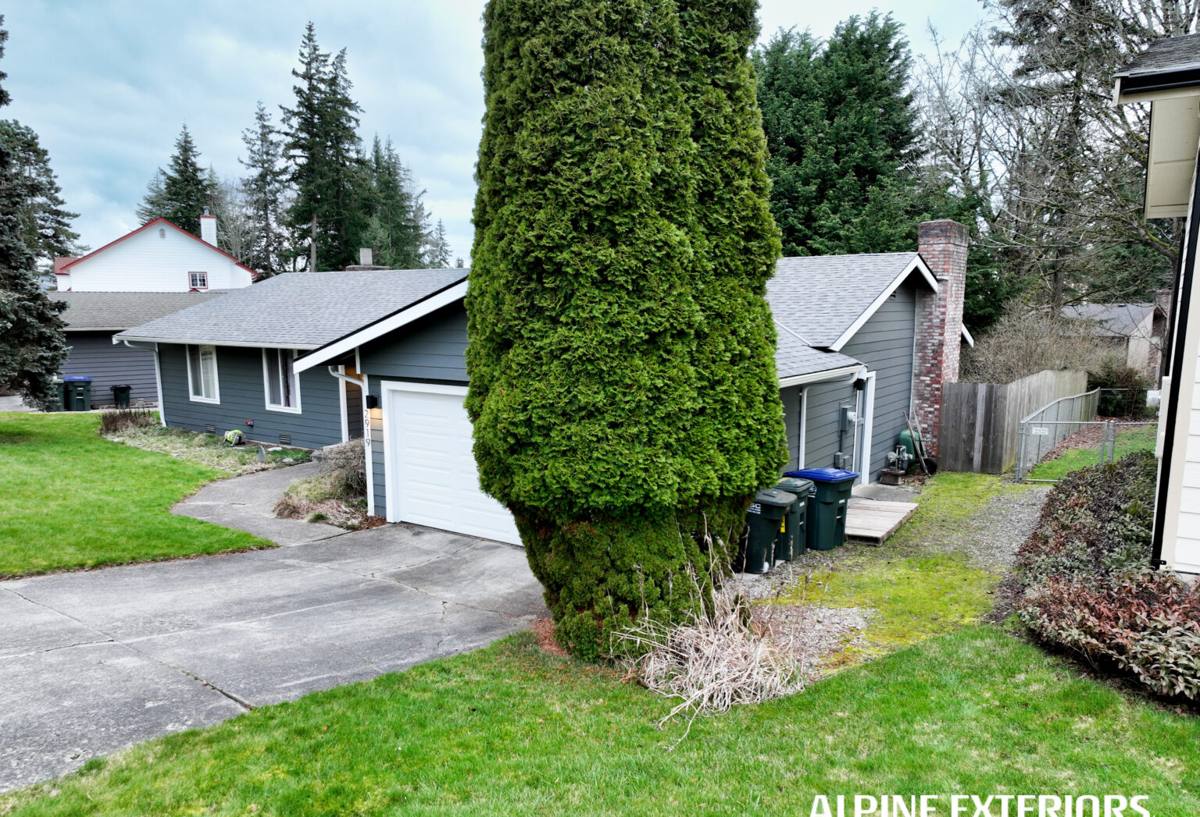
Where Siding Fails First on Harbor-Adjacent Homes
Low Walls and Splash Zones
The bottom two to three feet of a wall — especially anywhere close to grade, a patio, or a downspout discharge point — takes the most direct water exposure. Combined with salt spray carried on the wind, this is usually the first place we see finish breakdown or substrate damage on older siding.
South- and West-Facing Walls
Prevailing wind-driven rain off the water tends to load onto south- and west-facing elevations. These walls see more direct wetting during storms, so seams, laps, and caulk joints on these sides take more abuse over the life of the siding.
Shaded North Walls
Ironically, the walls that get the least storm exposure often have the worst moss and algae problems, because they stay damp the longest between weather events. Persistent surface moisture is what feeds moss growth and slowly degrades paint films and caulking.
Corners, Trim, and Butt Joints
Any place where two pieces of siding or trim meet is a potential water entry point. Caulk breaks down faster in a salt-air, high-UV-cycling environment than most homeowners expect, and once a joint opens up, water gets behind the siding rather than running off it.
Why We Only Install James Hardie Fiber Cement Here
We install one siding system on every home we work on: James Hardie fiber cement. That's a deliberate standard, not a lack of options, and it comes from seeing how other materials actually perform in a harbor climate over time.
Vinyl in a Salt-Air Environment
Vinyl siding is inexpensive and low-maintenance in a lot of climates, and we're not going to pretend otherwise. But it expands and contracts more than fiber cement with temperature swings, its seams and J-channels give water plenty of paths inward, and its color coating tends to fade and chalk faster under the combination of salt air and marine UV exposure. It's also a poor fit for homeowners who want a heavier, more substantial look on a coastal home.
Engineered Wood (LP SmartSide) and Moisture
LP SmartSide and similar engineered-wood products use an OSB-based substrate with a resin-treated strand exterior. When that substrate stays sealed and dry, it performs reasonably well. The problem is that any breach — a cracked caulk joint, a missed flashing detail, a spot where moss holds moisture against the surface — lets water into a wood-fiber core that swells and doesn't fully recover. In a climate with this much sustained dampness, we don't think that's a risk worth carrying on a client's home.
Cedar and Primed Wood
Real wood siding looks great and has a long tradition in the Pacific Northwest, but it demands a maintenance schedule — recoating, caulk inspection, moisture monitoring — that most homeowners underestimate going in. In a salt-air, high-moisture pocket like Blaine Harbor, that maintenance interval gets shorter, not longer.
What Hardie Gets Right
James Hardie fiber cement is non-combustible, dimensionally stable, and doesn't absorb and swell the way wood-based products can. Hardie's ColorPlus factory finish is baked on under controlled conditions and holds color and adhesion better than field-applied paint over the long run, which matters when salt air and UV are working against a finish every day. Hardie also engineers specific product lines, including HZ5 formulations, for regions with more moisture exposure — which is exactly the profile Blaine Harbor fits. Combined with a strong transferable warranty, it's the system we're comfortable standing behind on homes in this area.
What Correct Installation Looks Like Here
Fiber cement siding is only as good as the assembly behind it. On harbor-adjacent homes, we pay particular attention to:
- A continuous water-resistive barrier installed and lapped correctly behind the siding, with no gaps at seams or penetrations
- A drainage gap (rainscreen) in higher-exposure areas so any incidental moisture that gets behind the siding can drain and dry out instead of sitting against the sheathing
- Proper flashing at every window, door, and roof-to-wall transition — the majority of siding failures we find start at a flashing detail, not the field of the siding itself
- Corrosion-resistant fasteners driven to Hardie's specified pattern and depth, since fastener failure is accelerated by salt air
- Correct clearance from grade, roofing, and decks — Hardie specifies minimum clearances precisely because ground splash and roof runoff are common failure points
- Quality sealant at butt joints and trim, applied to surfaces prepped and primed as specified rather than caulked over bare cut edges
Skipping any one of these doesn't show up on day one. It shows up in year five or eight, as hidden rot, streaking, or a warranty claim that gets denied because the installation didn't match the manufacturer's requirements.
Our Installation Process
- Assessment: We inspect the existing siding, sheathing, and any moisture-damaged areas before quoting, so the estimate reflects the real condition of the wall, not just a surface measurement.
- Tear-off and substrate repair: Old siding comes off, sheathing is checked and repaired where needed, and any hidden rot from prior moss or moisture issues gets addressed before anything new goes up.
- Water management layer: We install the water-resistive barrier and drainage gap, and get all flashing details right at windows, doors, and roof intersections.
- Siding installation: Hardie panels or lap siding go on per manufacturer fastening specs, with attention to clearances and joint layout.
- Trim, caulking, and finish details: Trim is fitted, joints are sealed with quality sealant, and touch-up paint matches the ColorPlus finish where field cuts are exposed.
- Final walkthrough: We review the finished work with the homeowner before calling the job complete.
James Hardie Product Lines for Blaine Harbor Homes
| Product | Best Use | Notes for This Climate |
|---|---|---|
| HardiePlank Lap Siding | Traditional horizontal lap look, most common choice | Widely used profile; performs well with correct flashing and drainage detailing on exposed walls |
| HardiePanel Vertical Siding | Modern vertical look, accent walls, gables | Fewer horizontal laps means fewer joint lines exposed to wind-driven rain |
| HardieShingle | Shingle-style accents, gable ends, dormers | Good for architectural detail; benefits from careful attention at shadow lines where moisture can sit |
| HardieTrim | Corners, fascia, window and door trim | Matched fiber cement trim avoids the mismatch problems of pairing fiber cement field siding with wood trim |
What Drives the Cost of a Siding Installation
| Factor | Why It Matters |
|---|---|
| Home size and wall complexity | More square footage and more corners, gables, and dormers mean more material and labor |
| Tear-off vs. new construction | Removing and disposing of old siding, plus repairing any hidden substrate damage, adds time and cost |
| Siding profile and texture | Lap widths, shingle-style accents, and vertical panels vary in material and labor cost |
| Trim and color complexity | Multiple colors, custom trim details, or accent siding add finish work |
| Site accessibility | Tight lots, second stories, and limited staging area affect labor time |
| Substrate condition | Rot or moisture damage found during tear-off has to be repaired before new siding goes up |
We won't quote a firm number without seeing the home, but we'll always walk you through which of these factors apply to your project and why.
Signs Your Current Siding Needs Attention
- Soft or spongy spots when you press on the siding, especially near the bottom of walls
- Persistent moss or algae growth that comes back soon after cleaning
- Paint that's peeling, bubbling, or chalking faster than it used to
- Visible gaps, cracks, or missing caulk at joints, corners, and trim
- Warping, buckling, or panels that no longer sit flat against the wall
- Rising energy bills that suggest air or moisture is getting through the wall assembly
- Interior signs like musty smells or staining on walls that share an exterior wall with a problem area
Why Local Experience with Blaine Harbor Homes Matters
A siding crew that mostly works drier inland areas can do fine work and still miss the details that matter here — the flashing extra care at a west-facing wall, the drainage detail behind a north-facing shaded elevation, the fastener choice that resists salt-air corrosion. Working regularly in Blaine and along the Whatcom County coastline means we've seen how homes in this specific setting age, where they fail first, and what it actually takes to get a fifteen- or twenty-year-old installation right the first time.
If you're weighing a siding replacement on a Blaine Harbor home, we're happy to take a look and give you a straightforward, no-pressure estimate — including an honest read on what your current siding and sheathing are telling us before we talk about what goes back up.