 Blaine Siding
 Building New at Blaine Harbor Changes the Window Spec
A new build near Blaine Harbor sits closer to salt air, wind-driven rain, and standing moisture than almost anywhere else in Whatcom County. That changes how windows should be specified and installed from day one. On a harbor-adjacent lot, the window isn't just an opening for light and view — it's one of the largest penetrations in the building envelope, and every seam, fin, and flashing lap around it has to be right before siding and trim ever go on. Get it right during rough-in and the windows perform quietly for decades. Get it wrong and the callbacks show up as stains, soft trim, or fogged glass within a few wet seasons.
We install new-construction windows on builds in and around Blaine the same way every time: to the manufacturer's written instructions, integrated properly with the water-resistive barrier, and sequenced so water always has a way out and never a way in. This page covers what that actually looks like, why the local climate makes it non-negotiable, and what to expect if you're building near the harbor.
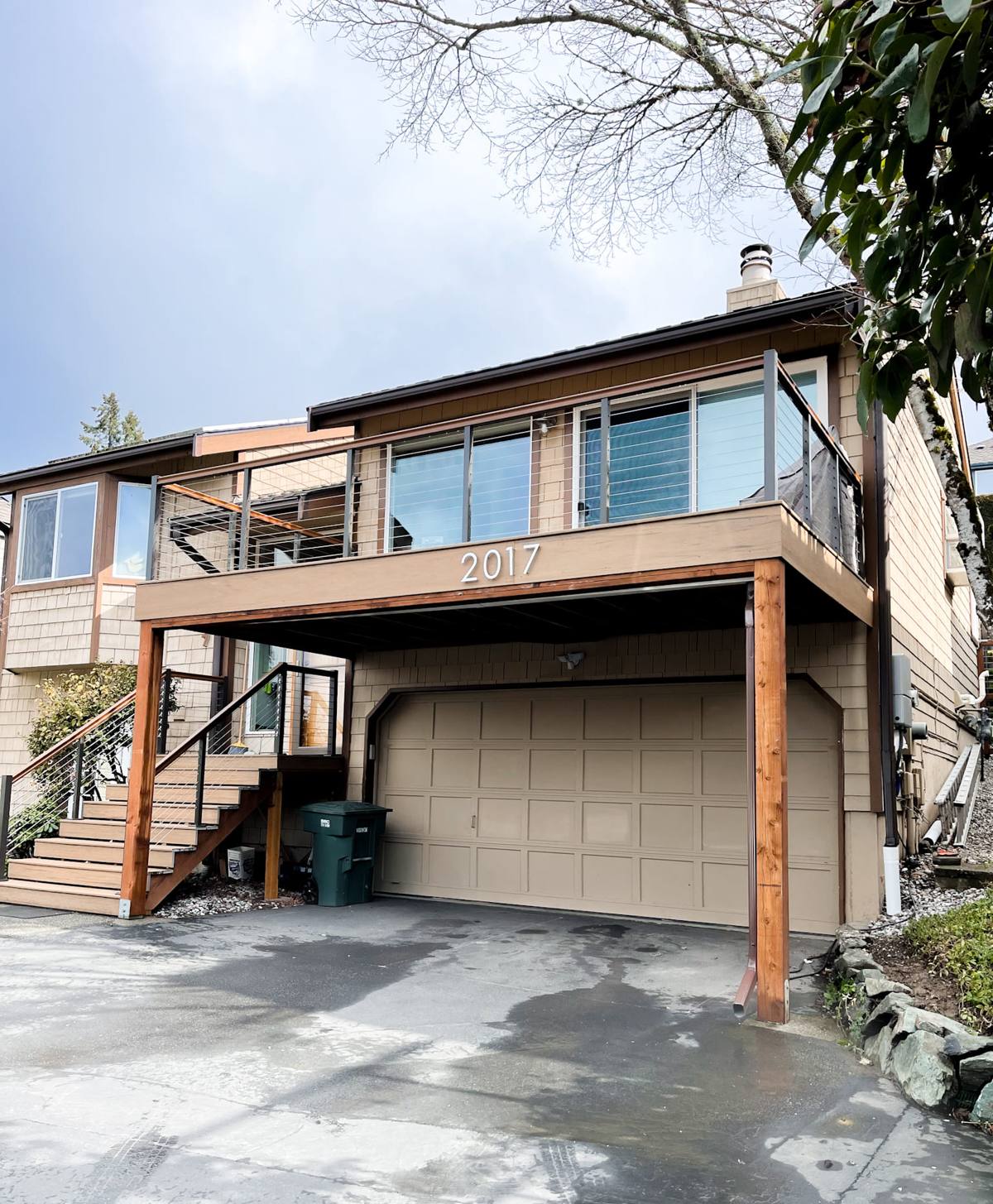
What Salt Air, Driving Rain, and Moss Season Do to a New Window
Homes closer to the water deal with three stresses that inland Whatcom County builds see less of, and they compound each other over a full year.
Salt-laden air and hardware
Airborne salt accelerates corrosion on anything metal — hinges, cranks, screws, and cladding fasteners. Untreated or lower-grade hardware can start pitting years before it should. This is why hardware finish and fastener material matter as much as the window frame itself on a harbor-adjacent build.
Wind-driven, sideways rain
Storms coming off the water don't just fall — they drive rain sideways into the wall assembly under pressure. A window that would shed water fine on a calm, inland lot can leak at Blaine Harbor if the flashing details aren't built to handle rain hitting the frame at an angle, under wind load, for hours at a time.
A long moss season
Western Whatcom County's wet, mild stretch of the year keeps surfaces damp for months. Moss and algae take hold anywhere water sits or drains slowly — window sills, head flashing, and trim board end grain included. Left unchecked, that trapped moisture works into wood trim and finish long before it's visible from the ground.
What a Correct New-Construction Install Actually Involves
"New-construction" windows use a nailing flange that gets integrated directly into the wall's water-resistive barrier before siding goes on — different from a replacement window, which fits into an existing, already-clad opening. That flange only works if the sequence around it is correct.
The flashing sequence, shingle-style
Every layer has to lap the one below it, like shingles on a roof, so water is always directed outward and down:
- Sill pan installed first, with a back dam so any water that gets past the window has nowhere to go but back out
- Window set into the pan and fastened per the manufacturer's schedule
- Side flanges taped or flashed next
- Head flashing installed last, lapping over the housewrap above the window
- All seams sealed with compatible flashing tape or self-adhered membrane, not just caulk
Skip or reverse any one of these steps and the window can look perfect from inside while quietly funneling water into the wall cavity.
Sill pans matter more here than almost anywhere
On a harbor lot, we treat a sill pan as mandatory, not optional. It's a small added step during framing that costs very little relative to the whole build, and it's the single detail most responsible for keeping wind-driven rain out of the rough opening over the life of the house.
Choosing Frame Material and Glass for a Harbor-Adjacent Lot
There's no single "best" window for every home near Blaine Harbor — the right choice depends on exposure, budget, and the look of the house. But some trade-offs matter more here than they would inland.
| Frame Material | Salt-Air / Corrosion Behavior | Maintenance | Relative Cost |
|---|---|---|---|
| Vinyl | Won't corrode; UV and color stability vary by grade | Low — occasional cleaning | Lower |
| Fiberglass | Very stable in salt air and temperature swings | Low | Mid to higher |
| Wood, clad exterior | Clad face resists weather; exposed wood needs protection from driving rain | Higher — finish and joints need periodic attention | Higher |
| Aluminum | Prone to pitting/corrosion in salt air unless properly finished and detailed | Moderate | Mid |
On glass, we don't treat the insulated glass unit as an afterthought. Dual-pane with a low-E coating, argon fill, and a warm-edge spacer bar is the baseline we build a harbor-area spec around — it cuts condensation risk in a climate that runs humid for long stretches, and it holds up better against the temperature swings between a cold night off the water and a sunny afternoon. On elevations facing open water or prevailing wind, we'll often talk through an upgraded glass package or reinforced anchoring, since that's the wall taking the most direct weather.
Our New-Construction Window Process
We work directly with builders, framers, and homeowners on new builds, so our process is built to slot into a construction schedule without becoming the bottleneck.
- Plan review and product consult — we review the window schedule and rough opening sizes against the manufacturer's specs before anything is ordered
- Rough opening check — openings are verified for size, square, and level once framing is complete
- Sill pan and flashing prep — installed before the window ever goes in the opening
- Window set and fastening — to the manufacturer's fastening schedule, not a generalized one
- Flange integration — taped and flashed into the housewrap in the correct shingle-lap order
- Water test / visual inspection — before siding closes the wall up and hides the work
- Closeout documentation — so the homeowner and builder both have a record of what was installed and how
Before we sign off on any new-construction window install, we run through the same checklist regardless of house size:
- Sill pan and back dam in place before the window was set
- Flashing lapped shingle-style, sealed with compatible tape or membrane
- Window shimmed, square, and fastened per the manufacturer's schedule
- Weep holes and drainage paths clear and unobstructed
- Interior air seal completed separately from the exterior water seal
- Hardware and fasteners rated for coastal/exterior exposure
Timing Around Whatcom County's Wet Season
Window installation on a new build has to happen inside a fairly narrow window in the construction schedule — after framing and before siding closes up the wall. In a coastal Whatcom County build calendar, that stretch can run into wet weather more often than an inland job would. We coordinate install timing with the general contractor to work around active rain where possible, and we don't install into a wet or actively leaking rough opening — moisture trapped behind a window at install time doesn't go away on its own, it just becomes a problem for later. If a stretch of driving rain is in the forecast, we'd rather shift the schedule a day than seal in moisture that shouldn't be there.
Why Hire a Crew That Already Works Blaine Harbor
A window manufacturer's warranty typically covers the unit — the glass seal, the hardware, the frame. It does not cover a flashing detail that was installed wrong. That gap is exactly where most window-related water damage actually originates, and it's why the installing crew's judgment matters as much as the product label.
Working new builds around Blaine Harbor regularly means we're already calibrated to this exposure — how much more attention a west- or water-facing wall needs, where moss tends to establish first, and how a wind-driven storm off the water behaves differently than a normal rain event. We also coordinate directly with the general contractor and framer, so the window install lines up with the rest of the envelope instead of being treated as an isolated trade. That coordination is what keeps a new build's water management continuous from foundation to roofline, rather than dependent on one crew's work matching up with another's guesswork.
After Move-In: Living With Moss Season
Once the house is finished, a little seasonal attention keeps the window details performing the way they were installed to. Weep holes at the base of the frame need to stay clear of debris, moss, and paint overspray so water can drain the way it's designed to. Gutters and downspouts near window heads should be checked so runoff isn't sheeting directly across the flashing. And it's worth a quick visual check each fall — before the wettest stretch of the year sets in — for any caulk lines that have separated or trim that's holding moisture longer than it should. None of this is heavy maintenance; it's the kind of five-minute check that keeps a well-installed window from ever becoming a problem window.
Get a Straight Answer for Your Blaine Harbor Build
If you're framing a new home near Blaine Harbor and want a window plan built around the site's actual exposure — not a generic spec pulled from an inland job — we're glad to walk the plans with you. Reach out for a free, no-pressure estimate using the form below.