 Blaine Siding
 Composite Decking Built for Birch Point's Conditions
Birch Point sits close enough to the water that every exterior material on a home has to deal with salt-laden air, wind-driven rain, and long stretches of damp shade where moss and algae get a foothold. A deck here isn't just a place to put a grill and some chairs — it's a structure that sits low, stays wet longer than the rest of the house, and takes the brunt of whatever the weather is doing that week. Composite decking, installed correctly, handles that environment better than most wood options because it doesn't absorb moisture the way lumber does and it won't rot, splinter, or need refinishing every couple of years.
That said, "composite" isn't a single product with one set of rules. Board quality, the substructure underneath it, and how the whole system drains and breathes make the real difference between a deck that looks good for fifteen-plus years and one that starts showing problems in year three. This page is about what that actually takes for a home in Birch Point specifically, not composite decking in general.
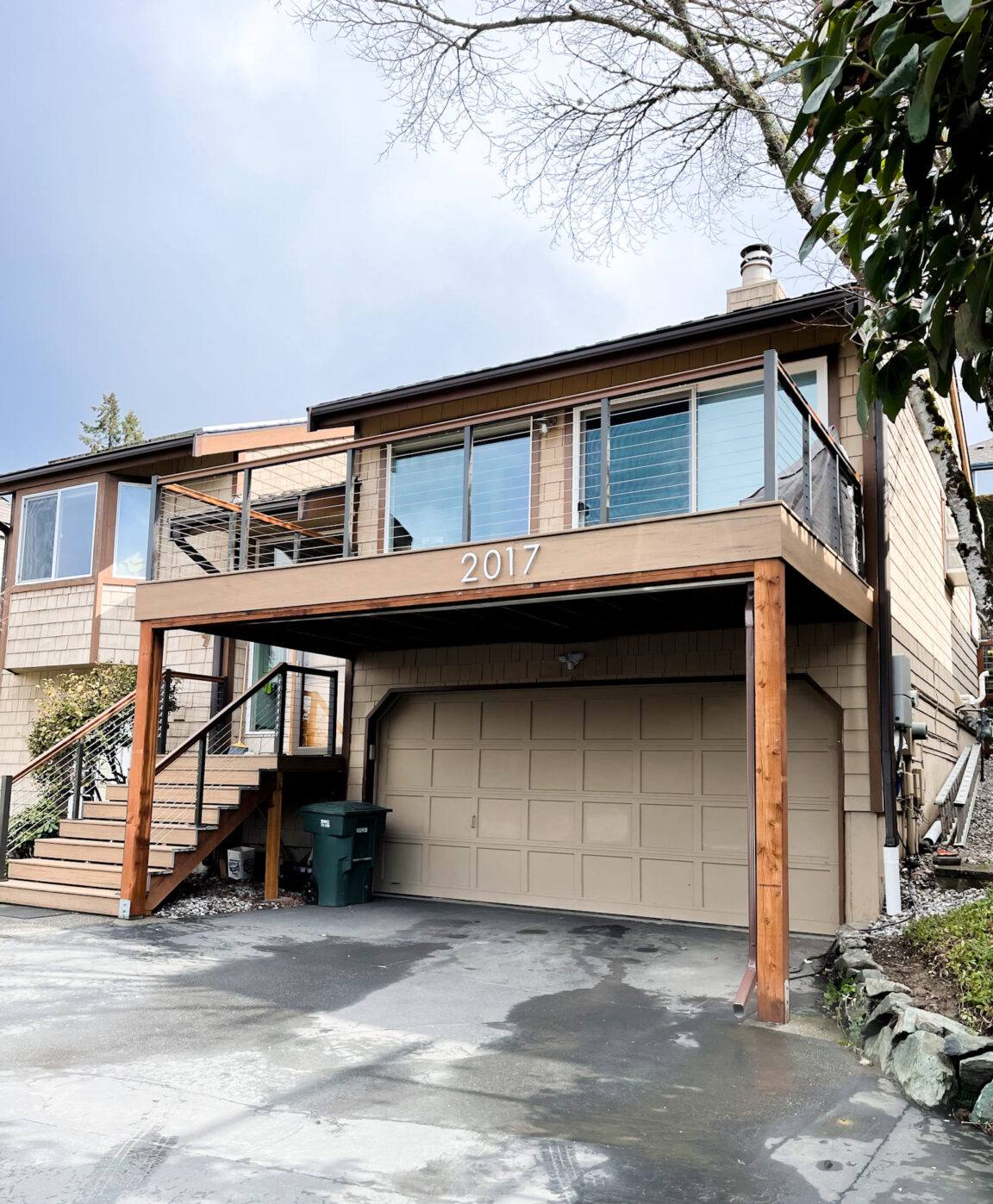
What Salt Air, Rain, and Moss Actually Do to a Deck
Salt Air and Hardware
Salt in the air accelerates corrosion on anything metal — fasteners, joist hangers, railing brackets, screws. On a lot of decks we get called to fix, the boards themselves are fine but the hidden hardware underneath has corroded and started to fail. That's a hardware and fastener selection issue, not a "composite decking doesn't work here" issue, and it's completely avoidable with the right materials.
Driving Rain and Water Management
Wind-driven rain doesn't just fall straight down — it gets pushed sideways into ledger boards, under rail posts, and into any gap where flashing was skipped or done poorly. Composite boards themselves shed water fine, but if the framing underneath, the ledger attachment to the house, or the flashing at the house wall isn't detailed correctly, water finds its way in anyway and you end up with a rot problem in the framing even though the decking on top looks brand new.
The Long Moss Season
Whatcom County's damp, shaded stretches of fall through spring are exactly what moss and algae need to take hold on any horizontal surface, and decks are prime real estate — especially the side of the house that gets less sun or sits under tree cover. Moss holds moisture against the board surface and makes boards slick and unsafe underfoot long before it does any real structural harm. It's manageable, but it needs to be part of how the deck is designed and maintained, not treated as a surprise every spring.
Composite vs. Other Decking Materials for This Climate
There's no single "best" decking material for every home — it depends on budget, how much upkeep you want to do, and how exposed the deck is to weather. Here's how the common options actually compare for a wet, salt-air, moss-prone site like Birch Point:
| Material | Moisture Behavior | Maintenance | Typical Lifespan Here |
|---|---|---|---|
| Pressure-treated wood | Absorbs water, prone to warping and checking near the coast | Annual cleaning, periodic staining/sealing | 10-15 years before major repairs |
| Cedar | Naturally rot-resistant but still absorbs moisture over time | Regular sealing to hold color and resist moss | 12-20 years with upkeep |
| Uncapped composite | Resists rot but the surface can absorb some moisture and stain | Occasional cleaning | 20-25 years |
| Capped composite | Sealed outer shell resists moisture, staining, and moss growth | Simple periodic washing | 25-30+ years |
We install capped composite on most Birch Point projects for exactly this reason — the capped surface doesn't give moss and algae the same porous foothold that uncapped boards or wood do, which matters a lot in a climate that stays damp for months at a stretch.
What a Correct Composite Deck Installation Involves
Substructure and Framing
The decking is only as good as what's underneath it. That means properly spaced joists rated for the board manufacturer's requirements, correct joist spacing for the specific composite product (it's often tighter than standard wood-deck spacing), and a frame that's built to shed water rather than trap it.
Fasteners and Hardware
Given the salt air here, we use stainless steel or coated corrosion-resistant fasteners and hardware throughout — hidden fastener clip systems where the product supports them, and hot-dip galvanized or stainless structural connectors everywhere else. Cutting corners on hardware is the single most common reason a deck fails from the inside out on a coastal property.
Ledger Flashing and House Connection
Where the deck attaches to the house is the highest-risk point for water intrusion. Proper flashing, correct fastener spacing, and a small air gap or drainage plane behind the ledger keep driving rain from working its way into the house framing over time.
Ventilation and Drainage Underneath
Low decks or decks built close to grade need airflow underneath to keep the joists dry and to keep moss and mold from establishing in the shaded, damp space below the boards. We build in the clearance and drainage path to keep that space working the way it's supposed to.
How Our Process Works
We keep the process straightforward because most homeowners have been through a confusing bid process before and don't want to repeat it:
- On-site visit to look at the existing deck or the build site, check drainage and sun exposure, and talk through board and railing options.
- A written estimate that spells out materials, fastener and hardware specs, and a realistic timeline — no vague allowances.
- Permitting handled on our end where required, including any structural or setback considerations specific to your property.
- Demo of the old deck (if applicable), framing and substructure work, then decking, railing, and trim.
- Final walkthrough where we go over care and cleaning before we consider the job done.
We don't push a single brand or board line on every job — the right choice depends on your budget, how the deck will be used, and how much sun or shade it gets.
Maintenance Composite Decking Still Needs
Composite is low-maintenance, not no-maintenance, and being upfront about that saves homeowners frustration later. In this climate, the realistic maintenance list looks like this:
- Rinse or sweep debris and organic buildup off the boards regularly, especially in shaded areas prone to moss.
- Wash the deck surface once or twice a year with a soft-bristle brush and a cleaner made for composite decking — pressure washers can be used but only at low pressure and the right distance, since aggressive pressure washing can damage the cap layer.
- Keep planters, furniture feet, and mats from trapping moisture directly against the boards for long periods.
- Check railing hardware and fastener points periodically for any early corrosion, especially closer to the water.
- Trim back overhanging vegetation that keeps sections of the deck shaded and damp longer than the rest.
Choosing Boards, Color, and Railing for a Waterfront Setting
Darker board colors show less staining from organic debris and moss residue but run hotter underfoot in direct sun; lighter and mid-tone colors stay cooler but need slightly more attention to keep looking clean. Cable, aluminum, or composite railing systems all hold up well against salt air when the hardware is spec'd correctly — wood railing is the one component we'd steer you away from on an exposed Birch Point deck, simply because it needs more upkeep than the decking itself to keep pace.
Why Hiring a Crew That Already Works Birch Point Matters
A lot of decking problems we get called to fix aren't because composite decking failed — they're because the deck was built to a generic spec that didn't account for what this specific stretch of Whatcom County coastline does to a structure year-round. Fastener choice, ledger flashing, joist spacing, and drainage underneath all need to be treated differently on a salt-air, high-moisture site than they would on a dry inland lot. A crew that already works in and around Blaine and Birch Point has seen which details matter here and builds them in from the start, instead of learning it after a callback.
Questions to Ask Before You Hire a Decking Contractor
- What fastener and hardware materials do you use, and are they rated for coastal/salt-air exposure?
- How do you handle ledger flashing and the connection point to the house?
- What joist spacing will you use for the specific composite product I'm choosing?
- Is the composite line capped or uncapped, and what does the manufacturer warranty actually cover?
- Have you built decks in Birch Point or similarly exposed parts of Blaine before?
If a contractor can't answer those clearly, that's worth noticing before you sign anything.
If you're weighing a new composite deck or replacing one that's showing its age, we're happy to take a look and walk the site with you. Request a free, no-pressure estimate through the form below and we'll give you a straight answer on what your home actually needs.