 Blaine Siding
 Roofing on Birch Point Is Not the Same Job as Roofing Inland
Birch Point sits right up against the water, and that changes what a roof has to deal with every single day. A few miles inland in Whatcom County, a roof mostly has to shed rain and survive winter. Out here, that same roof is also fighting salt-laden air, wind that comes off open water with nothing to slow it down, and a wet, shaded microclimate that grows moss faster than most homeowners expect. An asphalt shingle roof installed with inland assumptions - standard fasteners, minimal ventilation, no real moss strategy - tends to show its age early. One installed with this specific environment in mind holds up the way it's supposed to.
This page is about that one job, done right, for this one area: asphalt shingle roofing for homes in and around Birch Point.
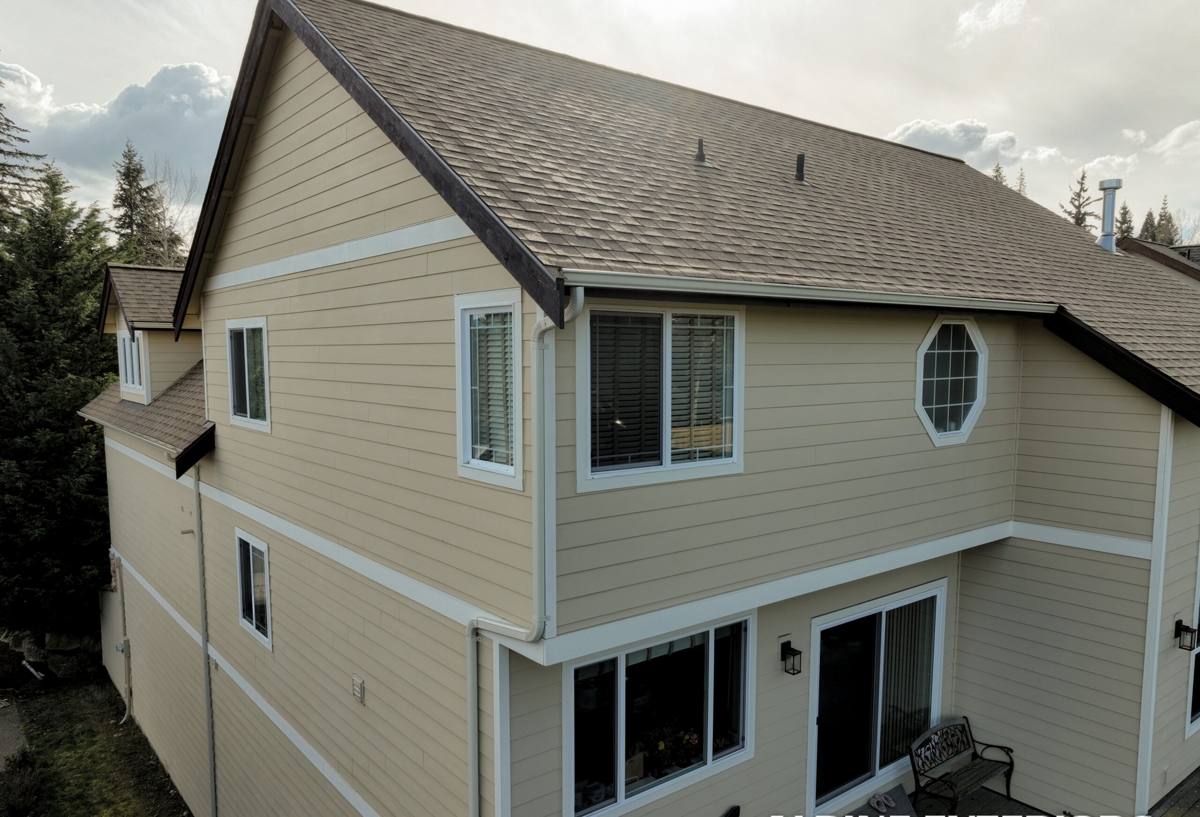
What Salt Air, Rain, and Moss Actually Do to a Shingle Roof
Corrosion at the Fasteners and Flashing
Salt air accelerates corrosion on any exposed metal - roofing nails, flashing, drip edge, vent stacks, valley metal. On a standard-grade roof, that shows up first as rust bleed streaking down through the shingles near flashing points, and eventually as fasteners that lose their grip. It's a slow process, but it's constant here in a way it isn't a few miles inland, which is why fastener and flashing material choice matters more on a Birch Point roof than on a typical Whatcom County job.
Moss and Algae Growth
Shaded, north-facing, or tree-adjacent roof sections near the water stay damp longer than they would in a drier, sunnier location. That extended moisture window is exactly what moss and algae need to get established. Once moss roots into the shingle mat, it lifts tabs, holds water against the roof deck, and shortens the life of the roofing well before its rated age. Algae streaking is mostly cosmetic, but heavy moss is a structural problem waiting to happen if it's ignored for a few seasons.
Wind-Driven Rain
Open water means less wind resistance and more driving rain hitting the roof at an angle instead of falling straight down. That kind of rain finds weak points - poorly sealed valleys, under-lapped courses, thin or missing underlayment at the eaves - that a straight-down rain would never expose. It's one of the main reasons roofs closer to the water fail at valleys and eaves before they fail anywhere else.
What a Correctly Installed Roof Includes Out Here
A shingle roof is a system, not just a layer of shingles. In a coastal environment like Birch Point, every layer of that system needs to be chosen and installed with the salt air and rain exposure in mind, not just to code minimums.
| Component | Standard Approach | What We Do for Coastal Exposure |
|---|---|---|
| Fasteners | Standard galvanized nails | Corrosion-resistant fasteners rated for coastal/marine exposure |
| Underlayment | Basic felt, minimal coverage | Synthetic underlayment with ice-and-water shield at eaves and valleys |
| Flashing | Painted steel | Corrosion-resistant flashing at valleys, walls, and penetrations |
| Ventilation | Whatever the existing vents allow | Balanced intake/exhaust sized to the roof, to control trapped moisture |
| Shingle sealing | Standard nail pattern | Manufacturer nail pattern plus attention to hand-sealing in exposed, high-wind areas |
None of this is exotic. It's the difference between building to the minimum and building for the actual conditions the roof will sit in for the next 20-30 years.
Signs a Birch Point Roof Needs a Closer Look
Because salt air and moss work slowly, a lot of roof problems out here get missed until they've caused real damage underneath. Worth checking for, especially after the wetter months:
- Moss visible on the roof surface, especially on shaded or north-facing slopes
- Dark streaking that isn't just algae - rust-colored streaks near flashing or vent stacks
- Granules collecting in gutters or at the base of downspouts
- Shingle tabs that look lifted, curled, or cupped rather than lying flat
- Soft spots or sagging when walked on (best assessed by a roofer, not a homeowner on a ladder)
- Daylight or water staining visible in the attic near the roof deck
- Flashing that looks rusted, loose, or separated from the roofline
- A roof age approaching 20 years without a full inspection on record
Any one of these on its own might be minor. A few of them together usually mean it's time for an inspection before the next round of driving rain finds the weak spot.
Our Asphalt Shingle Roofing Process
The process itself isn't complicated, but skipping steps is exactly how coastal roofs end up failing early. Here's how we approach a shingle roof for a Birch Point home:
- Inspection and assessment. We look at the existing roof, the deck underneath where accessible, ventilation setup, and any moss, algae, or corrosion patterns already present.
- Honest scope. We tell you what actually needs to happen - full replacement, repair, or a maintenance plan - and why, with straightforward pricing.
- Tear-off and deck check. On a replacement, we remove the old roofing down to the deck and check for rot or soft sheathing before anything new goes down, since covering a damaged deck just hides the problem.
- Underlayment and flashing. Ice-and-water shield at eaves and valleys, synthetic underlayment across the field, and corrosion-resistant flashing at every wall, valley, and penetration.
- Shingle installation. Installed to manufacturer specification, with extra attention to sealing and fastening in wind-exposed areas.
- Ventilation check. Intake and exhaust balanced so moisture from inside the house doesn't get trapped against the underside of the new roof.
- Final walkthrough. We go over the finished roof and the maintenance basics with you before we consider the job done.
Choosing the Right Shingle for This Location
Not every asphalt shingle product is a good fit for a coastal microclimate. The right choice depends on how much shade and moisture the roof deals with, and how much moss resistance and wind rating actually matter for that specific home.
| Shingle Type | Best For | Trade-Offs to Know |
|---|---|---|
| Standard 3-tab | Budget-conscious projects, simple rooflines | Lower wind rating and shorter lifespan; less margin in a high-exposure spot |
| Architectural/laminate | Most Birch Point homes | Higher wind rating, better appearance, longer warranty; higher upfront cost |
| Algae-resistant (copper-infused granules) | Shaded, moisture-prone roof sections | Helps slow algae staining; doesn't eliminate the need for moss upkeep |
| Impact-resistant / high-wind rated | Fully exposed, waterfront-facing slopes | Best durability in driving wind and rain; costs more per square |
We'll walk through which category fits your roof's actual exposure rather than defaulting to whatever's cheapest or whatever a warranty brochure pushes hardest. On some homes, mixing a standard product on protected slopes with a higher wind-rated product on the exposed side is the more honest, cost-effective call.
Maintenance That Actually Extends Roof Life Here
A well-installed roof still needs upkeep in this climate - that's not a knock on the work, it's just what salt air and a long moss season require. A realistic maintenance rhythm:
- Gentle moss removal (not pressure washing, which strips granules) once moss becomes visible, not after it's established
- Gutter cleaning at least twice a year so water isn't backing up under the shingle edge
- A visual check after major windstorms for lifted or missing shingles
- Trimming back overhanging branches that keep sections of roof shaded and damp longer than necessary
- A full inspection every few years, or sooner if the roof is past 15 years old
None of this is expensive or time-consuming if it's kept up with consistently. Skipped for a few years in a row, it's usually how a 25-year roof turns into a 15-year roof.
Why Local Experience in Birch Point Matters
A roofing crew that's never worked this stretch of the Whatcom County coastline doesn't automatically know how much extra attention moss, salt exposure, and wind-driven rain deserve here compared to a roof a few miles inland. That's not a small thing - it shows up in fastener choice, ventilation decisions, and how carefully the valleys and eaves get detailed. Working in and around Blaine and Birch Point regularly means we're not guessing at how this specific environment treats a roof over time; we're building to what we've actually seen hold up and what we've seen fail.
If you're weighing a repair, a full replacement, or just want an honest read on where your roof stands, we're glad to take a look and give you a straightforward assessment - no pressure, no hard sell. Reach out for a free estimate using the form below.