 Blaine Siding
 Building Decks That Hold Up on the Birch Bay Waterfront
Birch Bay sits right on the water, and that changes what a deck has to survive. Homes here deal with salt-laden air blowing off the bay, wind-driven rain that gets under fascia and railings most inland decks never see, and a wet season that runs long enough to grow moss on anything that doesn't drain and dry properly. A deck built to a generic spec — the kind you'd see in a catalog cutsheet — will show its age fast out here. Fasteners corrode sooner, wood surfaces stay damp longer between storms, and railing posts that aren't flashed correctly start showing rot at the base within a few seasons.
We build decks in Birch Bay the way the site actually demands: hardware rated for coastal exposure, ledger and post connections detailed to shed water instead of trap it, and framing laid out with enough airflow underneath to let things dry between rain events. This page covers what that looks like in practice, what a correct build involves, and how our process runs from first estimate to final walkthrough.
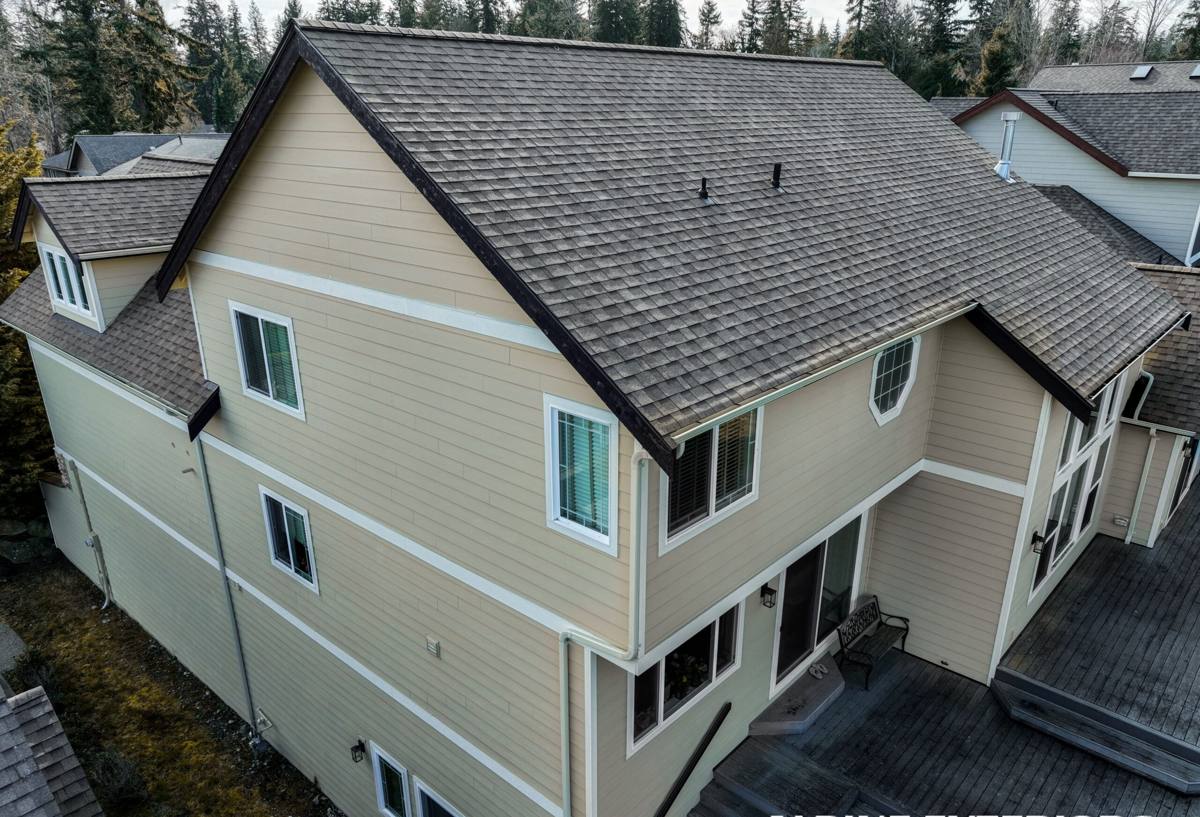
What Birch Bay's Climate Actually Does to a Deck
Salt Air and Corrosion
Proximity to Birch Bay's shoreline means airborne salt settles on everything, including deck hardware. Standard galvanized fasteners and connectors are undersized for this exposure — over a few years, salt exposure accelerates corrosion at joist hangers, screw heads, and structural bolts. Once a fastener starts rusting, it loses holding strength quietly, long before anything looks wrong on the surface. We spec stainless steel or high-grade coated fasteners rated for coastal and treated-lumber contact on every Birch Bay deck we build, not just the visible hardware but the structural connectors buried under the decking too.
Driving Rain and Water Intrusion
Storms coming off the water in this part of Whatcom County often bring rain sideways, not straight down. That means water finds its way behind rim joists, under poorly flashed ledger boards, and into end grain on rail posts and stair stringers — areas a calm-weather build might get away with skipping proper flashing on. We flash every ledger-to-house connection and cap exposed end grain, because in Birch Bay that detail is the difference between a deck that lasts and one with hidden rot in five years.
Moss, Algae, and the Long Wet Season
Whatcom County's wet season stretches long, and shaded or north-facing decks in Birch Bay can stay damp for weeks at a stretch. That's exactly the environment moss and algae need. Beyond being a slip hazard, moss holds moisture directly against decking boards, which speeds up surface degradation on wood and can dull composite surfaces over time. Deck orientation, gap spacing between boards, and under-deck ventilation all affect how fast — or whether — that buildup happens, and we account for all three at the design stage rather than leaving it for the homeowner to manage with a pressure washer every spring.
What a Correct Deck Build Involves Here
A deck that's going to hold up on the Birch Bay waterfront isn't a different design so much as a more careful build. The core elements:
- Footings sized and set below frost depth per local code, with post bases that keep wood off standing water
- Ledger flashing that integrates with the house's existing water management, not just a bead of caulk
- Corrosion-resistant structural hardware throughout — joist hangers, post caps, and all fasteners
- Board spacing and framing layout that allows airflow and drainage, reducing moss and mildew buildup
- Railing and stair connections detailed to shed water away from end grain and post bases
- Material selection matched to sun exposure, shade, and how close the deck sits to the water
Skipping any one of these doesn't fail the deck immediately — it fails it in year three or four, usually starting at a joint or connection point that was never visible during the walkthrough.
Choosing Materials for a Birch Bay Deck
There's no single "best" decking material for every Birch Bay property — it depends on sun exposure, how close you are to the water, budget, and how much upkeep you want to take on. Here's how the common options actually compare in this climate:
| Material | Coastal/Salt Air Performance | Moss/Algae Resistance | Maintenance |
|---|---|---|---|
| Pressure-treated fir/hem-fir | Good with proper fasteners and sealing | Moderate — needs regular cleaning and re-sealing | Annual cleaning, re-seal every 2-3 years |
| Cedar | Naturally decay-resistant, holds up well | Moderate — surface needs periodic cleaning | Cleaning and oil/sealant every 1-2 years |
| Composite decking | Excellent — doesn't absorb moisture or salt | Good, but algae can still grow on the surface film if shaded and damp | Occasional washing, no sealing |
| PVC decking | Excellent — fully synthetic, no wood to corrode or rot | Good with proper drainage and spacing | Lowest — mostly rinsing |
We'll walk through these trade-offs honestly during your estimate — composite and PVC cost more up front but ask less of you over the years, while wood costs less initially and rewards regular upkeep with a look a lot of homeowners still prefer. What matters most is that whichever material you choose, the framing and hardware underneath are built to the same coastal standard.
Railings and Fasteners Matter More Than People Expect
Homeowners often focus on decking boards and underestimate railings and fasteners, but in a bay-adjacent property these are frequently the first parts to show wear. Aluminum and vinyl railing systems tend to outperform painted wood railings here, since they don't rely on a coating that has to be maintained against salt spray. Whatever railing style you choose, we make sure post attachment and cap flashing are done to the same coastal-grade standard as the rest of the structure.
Our Process for Birch Bay Deck Projects
1. On-Site Assessment
We walk the property, note sun and shade exposure, drainage patterns, proximity to the water, and how the deck will tie into the existing structure. This tells us which material and hardware choices actually make sense for your specific lot, rather than a generic recommendation.
2. Design and Honest Estimate
We put together a design and a written estimate that spells out material choices and why we're recommending them for your site. No surprise upgrades sprung on you mid-project — if something changes once we open up the site, we tell you before we proceed, not after.
3. Permitting
Most deck projects in Whatcom County require a permit, and we handle that process as part of the job so it's not something you have to chase down yourself.
4. Build
Footings, framing, flashing, decking, and railings — built in that order, with inspections at the structural stages that require them. We don't cover framing until the connections that matter are done right, because those are the ones nobody sees again once the decking goes down.
5. Walkthrough
Before we call the job finished, we walk the deck with you, cover basic care for whatever material you chose, and answer questions about maintenance timing so you know what to expect going into your first wet season.
New Builds vs. Repairs and Rebuilds
Not every project on this page is a from-scratch build. A lot of our Birch Bay calls are for decks that were built without coastal-grade hardware or flashing and are now showing it — soft spots near the ledger, rusted fasteners, railing posts that have started to wobble. In many cases we can rebuild the framing and hardware while reusing sound structural elements, rather than tearing the whole thing out. In others, especially where rot has reached the ledger connection or main support posts, a full rebuild is the more honest recommendation. We'll tell you which situation you're in during the assessment — not after work has started.
Signs Your Current Deck Needs Attention
- Soft or spongy spots when you walk across the decking
- Rust staining around fastener heads or visible corrosion on hardware
- Persistent moss or dark staining in the same spots year after year, even after cleaning
- Gaps or movement where railing posts meet the deck frame
- Water pooling instead of draining off the surface after rain
- Visible daylight or gaps at the ledger board where the deck meets the house
Any one of these is worth a look before it turns into a structural repair. Caught early, most are straightforward fixes; left through another wet season, they tend to spread.
Why a Local Crew Matters for This Kind of Build
A deck builder who mostly works inland projects can still build a deck — but they're guessing at what Birch Bay's salt air and rain patterns will do to it over time. We work on homes throughout Whatcom County and along the Blaine and Birch Bay shoreline regularly, so the hardware grade, flashing details, and material recommendations we bring to your project aren't theoretical. They're based on what we've seen hold up, and what we've seen fail, on decks a few streets from yours.
That local familiarity also means we know the permitting process for this area and build to the standards it expects, without treating your project as a first attempt at a coastal build.
Get a Free Estimate for Your Birch Bay Deck
Whether you're planning a new deck, replacing an aging one, or dealing with early rot and hardware corrosion, we're happy to take a look and give you an honest assessment — no pressure, no obligation. Fill out the form below and we'll get in touch to schedule a free estimate for your Birch Bay property.