 Blaine Siding
 Why Ferndale Roofs Wear Differently Than Roofs Farther Inland
Ferndale sits close enough to the water that homes here deal with a mix of stresses that roofs in drier, inland parts of the country rarely see all at once. Salt-laden air off the Strait of Georgia and Puget Sound corridor slowly works on exposed metal fasteners and flashing. Driving rain, often coming in sideways during winter storms, tests every lap and seal in a shingle system rather than just sitting and running off. And because so many Whatcom County lots carry mature tree cover, a long, cool, damp season each year gives moss and algae months to gain a foothold on north-facing slopes and shaded valleys.
None of this means asphalt shingles are the wrong choice for a Ferndale home — they remain one of the most practical, cost-effective roofing systems available, and a well-installed asphalt roof holds up fine in this climate for decades. What it does mean is that the installation details matter more here than they would in a milder climate. A roof that's "close enough" in a dry region can leave real gaps in a place where the roof rarely gets a long stretch to fully dry out.
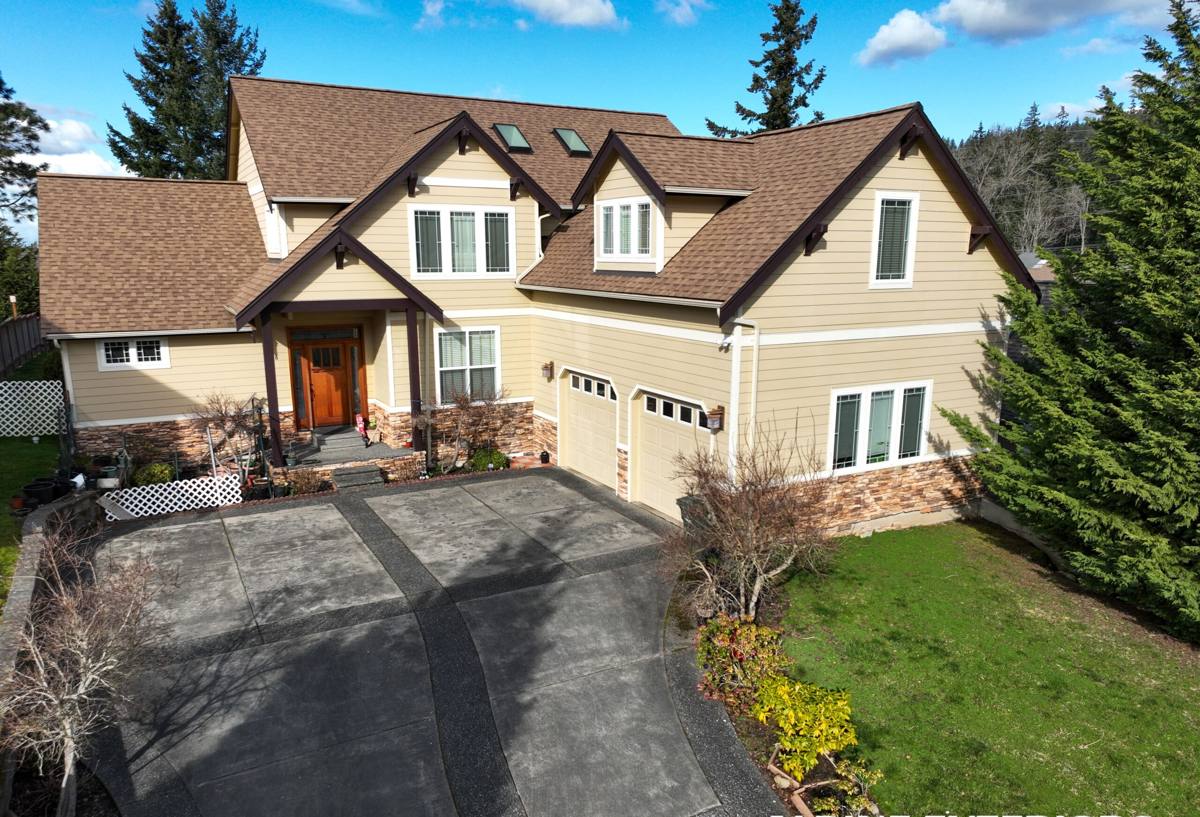
What Correct Asphalt Shingle Installation Actually Involves
A lot of the difference between a roof that lasts and a roof that causes problems in year six or seven comes down to steps that aren't visible once the job is finished. Here's what we consider non-negotiable on every asphalt shingle roof we install.
Tear-Off and Deck Inspection
We remove the old roofing down to the deck rather than layering over it. That lets us actually see the plywood or OSB underneath, check for soft spots, delamination, or water staining, and replace any damaged sections before new material goes down. Skipping this step is one of the most common ways a roof looks fine at installation and fails early.
Underlayment and Ice-and-Water Barrier
Synthetic underlayment goes down across the full deck as the roof's backup water barrier. At eaves, valleys, and around penetrations — the spots most exposed to wind-driven rain — we add self-adhering ice-and-water membrane. In a climate where sideways rain is a regular winter event rather than a rare storm, this detail earns its keep.
Flashing at Every Transition
Chimneys, skylights, sidewalls, and roof-to-roof transitions are where most leaks actually start, not in the open field of shingles. Step flashing, counter-flashing, and properly lapped valley metal have to be installed correctly and sequenced with the shingles as they go on — not caulked over as an afterthought.
Fastening and Nailing Pattern
Manufacturer nailing patterns exist for a reason, and getting them wrong is one of the fastest ways to void a shingle warranty without the homeowner ever knowing. We follow the pattern specified for the shingle line and the local wind exposure, with nails placed in the manufacturer's nailing strip — not high, not low, and not with a nail gun set to blow through the shingle face.
Ventilation Balance
Intake at the eaves and exhaust at the ridge need to work together, not against each other. We size and balance ventilation to the attic, not just add a ridge vent because it's standard practice.
Choosing a Shingle System for Whatcom County Weather
Not every asphalt shingle product is built the same way, and the differences matter more in a marine climate than they would somewhere dry and hot. The table below is a general guide to how the common tiers compare — actual pricing depends on roof size, pitch, and access, which we'll walk through at an in-person estimate.
| Shingle Tier | Wind Rating | Algae Resistance | Best Fit |
|---|---|---|---|
| Standard 3-Tab | Lower end of typical range | Basic or none | Budget-conscious re-roofs on simple, low-slope sections |
| Architectural / Laminate | Mid-to-high range | Often includes algae-resistant granules | Most Ferndale homes — good balance of durability and cost |
| Premium / Designer | High end of typical range | Enhanced algae-resistant granules, heavier mat | Steep-slope, highly visible roofs or homeowners prioritizing longevity |
For most homes in this area, we steer people toward an architectural shingle with algae-resistant (copper-infused) granules as the baseline, not the upgrade. Given how much shade and moisture the region gets, that feature earns its cost back in reduced staining and cleaning over the life of the roof. We're honest when a basic 3-tab is a reasonable fit for a detached garage or outbuilding — it just isn't usually our recommendation for the primary house roof here.
Moss, Algae, and Salt Air: The Maintenance Reality
Even a correctly installed roof needs some homeowner attention in this climate. A little routine care goes a long way toward getting full life out of the shingles.
- Keep gutters and valleys clear of needles and leaf debris — trapped organic material holds moisture against the shingles and feeds moss growth.
- Trim back overhanging branches where practical to cut down on shade and debris on north-facing slopes.
- Have moss physically removed rather than power-washed — pressure washing strips granules and shortens shingle life.
- Zinc or copper control strips near the ridge can help slow moss regrowth on shaded sections between cleanings.
- Walk the exterior after major windstorms and look for lifted or missing shingles, especially near ridges and edges.
- Have flashing and sealant checked every few years, since these are the first things to show wear from salt air and repeated wetting.
Our Process, Start to Finish
We keep the process straightforward because a roof replacement is disruptive enough without added confusion about what happens next.
- On-site inspection. We walk the roof (or use a drone where pitch or access makes that safer) and check the attic from inside where possible.
- Written estimate. You get a clear scope of work and pricing — what's included, what shingle and underlayment system is specified, and what would trigger an added cost, like unexpected deck damage.
- Material selection. We help you compare shingle lines and colors against your home and budget, without pushing a specific brand for its own sake.
- Scheduling around weather. Roofing in this region means working around rain windows. We plan installation days with realistic forecasts, not just the next open slot on the calendar.
- Tear-off and deck check. Old roofing comes off, the deck gets inspected, and any needed repairs are handled before new material goes down.
- Installation. Underlayment, ice-and-water barrier, flashing, and shingles go on in the correct sequence, with attention to nailing pattern and ventilation.
- Cleanup and magnetic sweep. Job site debris and stray fasteners are cleared from the yard and driveway, not just piled at the curb.
- Final walkthrough. We go over the finished roof with you and answer questions before calling the job complete.
- Warranty paperwork. You get documentation for both the manufacturer's material warranty and our workmanship coverage.
Repair or Full Replacement? Cost Factors to Weigh
Not every roofing problem means a full replacement, and not every homeowner needs to hear that it does. The honest answer usually comes down to a handful of factors.
| Factor | Leans Toward Repair | Leans Toward Replacement |
|---|---|---|
| Roof age | Under roughly half the shingle's rated life | Approaching or past the shingle's rated life |
| Extent of damage | Isolated area — one slope, one leak source | Widespread wear, multiple leak points, or granule loss across the field |
| Decking condition | Solid deck, no soft spots found | Soft, delaminated, or water-stained decking in multiple areas |
| Moss and algae staining | Surface staining, shingles otherwise intact | Long-term moss growth that has lifted or degraded shingles |
| Insurance involvement | N/A for routine wear | Storm or wind damage may be covered — worth documenting either way |
When repair is the honest recommendation, we'll say so. A roof replacement is a significant expense, and pushing one on a roof that has years of good life left isn't how we want to do business.
Ventilation and Moisture: What Homeowners Don't See
A shingle roof's performance depends as much on what's happening underneath it as on the shingles themselves. Poor attic ventilation traps warm, moist air against the underside of the roof deck, which can lead to condensation, premature deck rot, and — in cold snaps — ice buildup at the eaves even in a climate that doesn't see heavy, sustained snow. It also shortens shingle life from the underside, which is invisible until it isn't.
Balanced ventilation means enough intake at the soffits or eaves to match the exhaust at the ridge, sized to the square footage of the attic. We check this as part of every inspection, because it's often the difference between a roof that reaches its expected lifespan and one that shows problems years early, regardless of how good the shingles themselves are.
Warranties: What Manufacturer and Workmanship Coverage Actually Mean
Shingle warranties and installation warranties cover different things, and the distinction matters more than most sales literature makes clear.
The manufacturer's warranty covers defects in the shingle material itself — things like premature granule loss or a product that fails to perform as designed. It generally does not cover a leak caused by incorrect installation, and most manufacturers can deny a claim if the nailing pattern or ventilation specs weren't followed. That's part of why we install to spec rather than by habit.
Our workmanship warranty covers our labor — if something about how the roof was installed causes a problem, that's on us to fix. Ask any contractor bidding your roof to spell out both warranties in writing, including their length and what voids them. A vague verbal promise of "lifetime coverage" isn't the same as a documented warranty you can actually use.
Why Hiring a Crew That Already Works in Ferndale Matters
A roofing crew that regularly works Ferndale and the surrounding Whatcom County area brings a few practical advantages that a crew unfamiliar with the region can't match on paper alone. They already know which shingle lines and ventilation approaches hold up against this specific mix of salt air, driving rain, and shaded moss conditions, rather than applying a generic spec sheet. They're familiar with local permitting expectations and typical construction in the area's housing stock. And when a windstorm rolls through and multiple homes need attention at once, a locally established crew is easier to reach and more likely to prioritize repeat service-area customers over one-off jobs from out of the area.
If you're weighing a repair, a full replacement, or just want an honest read on what condition your roof is actually in, we're happy to take a look. Fill out the form below for a free, no-pressure estimate — we'll give you a straight answer, not a sales pitch.