 Blaine Siding
 Sumas sits inland from the water compared to Blaine and the Semiahmoo waterfront, but the weather that moves through Whatcom County doesn't stop at the shoreline. Salt-tinged marine air pushes in off the Strait, driving rain works its way sideways under eaves for months at a stretch, and the shaded, moisture-heavy conditions here keep moss and algae active longer than they are in drier parts of the state. Siding on a Sumas home has to shed water, resist swelling, and hold its finish through all of that — year after year, without babysitting. That's the standard we hold every fiber cement job to, and it's why we install one product line and nothing else.
What Sumas' Climate Actually Does to Siding
Homeowners in this area deal with three compounding stresses that most siding materials weren't built to handle together:
- Sustained moisture exposure. Long stretches of overcast, drizzly weather keep exterior walls damp for days at a time, especially on north- and west-facing elevations that don't get direct sun to dry them out.
- Driving, wind-blown rain. Storms off the water don't just fall straight down — wind pushes rain up under laps and into seams, which is where most siding failures actually start.
- Extended moss and algae season. Shade, moisture, and mild temperatures mean moss gets a longer growing window here than in most of the country. Anything porous or slow to dry becomes a host surface.
Wood-based products (cedar, primed spruce, and engineered wood like LP SmartSide) are all vulnerable to this combination because their core material absorbs moisture. Vinyl doesn't absorb water, but it expands and contracts with temperature swings, can warp in direct sun, and offers nowhere for paint or color to renew once it fades. Fiber cement is the material that actually resists all three stresses at once — which is the whole reason it exists as a product category.
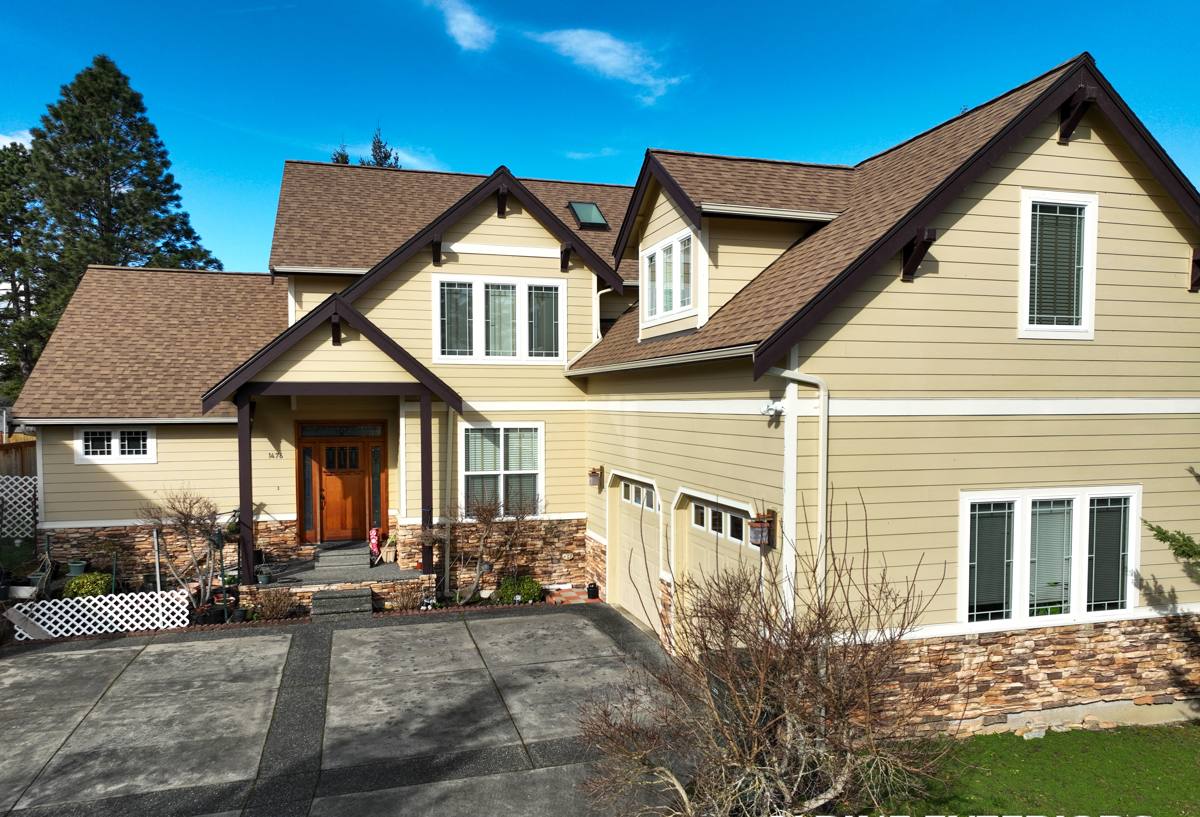
Why We Only Install James Hardie Fiber Cement
Fiber cement itself isn't a brand — it's a category, and not every fiber cement product is engineered the same way. We made the decision years ago to install James Hardie exclusively, for three reasons that matter directly to homes in this climate:
Climate-Engineered Product Lines
Hardie manufactures separate HZ5 and HZ10 formulations engineered for different climate zones, rather than one generic product sold everywhere. For the Pacific Northwest's wet, moderate-temperature climate, that means a board engineered around moisture cycling and freeze-thaw behavior specific to this region, not a one-size-fits-all mix.
Factory-Applied ColorPlus Finish
Most siding failures we see aren't the board itself — they're the paint film failing and letting water behind it. Hardie's ColorPlus finish is baked on in a controlled factory environment with multiple coats and a UV-cured topcoat, which holds up to sun and rain exposure far longer than field-applied paint and comes with its own finish warranty separate from the substrate.
Non-Combustible Core
Fiber cement is made primarily from cement, sand, and cellulose fiber — it doesn't burn, feed a fire, or contribute fuel the way wood-based siding can. For homes anywhere in Washington, that's a meaningful, permanent advantage that has nothing to do with weather at all.
We don't install Cemplank, Allura, LP SmartSide, vinyl, primed spruce, or cedar. Each of those has legitimate applications elsewhere, but for the moisture load and moss pressure this region puts on an exterior, we're not willing to put our name on an install that we know will need more maintenance, more repainting, or more repair down the line than Hardie requires.
What a Correct Fiber Cement Installation Actually Involves
Fiber cement siding is only as good as the installation underneath it. A rushed or undersized crew can turn a 30-50 year product into a 10-year problem. The details that matter most:
| Step | Why It Matters in Sumas |
|---|---|
| Weather-resistant barrier + rainscreen gap | Creates a drainage plane so any water that gets behind the siding has somewhere to go and dry out, instead of sitting against the sheathing |
| Proper flashing at windows, doors, and roof lines | These are the points where driving rain finds its way in first; flashing has to be layered correctly, not just caulked |
| Correct fastener spacing and placement | Hardie specifies exact nailing patterns and clearances — get this wrong and boards can crack, cup, or pull loose over time |
| Field-cut edge sealing | Factory edges are protected, but any board cut on site needs sealed edges or it becomes a moisture entry point |
| Correct clearance from grade, decks, and roofing | Siding installed too close to the ground or a roof surface stays wet longer and is one of the most common causes of premature failure |
| Caulking at seams and penetrations, not gaps | Caulk is a backup, not the primary water management strategy — over-reliance on it is a sign of a shortcut install |
None of this is unique to us — it's simply what the manufacturer's own installation specifications require. The problem is that not every crew follows them closely, and shortcuts don't show up as a problem until a few winters in.
Our Process for Sumas Siding Projects
1. On-Site Assessment
We walk the exterior, check the current siding and sheathing condition, look for existing moisture damage, and note anything unusual about the home's exposure — shade patterns, drainage, roofline details that affect flashing.
2. Product and Profile Selection
Most Sumas homes land on either HardiePlank lap siding for a traditional horizontal look or HardiePanel for a more modern, vertical board-and-batten style. We'll walk through ColorPlus color options and profile choices based on the home's style and your preference — not a one-size pitch.
3. Prep and Removal
Old siding comes off, sheathing gets inspected and repaired where needed, and the weather-resistant barrier and rainscreen system go on before a single piece of Hardie touches the wall.
4. Installation to Manufacturer Spec
Fastening, flashing, and clearances follow Hardie's published installation guidelines — not shortcuts, not "close enough."
5. Final Walkthrough and Warranty Paperwork
We walk the finished job with you, cover care and maintenance, and make sure the manufacturer's transferable warranty is properly registered.
Living With Fiber Cement Siding in a Moss-Heavy Climate
Fiber cement resists moss and algae far better than wood, but "resists" doesn't mean "immune." A little seasonal care keeps a Hardie exterior looking new for decades:
- Rinse siding with a garden hose (not a high-pressure washer aimed directly at seams) once or twice a year, especially shaded north-facing walls
- Keep gutters clear so overflow doesn't run down the siding face and stay wet longer than it should
- Trim back vegetation and tree limbs that shade a wall section and slow drying time
- Check caulking at trim and penetrations every year or two and touch up if it's cracking or pulling away
- Address any moss buildup early with a gentle wash rather than letting it establish and hold moisture against the surface
Compare that to wood siding, which typically needs re-staining or repainting every 3-7 years in this climate, or vinyl, which can't be repainted at all once its color fades or a panel cracks. Fiber cement's maintenance list is short precisely because the material and the factory finish are doing the hard work.
What Affects the Cost of a Sumas Fiber Cement Project
| Factor | Why It Moves the Price |
|---|---|
| Home size and wall complexity | More corners, gables, and dormers mean more cutting, flashing detail, and labor time |
| Current siding removal and sheathing condition | Rotted sheathing found underneath old siding needs to be replaced before new siding goes on |
| Product profile (lap vs. panel vs. shingle-style) | Some profiles take more time and material to install correctly than others |
| Trim and accessory work | Corner boards, trim, and soffit work done alongside siding adds scope but keeps the whole exterior consistent |
| Access and site conditions | Tight lot lines, decks, or multi-story sections can add scaffolding or staging time |
We won't quote a project without walking the home first — anyone offering a firm number over the phone is guessing. What we can tell you honestly is that Hardie costs more upfront than vinyl or engineered wood, and less over a 20-30 year window once you account for repainting, repair, and early replacement those alternatives typically need in this climate.
Why Hiring a Crew That Already Works in Whatcom County Matters
Fiber cement installation isn't complicated in theory, but it's easy to get subtly wrong in ways that only show up years later — under-flashed windows, missing rainscreen, edges left unsealed. A crew that installs siding across Whatcom County regularly sees how this climate actually treats an exterior over time: which details hold up and which ones don't. That's different from a crew installing a handful of jobs a year in a mix of climates and treating every siding product the same way.
We also only install one manufacturer's product, which means we're not learning installation specs on the fly across five different brands. Every crew member on a Hardie job here has done it enough times that the process is second nature — flashing, fastening, and finish detail included.
If you're weighing siding options for a Sumas home, we're glad to walk the property, look at what you're dealing with now, and give you a straight answer on what correct fiber cement installation would involve and cost. Reach out below for a free, no-pressure estimate.