 Blaine Siding
 Why Siding Fails Faster Near Dakota Creek
Homes in the Dakota Creek area sit close enough to the water that the air itself works against your siding every day, whether it's raining or not. Add in Blaine's wet-season wind and a moss growing season that runs most of the year, and you've got a set of conditions that will find every weak point in a siding system faster than they would twenty miles inland. If your siding is starting to look tired, cracked, or perpetually damp, it's worth understanding exactly why — because the "why" determines what actually needs to be replaced, not just cosmetically refreshed.
Salt Air and Corrosion
Coastal Whatcom County air carries fine salt particulate that settles on exterior surfaces and speeds up corrosion of fasteners, trim flashing, and any metal components in the wall assembly. On siding materials that rely on paint film for protection, that salt-laden moisture accelerates finish breakdown at seams, laps, and butt joints — the exact spots where water intrusion starts.
Driving Rain and Wind Exposure
Storms coming off the water don't just fall straight down — they drive rain sideways into wall surfaces, forcing water up under laps and into any gap that a straight-down rain would never reach. Siding installed without correct overlap, fastening, and flashing detail can look fine for a few years and then fail all at once once wind-driven rain finds a way behind the cladding.
A Long Moss and Algae Season
Shaded, moisture-holding conditions near tree cover and creek-adjacent lots mean moss and algae have a long runway to establish themselves — often nearly year-round. Beyond the cosmetic green-black staining, sustained moss growth holds moisture against the siding surface, which is exactly the kind of chronic dampness that rots wood-based products and stresses paint films on any material not engineered for it.
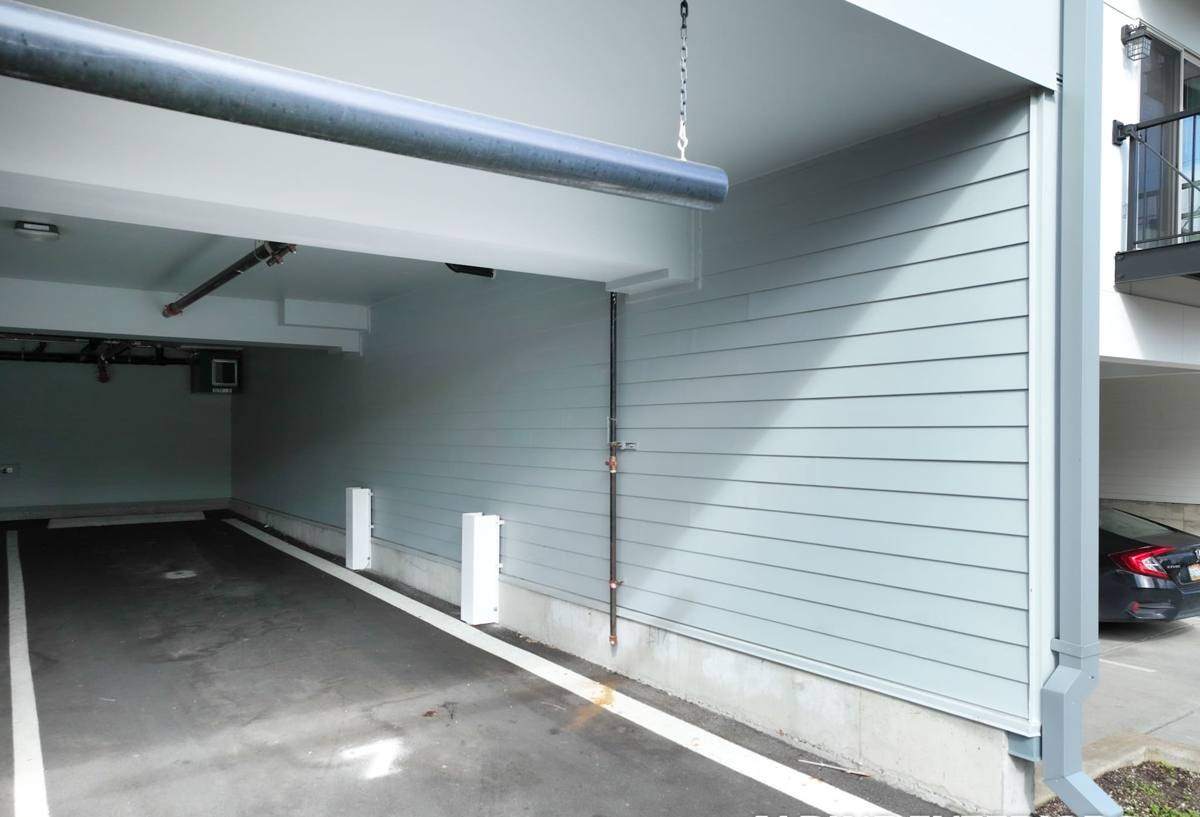
How to Tell Your Siding Has Reached the End of Its Life
Not every siding problem calls for full replacement — some are repairable. But certain signs mean the underlying material or installation has failed and patching won't hold:
- Soft or spongy spots when you press on the siding, especially near the bottom courses
- Persistent moss or algae staining that returns within weeks of cleaning
- Visible warping, buckling, or separation at panel seams and corners
- Paint that's peeling or bubbling rather than just fading
- Cracked caulk lines at trim and window edges that keep reopening
- A musty smell or visible staining on interior walls that back onto exterior siding
- Siding that's more than 20-25 years old and has never been fully inspected behind the surface
If two or three of these show up together, there's a good chance the problem is deeper than the visible surface — which is why a proper inspection looks past the siding itself.
What a Correct Siding Replacement Actually Involves
It's Not Just the Cladding
Replacing siding well means removing the old material down to the sheathing and actually looking at what's underneath before anything new goes up. In a climate like Blaine's, that inspection matters more than most homeowners expect. We're checking for soft or delaminated sheathing, compromised or missing weather-resistive barrier (house wrap), and rot at window and door openings — all common where the old siding has been letting moisture through slowly for years. Skipping this step and simply covering old problems with new siding just delays the failure; it doesn't fix it.
Flashing and Drainage Details That Get Skipped
Correct flashing at windows, doors, roof-to-wall transitions, and deck ledgers is what actually keeps wind-driven rain out — the siding itself is the last line of defense, not the first. A rainscreen or drainage gap behind the cladding gives any water that does get past the surface a way to drain and dry instead of sitting against the wall. These details are invisible once the job is done, which is exactly why they're where corners get cut on lower-quality installs.
Why We Install Only James Hardie Fiber Cement Here
Built for Wet, Salt-Exposed Climates
We standardized on James Hardie fiber cement because it holds up to exactly the conditions Dakota Creek homes deal with. It's non-combustible, doesn't absorb and swell with moisture the way wood-based products can, and Hardie's HZ5 product line is engineered specifically for the wetter, harsher climate zones the Pacific Northwest falls into. That's not a marketing detail — it affects the formulation and how the product performs over decades of damp exposure, not just one bad winter.
ColorPlus Finish vs. Field-Painted Products
Most of what causes early siding failure near the water isn't the base material — it's the finish. Hardie's ColorPlus technology is a factory-applied, baked-on finish that resists fading and holds up to salt air and UV significantly better than field-applied paint, and it comes with its own finish warranty. Field-painted siding depends entirely on paint quality, prep, and reapplication schedule; miss a repaint cycle in a moss-heavy, salt-air environment and you're patching failure years sooner than you should have to.
Our Siding Replacement Process, Start to Finish
- Inspection and estimate. We walk the exterior, check for soft spots and existing moisture damage, and give you an honest read on what the project actually involves before any tear-off starts.
- Tear-off. Old siding comes off cleanly, with care taken around windows, trim, and landscaping.
- Sheathing and moisture-barrier assessment. Any rotted sheathing gets replaced, and the weather-resistive barrier is repaired or replaced as needed — this is the step that gets skipped on rushed jobs.
- Flashing correction. Window, door, and transition flashing is installed or corrected to current best practice, not just re-covered.
- Hardie installation. Siding, trim, and accessories go up to manufacturer fastening and clearance specs, which matters both for performance and for keeping the product warranty intact.
- Detail and cleanup work. Caulking, touch-up, and site cleanup so the finished product looks as good up close as it does from the street.
- Final walkthrough. We go over the finished work with you directly before calling the job done.
Cost Factors for Dakota Creek Siding Replacement Projects
Every home is different, but the same handful of factors drive most of the cost variation we see on siding replacement jobs in this area:
| Factor | Why It Matters |
|---|---|
| Condition of sheathing underneath | Rot repair adds material and labor before new siding can even go up |
| Home size and number of stories | More surface area and taller walls both add material and labor time |
| Trim and detail complexity | Multiple gables, dormers, or accent details take more cutting and fitting time than a simple rectangular wall |
| Siding profile chosen | Lap, shingle, and panel styles differ in material and installation labor |
| Color and finish selection | ColorPlus factory finishes are priced into the product; custom field-painting is a separate cost |
| Access and site conditions | Tight lots, slopes, or landscaping close to the walls affect setup and labor time |
We walk through these factors during the estimate so you know what's driving the number, not just what the number is.
After the Install: Keeping Moss and Salt From Winning
Even the right siding still benefits from basic upkeep in this climate. A gentle rinse once or twice a year — never a high-pressure wash directly into seams — keeps moss and salt film from building up and dulling the ColorPlus finish. Keeping gutters clear reduces the amount of standing water and splashback hitting the lower courses, which is one of the more common causes of localized staining. And an occasional look at caulk lines around windows and trim catches small gaps before they become entry points. None of this is heavy maintenance — it's the difference between siding that still looks new at year fifteen and siding that looks tired at year five.
Why Local Dakota Creek Experience Matters
A crew that's replaced siding elsewhere in Whatcom County but hasn't worked this specific stretch near the water can still do competent work — but they're guessing at exposure levels that a local crew already knows firsthand. We've seen how far wind-driven rain travels up a wall near the creek, how long moss takes to reestablish on a shaded elevation here versus a sun-exposed one, and which flashing details actually get tested by a real winter storm off the water. That local pattern recognition shows up in the small decisions made on-site — not just the big ones written into a contract.
If your Dakota Creek home's siding is showing its age, we're glad to take a look and give you a straightforward, no-pressure assessment of what it actually needs. Use the form below to request a free estimate.