 Blaine Siding
 Birch Point's Waterfront Setting Changes What Siding Has to Do
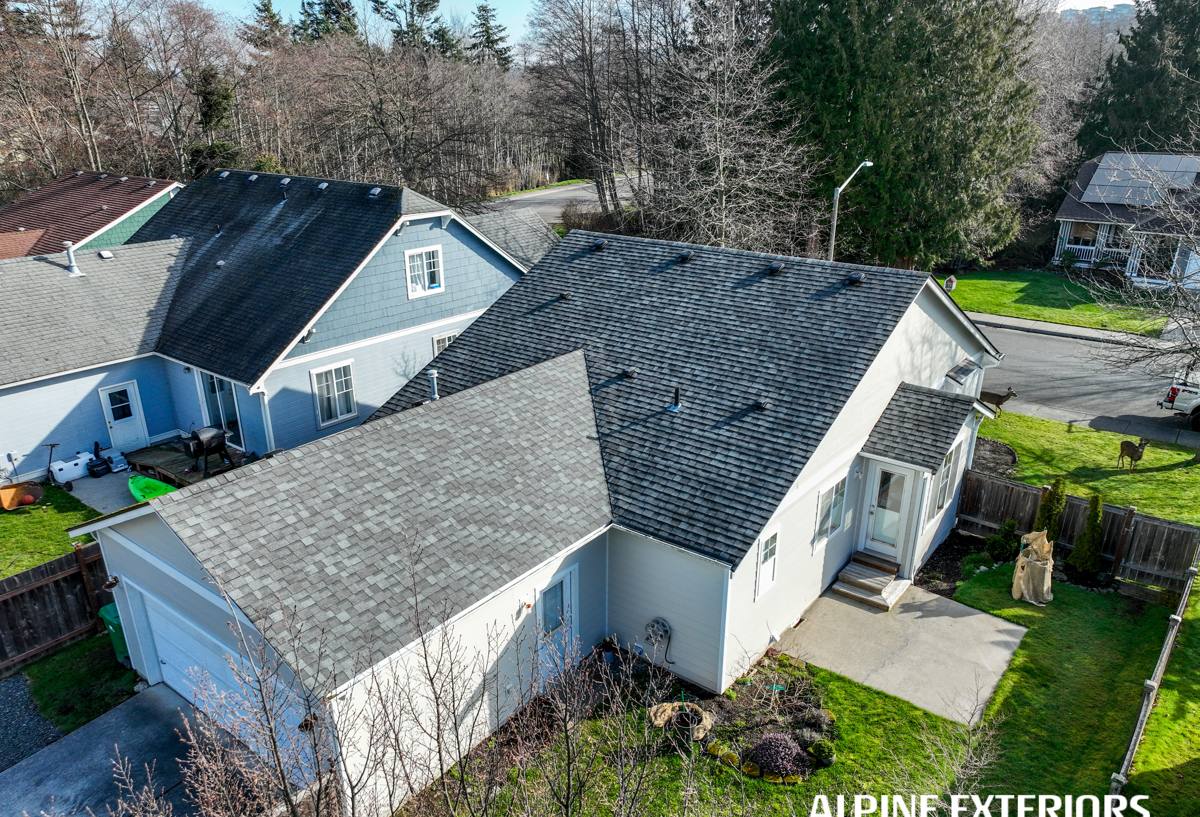
Birch Point sits out on the water in Whatcom County, and that location is exactly why siding here wears differently than siding fifteen miles inland. Homes on the point face a steady mix of salt-laden air, wind that carries rain sideways instead of straight down, and enough shade and moisture on the wooded side of the peninsula to keep moss and algae going for most of the year. None of that is exotic — it's just the reality of building on the Strait, and it means siding decisions that work fine in a dry inland subdivision can fall short out here within a few years.
We install siding on homes throughout the Blaine area, and the properties on Birch Point are consistently among the toughest test for exterior materials. If your siding is original to the house, or if it's a product that was never really engineered for marine exposure, this is the neighborhood where that gap shows up first — in cupping, in staining, in soft trim, and eventually in moisture getting past the cladding altogether.
What the Marine Climate Actually Does to a Home's Exterior
Salt Air and Corrosion
Airborne salt doesn't just affect metal railings and hardware — it accelerates the breakdown of paint films, caulking, and any siding material that relies on a surface coating to keep water out. Fasteners and trim pieces that aren't rated for coastal exposure corrode faster here than they would even a short distance inland, and once a fastener starts to fail, the panel it's holding starts to move.
Wind-Driven Rain
Because Birch Point is exposed on multiple sides, rain doesn't fall straight down against these walls — it gets pushed sideways and upward under eaves, around corners, and into any gap where flashing or caulking wasn't detailed correctly. This is a wind-driven-rain environment, not a gentle-drizzle environment, and siding systems and installation details both need to account for that.
Moss and Prolonged Dampness
On the more tree-covered and shaded stretches of the peninsula, siding can stay damp for days after a storm. That's exactly the condition moss and algae need to establish, and once a north-facing wall or a shaded lower course starts holding moisture instead of shedding it, the material behind the surface — sheathing, framing, trim — is at risk even if the visible siding still looks intact.
Signs a Birch Point Home Needs Replacement, Not Just Repair
Repair makes sense when the damage is isolated and the underlying wall assembly is still sound. Replacement becomes the honest recommendation once the damage is systemic — spread across multiple walls, tied to the material itself, or hiding moisture problems behind the surface. Watch for:
- Persistent moss or dark staining that returns within weeks of cleaning, especially on shaded or wind-exposed walls
- Panels or boards that feel soft, spongy, or visibly bowed when pressed
- Paint that's failing faster than a normal repaint cycle, especially peeling at seams and butt joints
- Visible gaps opening up at corners, trim, or window and door casings
- Corroded, popped, or backed-out fasteners along multiple courses
- A musty smell or soft drywall on interior walls that share an exterior wall with visible siding damage
- Siding that's original to a home built more than 20-25 years ago and was never a fiber cement or engineered product to begin with
What a Correct Siding Replacement Job Involves
Replacing siding on a waterfront property isn't just swapping old panels for new ones. Done right, it's a full rebuild of the water management system on the exterior of the house:
Tear-Off and Inspection
Full removal of the old siding lets us actually see the sheathing, framing, and existing weather-resistive barrier underneath — which is the only way to know what condition the wall is really in. Any rotted sheathing or framing gets addressed before a single new piece of siding goes up.
Weather-Resistive Barrier and Flashing
A new WRB is installed with correctly lapped seams, and flashing at windows, doors, and roof-to-wall intersections is detailed to shed wind-driven rain rather than trap it. This is the step that matters most in an exposure like Birch Point's, and it's the step that's easiest to shortcut if a crew is moving fast.
Drainage Gap (Rainscreen)
A furred-out air gap behind the siding lets any moisture that does get past the outer layer drain and dry out instead of sitting against the sheathing. On a coastal wall that takes regular wetting, this gap is what separates a wall that dries out between storms from one that stays chronically damp.
Fastening and Finish
Corrosion-resistant fasteners, correct nailing patterns, and factory-applied finishes reduce the number of failure points exposed to salt air compared to field-painted trim and standard fasteners.
Comparing Siding Options for a Birch Point Property
We only install James Hardie fiber cement siding, and the reasons come down to how different materials actually perform in this specific climate — not brand preference. Here's an honest comparison across the factors that matter most on the peninsula:
| Factor | James Hardie Fiber Cement | Vinyl | Cedar / Wood | LP SmartSide |
|---|---|---|---|---|
| Salt air / moisture resistance | Engineered for it; non-combustible, dimensionally stable | Doesn't rot, but expands/contracts and can warp in wind and heat cycling | Attractive but absorbs moisture; needs diligent upkeep near water | Engineered wood core is moisture-sensitive if edges or cuts aren't sealed |
| Moss / algae resistance | ColorPlus factory finish resists staining and holds up to cleaning | Can stain and chalk; color fades unevenly in coastal sun and salt | Prone to moss and mildew in shaded, damp conditions | Surface texture can hold moisture and organic growth if maintenance lapses |
| Wind-driven rain performance | Rigid panels, tight joints, engineered for high-exposure zones | Can rattle, bow, or blow off in sustained wind if not installed precisely | Performs adequately if maintained but demands more frequent recoating | Performance depends heavily on sealing every cut edge and seam |
| Maintenance | Occasional gentle rinse; factory finish holds color for years | Low maintenance but limited repair options once faded or cracked | Regular staining/sealing required, especially in a marine climate | Regular inspection of caulked seams and cut edges required |
| Fire resistance | Non-combustible | Combustible, can melt or deform near heat sources | Combustible | Combustible (engineered wood) |
Vinyl, cedar, and LP SmartSide all have legitimate uses in the right setting. What we've found, product by product, is that the trade-offs get harder to justify the closer a home sits to the water — and Birch Point is about as close to the water as houses in Whatcom County get.
Our Siding Replacement Process
- On-site inspection: We walk the exterior, check for moisture intrusion, evaluate sheathing condition where visible, and assess wind and sun exposure on each elevation.
- Written proposal: A clear scope covering material, HZ product line, color, trim details, and what's included in tear-off and disposal.
- Prep and tear-off: Old siding comes off, and we inspect what's underneath before covering it back up.
- Repairs: Any damaged sheathing or framing is replaced — this isn't an upsell, it's a precondition for the new siding to perform.
- WRB, flashing, and rainscreen installation: The water management layer goes in correctly, every time, regardless of whether it will ever be visible again.
- Siding installation: Panels or planks installed to manufacturer fastening specs, with attention to gaps, laps, and corner details suited to a high-wind, high-moisture wall.
- Trim, caulking, and final details: Sealed and finished to shed water, not just look finished.
- Final walk-through: We go over the finished work with you before calling the job done.
Why a Crew That Already Works Birch Point Matters
Exposure on this peninsula isn't uniform — a wall facing open water takes a different beating than a shaded wall tucked behind trees fifty feet away, and knowing which HZ product configuration and detailing fits which exposure is something you learn by working the area, not by reading a spec sheet once. Crews who haven't worked waterfront Whatcom County properties tend to treat every wall the same, which is how you end up with premature failures on the exposed sides of an otherwise decent install.
There's also the practical side: narrow or shared driveways, limited staging space on smaller waterfront lots, and permitting through the appropriate local jurisdiction all go smoother when a crew has already done it nearby. That familiarity doesn't show up on a quote, but it shows up in how smoothly the job runs and how the finished product performs five winters from now.
Caring for New Siding Through Blaine's Moss Season
Even the right material benefits from basic upkeep in this climate. A soft rinse once or twice a year removes salt residue and organic buildup before it has a chance to set in. Keeping gutters clear and trimming back vegetation that shades and dampens a wall helps that section dry out between storms instead of staying wet for weeks at a time. Avoid pressure washing directly at siding seams — it can force water behind properly installed flashing and caulking that would otherwise keep it out. None of this is high-maintenance; it's the same basic care that protects any exterior investment on the coast.
Get a Free, No-Pressure Estimate
If your Birch Point home's siding is showing moss, staining, soft spots, or just isn't holding up the way it used to, we're happy to take a look and give you an honest read on repair versus replacement — no pressure either way. Use the form below to request a free estimate.