 Blaine Siding
 Why Siding Repair Looks Different in the Lynden-Blaine Area
Homes around Lynden sit a few miles inland from Blaine and the Strait of Georgia, but they still get plenty of the same weather that hammers the rest of Whatcom County: long stretches of driving rain off the water, salt-laden air that travels farther inland than most homeowners expect, and a wet season that runs long enough to grow moss on anything that stays damp for more than a few days. That combination is hard on exterior siding in ways that don't show up overnight. Small problems — a cracked board, a failed caulk joint, a soft spot near a downspout — sit through months of saturation and drying cycles before they turn into something a homeowner actually notices.
Siding repair in this area isn't just about patching what's visible. It's about understanding why that spot failed in the first place, because the same conditions that caused it are still acting on the rest of the wall.
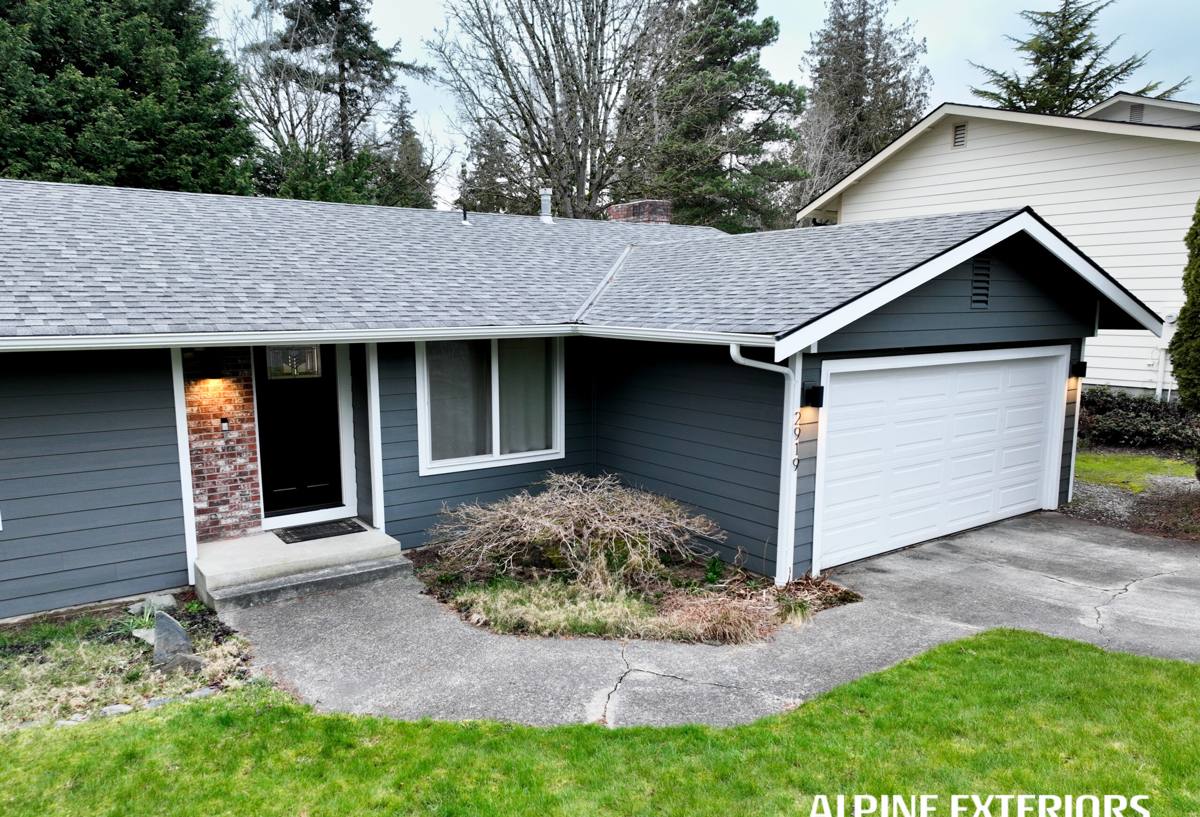
Common Siding Damage We See Around Lynden and Blaine
Moisture Intrusion
This is the big one in Whatcom County. Wind-driven rain finds its way behind siding through failed caulking, gaps at trim, or improperly lapped seams. Once water gets behind the siding, it doesn't dry out quickly in our climate — the result is soft sheathing, staining, or in older wood and composite products, visible swelling and delamination.
Moss and Algae Growth
Shaded north- and west-facing walls, common on lots with mature trees around Lynden, stay damp for extended stretches. Moss and algae take hold in the texture and seams of some siding materials, and beyond the cosmetic issue, sustained moisture retention against the siding surface accelerates whatever underlying damage is already there.
Cracking and Impact Damage
Wind-thrown branches, hail, and simple age-related brittleness cause cracked boards or panels. A crack that goes unaddressed becomes an entry point for water, which turns a cosmetic repair into a structural one.
Caulk and Sealant Failure
Caulk has a service life, and in a marine-influenced climate that life is shorter than most manufacturers' literature assumes. Failed caulking around windows, doors, and trim is one of the most common root causes behind siding repairs that otherwise look unrelated to caulk at all.
Fastener and Trim Issues
Repeated wet-dry cycling loosens fasteners over years, especially where the original installation used a nailing pattern or fastener type that wasn't matched to the material or the exposure.
What a Correct Siding Repair Actually Involves
A repair that only replaces the damaged piece and stops there is a repair that's likely to fail again. Doing it right means going a layer deeper:
- Removing enough surrounding material to inspect the sheathing and house wrap underneath — not just the piece that looks bad
- Confirming whether the damage is isolated or a symptom of a flashing or drainage plane problem elsewhere on the wall
- Drying out and, if needed, replacing any wet sheathing before new siding goes back on
- Re-flashing windows, doors, and penetrations that were part of the failure, not just re-caulking over the same gap
- Matching the replacement material's profile, reveal, and finish closely enough that the repair doesn't stand out
- Sealing and fastening to the manufacturer's actual specification, not just "close enough"
Skipping the inspection step is the single most common reason a siding repair has to be redone within a couple of years. If the moisture source isn't found and corrected, a new piece of siding is just a new surface for the same problem to attack.
Repair or Replace? How We Make the Call
Not every damaged wall needs full replacement, and not every small crack should just get patched and ignored. The right call depends on a few honest factors:
| Factor | Leans Toward Repair | Leans Toward Replacement |
|---|---|---|
| Extent of damage | Isolated to one or two boards/panels | Spread across multiple walls or elevations |
| Sheathing condition | Dry, sound wood underneath | Soft, stained, or rotted sheathing found |
| Age of existing siding | Well within expected service life | Nearing or past the material's practical lifespan |
| Material match | Discontinued but replaceable in-kind | No longer available or mismatched appearance |
| Root cause | Single fixable source (caulk, flashing) | Systemic drainage or installation issue |
We'll tell you plainly which category your home falls into. There's no benefit to us in talking a homeowner into a full replacement when a targeted repair will genuinely hold up — and no benefit in patching over a problem that's going to come back.
Why We Repair and Replace with James Hardie Fiber Cement Only
We install and repair exclusively with James Hardie fiber cement siding. We don't work in vinyl, LP SmartSide, or other composite and wood-based products, and that standard applies to repairs, not just new installs. There are a few reasons that matters here specifically:
- Non-combustible material — fiber cement doesn't feed a fire the way some wood-based composites can, a meaningful consideration as wildfire smoke and dry-season risk have become more relevant even in Western Washington.
- Moisture behavior — fiber cement doesn't swell, delaminate, or absorb water the way OSB-core composite products can when a seal fails, which matters directly in a climate that keeps siding wet for long stretches.
- Factory-cured ColorPlus finish — a finish baked on at the factory resists the fading and moss-friendly surface breakdown that field-applied paint is more prone to over time.
- Climate-engineered product lines — Hardie's HZ10 line is formulated specifically for cold, wet, freeze-thaw climates, which is a closer match to Whatcom County conditions than a one-size-fits-all product.
When we're repairing a home that already has Hardie siding, matching the existing product is straightforward. When we're repairing a home with a different existing siding material and the damage is extensive enough to justify replacement rather than patching, we'll walk you through why we'd recommend transitioning to Hardie rather than repairing in-kind — and we'll be upfront if a smaller, targeted repair in the existing material is genuinely the more sensible near-term option instead.
Our Repair Process for Lynden-Area Homes
- On-site inspection. We look at the damaged area and the surrounding wall, not just the spot you called about.
- Root-cause diagnosis. We identify whether the damage is isolated or points to a flashing, drainage, or installation issue.
- Honest scope and estimate. You get a clear explanation of what's actually needed and why, with repair and replacement options laid out where both are reasonable.
- Removal and inspection of sheathing. Damaged siding comes off, and we check what's underneath before anything new goes up.
- Correction of the underlying cause. Re-flashing, re-sealing, or sheathing repair happens before new siding is installed, not after.
- Installation to manufacturer spec. Fastening, spacing, and sealing follow James Hardie's actual installation requirements.
- Final walk-through. We confirm the repair blends with the surrounding siding and that you understand what was done and why.
Signs Lynden Homeowners Shouldn't Ignore
Between now and your estimate, a quick visual check can help you flag what to mention:
- Soft or spongy spots when you press gently on the siding surface
- Visible cracking, warping, or bulging in any panel or board
- Persistent moss or dark streaking, especially on shaded or north-facing walls
- Peeling paint or bubbling finish, which often signals moisture trapped underneath
- Gaps or cracked caulk around windows, doors, and corner trim
- Staining on interior walls near exterior corners, which can indicate siding-related water intrusion well before exterior damage is obvious
Why Hiring a Crew That Already Works Lynden and Blaine Matters
A repair crew that works this specific area regularly has already seen how the local combination of salt air, sustained rain, and shaded, moss-prone lots plays out on real houses — not just in general climate guidance. That translates into faster, more accurate diagnosis: knowing which wall orientations tend to fail first, which original installation shortcuts show up again and again in homes built during certain periods, and what a correctly sealed repair actually needs to hold up through another Whatcom County winter. It also means straightforward local logistics — permitting familiarity, material sourcing, and a crew that isn't learning the region's weather behavior on your home for the first time.
If you're dealing with a damaged section of siding, a soft spot you've noticed, or just want an honest read on whether repair or replacement makes more sense for your home, we're happy to take a look. The estimate is free, there's no pressure attached to it, and you'll get a straight answer about what your siding actually needs.