 Blaine Siding
 Siding Built for California Creek's Marine Climate
California Creek sits close enough to Semiahmoo Bay and Drayton Harbor that salt-laden air is simply part of daily life here. Add Whatcom County's long, wet winters and the moss and algae growth that comes with months of shade and moisture, and you've got a climate that is genuinely hard on exterior building materials. Siding here doesn't just need to look good on installation day — it needs to hold up through decades of salt exposure, driving wind-driven rain, and the kind of persistent dampness that never quite fully dries out between storms.
We install siding specifically for homes in this environment. That means product selection, water management details, and fastening choices are all made with California Creek's actual conditions in mind, not a generic Pacific Northwest average.
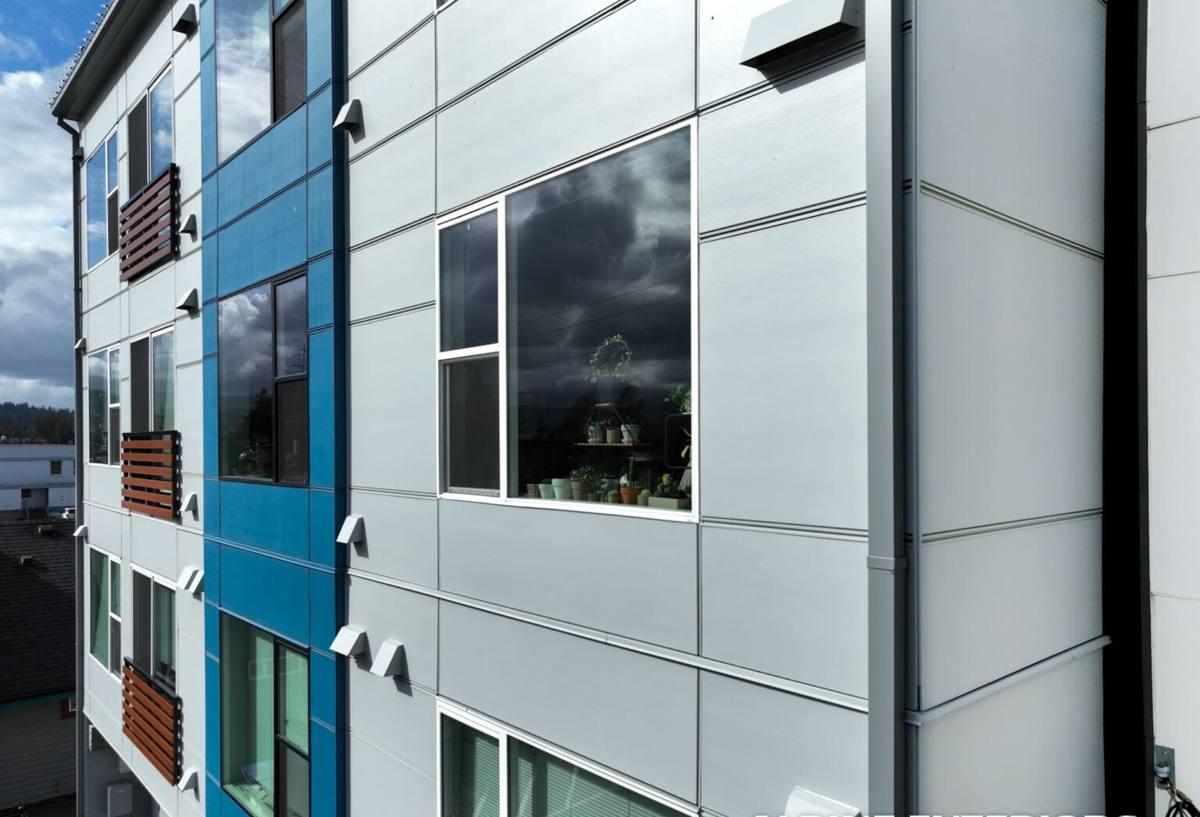
What This Climate Does to Siding Over Time
Salt Air and Corrosion
Proximity to tidal water means airborne salt settles on every exterior surface, including siding, trim, and fasteners. Salt accelerates corrosion in exposed metal, and it can also contribute to premature breakdown of coatings and finishes that weren't engineered to resist it. Over years, homes closer to the water tend to show wear faster than homes just a few miles inland — faded paint, chalky surfaces, and fastener corrosion bleeding through the finish are common complaints we hear from homeowners in this part of Blaine.
Driving Rain and Moisture Intrusion
Storms coming off the Strait of Georgia don't just drop rain straight down — wind pushes it sideways, into seams, laps, and penetrations that a calmer climate would never stress-test. Siding systems here need properly lapped joints, correctly flashed windows and doors, and a drainage plane behind the cladding that lets any moisture that does get past the surface find its way back out instead of soaking into sheathing.
Moss, Algae, and Prolonged Dampness
Tree cover and short winter days mean many exterior walls in California Creek stay damp and shaded for extended stretches. That's exactly the environment moss and algae need to take hold. Porous or wood-based siding gives these organisms something to grip and feed on; a dense, factory-finished fiber cement surface gives them far less to work with, though it isn't a total substitute for good design and airflow.
Why We Only Install James Hardie Fiber Cement
Given what this climate does to siding, we made a deliberate decision to stop installing vinyl, LP SmartSide, cedar, primed spruce, and other fiber cement brands like Cemplank or Allura. Each of those products has legitimate uses somewhere, but for a marine, high-moisture, high-wind environment like California Creek, we don't think they hold up as well as James Hardie's fiber cement system over the long run:
- Non-combustible core: Hardie's fiber cement doesn't feed a fire the way wood-based products can, which matters as regional wildfire risk and insurance scrutiny both increase.
- Dimensionally stable: Fiber cement doesn't swell, cup, or rot the way wood and wood-composite sidings can when they stay wet for long stretches.
- ColorPlus factory finish: A baked-on finish applied under controlled conditions resists fading and chipping better than field-applied paint, which matters when salt air is already working against the coating.
- Climate-engineered HZ5 formulation: Hardie's HZ product line is engineered for wetter, harsher climates like ours, rather than a one-size-fits-all national formulation.
- Strong transferable warranty: A meaningful, transferable warranty backs the product when it's installed to Hardie's published specifications — important for resale value in a market like Blaine.
We're not going to claim other products are worthless — vinyl is inexpensive and low-maintenance in mild climates, and cedar has real aesthetic appeal. But for the specific combination of salt exposure, wind-driven rain, and moss pressure that California Creek homes face, we've concluded Hardie fiber cement is the more durable, lower-maintenance long-term choice, and it's the only product we put our name behind.
What a Correct Installation Actually Involves
Fiber cement siding is only as good as the installation behind it. Most of the siding failures we get called out to inspect aren't a product problem — they're a workmanship problem. A correct James Hardie installation in this climate includes:
Water Management Before the Siding Goes On
- A continuous weather-resistant barrier installed over the sheathing, lapped correctly from bottom to top
- Properly integrated window and door flashing so water is directed out and away from the wall assembly, not behind it
- Rainscreen or vented furring strips where conditions call for it, giving the wall an air gap to dry out between storms
- Correct kick-out flashing at roof-to-wall intersections, a detail that's frequently missed and a common source of hidden rot
Installation to Manufacturer Specification
- Proper nail placement and fastener spacing — over-driven or under-driven fasteners are one of the most common causes of premature siding failure
- Correct minimum clearances from grade, roof lines, decks, and patios so the siding never sits in standing water or gets buried by landscaping over time
- Field-cut edges properly sealed and painted, since factory ColorPlus coating doesn't extend to a cut you make on site
- Caulking used only where Hardie's installation instructions call for it — not as a substitute for proper flashing
Our Process for California Creek Homes
- On-site assessment: We walk the property, check current siding and water damage where accessible, and look at sun exposure, tree cover, and wind exposure that are specific to the lot.
- Product and profile selection: We help you choose between lap siding, panel systems, and trim profiles based on your home's style and the specific exposure of each elevation.
- Water management plan: Before any siding is discussed further, we plan out flashing, drainage plane, and ventilation details for every wall — this is where long-term performance is actually decided.
- Installation: Full tear-off of failing material where needed, correct water management installed first, then Hardie siding installed to manufacturer specification.
- Final walkthrough: We review the completed work with you, including care and maintenance expectations specific to a marine climate.
Comparing Siding Options for a Marine Climate
| Factor | Vinyl | Cedar / Wood | James Hardie Fiber Cement |
|---|---|---|---|
| Salt air resistance | Moderate — can become brittle over time | Poor without diligent maintenance | Strong, engineered for wet climates |
| Moisture / rot resistance | Doesn't rot, but can trap moisture behind it | Prone to rot if finish isn't maintained | Non-combustible, dimensionally stable |
| Moss / algae resistance | Fair, smooth surface | Poor, porous surface | Good, dense factory finish |
| Finish longevity | Fades, doesn't repaint well | Requires repainting/staining every few years | Factory ColorPlus finish, long fade resistance |
| Fire performance | Can melt/deform | Combustible | Non-combustible core |
| Typical warranty | Varies widely by manufacturer | Limited, finish-dependent | Strong transferable manufacturer warranty when installed to spec |
Cost Factors for a California Creek Project
Every home is different, but a few factors consistently drive cost on siding installation in this area:
- Removal and disposal of existing siding, especially if hidden moisture damage requires sheathing repair once the old material comes off
- Wall complexity — number of stories, dormers, corners, and trim details all add labor time
- Water management upgrades such as adding a rainscreen or replacing inadequate flashing discovered during tear-off
- Siding profile and trim selection — lap width, panel systems, and trim board complexity all affect material and labor cost
- Access and site conditions — tree cover, slope, and staging space around the home
We give you a real number after seeing the specific home, not a guess based on square footage alone — hidden moisture damage under old siding is common enough in this climate that we don't want to promise a price before we've actually looked.
A Practical Checklist Before You Sign a Siding Contract
- Does the contractor specify a water management plan, or just "install siding"?
- Is fastener spacing and placement called out in the written scope, matching manufacturer specification?
- Are minimum clearances from grade, roofline, and decks addressed in writing?
- Does the quote name the specific Hardie product line and profile, not just "fiber cement"?
- Is the manufacturer's transferable warranty explained, including what voids it?
- Has the contractor worked in this specific area before, and do they understand the salt air and moss exposure here?
Why Local Experience in California Creek Matters
A crew that mainly works inland or in drier parts of Whatcom County can install siding correctly by the book and still miss details that matter specifically near the water — where wind-driven rain hits a wall, how much shade a north-facing elevation gets through winter, or where kick-out flashing tends to get skipped on homes near roof-to-wall transitions common in this neighborhood's housing stock. Working in Blaine and the surrounding shoreline communities regularly means those details aren't guesswork; they're part of every estimate and every install plan we write.
If you're weighing a full re-side, a repair after storm damage, or you're just not sure whether your current siding is holding up the way it should, we're happy to take a look. Reach out for a free, no-pressure estimate — we'll walk the property with you and tell you honestly what we see.