 Blaine Siding
 Roof Repair in Sandy Point: What the Climate Demands
Sandy Point sits close enough to the water that its roofs live a different life than roofs a few miles inland in Blaine or elsewhere in Whatcom County. Salt-laden air, wind-driven rain off the Strait, and a moss season that can stretch across most of the wet months all put steady pressure on roofing materials and the details that hold a roof together. A repair here isn't just about patching a leak — it's about understanding why that spot failed in the first place and making sure the fix holds up to the same conditions that caused the problem.
We work on Sandy Point roofs regularly, and the failures we see tend to cluster around a handful of causes: salt-accelerated corrosion on fasteners and flashing, moss and moisture trapped in shaded or low-slope areas, and wind-driven rain finding its way past aging flashing or worn underlayment. None of that is unusual for this stretch of coastline — it's just what a roof out here has to deal with, and a repair that ignores it tends to fail again within a season or two.
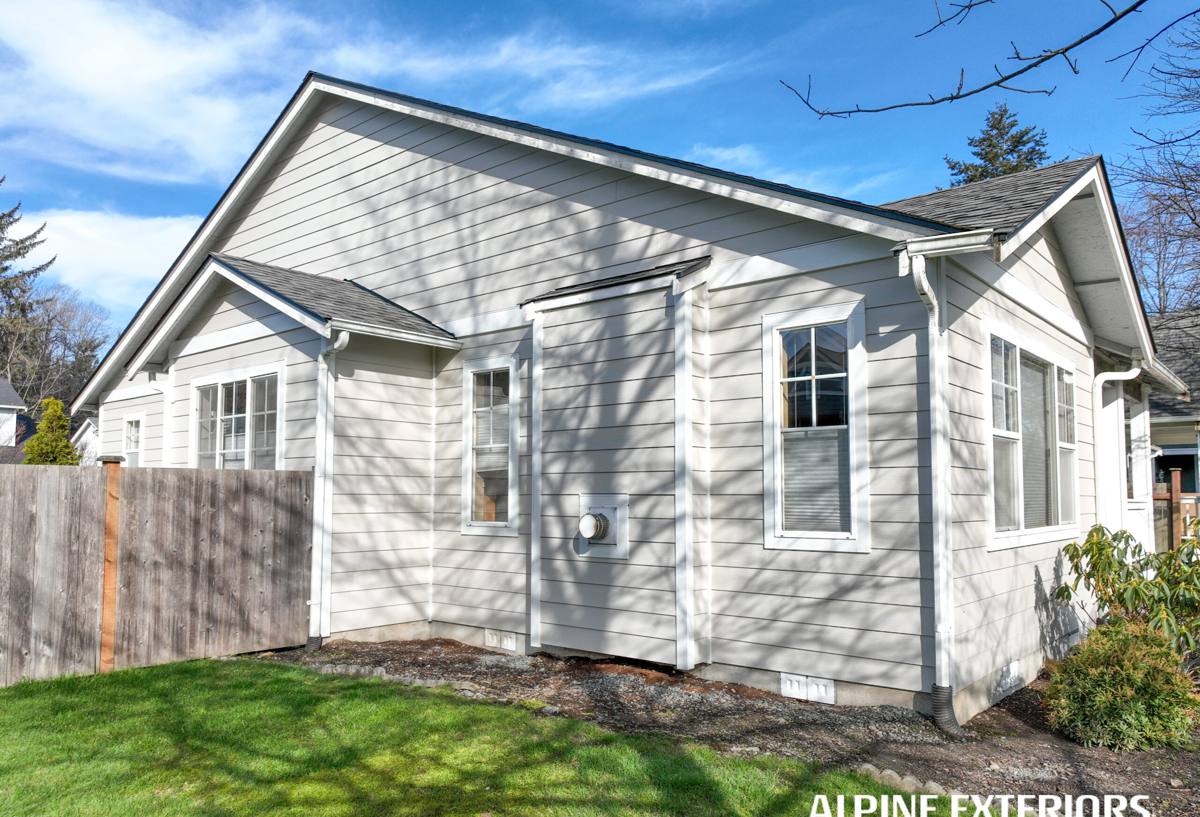
Why Sandy Point Roofs Wear Differently Than Roofs Inland
Salt Air and Metal Fatigue
Airborne salt accelerates corrosion on exposed metal — flashing, fasteners, gutter hardware, and vent caps in particular. A nail or flashing seam that would last decades in a drier, inland part of Whatcom County can start showing rust and pinholing years earlier this close to the water. Once metal flashing corrodes, it stops shedding water the way it's supposed to, and that's when small leaks start.
Wind-Driven Rain
Blaine gets its share of storms pushing rain sideways off the water, and Sandy Point catches that exposure directly. Wind-driven rain doesn't just fall on a roof — it gets pushed up and under shingle edges, into valleys, and around anything that penetrates the roof deck (vents, chimneys, skylights). Roofing details that would be fine in calmer conditions can leak here if they weren't installed with that wind exposure in mind.
Common Roof Repair Issues We See in Sandy Point Homes
Moss and Algae Growth
Shaded roof planes and north-facing slopes hold moisture longer, and moss takes hold in those spots first. Moss isn't just a cosmetic problem — as it grows, it lifts shingle edges, holds standing moisture against the roofing material, and slowly works its way under the surface. Left long enough, it can rot decking and undercut flashing. A roof repair on a moss-affected section usually means removing the growth carefully, replacing any compromised material underneath, and addressing why that area stays wet in the first place — often a ventilation or shading issue that a patch alone won't fix.
Flashing, Valleys, and Penetrations
Most of the leaks we trace back to a cause, rather than just a worn shingle, come from flashing: around chimneys, at roof valleys, where a vent pipe comes through, or where a lower roof meets a wall. These are the places where two different materials or planes meet, and they're the first spots to fail when a roof is exposed to salt air and wind-driven rain. A correct repair replaces the flashing detail itself, not just the shingles around it.
Granule Loss and Wear on Southern and Western Exposures
Sun and weather exposure on south- and west-facing roof planes wear down shingle granules faster over time, thinning the material's protection well before the rest of the roof shows its age. This kind of wear is gradual, so it often goes unnoticed until it's showing up as a soft spot or a leak during a heavy rain.
What a Correct Roof Repair Actually Involves
Matching Materials, Not Just Patching
A repair that just covers a leak with new material on top of the old is a short-term fix. Doing it correctly means matching the existing roofing material as closely as possible — in type, weight, and where reasonable, color and age — so the repaired section performs the same as the rest of the roof and doesn't create a new weak point at the seam between old and new.
Checking Ventilation and Decking, Not Just the Surface
A leak or moss patch is often a symptom, not the whole problem. Before we close up a repair, we check the roof deck underneath for soft spots or rot, and we look at attic ventilation in that area. Poor ventilation traps moisture against the underside of the roof, which speeds up decking rot and can cause moss and mildew to come back in the same spot even after a clean repair.
Fastening and Sealing for Wind and Salt Exposure
Given the wind-driven rain and salt air Sandy Point deals with, we pay close attention to fastener type and placement, and to how flashing is sealed and lapped. Using the wrong fastener material, or sealing a seam that should have been mechanically lapped instead, is a common shortcut that fails early in this kind of exposure.
Repair or Replace? How We Help You Decide
Not every roof problem calls for a full replacement, and not every leak can be permanently solved with a repair. We assess the roof honestly and walk you through the trade-offs rather than defaulting to the bigger job.
| Factor | Favors Repair | Favors Replacement |
|---|---|---|
| Age of roof | Roof is within its expected service life | Roof is near or past its expected service life |
| Extent of damage | Isolated to one or two areas | Recurring leaks or wear spread across multiple planes |
| Decking condition | Solid, no rot found during inspection | Soft spots or rot found in more than one area |
| Moss/algae history | First occurrence, addressed with cleaning and repair | Chronic moss return despite past cleaning and repairs |
| Material availability | Matching material still available | Original material discontinued or badly mismatched |
When the honest answer is repair, we tell you that. When a roof has enough age and wear that repeated repairs would cost more over time than a replacement, we tell you that too — with the reasoning laid out, not just a recommendation.
Our Roof Repair Process for Sandy Point Homes
- Inspection: We look at the roof surface, flashing details, valleys, and where possible, the attic side, to find the actual source of a leak or damaged area — not just where water is showing up inside.
- Written assessment and estimate: You get a clear explanation of what we found, what needs to be done, and why — with a straightforward price before any work starts.
- Repair: We remove and replace only what's compromised, matching materials and details to the rest of the roof, and correcting the underlying cause where one is found (ventilation, flashing design, drainage).
- Cleanup and check: Debris is cleared, gutters and downspouts near the repair are checked for clogging, and we confirm the fix is watertight before we consider the job done.
Why a Crew That Already Works Sandy Point Matters
A roofer who mostly works inland, away from salt air and direct wind exposure, may not think twice about a fastener choice or a flashing detail that would be perfectly fine there but won't hold up at Sandy Point. Knowing this stretch of Blaine's coastline — how moss season plays out here, how wind-driven rain moves across a roof, which flashing spots fail first in salt air — means fewer surprises and repairs that are built for the conditions they actually have to survive, not generic conditions.
It also means we're not guessing at timing. Moss removal and roof repair work go better in drier stretches of the year, and knowing the pattern of Whatcom County's wet season helps us plan repairs before a small leak turns into a bigger problem during the heaviest rain months.
Roof Repair Checklist for Sandy Point Homeowners
Signs it's worth having a roof looked at, before a small issue becomes water damage inside the home:
- Visible moss or dark streaking on any roof plane, especially shaded or north-facing sections
- Granules collecting in gutters or at the base of downspouts
- Rust staining or visibly corroded flashing around chimneys, vents, or valleys
- Curling, cracked, or lifted shingle edges, particularly after a windy storm
- Water stains on ceilings or in the attic, even faint or intermittent ones
- Daylight visible through the roof deck when viewed from inside the attic
- Gutters or downspouts that overflow or back up during heavy rain
If any of these look familiar, it's worth getting a roof looked at before the next storm season rather than after.
Get a Free, No-Pressure Estimate
If you're dealing with a leak, moss buildup, or storm damage on a Sandy Point roof, we're happy to take a look and give you a straight assessment — what's actually going on, what it will take to fix it correctly, and a clear price. Use the form below to request a free estimate; there's no pressure and no obligation.