 Blaine Siding
 Siding That Has to Work at Sandy Point, Not Just Look Good
Sandy Point sits right up against the water on the north end of Whatcom County, close enough to the Strait of Georgia and the Canadian border that the weather here plays by different rules than it does even a few miles inland. Homes in this community take a steady diet of salt-laden air, wind-driven rain off the water, and a moss season that runs longer than most homeowners expect. Siding that would hold up fine in a sheltered Bellingham subdivision can start showing problems years early out here if it isn't matched to the exposure.
We install James Hardie fiber cement siding, and we do it as a crew that already works this stretch of Whatcom County. This page is about what that actually means for a Sandy Point home — not a general pitch for fiber cement siding, but what correct siding work looks like on a house that sits in salt air and takes rain sideways for a good part of the year.
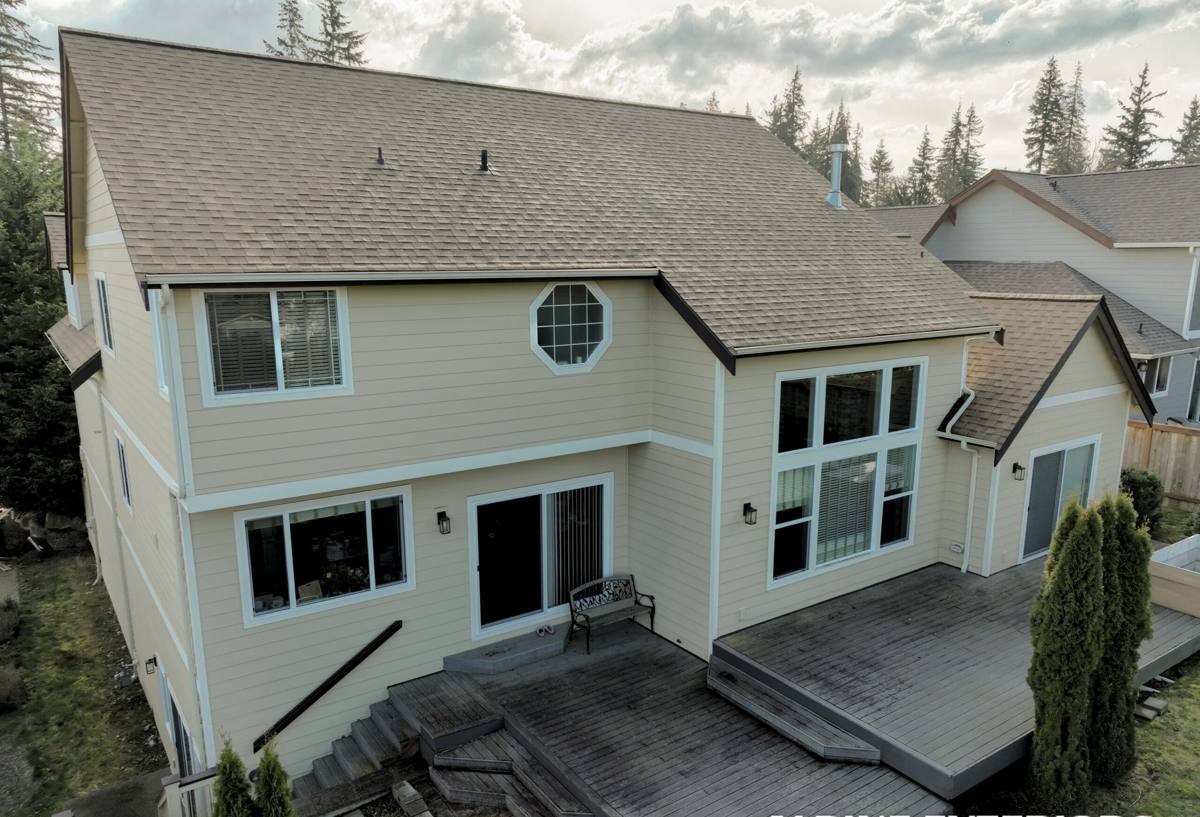
What Sandy Point's Climate Does to Exterior Walls
Salt Air and Corrosion
Waterfront and near-waterfront homes deal with airborne salt that settles on every exterior surface, not just the siding. Over years, that salt exposure accelerates corrosion on fasteners, flashing, and trim if the wrong materials or installation methods are used. It also means caulking and paint film get put to a harder test than they would a few miles inland.
Driving, Wind-Driven Rain
Open water exposure means rain rarely falls straight down here — it comes in at an angle, driven by wind off the bay. That changes how water behaves at every horizontal joint, window, and butt seam on the wall. Siding systems and flashing details that rely on gravity alone to shed water are more likely to let moisture find its way behind the cladding.
Moss, Mildew, and a Long Damp Season
Whatcom County's marine climate keeps humidity high for much of the year, and shaded, north-facing walls at Sandy Point stay damp longer after a storm than walls in drier parts of the county. That's the environment moss and mildew like best. Siding that traps moisture against the substrate, or that has seams and laps prone to holding water, gives moss and mildew exactly the foothold they need.
Why We Standardized on James Hardie Fiber Cement
We only install James Hardie products. Fiber cement is a cement-based composite — not vinyl, not wood, not an engineered wood product — and that composition matters directly for a house like the ones at Sandy Point:
- It's non-combustible, which matters for insurance and peace of mind regardless of location.
- It doesn't rot, delaminate, or feed mold the way wood-based sidings can when they take on repeated moisture.
- Hardie's ColorPlus factory-applied finish is baked on and warranted separately from the substrate, which holds up better against salt-air fading and chalking than field-applied paint.
- Hardie engineers specific product lines (HZ5) for harsher, wetter climate zones, which the Pacific Northwest coastal belt qualifies as.
- It carries a strong transferable warranty, which matters to future buyers of waterfront property as much as current owners.
None of that is a guarantee by itself — the installation has to be correct for any of it to hold up. That's the part we control, and it's where most siding failures at Sandy Point actually start.
What a Correct Fiber Cement Job Looks Like Here
Water Management Comes First
Before a single board goes up, the wall needs a proper weather-resistive barrier and rainscreen or drainage plane appropriate to the exposure. On a house taking driving rain off the water, we don't treat the siding itself as the only line of defense — the assembly behind it has to manage bulk water and let the wall dry.
Fastening and Flashing for Salt Exposure
We use fasteners and flashing rated for the corrosion exposure at Sandy Point, not generic hardware. Every horizontal joint, window head, and penetration gets flashed to shed water outward, because a wind-driven rain event will find any shortcut in that detailing eventually.
Clearances and Gaps Set to Spec
Hardie's install specifications call for specific clearances from grade, roofing, decks, and other siding terminations, plus gaps at joints for expansion. Skipping these is one of the most common ways fiber cement installations fail early — wicking moisture up from below or trapping it at a joint that was caulked shut instead of left to drain.
Caulk and Sealant Where It Belongs — and Only Where It Belongs
Modern fiber cement systems are designed to shed water through geometry and flashing, with sealant used at specific transitions, not as a substitute for correct flashing. Over-caulking a fiber cement installation can trap moisture behind the board instead of letting it escape, which is worse than leaving a designed gap alone.
Comparing Approaches: What Changes at a Waterfront Property
| Factor | Typical Inland Whatcom County Home | Sandy Point / Waterfront Exposure |
|---|---|---|
| Fastener and flashing material | Standard corrosion-resistant hardware usually adequate | Higher-grade corrosion resistance recommended for salt air |
| Rain exposure direction | Mostly vertical rainfall | Frequent wind-driven, angled rain against walls |
| Moss/mildew risk on shaded walls | Present, moderate | Elevated — longer damp periods, more consistent humidity |
| Hardie product line fit | Standard HZ product often sufficient | HZ5 climate-engineered line typically the better match |
| Inspection/maintenance interval | Standard periodic check | Slightly more frequent checks at joints, flashing, and grade clearance recommended |
Our Process for a Sandy Point Job
- On-site assessment — we look at wall exposure, existing moisture damage, grade clearances, and how the house sits relative to prevailing wind and water.
- Product and detail plan — we specify the Hardie line, fastener grade, and flashing details matched to that exposure, not a one-size-fits-all spec.
- Tear-off and substrate check — old siding comes off and we inspect sheathing for hidden moisture damage before anything new goes up, which matters more on a house that's been absorbing salt air and driving rain for years.
- Correct installation — weather barrier, flashing, fastening, and clearances installed to Hardie spec and to the realities of the site.
- Final walkthrough — we go over what was done and what regular upkeep looks like for a home in this exposure.
Why Hiring a Crew That Already Works Sandy Point Matters
A siding crew that mostly works inland jobs can install fiber cement correctly by the book and still miss the details that matter specifically for a waterfront property — the extra flashing attention at a wall that takes rain sideways, the fastener grade that holds up against salt air over decades, the clearance details that keep moisture from wicking up from a damp foundation area near the water. We work this part of Whatcom County regularly, so those aren't judgment calls we're making for the first time on your house.
That local familiarity also means we're not guessing at how a Sandy Point property behaves through a full year — we've seen how these walls dry out, where moss tends to establish first, and which details on older installations tend to fail early. That shapes how we spec and install new siding rather than just following a generic checklist.
Signs Existing Siding at Sandy Point Needs Attention
- Moss or dark streaking concentrated on shaded or north-facing walls
- Soft spots, bubbling, or visible swelling, especially near the bottom courses or window sills
- Caulk that's cracked, shrunk, or pulled away at joints and trim
- Paint or finish that's chalking, peeling, or fading unevenly, particularly on water-facing elevations
- Visible rust staining running from fasteners or flashing
- Gaps or clearance issues where siding meets grade, decks, or roofing
Any one of these is worth a look before it turns into sheathing damage, which costs a lot more to fix than the siding itself.
What This Costs to Get Right
Every Sandy Point job is different depending on square footage, current wall condition, and how much existing siding and any hidden substrate damage needs to be addressed before new siding goes up. We won't quote a number without seeing the house, but we can tell you that skipping proper water management or using generic hardware to save money up front is the most common reason siding on waterfront homes fails ahead of schedule — the labor to do it right the first time costs far less than redoing it in ten years.
If you're planning a siding project at Sandy Point, we're happy to walk the house, look at what your walls are dealing with, and give you a straight assessment of what it needs. Reach out for a free, no-pressure estimate using the form below.