 Blaine Siding
 Siding Replacement for Peace Arch Homes
The Peace Arch area sits right at the international border in Blaine, close enough to the water and to the park that shares its name that homes here take on a specific mix of exposure most inland Whatcom County properties never see. It's a small, residential corner of a small border town, but the siding on these houses works harder than siding just a few miles inland — more salt in the air, more wind-driven rain coming straight off the water, and a moss season that barely takes a break most years. We work in Peace Arch regularly, and siding replacement here gets planned around that exposure from the start rather than treated like a job in a more sheltered part of the county.
This page is specifically about siding replacement — tearing off failing or aging siding and installing new material in its place, done correctly for this location. We install James Hardie fiber cement exclusively, and for a property in Peace Arch, that's not a marketing position. It's the product line we've found actually holds up to what this spot throws at a house year after year.
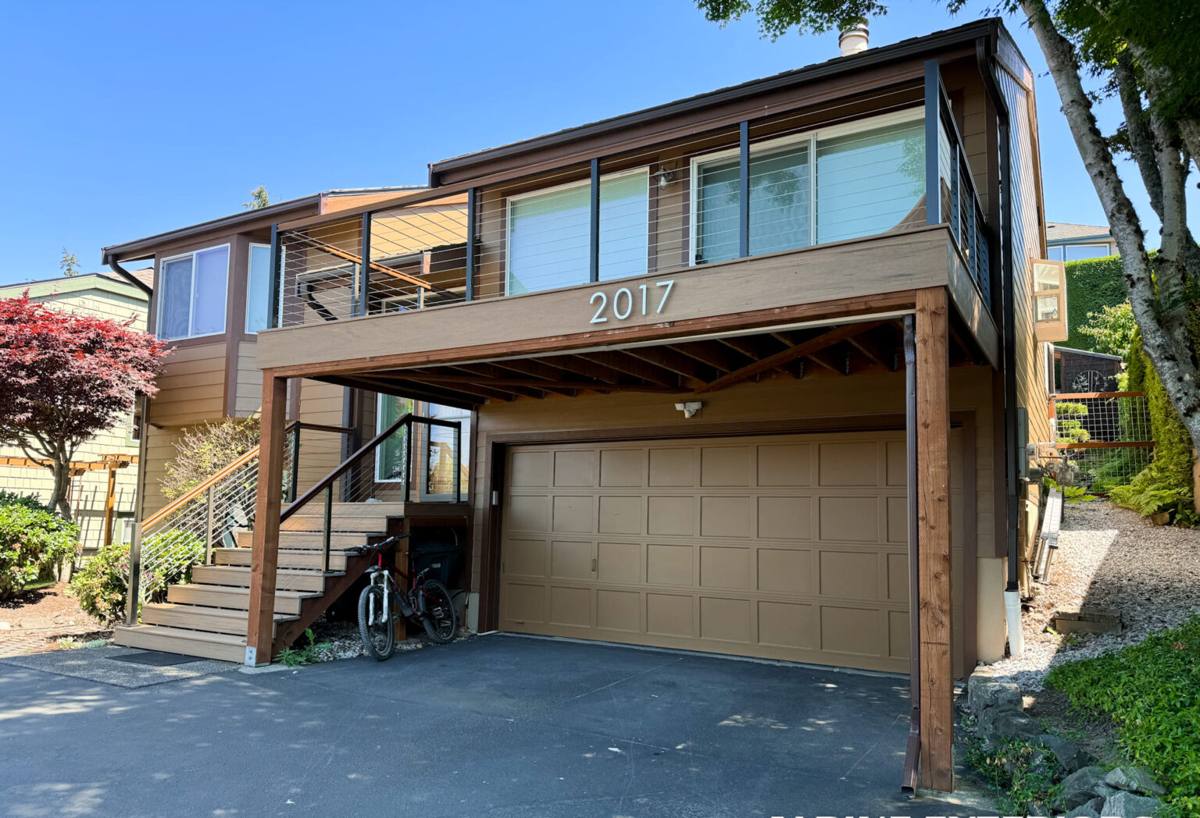
What Peace Arch's Exposure Does to Siding
Salt Air Off the Water
Being this close to the border and the bay means a steady dose of salt-laden air, even on days that feel calm. Salt is hard on fasteners, flashing, and any exposed metal trim, and it breaks down lower-grade paints and coatings faster than a dry inland climate would. On siding specifically, that means field-applied finishes tend to chalk and fade sooner here, and any small gap in a coating becomes the spot where corrosion gets started.
Driving, Wind-Driven Rain
Storms in this part of Whatcom County rarely just fall straight down. Wind pushes rain sideways into wall assemblies, and a home in Peace Arch's exposed position takes that sideways load more often and with more force than a property tucked further inland. Siding that isn't lapped, flashed, and sealed correctly gives wind-driven rain a way in at seams, corners, and butt joints — problems that don't show up on the surface right away, but keep working behind the wall until they do.
A Long Moss Season
Mild temperatures combined with near-constant moisture give moss and mildew a long growing season on shaded and north-facing walls, and Peace Arch's tree cover and closeness to the water only stretch that season out further. Once moss takes hold on a porous or aging surface, it holds moisture directly against the wall, which is a slow but real path to hidden rot if it's left alone long enough.
Open Wind Exposure Near the Border
Low-lying, open land near the border and the water leaves Peace Arch homes with less wind shelter than properties set back in more developed parts of Blaine. Fastening patterns and trim attachment that would be adequate on a calmer, more sheltered lot need to be tighter here, which is one more reason we don't plan every Blaine siding job the same way.
Signs a Peace Arch Home Needs Siding Replacement, Not Just a Patch
Not every siding problem calls for a full tear-off, and we'll tell you honestly when a repair is the right call. But in this location, a few signs usually mean the underlying material has reached the end of what it can protect the house from:
- Soft or spongy siding when pressed, especially low on the wall or around window and door trim
- Moss or dark staining that returns quickly after cleaning, particularly on shaded or north-facing walls
- Visible cracking, cupping, or warping across multiple boards rather than one isolated spot
- Rust streaking or corroded fasteners and trim, more common this close to the water
- Peeling or chalking paint that keeps coming back within a year or two of repainting
- Gaps opening up at butt joints, corners, or trim transitions
- A musty smell or visible staining on interior walls that back up to exterior siding
Any one of these on its own might be a repair. Several of them together, especially on a home that's had the same siding for a couple of decades, usually means the material itself is failing rather than one section needing attention.
Why James Hardie Fiber Cement Is What We Install
We used to install a wider range of siding products. We stopped, and the decision came from what we kept finding on tear-offs in coastal, high-moisture spots like Peace Arch — not from a supplier arrangement or a sales angle.
- Non-combustible core: Fiber cement doesn't feed a fire the way wood-based siding products can, which matters for both household safety and insurance underwriting.
- Factory-applied ColorPlus finish: The color is baked on under controlled factory conditions rather than brushed on at the job site, so it resists fading, chalking, and moisture intrusion far longer than a field-applied coating in a salt-air environment.
- Climate-engineered HZ formulation: Hardie builds different product formulations for different climate zones, including versions engineered for sustained moisture exposure — a real match for a property sitting this close to the water and the border.
- Dimensional stability: Fiber cement doesn't swell, cup, or warp the way engineered wood siding can after repeated wet-season exposure, which matters given how long Peace Arch's wet stretches run.
- Strong transferable warranty: Hardie backs its products with one of the stronger warranty structures in the industry, provided the installation follows their spec — real protection rather than a marketing claim.
We don't install LP SmartSide, vinyl siding, Cemplank, Allura, primed spruce, or cedar. Each has a place in the broader market, and plenty of homeowners elsewhere are satisfied with them. But for a property taking this much salt air and driving rain, we made a professional call to install one system we fully stand behind rather than offer something cheaper that quietly shifts maintenance risk onto the homeowner a few years down the line.
Matching the Product to a Peace Arch Home
| Hardie Product | Typical Use | Why It Fits This Location |
|---|---|---|
| HardiePlank lap siding | Most single-family homes | Traditional lap profile sheds wind-driven rain well when overlapped and flashed correctly |
| HardiePanel vertical siding | Accent walls and gable ends | Fewer horizontal seams for wind-driven rain to find on the most exposed elevations |
| HardieShingle siding | Cottage or craftsman-style homes | Textured look without the moisture absorption of real wood shingle near salt air |
| HardieTrim boards | Corners, window and door casing, fascia | Factory-finished trim resists the same salt and moisture exposure as the field siding |
Profile and color come down to the homeowner's preference, but the underlying product family and installation approach stay consistent with what this specific location actually needs.
What a Correct Siding Replacement Involves Here
Material choice only gets a Peace Arch home halfway there. The rest is installation detail, and in a spot with this much salt and wind exposure, skipping any of the following tends to show up faster than it would on a milder, more sheltered lot.
Tear-Off, Not Overlay
Installing new siding over old siding traps whatever moisture or damage is already there and hides it for years. On a Peace Arch home, where salt-driven corrosion and wind-driven rain both push moisture toward the wall, a full tear-off is the only way to actually see what's happening at the sheathing and framing before covering it back up.
Rain Screen Gap
A small drainage cavity behind the siding lets any moisture that does get past the exterior surface drain and evaporate instead of sitting against the wall sheathing. This matters more here than in a drier climate, because the wall assembly gets wet more often and needs a real way to dry back out between storms.
Correct Fastener Type and Spacing
Hardie specifies fastener placement and corrosion-resistant fastener types for a reason, and that reason is more pressing this close to salt air. Loose spacing or the wrong fastener is one of the more common causes of early siding failure we find on tear-offs near the water.
Properly Lapped House Wrap and Flashing
Every seam, corner, and penetration needs to shed water downward and outward, especially on the elevations that catch wind-driven rain directly. This is where a rushed installation shows its weaknesses first, usually a year or two after the job is finished rather than on the day it's done.
Sealed Butt Joints and Trim Transitions
Open or poorly sealed joints are where salt-laden moisture finds its way behind the siding first. We treat these as places to slow down, not places to move fast, since they're invisible once the job is buttoned up and hard to catch without pulling siding back off.
Our Siding Replacement Process for Peace Arch
- Walk the property. We look at the existing siding, trim, window flashing, and any visible moisture signs before quoting anything, since two homes on the same block can need very different scopes once we're actually up close.
- Honest assessment. We'll tell you plainly whether you're looking at a repair, a partial re-side, or a full tear-off and replacement, and why.
- Written estimate. A clear scope and price, with no pressure to sign on the spot.
- Full tear-off. Old siding comes off completely so the sheathing and framing underneath can actually be inspected, not guessed at.
- Substrate repair as needed. Any rot or moisture damage found gets addressed before new siding goes on — covering it up would just hide the problem again.
- House wrap, flashing, and rain screen installed to spec. This is the step that determines how the siding performs for the next several decades, not just how it looks on install day.
- James Hardie siding and trim installed with correct fastener spacing, sealed joints, and attention to the elevations taking the most wind and salt exposure.
- Final walk-through. We go over the finished work with you before calling the job done.
Cost Factors for a Peace Arch Siding Replacement
| Factor | What It Affects | Why It Matters in Peace Arch |
|---|---|---|
| Tear-off vs. overlay | Labor scope and substrate access | Tear-off is the only way to catch hidden moisture damage common this close to the water |
| Substrate condition | Repair costs before new siding goes on | Salt air and driving rain accelerate hidden rot behind aging or failing siding |
| Home size and trim complexity | Material and labor quantities | More corners and trim transitions mean more joints that need correct sealing |
| Fastener and flashing spec | Material cost and labor time | Corrosion-resistant fasteners and tighter fastening patterns cost more but last longer near salt air |
| Site access | Staging and equipment needs | Lot size and setback near the border can vary how the job gets staged |
These are general drivers, not a quote. Every home in this area sits at a slightly different distance from the water and under different tree cover, so we walk the property before putting a real number on the work.
Why a Local Crew Matters for This Job
A crew that works Peace Arch regularly sees how salt air, driving rain, and a long moss season actually behave on real houses here over a full year, not just how a product performs on a spec sheet. That experience shapes practical decisions on install day: which elevations take the worst of the wind, where extra flashing attention pays off, and which fastener choices are worth the added time so a homeowner isn't dealing with a callback after the next storm off the water. Peace Arch's mix of border exposure and closeness to the water isn't identical to more sheltered parts of Blaine, and a crew that's worked this specific area builds accordingly instead of applying a generic approach meant for a milder lot.
Get a Free, No-Pressure Estimate
If your Peace Arch home has siding that's showing its age — moss that won't stay gone, soft spots, cracking, or corrosion around the trim — we're glad to take a look and give you a straightforward, honest assessment. Reach out using the form below to schedule a free estimate, with no pressure and no upsell script.