 Blaine Siding
 Siding Repair for Homes Near the Peace Arch
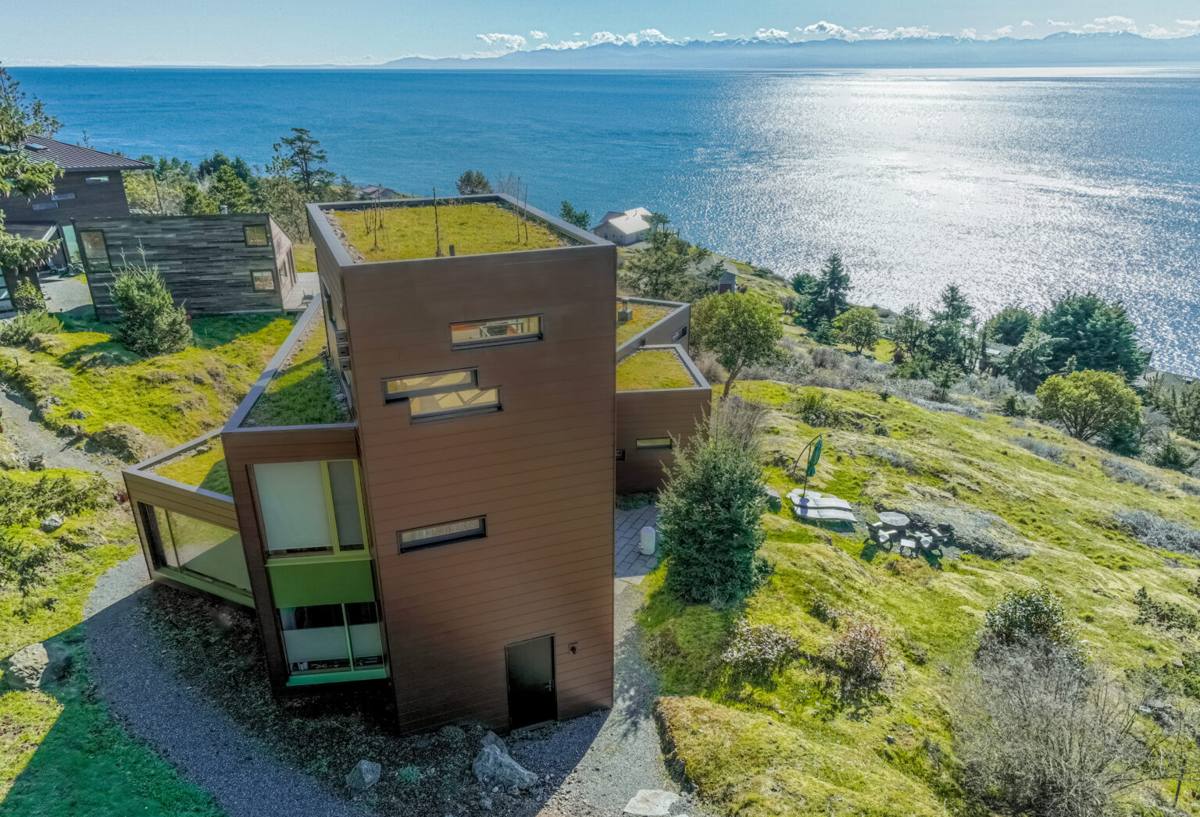
The neighborhoods around the Peace Arch border crossing sit about as close to the water and the weather as a house in Whatcom County can get. This is the northwest corner of the county, right where Semiahmoo Bay meets the international line, and it's a stretch of Blaine where salt air, wind-driven rain, and a long moss season aren't occasional problems — they're the baseline conditions every exterior surface has to deal with year-round. Siding here ages differently than siding a few miles inland, and repair work has to account for that instead of treating every job the same way it would be treated in a drier, more sheltered part of the county.
We install and repair James Hardie fiber cement siding exclusively. That's not a marketing detail — it's the standard we've built our repair process around, because patching in a mismatched or lower-grade material on a home this close to the water tends to create a second failure point right next to the first one. This page is specifically about siding repair for Peace Arch-area homes: what the climate does to siding here, how we decide what actually needs to happen, and what a repair done right looks like.
What This Corner of Blaine Does to Siding
Salt Air Off Semiahmoo Bay
Homes near the Peace Arch sit close enough to the bay that salt-laden air is a near-constant presence, not just something that shows up during a storm. Salt accelerates corrosion on fasteners, flashing, and any exposed metal trim, and it breaks down lower-quality paints and coatings faster than they'd wear in a drier inland climate. When we're repairing siding out here, corroded or failing fasteners are one of the most common underlying causes we find, even on siding that still looks reasonably good from the street.
Driving Rain Off the Water
Storms coming in off the water don't fall straight down — wind pushes rain sideways into wall assemblies, into window and door trim, and into the joints where different siding pieces meet. That sideways-driven moisture is harder on a house than the same amount of straight-down rain, and it's exactly the kind of exposure that finds any gap a rushed repair or an aging installation has left behind. Peace Arch's exposed position near the border and the bay means this pattern shows up more often, and with more force, than it does further inland.
A Long Moss and Mildew Season
Mild temperatures combined with near-constant moisture give moss and mildew a growing season that can run most of the year on shaded, north-facing, or tree-covered walls. Moss holds moisture against a wall surface long after the rain stops, and any siding with even minor surface damage becomes an easier place for it to take hold. On repair calls in this area, we regularly see moss growth marking exactly where water has been sitting the longest — it's often the first visible clue pointing to a problem underneath.
Repair or Replace? How We Make the Call
Not every damaged section of siding needs a full re-side, and not every home that looks fine from the sidewalk is actually fine underneath. Making the right call takes an honest look at both the visible damage and what's likely happening behind it.
When Repair Is the Right Call
Localized damage — a cracked or impact-damaged board, a section that's come loose, isolated moisture staining around one window or corner — is usually a good candidate for repair rather than replacement, especially on siding that's otherwise sound and reasonably current. Repair makes the most sense when the problem is contained and the surrounding material is still performing the way it should.
When It's Time to Talk About Replacement
Widespread moisture intrusion, soft or spongy siding across multiple walls, or damage that traces back to a systemic problem with the original installation — missing rain screen, poor flashing, wrong fastener type — usually means repair would just be patching a symptom. In those cases we'll say so directly rather than repairing a section that's likely to fail again in a year or two. We'd rather have that conversation up front than have a homeowner pay twice.
What a Correct Siding Repair Involves
A repair is only as good as what's underneath it once the new material goes back on. In a location that takes this much salt air and driving rain, skipping the parts you can't see after the job is done is where most repair failures start.
- Full assessment before patching: We pull back enough of the surrounding siding to see the house wrap, flashing, and sheathing condition, not just the damaged piece itself.
- Matched James Hardie material: Repairs use the same fiber cement product line and, where possible, the same ColorPlus factory finish as the surrounding siding, so the patch doesn't stand out or age at a different rate.
- Corrosion-resistant fasteners: Given the salt exposure this close to the bay, fastener type and spacing follow Hardie's spec exactly rather than whatever happens to be on the truck.
- Re-lapped house wrap and flashing: Any house wrap or flashing disturbed during the repair gets properly re-lapped so water continues to shed outward and downward, not just tucked back into place.
- Sealed joints and transitions: Butt joints and trim transitions around the repair area are sealed to the same standard as new construction, since a poorly finished edge is often where the next leak starts.
None of this is unusual or exotic — it's simply the manufacturer's installation spec, applied consistently to a repair instead of only to new work. Skipping it to save an hour on a small job is exactly how a repair turns into a repeat service call.
Why We Only Repair With James Hardie Materials
We install James Hardie fiber cement siding exclusively, and that applies to repair work as well as full installations. We won't install or patch in LP SmartSide, vinyl siding, Cemplank, Allura, primed spruce, or cedar. Each of those products has homeowners who are satisfied with them, but our decision to standardize on one system came from what we've seen on tear-offs and repair calls in coastal, high-moisture towns like this one.
Fiber cement doesn't swell, cup, or warp the way engineered wood products can after repeated wet-weather exposure, and it carries a non-combustible core that matters for both safety and insurance considerations. The factory-applied ColorPlus finish holds its color and integrity against salt air and moisture far longer than field-applied paint, and Hardie's HZ5 formulation is engineered specifically for regions with sustained moisture and freeze-thaw cycling — a fair description of this stretch of the Whatcom County coastline. Patching a Hardie repair in with a different, lower-grade material would undercut all of that, so we simply don't do it.
Our Repair Process, Start to Finish
1. On-Site Assessment
We walk the affected area and, where warranted, adjacent sections of the wall, looking past the visible damage to check for staining, soft spots, or fastener corrosion that might indicate a larger issue.
2. Honest Scope Recommendation
We tell you plainly whether the job is a contained repair or something that points toward a larger problem, and why. If it's a straightforward repair, we say so — we're not looking to upsell a full re-side when it isn't warranted.
3. Material Matching
We source the correct Hardie profile, plank width, and ColorPlus color match so the repaired section blends into the existing siding rather than looking like an obvious patch.
4. Repair to Spec
The repair itself follows Hardie's installation spec on fastening, flashing, house wrap lapping, and joint sealing — the same standard we hold a full installation to, regardless of the size of the job.
5. Final Check
Before we consider the job done, we check that the repaired area sheds water the way the rest of the wall does, with no exposed seams or gaps a future storm off the bay could work its way into.
Cost Factors for Siding Repair Near the Peace Arch
| Factor | What It Affects | Peace Arch-Area Consideration |
|---|---|---|
| Extent of visible damage | Number of boards or sections needing replacement | Isolated impact or crack damage vs. moisture that's spread along a wall |
| Condition behind the siding | Whether sheathing or house wrap also needs attention | More likely on walls that take direct wind-driven rain off the bay |
| Color and profile match | Sourcing the correct Hardie plank and ColorPlus finish | Older installations may need a closer color match if the siding has weathered |
| Accessibility | Scaffolding or lift needs for upper-story or hard-to-reach sections | Some homes near the water have taller wall sections facing the wind |
| Fastener and flashing condition | Whether hardware needs full replacement, not just cosmetic patching | Salt air speeds up corrosion on fasteners and exposed trim |
These are general drivers, not a quote — every home in this area sits at a slightly different distance from the water and under different tree cover, so we look at the actual wall before putting a number on the work. What looks like a small cosmetic repair from the ground sometimes turns out to be more once we're up close, and we'd rather tell you that honestly than guess low over the phone.
Signs a Peace Arch-Area Home May Need Siding Repair
- Cracked, split, or impact-damaged boards, especially near ground level or corners
- Soft or spongy siding when pressed, particularly low on the wall or around window trim
- Moss or dark staining that returns quickly after cleaning, especially on shaded or north-facing walls
- Rust streaking near fasteners or trim, more common this close to the water
- Gaps opening up at butt joints, corners, or trim transitions
- Peeling, chalking, or fading finish that's noticeably worse than the rest of the wall
- Visible warping or bowing in a section of siding
Any one of these on its own might be minor. Several showing up together, or moisture damage that keeps coming back after a cosmetic fix, is usually a sign the underlying cause hasn't actually been addressed.
Why a Crew That Already Works This Area Matters
Siding repair near the Peace Arch isn't the same job as siding repair a few miles inland, and a crew that already works this stretch of Blaine regularly knows where the wind-driven rain hits hardest, which walls stay damp longest through the moss season, and which fastener and flashing details are worth the extra attention so a repair doesn't come back as a callback after the next storm off the bay. That local pattern recognition is hard to replace with a generic approach, and it's part of why we treat repair work in this area with the same installation discipline we'd use on a full re-side.
If your home near the Peace Arch has damaged, aging, or failing siding, we're glad to take an honest look and tell you plainly what it needs — a targeted repair, or something more. Reach out using the form below to schedule a free, no-pressure estimate.