 Blaine Siding
 Siding Installation Built for the Peace Arch Area
Homes near the Peace Arch border crossing sit in one of the more exposed pockets of Blaine. You're close enough to Semiahmoo Bay and the Strait of Georgia to pick up salt-laden marine air, open enough to catch wind-driven rain off the water, and shaded enough through the wet months that moss and algae get a long runway to establish themselves on north- and west-facing walls. Siding in this part of Whatcom County isn't just a cosmetic choice — it's a system that either sheds that combination of salt, moisture, and organic growth for decades, or slowly loses the fight to it. This page covers what a correct siding installation looks like specifically for Peace Arch-area homes, and why we only install one product system to do it.
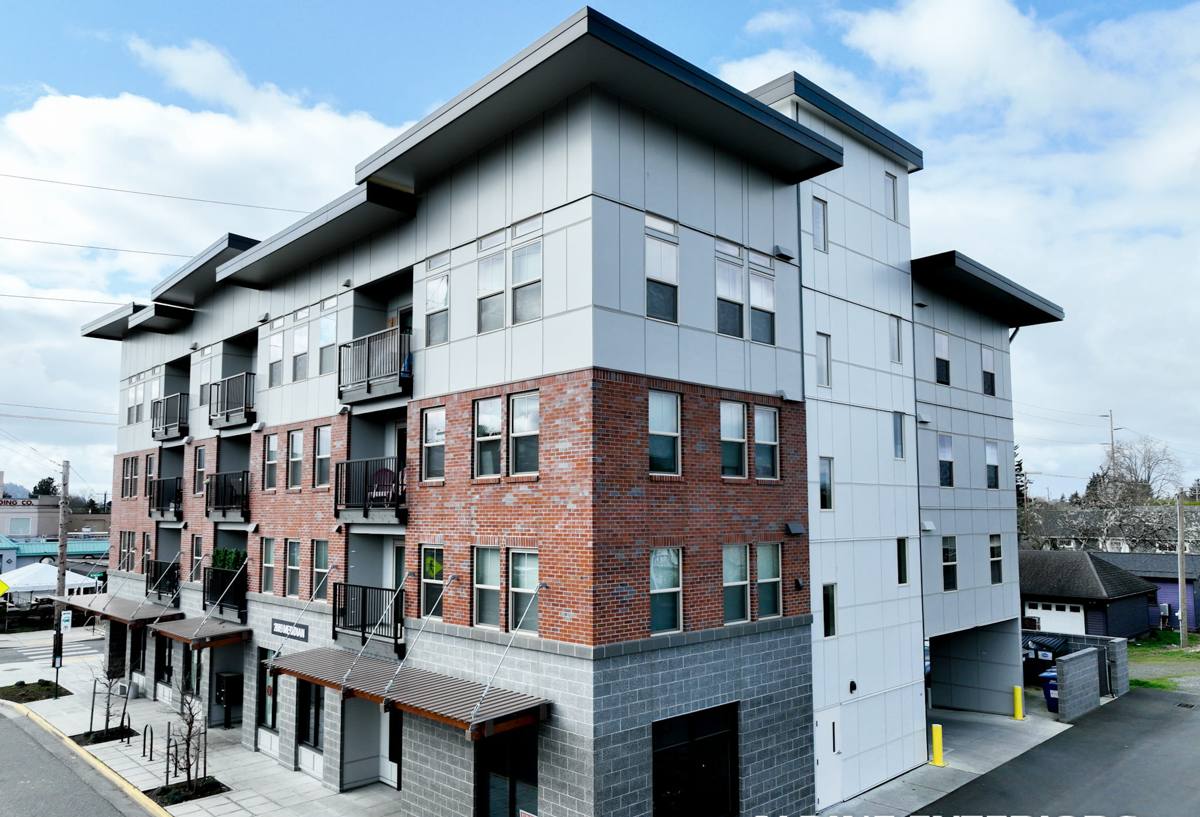
What This Climate Actually Does to Siding
Salt Air and Corrosion
Proximity to the Strait means airborne salt settles on exterior surfaces even when there's no direct spray. Over years, that salt film accelerates corrosion on fasteners, flashing, and any metal trim that isn't rated for a marine-adjacent environment. It also breaks down cheaper coatings faster than manufacturers' inland test data would suggest, which is one reason factory-cured finishes matter more here than in drier parts of the state.
Driving Rain
Blaine's weather doesn't just rain straight down — wind off the water pushes moisture sideways into wall assemblies, especially on gable ends and any elevation facing open water or cleared land. Siding that depends on paint film alone to keep water out, rather than a water-resistive barrier and correct drainage plane behind it, will eventually let moisture find a seam, a fastener hole, or a poorly lapped joint.
The Long Moss Season
Whatcom County's wet season stretches long, and shaded walls near mature trees or close-set neighboring homes stay damp for weeks at a time. That's exactly the condition moss and algae need. Porous or fibrous siding materials give organic growth something to grip into; a dense, factory-finished fiber cement surface gives it far less to hold onto, and what does grow tends to sit on the surface rather than root into the material.
Why We Install Only James Hardie Fiber Cement
We don't install vinyl, LP SmartSide, primed wood, cedar, or other fiber cement brands like Cemplank or Allura. That's not a marketing position — it's a standard we hold because of what we see happen to homes in exactly this kind of coastal, wet-winter climate over a 10-, 20-, and 30-year horizon. James Hardie's fiber cement is non-combustible, dimensionally stable in swings between soaked and dry conditions, and available in HZ5 formulations engineered for climates with sustained moisture exposure — which describes the Peace Arch area well. The factory-applied ColorPlus finish is baked on and warrantied against fading and peeling in a way field-applied paint on wood or lower-grade fiber cement products isn't. We'd rather install one product correctly than offer several and let homeowners guess which one will actually hold up on their specific lot.
That said, Hardie isn't magic on its own — it performs the way it's rated to perform only when the install respects flashing, clearances, and fastening detail. That's where most of the real work, and most of the real risk, actually lives.
What a Correct Installation Involves
Water Management Comes First
Before a single piece of siding goes up, the wall needs a continuous water-resistive barrier, correctly lapped house wrap or building paper, and properly integrated flashing at every window, door, and penetration. In a driving-rain environment like Blaine's, this layer is what actually keeps water out of the wall — the siding itself is the second line of defense, not the first.
Fastening and Clearances
Hardie's installation instructions specify fastener type, placement, and minimum clearances from grade, roof lines, and decks — typically several inches of clearance to prevent splashback and standing moisture from wicking into the board's cut edges. Skipping these clearances is one of the most common corner-cuts we see on homes that later show swelling or paint failure at the bottom courses.
Cut-Edge Sealing
Every field cut exposes raw fiber cement that isn't factory-sealed. Sealing those cut edges before installation is a manufacturer requirement, not an optional step, and it matters more here than in a dry inland climate because those edges are exactly where wind-driven rain finds its way in over time.
Fastener and Trim Material
Given the salt-air exposure near the Peace Arch crossing, fastener corrosion resistance and compatible trim materials aren't details to gloss over. We match fastener specs to the coastal exposure rather than defaulting to whatever's cheapest, because a rusting fastener eventually stains the face of the siding and loosens its grip.
Our Process on Peace Arch-Area Homes
- On-site assessment: we walk the exterior, note exposure direction relative to the water and prevailing wind, existing moisture or moss patterns, and the condition of the current siding and sheathing underneath it.
- Tear-off and sheathing check: old siding comes off and we inspect sheathing for rot or soft spots before anything new goes on — covering damaged sheathing just hides a problem that will resurface.
- Water-resistive barrier and flashing: house wrap, window and door flashing, and kickout flashing at roof-wall intersections are installed or corrected to current best practice.
- Hardie installation to spec: proper clearances, fastener pattern, cut-edge sealing, and factory-finish handling per Hardie's published installation guidelines.
- Trim, caulking, and final detail: corners, trim boards, and joints are finished and sealed with materials suited to a marine-influenced climate.
- Walkthrough: we go over the finished work with you before calling the job done.
Comparing How Common Siding Options Handle This Climate
| Material | Salt Air Resistance | Driving Rain / Moisture Behavior | Moss & Algae Resistance |
|---|---|---|---|
| James Hardie fiber cement (HZ5) | Engineered for high-moisture, coastal-adjacent exposure | Dimensionally stable when installed to spec; factory finish sheds water well | Dense surface limits root-in growth; surface growth cleans off more easily |
| Vinyl | Doesn't corrode, but can become brittle and gap over time in temperature swings | Relies heavily on the barrier behind it; seams can allow water intrusion | Grime and algae can film on the surface, especially in shaded areas |
| Primed wood or cedar | Coatings degrade faster under salt exposure; needs frequent recoating | Absorbs moisture at end grain and joints if maintenance lapses | Organic material is naturally more prone to moss and rot in shaded, damp spots |
| Other fiber cement brands | Varies by product line and finish quality | Depends on installation detail and factory finish durability | Generally better than wood; performance varies by manufacturer |
Signs Your Current Siding Is Losing the Fight
- Green or black film building up faster than a seasonal wash can keep ahead of, especially on shaded walls
- Paint peeling or bubbling in patches, particularly near the bottom courses or around windows
- Soft or spongy spots when you press on the siding near grade level or below decks
- Rust streaking below fastener heads or trim pieces
- Visible gaps, warping, or cupping at board joints
- A musty smell or visible staining on interior walls that share an exterior wall with these symptoms
Any one of these on its own might just need attention. Several together, especially on a home that's been through a number of wet seasons without an inspection, usually means the water management behind the siding has been compromised for a while.
Why Local Installation Experience Matters Here
A crew that's only worked drier, inland jobs will treat clearances, flashing details, and fastener choice as boilerplate. A crew that regularly works homes near the Peace Arch crossing and along Blaine's shoreline treats those same details as the difference between a wall assembly that lasts thirty years and one that needs rework in eight. We know which elevations on a typical lot here take the worst of the wind-driven rain, which walls hold moss the longest through a Whatcom County winter, and where salt exposure tends to bite hardest on fasteners and trim. That local pattern recognition shapes how we sequence the work and where we don't cut corners.
Maintenance After Installation
Correctly installed Hardie siding is low-maintenance, not no-maintenance. In this climate, that means an annual visual check for any caulking that's pulled away, a gentle wash if moss or algae film starts building on shaded elevations, and prompt attention if you ever notice a soft spot, staining, or a gap that wasn't there before. Catching a small flashing or caulk failure early is a minor fix; ignoring it through a few wet seasons turns it into a sheathing repair.
Getting Started
If you're weighing a siding replacement on a Peace Arch-area home, or you've noticed some of the warning signs above, we're glad to take a look. We offer a free, no-pressure estimate — we'll walk your home's exterior, talk through what we see, and give you a straight answer on what it needs.