 Blaine Siding
 Roof Replacement for the Peace Arch Area of Blaine
Homes near the Peace Arch border crossing sit in one of the more demanding stretches of coastline in Whatcom County. You're close enough to Semiahmoo Bay and Drayton Harbor to catch salt-laden air off the water, exposed enough to take the full force of storms rolling in off the Strait of Georgia, and shaded enough by mature evergreens that moss has every advantage it needs. A roof that would hold up fine forty miles inland can fail early out here if it wasn't built with this specific combination of stressors in mind.
This page is about roof replacement done right for this particular area — not a generic overview, but the specifics that matter when your roof faces salt air, driving rain, and a moss season that can run most of the year.
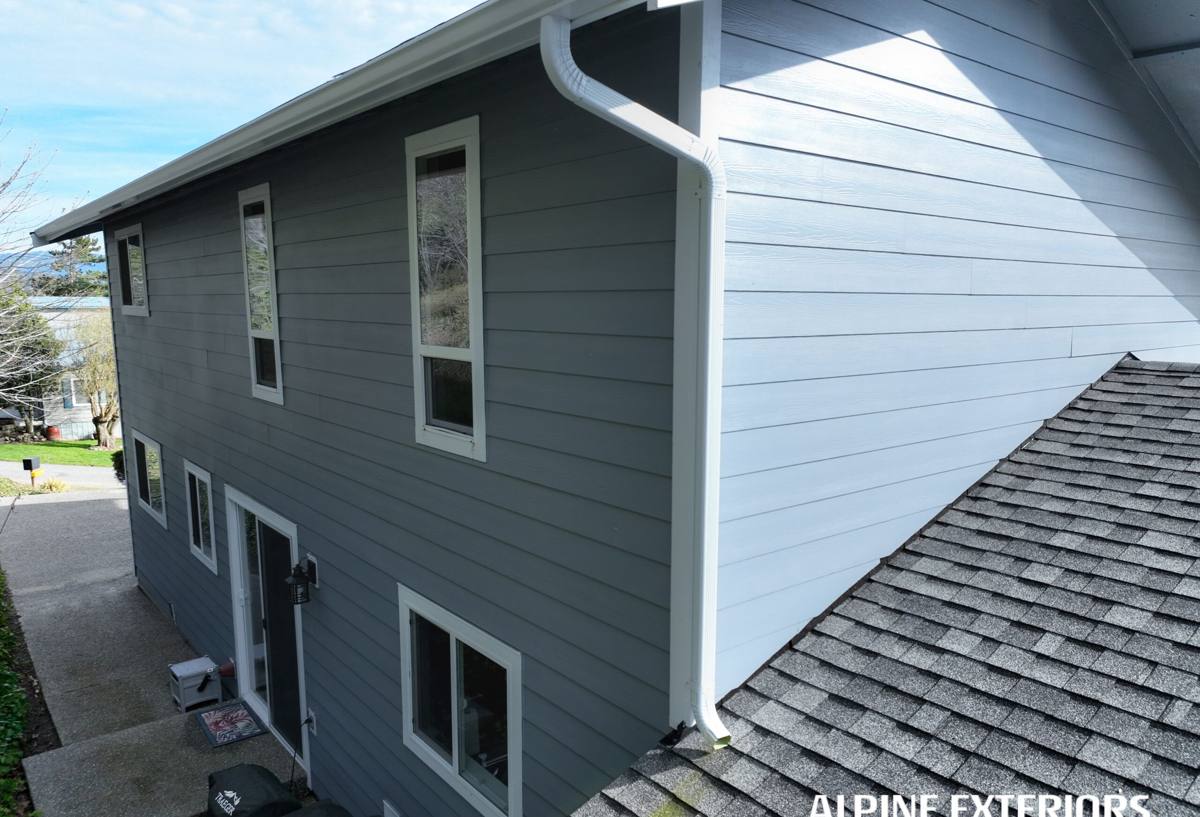
The Three Things Working Against Your Roof Here
Salt Air
Airborne salt doesn't just sit on a roof — it accelerates corrosion on exposed fasteners, flashing, and any metal component that isn't rated for a marine-adjacent environment. Standard galvanized fasteners can start showing rust streaks years before they would in a drier, inland location. This is why fastener and flashing material selection matters more here than it would on a roof twenty miles from the water.
Driving Rain
Blaine's weather doesn't just rain straight down — wind off the water pushes rain sideways and up under laps, edges, and flashing that would otherwise shed water fine in a calm downpour. Roofs here need underlayment and flashing details that assume water will be driven uphill and sideways at some point in their life, not just falling straight down.
Moss
Shade from mature trees plus near-constant moisture is close to ideal growing conditions for moss. Moss isn't just cosmetic — it holds moisture against the roof surface, lifts shingle edges as it grows, and can shorten the life of an otherwise sound roof by years if it's never addressed. Any roof replacement in this area that doesn't plan for moss from day one is planning to be redone sooner than it should be.
What a Correct Roof Replacement Involves Out Here
Full Tear-Off and Deck Inspection
We don't roof over an existing layer. A full tear-off is the only way to actually see the deck — and in a wet climate, that matters, because trapped moisture under old shingles can soften or rot sheathing without any obvious sign from the surface. Any soft, delaminated, or rotted decking gets replaced before anything new goes down. Skipping this step is how a new roof ends up failing from the inside out.
Water Barrier Details
Valleys, eaves, and any low-slope transitions get self-adhering ice-and-water membrane, not just standard underlayment. Given how often wind-driven rain works its way up under the first few courses at the eave, we treat that zone as a place where extra protection pays for itself. The rest of the deck gets a synthetic underlayment that holds up better than old-style felt if it gets wet before the roofing goes on — which, in this climate, is a real possibility during a multi-day install.
Fasteners and Flashing Rated for Salt Exposure
Given the salt air, we use corrosion-resistant fasteners and flashing rather than the cheapest standard-grade hardware. This is a small cost difference at install time and a meaningful difference in how the roof looks and performs ten years out — streaking, rust-through, and failed flashing seals are almost always a fastener or flashing-grade problem, not a shingle problem.
Ventilation
Balanced intake and exhaust ventilation keeps the underside of the deck dry and helps prevent the trapped moisture that feeds both rot and moss. A roof that can't breathe traps humidity against the underside of the sheathing, which is exactly the wrong thing to do in a climate this wet.
Moss-Resistant Material Choices
Where the client wants it, we install algae- and moss-resistant shingles, and we can add zinc or copper strips near the ridge on request — rain washing over these metals releases trace amounts that inhibit moss growth downhill of the strip. It's not a permanent fix on its own, but combined with material choice and periodic maintenance, it meaningfully extends the time between moss treatments.
Material Options for This Microclimate
There's no single "right" material for every home — it depends on your roof's slope, sun/shade exposure, and how much maintenance you want to take on. Here's how the common options actually perform in a salt-air, high-moss environment:
| Material | Salt Air Performance | Moss Resistance | Maintenance |
|---|---|---|---|
| Architectural asphalt shingle (algae-resistant) | Good with corrosion-rated flashing/fasteners | Better than standard shingle; not moss-proof | Low — periodic soft-wash and gutter clearing |
| Standard 3-tab asphalt shingle | Adequate but shorter lifespan near water | No built-in resistance | Higher — more frequent moss treatment needed |
| Metal roofing (properly coated) | Excellent if coating/fastener spec is marine-rated | Very good — moss struggles to grip | Low, but coating quality is critical near salt air |
| Cedar shake | Requires diligent maintenance in this climate | Naturally moss-prone if not treated | Highest — regular treatment and inspection needed |
Our default recommendation for most Peace Arch homes is an algae-resistant architectural shingle paired with corrosion-rated flashing, because it balances upfront cost, moss resistance, and long-term maintenance well. Metal is a strong option for homeowners who want to minimize moss maintenance and are comfortable with the higher upfront cost. We're happy to walk through the honest trade-offs for your specific roof.
What Drives the Cost of a Roof Replacement Here
| Factor | Why It Matters Locally |
|---|---|
| Roof size and pitch | Steeper roofs near the water often need more careful safety staging and take longer |
| Number of existing layers to remove | Older homes near Peace Arch sometimes have two layers of shingles requiring full tear-off |
| Decking condition | Wet climates increase the odds of hidden rot found once tear-off begins |
| Material choice | Algae-resistant shingle, metal, and cedar carry different material and labor costs |
| Flashing and fastener grade | Corrosion-rated hardware costs more but pays off in a salt-air location |
| Moss remediation add-ons | Zinc/copper strips and pre-install moss treatment add modest cost but reduce future maintenance |
We won't know your exact number until we've inspected the roof and deck in person, but these are the honest variables that move the price — no surprise line items after the fact.
Signs Your Peace Arch Roof May Be Due for Replacement
- Granule loss showing up in gutters or on the ground below downspouts
- Shingles that are curling, cupping, or have visibly lifted edges
- Persistent moss or dark streaking that returns quickly after cleaning
- Daylight visible through the roof deck from inside the attic
- Soft spots or sagging noticeable when walking the roofline visually from the ground
- Water stains on interior ceilings, especially after a wind-driven rain event
- Roof is approaching or past the expected lifespan for its material type
- Rusting or deteriorating flashing around chimneys, vents, or valleys
Our Process
- On-site inspection of the roof, decking, ventilation, and existing moss or moisture damage
- Honest, itemized estimate covering material options and the specific cost factors above
- Scheduling that accounts for Whatcom County's rain patterns to protect an exposed deck during the work
- Full tear-off, deck inspection and repair, water barrier installation, and material installation
- Flashing, ventilation, and moss-resistance details finished to spec
- Final walkthrough and cleanup, including magnetic sweep for stray fasteners
Why a Local Peace Arch Crew Matters
A roofing crew that regularly works this specific stretch near the border and the water already knows how the wind behaves off the Strait, how shaded lots near the park tend to hold moisture longer, and which flashing and fastener specs actually hold up here versus what looks fine on paper. That's not something you get from a crew that mostly works inland Whatcom County or comes from out of the area for one job. It also means faster response if a storm causes damage, because we're not driving in from somewhere else.
We also deal directly with the permitting and inspection requirements that apply to roofing work in the City of Blaine and unincorporated Whatcom County, so there's no guesswork about what's required before or after the job.
Get an Honest Look at Your Roof
If your roof is showing granule loss, moss that keeps coming back, or you're just not sure how much life it has left, we're glad to come take a look. The estimate is free, there's no pressure, and you'll get a straight answer about whether replacement makes sense now or repair can buy you more time. Use the form below to get started.