 Blaine Siding
 Why Roofs Near the Peace Arch Take a Different Kind of Beating
Homes in the Peace Arch area of Blaine sit about as close to the water and the border as you can get in Whatcom County, and that location comes with a specific set of roofing challenges. Marine air off the Salish Sea carries salt that slowly corrodes exposed metal — fasteners, flashing, vent caps — faster than it would a few miles inland. Storms rolling in off the water bring driving, wind-blown rain that finds any weak seam, nail pop, or aging flashing detail and works its way underneath. And because the area stays cool, damp, and often shaded for long stretches of the year, moss and algae get a head start that homes in drier climates never deal with.
None of this means a roof in this part of Blaine is doomed to fail early. It means the installation has to account for these conditions from the start, rather than using a generic approach and hoping the roof holds up. That's the difference between a new roof that looks fine for a season and one that actually performs for its full rated life in a coastal Whatcom County climate.
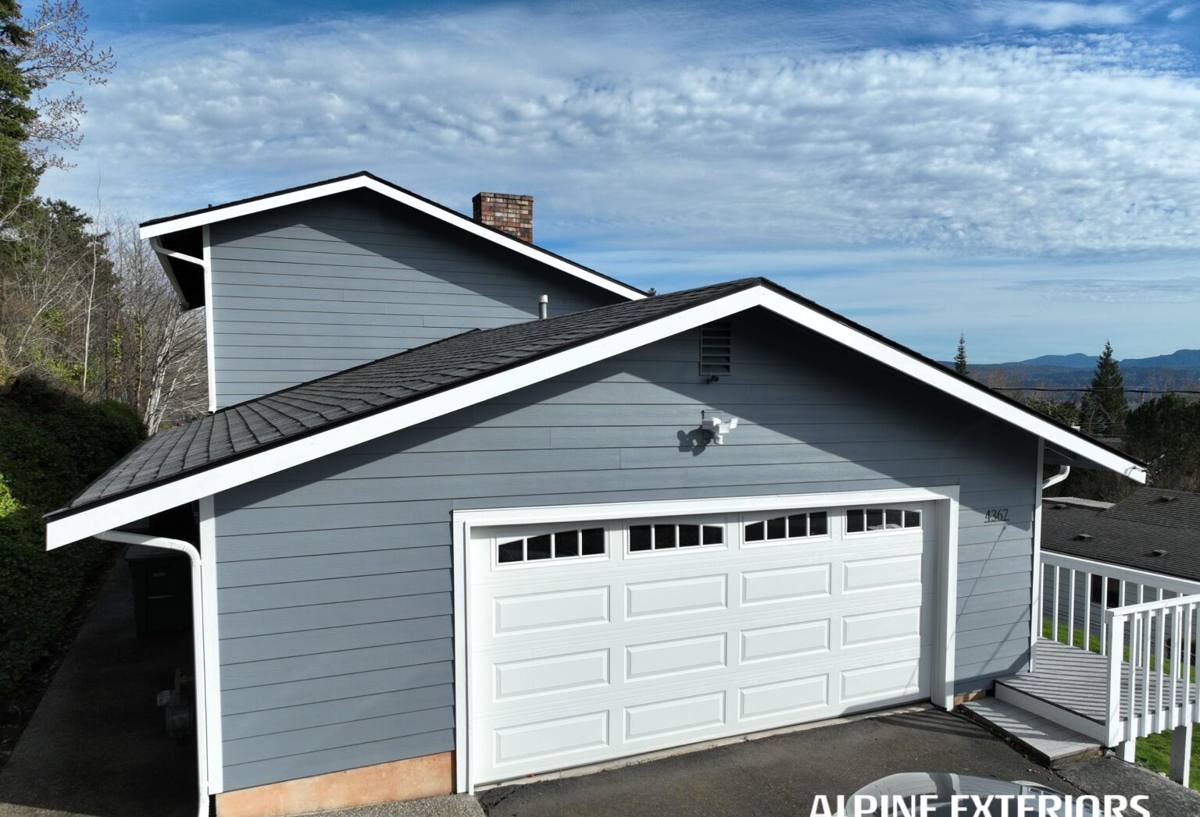
Signs a Peace Arch Home Needs a New Roof, Not Another Repair
Repairs make sense when the problem is isolated. A full replacement makes sense when the roof as a system is wearing out. Common signs we look for on homes in this area include:
- Granule loss heavy enough that you can see bare asphalt on multiple slopes, not just one weathered spot
- Moss colonies established at shingle edges and butt joints, especially on north-facing or tree-shaded slopes
- Shingles that are curling, cupping, or cracking rather than lying flat
- Soft or spongy decking underfoot, or visible sagging along a roof plane
- Daylight, water stains, or damp insulation visible from inside the attic
- Flashing around chimneys, skylights, or vent pipes that's rusted, lifted, or was never properly step-flashed
- A pattern of repeat repairs in the same areas every year or two
Asphalt composition roofs in this climate typically run 20–25 years before they're due, sometimes less if ventilation was poor or moss was allowed to sit for years. If a roof is in that age range and showing two or more of the signs above, a new installation is usually the more honest recommendation than another patch.
What a Correct New Roof Installation Actually Involves
A new roof is more than shingles nailed to a deck. In a climate that sees this much driving rain and sustained dampness, the layers underneath the visible roofing material matter as much as the material itself.
Tear-Off and Deck Inspection
We remove the old roofing down to the deck rather than layering over it. That's the only way to actually see the plywood or plank decking underneath — soft, delaminated, or water-stained sections get replaced before anything new goes down. Roofing over a compromised deck just hides the problem for a few more years.
Underlayment and Ice-and-Water Barrier
Given how much driving, wind-blown rain this area gets off the water, underlayment choice isn't a place to cut corners. Self-adhered ice-and-water membrane at eaves, valleys, and around every penetration gives a second line of defense if wind ever pushes water up and under the shingle line — which happens more here than in more sheltered inland neighborhoods.
Flashing and Penetrations
Chimneys, skylights, plumbing vents, and valleys are where most leaks start, not the open field of shingles. Proper step flashing, counter-flashing, and sealed penetrations matter more in a salt-air, high-rainfall environment because corroded or poorly sealed metal fails faster here than it would somewhere drier.
Ventilation
Balanced intake and exhaust ventilation keeps the attic dry and close to outdoor temperature. That matters two ways: it protects the decking and framing from condensation-driven rot, and it reduces the cool, damp attic conditions that shorten a shingle's life from underneath, on top of whatever moss is doing from above.
Roofing Materials That Hold Up in Blaine's Marine Climate
Material choice affects how well a roof handles salt air, sustained moisture, and moss pressure over time. There's no single right answer for every home — budget, roof pitch, and how the house looks all factor in — but here's how the common options compare for this specific location.
| Material | Typical Lifespan | Salt Air & Moisture Behavior | Moss Resistance |
|---|---|---|---|
| Asphalt composition shingle | 20–25 years | Performs well with correct underlayment and flashing; algae-resistant granules help with staining | Moderate — benefits from zinc/copper strips and regular cleaning |
| Standing seam metal | 40–50+ years | Excellent when properly coated and fastened; coastal-rated fasteners recommended near salt air | High — sheds moss and debris well due to smooth, steep-shedding surface |
| Synthetic/composite shingle | 30–50 years (varies by manufacturer) | Good moisture resistance; doesn't absorb water like organic materials | Moderate to high depending on surface texture |
Asphalt remains the most common choice because it balances cost, appearance, and performance well, provided the installation details are handled correctly. Metal costs more upfront but trades that for a much longer service life and less maintenance in a wet, mossy climate. We'll walk through the honest trade-offs for your specific roof rather than pushing one material by default.
Cost Factors for a Peace Arch Re-Roof
Every roof is priced on its own specifics, but the variables that move the number are consistent. Broadly, homeowners in this area should expect the total to fall somewhere in the low-to-mid five figures for a typical asphalt shingle replacement on an average-size home, with the following factors pushing it up or down:
| Factor | Effect on Cost |
|---|---|
| Roof size and number of planes | Larger, more cut-up roofs take more material and labor |
| Pitch and accessibility | Steep or hard-to-access roofs require more safety setup and time |
| Layers to remove | Tearing off multiple existing layers adds labor and disposal cost |
| Deck condition | Rotted or soft decking sections need replacement before roofing |
| Material choice | Standard asphalt costs less upfront than metal or premium synthetics |
| Flashing and detail work | Chimneys, skylights, and multiple valleys add labor to do correctly |
We give a firm, itemized number after actually inspecting the roof — not a phone estimate — because guessing on deck condition or flashing complexity is how homeowners end up with surprise costs mid-project.
Moss, Algae, and the Long Wet Season
Whatcom County's moss season runs long — realistically from early fall through late spring — and homes near the water with shaded or north-facing slopes see it worst. Left alone, moss holds moisture against the shingle surface, lifts shingle edges as it grows, and accelerates granule loss underneath it. On an older roof, a thick moss mat can shave years off the remaining service life.
On a new installation, we install zinc or copper strips near the ridge on request, which release trace metal ions that discourage moss regrowth as rain washes over them. Beyond that, keeping nearby tree limbs trimmed back for sunlight and airflow, and having the roof inspected and cleaned every couple of years, does more to prevent moss than any one-time treatment.
Our New Roof Installation Process
Estimate and Roof Assessment
We inspect the existing roof in person — deck condition, ventilation, flashing details, and any problem areas — and walk through material and budget options with you before writing a number.
Material Selection and Scheduling
Once you've picked a material and color, we schedule around realistic weather windows for this area, since a new roof needs a dry stretch to install correctly and we're not going to rush it into a rain system off the water.
Installation
Tear-off, deck repair as needed, underlayment, flashing, and the new roofing go down in sequence, typically completed in one to a few days depending on size and complexity.
Cleanup and Final Walkthrough
We magnet-sweep the property for nails, haul away the old material, and walk the finished roof with you before calling the job done.
Why a Local Blaine Crew Matters
A crew that already works in and around Blaine knows the practical realities that a roofing company from further inland won't think twice about: how quickly a clear morning can turn into wind-driven rain off the water, which slopes on a coastal-exposed home take the worst weathering, and how to read Whatcom County permitting requirements without back-and-forth delays. That local familiarity shows up in scheduling decisions, material recommendations, and how a roof is detailed at the edges — the parts that actually determine whether it holds up through its first few wet seasons.
It also matters for response time. If a windstorm off the Salish Sea damages a roof or a leak shows up during a heavy rain event, a crew based nearby can get out to look at it in days, not weeks.
Questions to Ask Before You Hire a Roofing Contractor
Whoever you choose for a new roof installation, a few basic checks protect you regardless of who does the work:
- Are they licensed and insured to work in Washington State, and will they show you proof without hesitation?
- Do they tear off old roofing and inspect the deck, or do they offer to roof over existing layers?
- Is the estimate itemized — material, labor, disposal, flashing work — or just a single lump number?
- What underlayment and ice-and-water barrier do they use, and where do they install it?
- What's the manufacturer's warranty on materials, and what's their own warranty on workmanship?
- Can they explain, in plain terms, how they'll handle valleys, chimney flashing, and ventilation on your specific roof?
- Do they have experience with homes in this specific area, dealing with the same salt air and rain exposure?
A contractor who answers these clearly and without pressure tactics is generally one worth trusting with a project this size.
If your Peace Arch-area home is due for a new roof, we're happy to take a look and give you a straightforward, no-pressure estimate — just fill out the form below and we'll set up a time to inspect the roof in person.