 Blaine Siding
 Why Peace Arch Roofs Take a Different Kind of Beating
Peace Arch sits right up against the water and the border, which means homes here deal with a mix of conditions that inland Whatcom County neighborhoods don't see nearly as often. Salt-laden air off the Salish Sea, wind-driven rain that comes in sideways off winter storms, and a moss season that can run eight or nine months a year all put extra stress on a roof. An asphalt shingle roof that would hold up fine in a drier, calmer climate can wear out early here if it wasn't built for these specific conditions in the first place.
Salt Air and Metal Components
Airborne salt doesn't just affect boats and dock hardware. It works on every exposed metal component on a roof — flashing, drip edge, vent caps, nail heads. Standard galvanized fasteners and light-gauge flashing corrode faster this close to the water, and once flashing starts to rust and pit, it stops shedding water the way it's supposed to. That's usually where a roof starts leaking long before the shingles themselves are worn out.
Driving Rain and Wind
Storms rolling in off the water don't just drop rain straight down — they push it sideways and up under shingle edges, especially at eaves, valleys, and anywhere two roof planes meet. A roof that only relies on the shingles themselves to keep water out, without a properly detailed underlayment and flashing system underneath, is going to leak during a hard blow even if the shingles look fine from the ground.
Moss, Shade, and a Long Wet Season
A lot of Peace Arch lots have mature trees and enough tree cover that north-facing roof slopes rarely get direct sun. Combine that with our long stretch of wet months and you get roofs that stay damp for days after a storm instead of drying out in an afternoon. Moss and algae take hold in exactly those conditions, and once moss gets a foothold, it holds moisture directly against the shingle surface, which speeds up granule loss and shortens the roof's usable life.
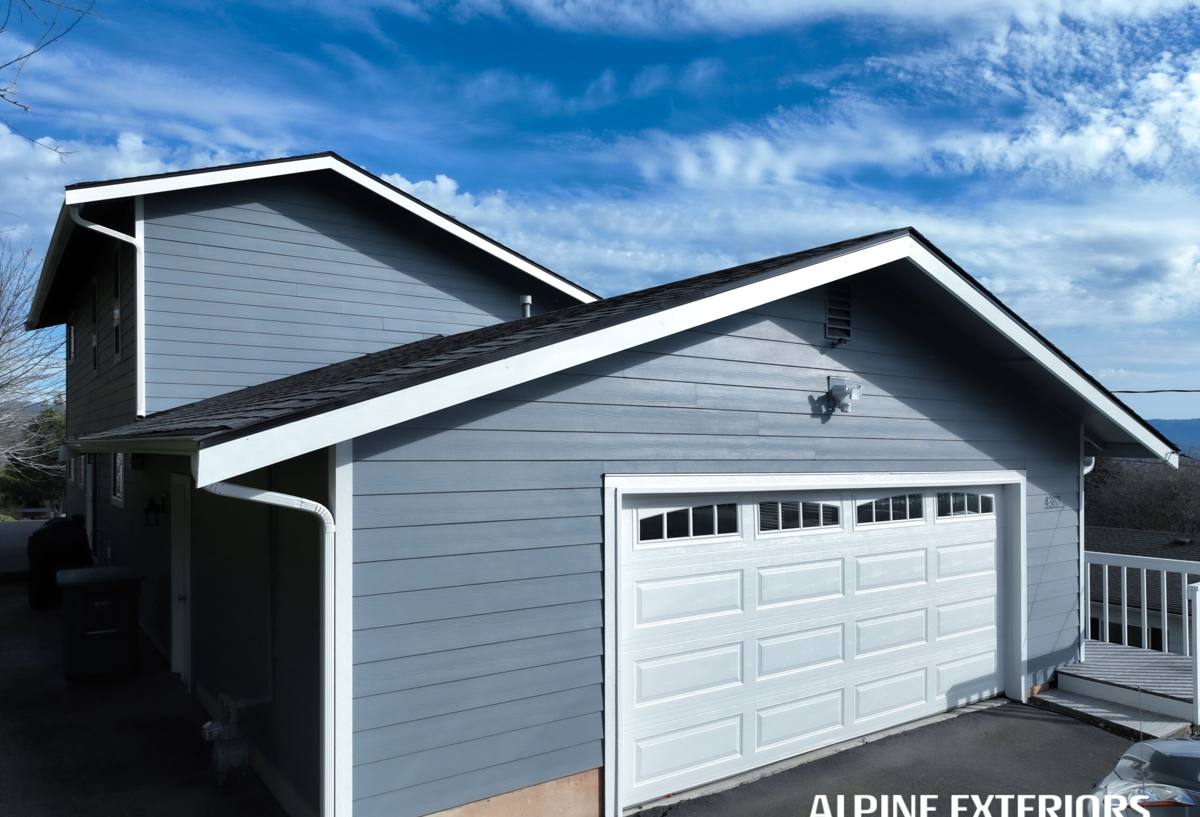
What a Correct Asphalt Shingle Job Requires Here
An asphalt shingle roof done right for Peace Arch isn't just "shingles nailed to plywood." It's a system, and every layer of that system matters more here than it would somewhere drier and less exposed.
Shingle Class and Wind Rating
We spec shingles rated for the wind exposure this area actually sees, not the minimum a manufacturer's base product offers. We also lean toward algae-resistant (AR) shingle lines for anything with tree cover or a north-facing slope, since standard shingles will streak and grow moss faster in shaded, damp spots.
Underlayment and Water Barrier at Vulnerable Points
A synthetic underlayment across the whole deck is the baseline, but eaves, valleys, and any low-slope transitions get an additional self-adhered ice-and-water membrane. That's the layer that actually stops wind-driven rain from finding its way under the shingles at the spots most likely to take on water.
Ventilation
Balanced intake and exhaust ventilation keeps warm, moist attic air from condensing on the underside of the roof deck. Poor ventilation doesn't just shorten shingle life from the inside — it also keeps the deck itself damper, which feeds the same moss and mildew problems you're trying to avoid on the outside.
Flashing and Transitions
Step flashing at walls, valley metal, and flashing around any roof penetrations get corrosion-resistant material given how much salt air this location deals with. Cheap or reused flashing is one of the most common causes of early leaks we find on reroof jobs in this area.
Our Process for a Peace Arch Reroof or Repair
- Inspection of the existing roof, decking, flashing, and ventilation to identify what's actually causing any current problems.
- Full tear-off of old roofing material so the deck can be properly evaluated instead of just covered over.
- Deck repair where needed — soft, rotted, or delaminated sheathing gets replaced, not shingled over.
- Installation of synthetic underlayment and ice-and-water membrane at eaves, valleys, and other vulnerable areas.
- New flashing at all walls, valleys, and penetrations.
- Shingle installation following manufacturer specs for nailing pattern and exposure, matched to the wind rating we spec'd for the job.
- Ridge and intake ventilation installed or corrected as needed.
- Full site cleanup, including a magnetic sweep for stray nails.
- Final walkthrough so you understand what was done and what to watch for going forward.
Asphalt Shingles vs Other Roofing Options for This Climate
Asphalt shingles remain the most practical choice for most Peace Arch homes, but it's worth understanding the honest trade-offs against the other materials homeowners ask about.
| Material | Moss/Algae Resistance | Salt-Air Durability | Maintenance | Typical Lifespan |
|---|---|---|---|---|
| Asphalt shingle (standard) | Fair — improves with AR granules | Good with proper flashing | Low to moderate | 20-25 years |
| Asphalt shingle (architectural/AR) | Good | Good with proper flashing | Low to moderate | 25-30 years |
| Metal (standing seam or panel) | Very good | Depends heavily on coating quality | Low | 40-plus years |
| Cedar shake | Poor without regular treatment | Moderate | High — regular cleaning and treatment needed | 20-30 years with upkeep |
Metal has real advantages in a wet, mossy climate, but it comes at a higher upfront cost and needs a contractor who details the seams and fasteners correctly to avoid its own set of problems. Cedar shake looks great but demands ongoing maintenance to fight moss and moisture retention that most homeowners underestimate when they choose it. For most Peace Arch homes, a quality architectural asphalt shingle with proper underlayment and ventilation gives the best balance of upfront cost, appearance, and realistic long-term performance.
Cost Factors for Asphalt Shingle Roofing in Peace Arch
Every roof is different, but the same handful of factors drive most of the cost difference between jobs in this area.
| Factor | Why It Affects Cost |
|---|---|
| Roof pitch and access | Steeper roofs and difficult access take longer and require more safety equipment |
| Existing layers to remove | Multiple layers of old roofing mean more tear-off and disposal labor |
| Decking condition | Rotted or soft sheathing found during tear-off needs replacement before shingles go on |
| Ventilation upgrades | Adding or correcting intake/exhaust venting adds material and labor |
| Shingle tier | Standard 3-tab vs architectural vs premium AR lines carry different material costs |
| Penetrations and valleys | Chimneys, skylights, and multiple valleys each need custom flashing work |
As a broad range, a straightforward asphalt shingle reroof on a typical single-family home in this area often falls somewhere between $9,000 and $20,000, with steep pitches, extensive deck repair, or a premium shingle line pushing toward the higher end. We won't know your actual number until we've looked at the roof in person — anything quoted without an inspection is a guess.
Maintenance That Actually Matters in a Moss Climate
- Keep gutters and downspouts clear so water isn't backing up under the roof edge
- Have moss treated or removed before it builds up thick enough to hold moisture against the shingles
- Trim back branches that keep a roof section shaded and slow to dry
- Check flashing and roof penetrations at least once a year for signs of corrosion or lifting
- Walk the attic periodically to check for damp insulation or daylight showing through the deck
- Have the roof inspected after any major windstorm, not just when a leak shows up inside
Signs Your Peace Arch Roof Needs Attention Now
- Granules collecting in gutters or at downspout outlets
- Shingles that are curling, cupping, or visibly buckled
- Thick moss growth, especially on shaded or north-facing slopes
- Dark streaking across the roof surface
- Soft or spongy spots when the roof is walked
- Water stains on ceilings or in the attic after a storm
- Missing or lifted shingles following high wind
Why Hiring a Crew That Already Works Peace Arch Matters
A contractor who works this specific area regularly knows which slopes and exposures tend to hold moss the longest, which flashing details actually hold up against salt air over time, and how local wind patterns off the water affect shingle selection and installation. That's knowledge you build from doing the work here repeatedly, not from a general roofing checklist that doesn't account for this location.
We also handle the permitting and code requirements that apply in Blaine and Whatcom County, so you're not left figuring that out on your own mid-project. And because we're local, we're the ones you call if something needs a second look after the job is done — not a crew that's moved on to another region.
If your Peace Arch home is due for a new roof, showing signs of moss or wind damage, or you just want an honest read on what shape it's in, we're glad to take a look. Fill out the form below for a free, no-pressure estimate.