 Blaine Siding
 Siding Repair Built for Nooksack's Wet, Salt-Laden Climate
Nooksack sits inland from the water but still gets the full brunt of Whatcom County's weather pattern: long stretches of driving rain off the Pacific, damp winters that never fully dry out, and enough coastal salt air carried up the valley to accelerate corrosion on fasteners, trim, and anything with a weak factory finish. Add a moss season that can run six months or more, and you have a climate that punishes siding that isn't installed or repaired correctly. We do siding repair work in Nooksack regularly, and the damage we find almost always traces back to the same handful of causes: trapped moisture, failed caulking, moss holding water against a wall, or a patch job that didn't match the original material and started failing again within a couple of years.
This page is about siding repair specifically — not full re-siding, not new construction. If your home's siding is fundamentally sound but has isolated damage, this is the service that fixes it correctly instead of masking it.
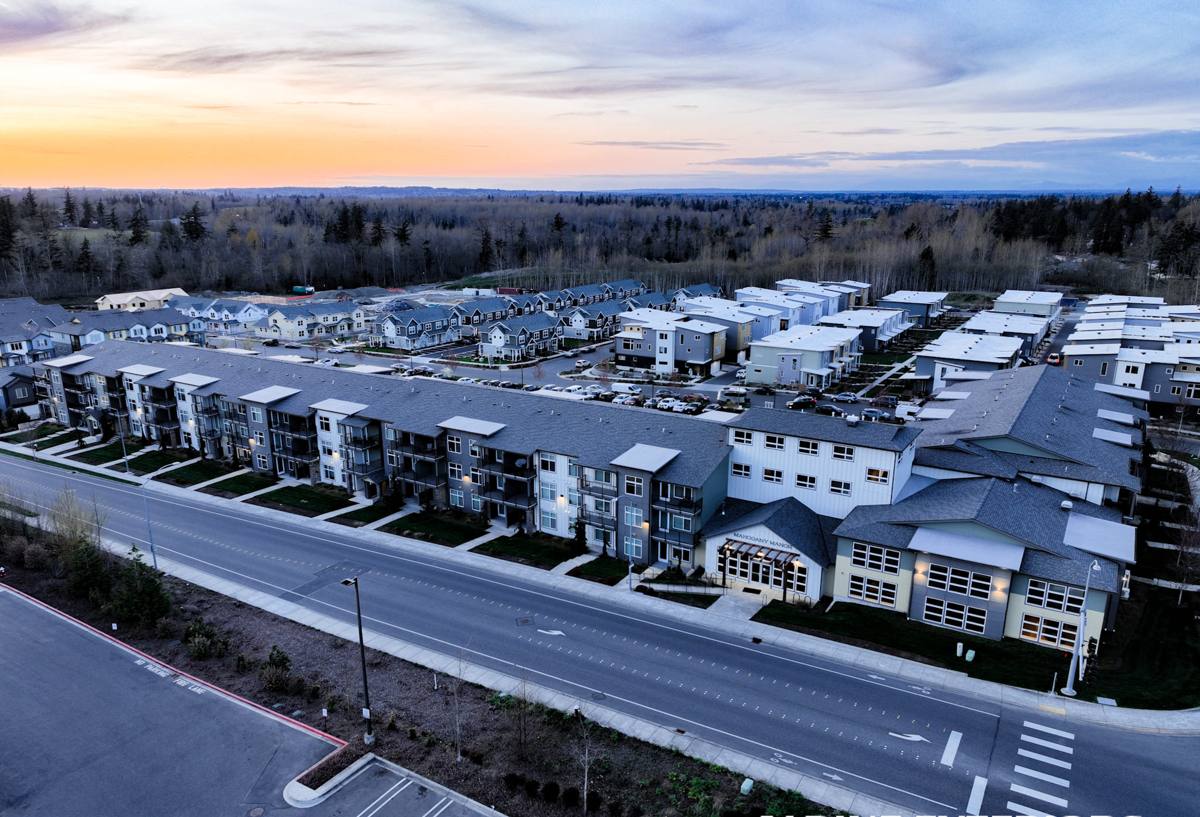
What Causes Siding Damage in This Area
Moisture that never gets a break
Whatcom County's rain isn't just frequent, it's prolonged. Siding that would dry out fine in a drier climate stays damp for days after a storm here. Any gap in caulking, any seam that wasn't lapped correctly, or any spot where water can get behind the siding will eventually cause rot, delamination, or paint failure — and it happens faster in Nooksack's climate than it would in most of the country.
Moss and organic growth
Moss doesn't just look bad. Once it establishes on a wall, it holds moisture against the surface constantly, which is exactly the condition that causes wood-based siding to soften and fiber cement joints to fail if they weren't sealed properly to begin with. North-facing walls and anything shaded by trees see this first.
Salt air and fastener corrosion
You don't have to be right on the water for salt air to matter. Prevailing weather carries it inland, and over years it corrodes standard fasteners, flashing, and cheaper trim hardware. Corroded fasteners work loose, which opens gaps, which lets water in — it's a slow chain reaction that shows up as a repair call five or ten years after the original install.
Impact and mechanical damage
Storm debris, ladder contact, pressure washing done wrong, and general age all cause cracked panels, dented trim, or popped nails. These are usually the easiest repairs, but only if they're caught before water gets behind the damaged area.
Signs You Need a Repair, Not a Full Re-Side
- Localized cracking, chipping, or holes in a small number of panels
- Soft or spongy spots when you press on the siding near the bottom of walls or under windows
- Visible gaps at seams, corners, or trim where caulking has shrunk or pulled away
- Peeling or bubbling paint in specific areas rather than across the whole house
- Moss or dark staining concentrated on one or two walls
- Nails backing out or trim that feels loose to the touch
- Water stains on interior walls or ceilings near an exterior wall
If damage is limited to a few areas and the rest of the siding is structurally sound, repair is the right call. If we find widespread rot, repeated failures across multiple walls, or siding that's simply reached the end of its service life, we'll tell you honestly — a patch job on siding that's failing everywhere just delays a bigger cost.
What a Correct Siding Repair Actually Involves
A repair that holds up in this climate is more than swapping a broken panel. Done right, it includes:
- Diagnosing the cause, not just the symptom. If a panel rotted because water was getting behind it, replacing the panel without fixing the water path just buys a few years before it happens again.
- Checking the water-resistive barrier and flashing underneath. Any repair that opens up the wall is a chance to inspect what's behind the siding — house wrap, flashing at windows and penetrations, and the condition of the sheathing.
- Matching material and profile. A patch that doesn't match reveal, thickness, or texture stands out and can also create a water-shedding mismatch at the seam.
- Correct fastening and joint treatment. Panels need to be fastened per manufacturer spec, joints caulked with a product rated for the material, and factory-cut edges sealed where required.
- Finish matching. On factory-finished siding, color and sheen matching matters. Field-applied paint over a factory finish that doesn't match will weather differently and show as a visible patch within a season or two.
Repair vs. Replacement: How We Help You Decide
| Factor | Repair usually makes sense | Replacement usually makes sense |
|---|---|---|
| Extent of damage | Isolated to a few panels or one wall | Recurring failures across multiple walls |
| Age of siding | Well within expected service life | Already near or past expected lifespan |
| Underlying structure | Sheathing and framing are dry and sound | Rot has reached the sheathing or framing |
| Original material | Still available or closely matchable | Discontinued or badly faded, so patches will stand out |
| Root cause | A fixable detail (caulking, flashing, one bad panel) | Systemic issue — original install or product itself is failing |
We won't push a full replacement when a repair will genuinely hold. We also won't recommend a repair if we find the underlying cause is a bigger problem — that's a disservice to the homeowner and it doesn't hold up in this weather anyway.
Our Repair Process
1. Inspection
We look at the visible damage and probe the surrounding area, since moisture problems are almost always bigger than the spot you noticed. We check for soft spots, look at flashing and caulking nearby, and note whether the damage is isolated or a symptom of something wider.
2. Honest assessment and plan
We tell you what we found, what's causing it, and what it will take to fix it right — including if that means the repair scope needs to grow slightly to address the actual cause, or if it means we think replacement is the smarter long-term move.
3. Material sourcing and matching
We source material and finish to match as closely as possible. Where an exact match isn't available, we'll tell you upfront rather than surprise you with a visible seam.
4. The repair itself
Damaged material comes out, the area underneath gets inspected and corrected if needed (flashing, house wrap, sheathing), and new material goes in fastened and sealed to spec.
5. Cleanup and final check
We clean up debris and old material, and do a final check of the repaired area and surrounding siding before we call the job done.
Why We Repair With James Hardie Fiber Cement
When a repair calls for new siding material — whether it's matching existing Hardie siding or replacing a failed section of something else — we use James Hardie fiber cement. It's non-combustible, engineered for wet climates like ours through Hardie's HZ product lines, and finished with a factory-applied ColorPlus coating that resists the fading and chalking that plagues field-painted repairs. That matters specifically for repair work: a factory finish that's built to match Hardie's own color system holds up and blends in far better over time than a hand-painted patch on a different material. It's also why we don't install vinyl, LP SmartSide, or other fiber cement brands — we've standardized on one system so repairs, matches, and warranty coverage stay consistent for the life of the siding.
Why Hiring a Crew That Already Works Nooksack Matters
Siding repair looks straightforward until the details go wrong. A crew that already works throughout Whatcom County — including communities like Nooksack — knows how this climate behaves on a wall: which orientations moss hits first, how far moisture travels behind a failed seam before it shows up as visible damage, and what corrosion looks like on hardware that's been exposed to years of salt-laden rain. That familiarity means fewer surprises mid-repair and a more accurate first assessment, instead of a callback six months later because the real cause was missed.
Local availability also matters for repair work specifically. Storm damage and moisture problems don't wait for a convenient schedule, and being able to get someone out promptly — rather than waiting on a crew based hours away — often makes the difference between a contained repair and a problem that spreads while it sits.
What to Watch For Between Now and Your Next Inspection
- Check low areas of siding and anywhere near ground contact for softness or swelling
- Look under windows and at corner trim for gaps or cracked caulking
- Note any wall that's developed moss or persistent dark staining
- Watch for paint that's peeling in patches rather than uniformly
- Listen for loose or rattling trim during windy weather
- Check attic or interior walls for staining after a heavy rain
Catching these early is what keeps a repair a repair, instead of letting it grow into a replacement.
If you're seeing any of these signs on your home in Nooksack, we're happy to take a look and give you a straight answer on what it needs. Request a free, no-pressure estimate using the form below and we'll walk the property with you.