 Blaine Siding
 Windows Built for What Nooksack Weather Actually Does
Nooksack sits in a part of Whatcom County where the weather doesn't take a day off. Marine air pushes in off the Strait, rain settles into the area for days at a time rather than passing through, and the shoulder seasons bring the kind of damp, low-light stretches that keep everything outdoors just a little bit wet. Windows take the brunt of that. They're the part of the house with the most seams, the most moving parts, and the most exposure to whatever the weather throws at the wall.
A window that was fine when the house was built twenty or thirty years ago is often not fine now. Seals fail, frames swell and shrink with the moisture cycle, and glass that once looked clear starts fogging between the panes. This page is about what custom window work actually looks like for a home in Nooksack — what the climate demands, what a correct installation involves, and how our process works from first look to final walk-through.
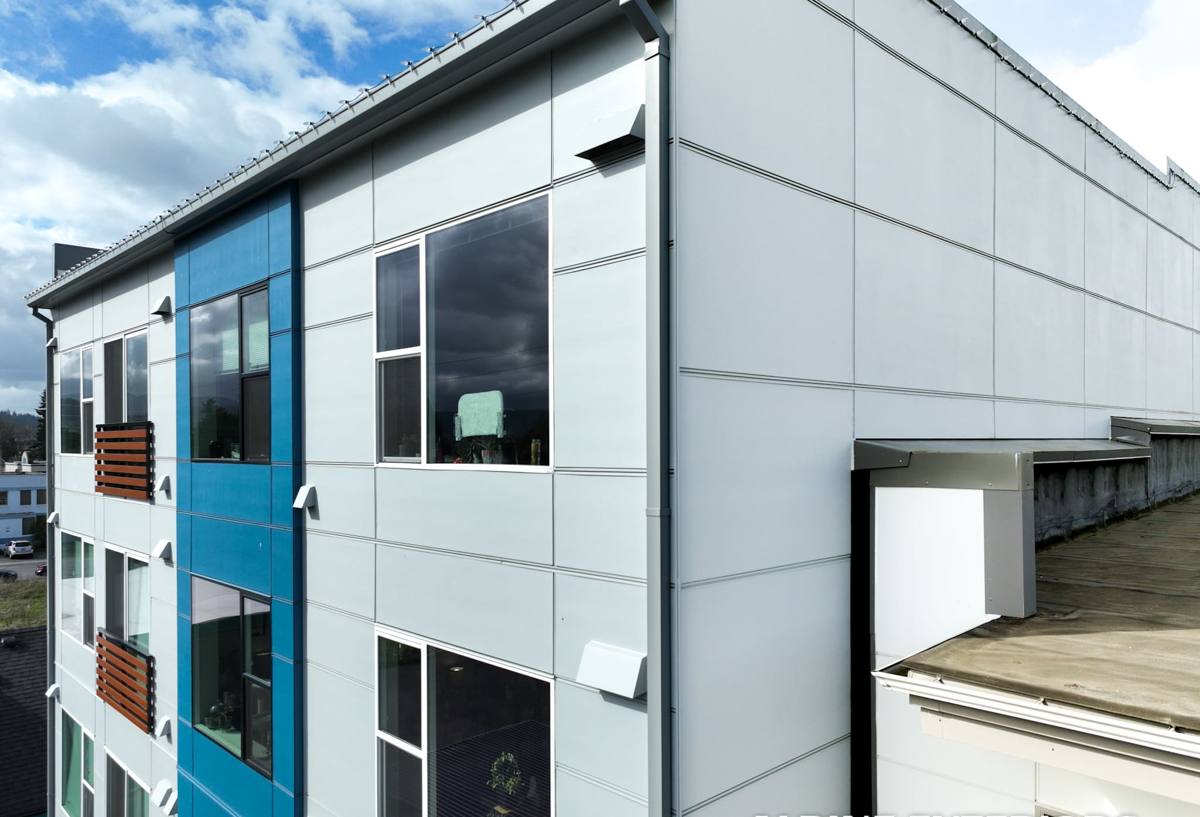
What Nooksack Homes Are Up Against
Rain That Doesn't Let Up
Driving rain — rain pushed sideways by wind rather than falling straight down — is the real test for any window. It's not the water sitting on the glass that causes problems, it's water finding its way behind trim, under sills, or into a gap where flashing was skipped or done wrong. Over years, that slow intrusion rots wood framing and blisters paint long before anyone notices a leak from inside.
Salt-Tinged Air
Air moving inland off the water carries a fine salt content with it, and that air doesn't stop at the coastline — it settles into siding, trim, and hardware across this part of the county. Salt-laden moisture is harder on unprotected metal fasteners, cheap cladding, and any finish that isn't rated for coastal exposure. It's one more reason material choice matters more here than it would somewhere landlocked and dry.
A Long Moss Season
Whatcom County's damp, shaded stretches of the year give moss and algae a long runway to take hold on anything that stays wet — roofs, north-facing siding, and window sills that don't drain properly. Moss holds moisture against wood and vinyl surfaces, which accelerates rot and finish breakdown in exactly the spots homeowners check least often.
Temperature Swings and Condensation
Even without extreme cold, the gap between a heated interior and a damp 40-degree exterior is enough to cause condensation on older, single-pane, or poorly sealed windows. That moisture on the inside of the glass is a signal the window isn't doing its job — and over time it can lead to sill damage and mold at the corners of the frame.
Signs Your Windows Are Losing the Battle
Most homeowners don't think about their windows until something forces the issue. Here's what we look for, and what you can check yourself before calling anyone:
- Fogging or a milky haze between panes of double-glazed glass — the seal has failed and the gas fill is gone
- Soft or discolored wood at the sill or lower frame corners
- Windows that are hard to open, close, or lock — a sign the frame has shifted or swollen
- Visible daylight or a draft you can feel around the frame on a windy day
- Paint that's peeling or bubbling on the interior or exterior trim near the window
- Moss or dark streaking building up on the sill or beneath the window
- Noticeably higher heating bills in a room that used to hold temperature fine
Any one of these on its own might not mean much. Two or three together, especially on a window that's original to the house, usually means it's time for a real conversation about replacement rather than another round of caulk and patch.
What "Custom" Actually Means
Custom doesn't mean expensive or fancy — it means the window is built to the actual opening in your house rather than pulled off a shelf in a standard size. Most homes in this area, especially older ones, have openings that have shifted slightly over the decades. A stock-sized replacement forced into a slightly-off opening is where a lot of future leaks start.
Custom work also covers style decisions that matter for how the house performs, not just how it looks: window shape, how it operates (casement, double-hung, sliding, awning), grille pattern, and interior/exterior color or finish. We measure the actual opening, account for how the wall assembly around it is built, and order glass and frame components to match — not the other way around.
Frame Materials and Glass Packages
Frame material and glass package are the two decisions that determine how a window performs in this climate over the next 20-plus years. Here's how the common options stack up for a wet, salt-touched, moss-prone environment like Nooksack:
| Frame Material | Moisture Behavior | Maintenance | Best Fit |
|---|---|---|---|
| Vinyl | Won't rot; can flex slightly with big temperature swings | Low — occasional cleaning | Most homes prioritizing value and low upkeep |
| Fiberglass | Very stable, minimal expansion/contraction, holds up well to sustained damp exposure | Low | Homes wanting a stiffer, longer-lived frame, willing to pay more up front |
| Wood | Handsome, but needs a sound finish system to keep moisture out | Higher — periodic refinishing | Homes prioritizing a traditional look and willing to maintain it |
| Wood-Clad | Exterior clad in vinyl or aluminum protects the wood from direct weather | Moderate | A middle ground — wood interior warmth, protected exterior |
On glass, the details that matter most locally are the Low-E coating (cuts heat loss and UV fading), the gas fill between panes (argon is standard, improves insulating value), and the spacer system at the edge of the glass unit — a poor spacer is often the first thing to fail in a damp climate, well before the glass itself.
Our Installation Process
- On-site assessment. We look at your existing windows, the condition of the framing around them, and any signs of past water intrusion before recommending anything.
- Precise measurement. Every opening gets measured individually — no assuming two windows on the same wall are identical, because on older homes they often aren't.
- Material and glass selection. We walk through frame and glass options based on your budget, the window's exposure (a west-facing wall takes more weather than a sheltered one), and how the house is used.
- Removal and inspection. Old windows come out carefully so we can check the wall cavity and sill for hidden rot or water damage before anything new goes in.
- Flashing and sealing. This is the step that determines whether a window stays dry for the next 20 years. Proper flashing tape, sill pans, and sealant sequencing matter more than the window itself.
- Setting and shimming. The new window is set level, plumb, and square, then shimmed and fastened correctly — a window installed slightly out of square will bind, leak, or fail its seal early.
- Interior and exterior finish work. Trim, caulking, and paint or stain are finished to match the rest of the house.
- Final walk-through. We open, close, and lock every window with you before we consider the job done.
Why Hiring a Crew That Already Works Nooksack Matters
Window installation looks the same on paper everywhere, but the details that keep water out change based on local weather patterns. A crew that works this part of Whatcom County regularly already knows which wall assemblies are common in Nooksack-area homes, how much wind-driven rain a given exposure typically takes, and where moss and algae tend to build up first. That's the kind of judgment that doesn't come from a manual — it comes from doing the work here, on houses like yours, season after season.
It also means a crew that's accountable locally. If a seal needs a second look after the first hard rain of the season, we're not driving in from three counties away to check on it.
What Affects the Cost
Every project is different, but these are the factors that typically move a custom window job up or down in price:
| Factor | Why It Matters |
|---|---|
| Number of openings | More windows means more material, labor, and disposal of old units |
| Frame material | Vinyl is generally the most budget-friendly; fiberglass and wood cost more up front |
| Window size and shape | Larger openings and custom shapes (arched, oversized, specialty) cost more than standard rectangles |
| Condition of existing framing | Hidden rot found during removal adds repair work before the new window can go in |
| Access and height | Second-story or hard-to-reach windows take more time and equipment |
| Glass package | Upgraded Low-E coatings or triple-pane glass add cost but improve comfort and efficiency |
We give straight numbers during the estimate, broken down by these factors, so you know what you're paying for and where the flexibility is if the budget is tight.
Keeping New Windows Performing for the Long Run
A correctly installed window still benefits from basic upkeep in this climate. Rinse sills and tracks a couple times a year to keep moss and debris from building up. Check that exterior caulking around the frame stays intact — a hairline gap is easy to reseal early and expensive to ignore. And keep an eye on drainage weep holes at the base of the frame; if they clog, water that's supposed to drain away starts sitting against the sill instead. None of this is heavy maintenance, but skipping it is how a good installation gets undermined over time.
If your windows are fogging, sticking, drafty, or just original to a house that's due for an upgrade, we're glad to take a look. Reach out for a free, no-pressure estimate — we'll walk the property, answer your questions honestly, and give you real numbers before you decide on anything.