 Blaine Siding
 Board & Batten Siding for Nooksack Homes
Nooksack sits inland along the river valley that gives it its name, away from the open water that Blaine and the coastal parts of Whatcom County deal with directly. That distance doesn't buy the neighborhood a break from wet weather, though. The same Pacific storm systems that push salt-tinged marine air onto the coastline keep moving east up the valley, and they arrive in Nooksack as driving rain, low cloud cover, and the kind of persistent dampness that keeps shaded walls wet for days at a time. Board and batten siding has become a popular choice out here for the same reason it's popular everywhere in this region — the vertical lines suit both older farmhouse-style homes and newer construction — but it's also a profile that asks more of the material and the installer than a standard horizontal lap job does.
Every seam between a board and the batten that covers it is a place water can try to work its way behind the siding. In a valley that stays humid and shaded much of the year, how that seam is built matters more than which brand name ends up on the invoice. We install James Hardie fiber cement board and batten exclusively, and we build every joint, fastening pattern, and flashing detail around what this specific climate does to a wall over ten, twenty, and thirty years.
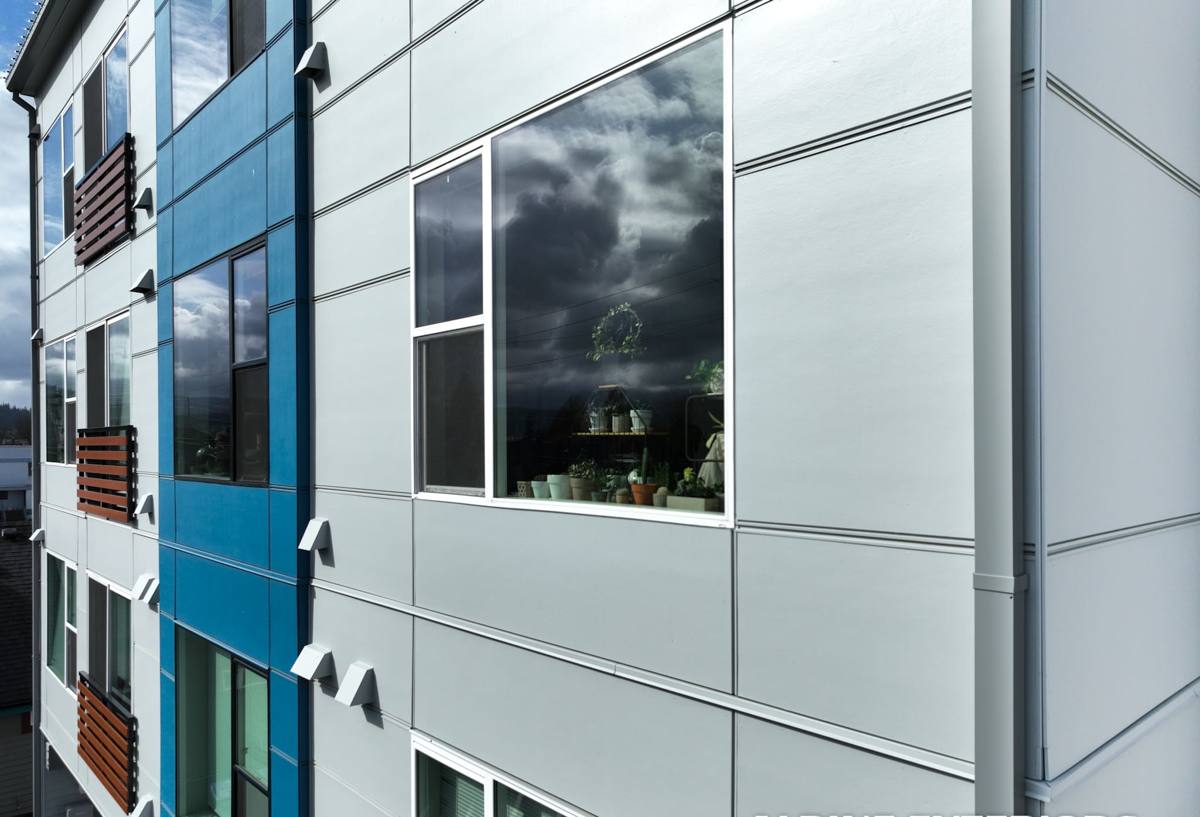
What Nooksack's Climate Asks of a Board & Batten Wall
Driving Rain in the River Valley
Rain in this part of Whatcom County rarely falls straight down for long. Wind moving up the valley pushes it sideways against exterior walls, and a vertical siding profile with battens running the full height of the wall gives that wind-driven rain a lot of joint length to test. A batten that's caulked shut instead of properly lapped and back-primed becomes a place where water collects instead of a place where it sheds.
Marine Air That Reaches Inland
Nooksack isn't on the water, but the marine layer that moves in off the Salish Sea doesn't stop at the coastline — it rolls up the lowlands and settles into the valley, especially overnight and in the shoulder seasons. That means fasteners, trim, and any exposed metal on a home here still deal with more corrosion exposure than a home in a dry inland climate would, even without direct salt spray. Board and batten uses more fasteners per square foot than lap siding because both the boards and the battens need to be secured, so getting that fastener spec right carries extra weight on this profile.
A Long Moss Season on Shaded Walls
Tree lines, outbuildings, and the general low-lying layout common around Nooksack mean plenty of walls stay shaded for most of the day. Shaded walls dry slower, and slow-drying walls grow moss and mildew for a longer stretch of the year than sun-exposed ones do. A batten installed tight against a board with no room for air movement traps that moisture right against the substrate, which is a slow, quiet path toward staining and premature finish failure right at the seam — often in a spot that isn't visible from the ground.
Why Material Choice Matters More on This Profile
Board and batten amplifies whatever weaknesses a siding material already has, simply because the joint count is higher and more raw edge is exposed to weather. That's part of why we don't offer LP SmartSide, vinyl, Cemplank, Allura, primed spruce, or cedar board and batten. Each of those is a legitimate product, and other contractors install them competently. Engineered wood products need every cut edge sealed and maintained or they're prone to swelling at exactly the kind of seams this profile has plenty of. Vinyl board and batten can look the part from the street, but it flexes with temperature and doesn't take paint well if a homeowner ever wants to change the color. Cedar looks excellent on day one and demands real, recurring maintenance to keep looking that way in a valley this consistently damp. Primed spruce needs a field-applied topcoat that has to be maintained on a schedule or the substrate underneath starts to take on moisture.
James Hardie fiber cement doesn't swell, rot, or support moss growth the way wood-based products can, and its factory-applied ColorPlus finish is baked on under controlled conditions rather than painted on site. On a profile with this many seams, in a valley that stays wet and shaded this much of the year, we standardized on one system we trust completely rather than offering a lower-cost option that shifts long-term maintenance risk back onto the homeowner.
What "Correct" Board & Batten Installation Actually Involves
A board and batten wall that's going to hold up in this climate isn't just boards and battens nailed to studs. It's a system, and every layer of that system matters:
- A properly lapped weather-resistive barrier behind the siding, with all seams and penetrations sealed before the first board goes up
- Correct clearance between the bottom of the siding and grade, decks, or roofing to keep splash-back and standing moisture away from the material
- Back-priming or factory-sealed edges on every board and batten, especially at field cuts
- A drainage gap behind battens rather than a joint caulked flush and tight, so any incidental moisture can escape instead of getting trapped
- Corrosion-resistant fasteners, sized and spaced to Hardie's published specifications rather than whatever a crew has on the truck that day
- Properly flashed and sealed transitions at every window, door, and roofline intersection, since these are the highest-risk points on any wall
- Batten spacing and reveal consistent across the wall, since an uneven pattern is one of the fastest ways a board and batten job looks amateur from the curb
Skip any one of those steps and the wall might still look right for a season or two. It's what's happening behind the boards during the years the homeowner isn't looking that determines whether the siding is still doing its job at year fifteen or twenty.
Our Process for a Nooksack Board & Batten Project
Walk-Through and Assessment
We start by walking the property and looking at each elevation individually — sun exposure, shade patterns, proximity to trees or outbuildings, and the condition of the existing siding and wall assembly all factor into how we plan the job. A wall on the shaded, tree-lined side of a Nooksack property gets treated differently than a wall that gets sun most of the day, because they're not facing the same moisture load.
Tear-Off and Substrate Check
Once the old siding comes off, we inspect the sheathing and framing underneath before anything new goes up. This is often the point where hidden moisture damage from a prior installation shows up, and it needs to be addressed before new siding goes over it — covering a compromised wall with new material just hides the problem for a while longer.
Weather Barrier, Flashing, and Install
We install the weather-resistive barrier and flashing first, then the boards and battens according to Hardie's specifications for fastening, spacing, and clearance. Every window, door, and roof transition gets flashed and sealed as part of the install, not as an afterthought once the siding is up.
Final Walk-Through
Before we consider a job finished, we walk the property with the homeowner, check every elevation, and go over care and maintenance specific to the finish and colors chosen. Straightforward questions get straightforward answers, not a sales pitch.
James Hardie Board & Batten: The Product Specifics
James Hardie's fiber cement is engineered in climate-specific HZ formulations, and homes in this part of the Pacific Northwest fall under the HZ5 line, built to perform in a wet, temperate climate rather than a dry or freeze-heavy one. Board and batten is available both as individual Hardie boards paired with separate battens and as a pre-assembled panel product, depending on the look and budget a homeowner is after. Either way, the ColorPlus finish comes factory-applied and baked on, which means the color and sheen are far more consistent than a field-painted finish, and touch-up is limited mostly to cut edges rather than repainting whole walls down the road. Hardie backs the product with a transferable limited warranty, which matters to a homeowner who might sell the property before the siding's functional life is up.
Cost Factors for Board & Batten Siding in Nooksack
Board and batten costs more per square foot to install than standard lap siding, mainly because of the extra material and labor that go into the battens themselves. Beyond the base profile, a handful of factors on any given Nooksack property tend to move the number:
| Factor | Why It Matters |
|---|---|
| Wall height and roofline complexity | More gables, dormers, and transitions mean more cuts and flashing details |
| Existing wall condition | Moisture damage found at tear-off has to be repaired before new siding goes up |
| Batten spacing and reveal | Tighter spacing uses more material and more fastening labor per wall |
| Number of windows and doors | Each opening adds flashing and trim work |
| Site access | Long driveways, fencing, or tight lot lines can add setup and staging time |
We'll walk your specific property and give you real numbers based on your walls, not a rough estimate off square footage alone — two homes with similar footprints can land at very different totals depending on how many of these factors apply.
Why Hire a Crew That Already Works in Nooksack
Board and batten is not a forgiving profile to redo. Because the battens cover the seams between boards, fixing a bad install usually means pulling battens, boards, or both, rather than a quick patch job. A crew that's worked this specific valley knows which walls hold moisture longest, which orientations need the most attention to drainage detailing, and how the marine-influenced weather that reaches this far inland behaves differently than it does right on the coast. That's not something a crew coming from outside the area picks up on the first job they do here — it comes from having done the work in this exact valley across more than one wet season.
If you're weighing board and batten for a home in Nooksack, we're happy to walk the property, talk through what your specific walls need given their shade and exposure, and give you a straightforward, no-pressure estimate. There's a form below — reach out and we'll set up a time to take a look.