 Blaine Siding
 Roofing in Grandview: A Climate That Doesn't Forgive Shortcuts
Grandview sits close enough to Semiahmoo Bay and the Strait of Georgia that salt-laden air is a constant, not an occasional weather event. Add Whatcom County's long wet season, steady onshore wind, and a moss season that can run eight or nine months out of the year, and you get a roofing environment that punishes anything installed to a bare-minimum standard. A roof that would last two decades in a dry inland climate can start failing in half that time here if it wasn't built for these specific conditions.
This page is about one job done right: new roof installation for homes in Grandview. Not a general overview of roofing services — the details that actually matter when you're replacing a roof on a house that sits in this particular stretch of Whatcom County.
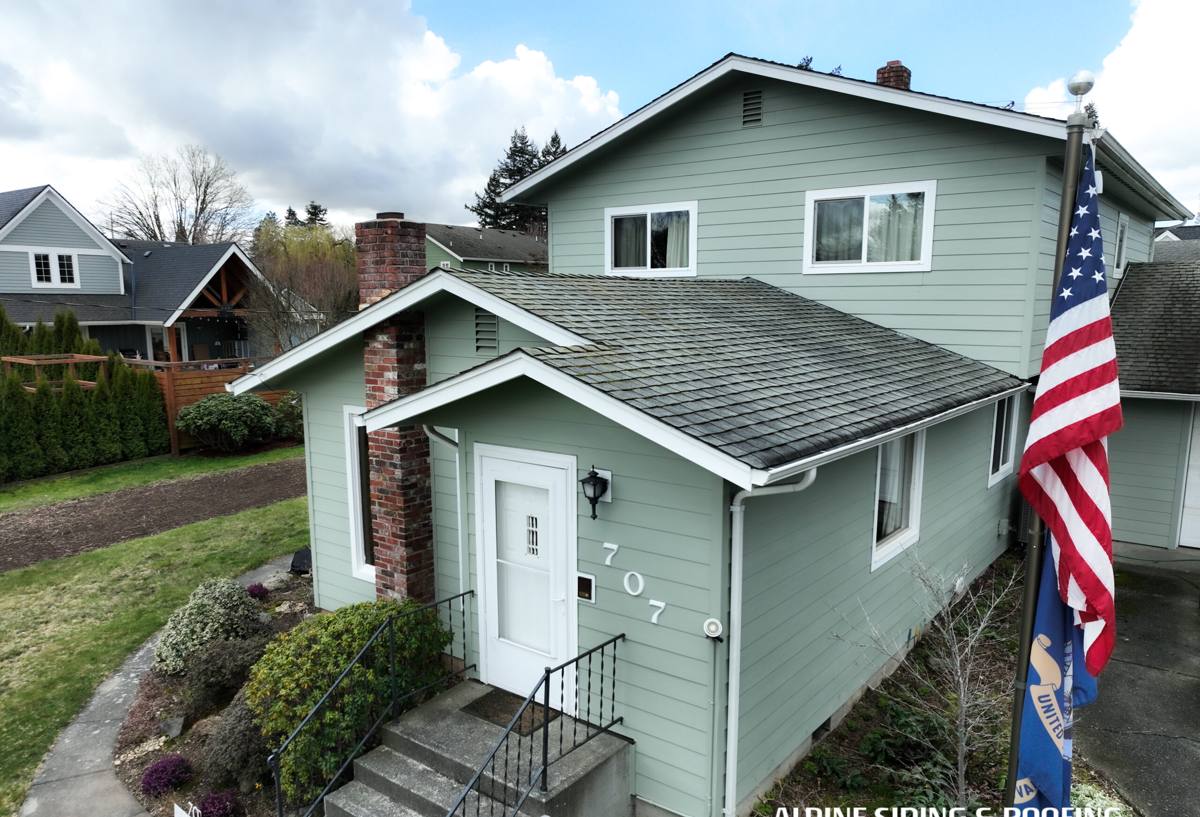
What Salt Air, Driving Rain, and Moss Actually Do to a Roof
Each of these three factors attacks a roof differently, and a correct installation has to account for all three at once.
Salt Air
Airborne salt accelerates corrosion on any exposed metal — flashing, fasteners, vent stacks, drip edge. Standard galvanized fasteners can start showing rust streaks well before the shingles around them show any wear. This is a metallurgy problem as much as a roofing problem, and it's one of the first things that gets overlooked on homes near the water.
Driving Rain
Wind-driven rain doesn't fall straight down — it gets pushed sideways and upward under laps, around penetrations, and into any gap in the flashing detail. A roof system built for calm-weather rain will leak here even if every shingle is technically installed "to code," because code minimums assume average conditions, not a coastal wind pattern.
A Long Moss Season
Moss needs shade, moisture, and time — Grandview's tree cover and damp months supply all three for most of the year. Moss doesn't just look bad; it lifts shingle edges, holds moisture against the roof deck, and works its way under laps where it keeps wood wet long after the surface has dried. Left unaddressed, it shortens the life of even a well-installed roof.
Choosing the Right Roofing System for This Climate
Every roofing material handles salt, rain, and moss differently. We walk homeowners through the real trade-offs rather than pushing one product for every house.
| Material | Salt Air Resistance | Moss Resistance | Typical Lifespan Here | Relative Cost |
|---|---|---|---|---|
| Architectural asphalt shingle | Good, with corrosion-resistant fasteners and flashing | Moderate — benefits from moss-inhibiting granules | 20–30 years | $$ |
| Standing seam metal | Very good with coated, marine-grade fasteners | Very good — sheds moss growth surface | 40–50+ years | $$$$ |
| 3-tab asphalt shingle | Fair — thinner profile, more vulnerable at edges | Lower — flatter profile holds moisture longer | 15–20 years | $ |
| Cedar shake (natural) | Fair — requires ongoing maintenance in salt exposure | Low without regular treatment; moisture retention is a real concern | Variable, maintenance-dependent | $$$ |
For most Grandview homes, a mid- to upper-tier architectural shingle rated for high wind and algae resistance offers the best balance of upfront cost and long-term performance. Standing seam metal is worth serious consideration on homes with more direct wind and salt exposure, or for owners planning to stay long-term and wanting to minimize future re-roofs. We'll always give you the honest cost-versus-lifespan math rather than steering you toward whatever is easiest to install.
What a Correct New Roof Installation Actually Involves
A new roof is only as good as what happens underneath the shingles. Here's what we consider non-negotiable on a Grandview installation.
Full Tear-Off and Deck Inspection
Layering new shingles over old is a shortcut that traps moisture and voids most manufacturer warranties. We remove the existing roofing down to the deck, then inspect every sheet of sheathing for soft spots, delamination, or moisture damage — common in this climate wherever moss or clogged gutters have kept an area wet for extended periods. Damaged decking gets replaced before anything new goes down.
Ice and Water Shield at Vulnerable Points
Eaves, valleys, and roof-to-wall transitions get a self-adhering waterproof membrane underneath the primary underlayment. This is the backup layer that keeps a wind-driven rain event from becoming an interior leak, even if water manages to work its way past the shingles themselves.
Corrosion-Resistant Flashing and Fasteners
Given the salt exposure, we specify flashing and fastener materials rated for coastal use rather than standard-grade galvanized components. It costs more upfront and it's the difference between flashing that lasts the life of the roof and flashing that needs attention in five to seven years.
Proper Attic Ventilation
Balanced intake and exhaust ventilation keeps the underside of the roof deck dry and temperature-stable. In a climate with this much ambient moisture, poor ventilation is one of the most common causes of premature roof failure from the inside out — it also feeds the conditions moss and mold need to take hold.
Moss-Resistant Shingle Selection or Treatment
Where the site has heavy shade or tree cover, we discuss algae- and moss-resistant shingle products, and we install zinc or copper strips near the ridge where appropriate — a low-maintenance way to inhibit regrowth over time without chemical treatments.
Our Process, Start to Finish
- On-site assessment. We inspect the existing roof, attic ventilation, and any problem areas — including moss buildup, soft decking, or flashing wear — and take measurements.
- Written estimate. You get a clear breakdown of material options, scope of work, and cost — no vague allowances or surprise add-ons after the fact.
- Material selection. We walk through the material comparison above based on your home's exposure, budget, and how long you plan to stay in the house.
- Tear-off and deck repair. Full removal of old roofing, deck inspection, and replacement of any compromised sheathing.
- Underlayment and flashing installation. Waterproof membrane at vulnerable points, corrosion-resistant flashing throughout.
- Shingle or panel installation. Installed to manufacturer specification, with attention to wind-rated fastening patterns given the exposure.
- Final walkthrough and cleanup. We inspect the completed roof with you, haul away all debris, and do a magnetic sweep for stray fasteners.
Signs a Grandview Home May Need a New Roof
- Granules collecting in gutters or at downspout outlets
- Shingles that are curling, cupping, or missing at the edges
- Visible moss or dark streaking across large sections of the roof
- Soft spots or sagging when walked on (assessed by a professional, not the homeowner)
- Rust staining around flashing, vent stacks, or fasteners
- Daylight visible through the roof deck from inside the attic
- Interior water stains on ceilings, especially after wind-driven rain events
- The roof is approaching or past its material's expected lifespan for this climate
Any one of these on its own isn't necessarily an emergency, but a combination of two or three is worth a professional inspection sooner rather than later — small issues in this climate tend to compound quickly once moisture gets behind the roofing system.
Why a Local Blaine Crew Matters for This Job
Roofing crews who don't regularly work this stretch of Whatcom County often under-spec for the actual exposure a Grandview home sees — using standard fasteners instead of corrosion-resistant ones, skipping moss-inhibiting details, or under-ventilating because it "usually" works elsewhere. We work in this area regularly enough to know which parts of a roof system need to be upgraded past the code minimum and which manufacturer products actually hold up to salt air and a long wet season, rather than just meeting a spec sheet written for a different climate.
Being local also means we're reachable for questions during and after the job, and we're not disappearing to the next region once the install is done. If a warranty question or a maintenance question comes up two years down the road, you're calling a crew that's still working in your neighborhood.
Protecting the Investment After Installation
A correctly installed roof still benefits from basic seasonal upkeep in this climate. Keeping gutters clear so water doesn't back up under the eaves, trimming back overhanging branches to reduce shade and debris buildup, and having moss growth addressed before it spreads are all low-cost habits that protect the investment. We're happy to talk through a simple maintenance schedule appropriate for your home's specific exposure and tree cover when we complete the install.
If you're weighing a new roof for a Grandview home, we're glad to come take a look and give you a straightforward, no-pressure estimate — use the form below to get started.