 Blaine Siding
 Why Blaine Harbor's Climate Is Hard on a Roof
Blaine Harbor sits right where the weather comes off the water first. Homes here take a different kind of beating than roofs a few miles inland in Whatcom County — salt-laden air moves through constantly, rain arrives sideways as often as it falls straight down, and the wet season stretches long enough that moss and algae get a real foothold before summer ever dries things out. None of that is exotic or extreme, but it's relentless, and a roof that would hold up fine in a drier, inland part of the county can start showing problems here years earlier.
Salt air is the piece people underestimate most. It doesn't take a house sitting on the water — even a block or two back, airborne salt settles on exposed metal, fasteners, and flashing day after day. Combined with near-constant moisture, that's a corrosion accelerant. Add wind-driven rain that gets pushed up under laps and around penetrations that would stay dry in a calmer climate, and you've got a roof system that has to be right in the details, not just the field of the panels.
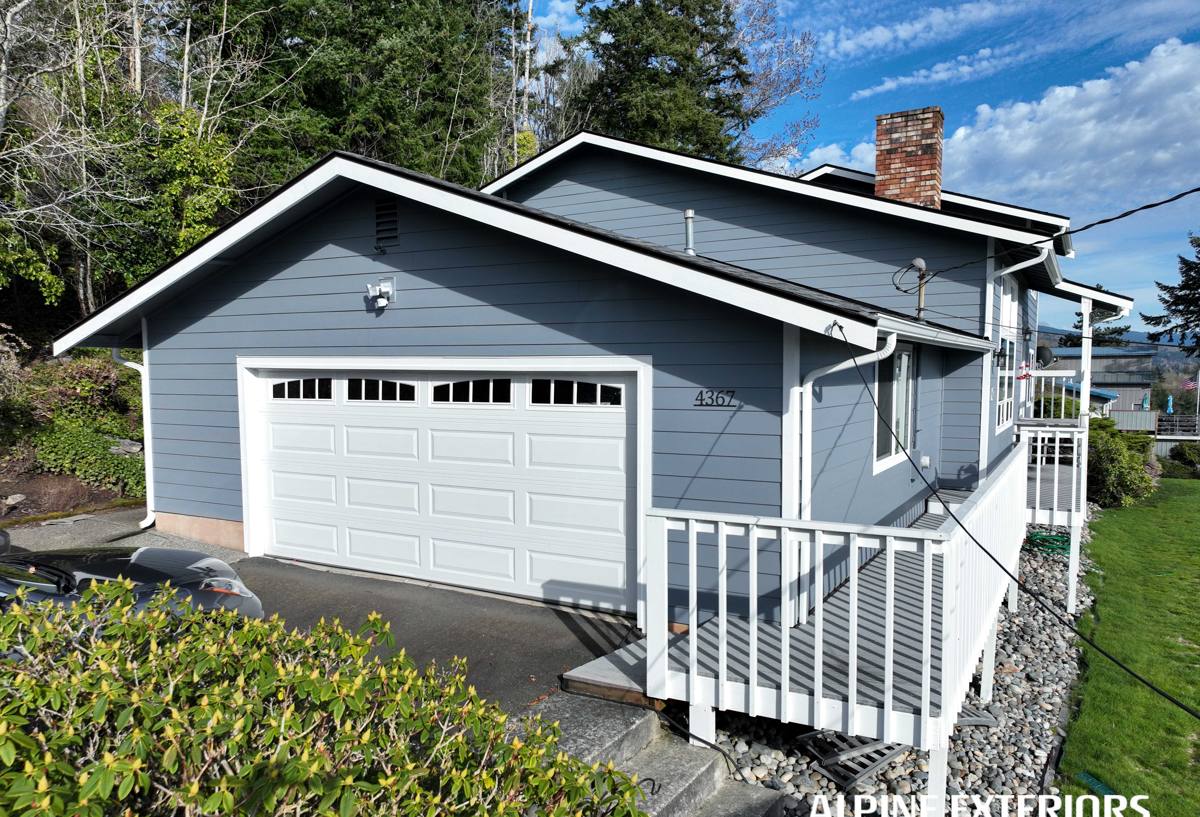
What a Metal Roof Actually Needs to Handle This
Fasteners and Metal That Match the Environment
The single biggest point of failure we see on metal roofs near the water isn't the panels — it's the fasteners and trim. Standard-grade screws and unmatched metals corrode faster in salt air, and once a fastener starts weeping rust, it stains the panel and eventually loses its seal. For Blaine Harbor, that means specifying corrosion-resistant fasteners rated for coastal exposure and making sure flashing, trim, and panel metal are compatible with each other so you're not setting up galvanic corrosion between dissimilar metals.
Underlayment and Moisture Management
Because wind-driven rain here can push water uphill under laps, a synthetic, self-adhering underlayment at eaves, valleys, and penetrations matters more than it would in a sheltered location. We also pay close attention to how the roof breathes — trapped moisture under a metal panel, especially over an older roof deck, is how you end up with deck rot nobody notices until a soft spot shows up on the interior ceiling.
Panel Profile and Ventilation
Panel profile affects how well a roof sheds wind-driven rain and how much surface area is exposed to standing moisture. Ridge and soffit ventilation also has to be sized correctly — good ventilation controls condensation inside the attic, which is a separate but related problem from exterior moisture intrusion, and it's easy to get wrong on a retrofit if the existing intake and exhaust weren't balanced to begin with.
Comparing Metal Roofing Types for This Climate
Not every metal roofing product performs the same way under salt air and constant moisture. Here's how the common options stack up for a Blaine Harbor home specifically.
| Type | Coastal Performance | Maintenance | Typical Fit |
|---|---|---|---|
| Standing seam (concealed fastener) | Best — no exposed fasteners to corrode or work loose | Low | Full replacements, homes closest to the water |
| Exposed-fastener panel | Good if fasteners and gaskets are coastal-rated and re-checked periodically | Moderate — fasteners need occasional inspection | Budget-conscious replacements, outbuildings, garages |
| Stone-coated steel | Good; coating protects the substrate but seams and cuts need careful sealing | Moderate | Homes wanting a shingle or shake look with metal durability |
| Metal shingles/shakes | Good on a well-detailed roof; more seams than standing seam | Moderate | Homes matching a traditional roofline |
For most Blaine Harbor homes, we lean toward standing seam when the budget allows it, simply because eliminating exposed fasteners removes the most common long-term maintenance and corrosion point in this environment. That's a professional preference based on how these systems age here — not a knock on exposed-fastener panels, which still perform well when installed and maintained correctly.
What Drives Cost on a Coastal Metal Roof
| Factor | Why It Matters Here |
|---|---|
| Panel type and gauge | Heavier gauge and concealed-fastener systems cost more upfront but reduce long-term corrosion maintenance |
| Roof complexity | More valleys, dormers, and penetrations mean more flashing detail — and more places wind-driven rain can find a way in |
| Existing deck condition | Moisture-damaged decking found during tear-off adds cost but shouldn't be skipped over |
| Fastener and flashing spec | Coastal-rated hardware costs more per piece but is cheap insurance against early corrosion |
| Ventilation upgrades | Balancing intake and exhaust during a re-roof is often the right time to fix an under-ventilated attic |
We won't quote a number here that doesn't mean anything without seeing the actual roof — pitch, size, tear-off scope, and detailing all move the price. What we can tell you honestly: the line items that matter most for longevity in Blaine Harbor are the fastener spec and the flashing detail, not the headline price per square.
How We Approach a Metal Roof Job in Blaine Harbor
- On-site assessment — we look at the existing roof, deck condition, ventilation, and how exposed the home is to wind and salt drift off the water.
- Product and profile selection — we walk through the comparison above with you based on your budget, roofline, and how close you are to the water.
- Tear-off and deck inspection — any soft or moisture-damaged decking gets replaced before a single panel goes down; covering up a bad deck is how you end up redoing the job in five years.
- Underlayment and flashing first — self-adhering membrane at vulnerable points, then flashing detail at every penetration, valley, and edge.
- Panel installation — installed to the manufacturer's coastal-exposure specifications, with fasteners and sealants matched to the metal.
- Ventilation check — intake and exhaust balanced so the attic isn't trapping moisture against the new deck from underneath.
- Final walkthrough — we go over the finished roof with you, including what routine maintenance actually looks like for your specific setup.
Moss, Algae, and Salt: What Ongoing Maintenance Really Looks Like
A correctly installed metal roof in this climate needs far less maintenance than shingles, but "less" isn't "none." Moss and algae don't damage metal panels the way they can undermine shingles, but buildup still holds moisture against seams and fasteners longer than a clean roof would, and it's worth staying ahead of for appearance and drainage alone.
- Rinse debris and organic buildup from valleys and low-slope sections once or twice a year, especially after the wet season
- Keep gutters and downspouts clear so water isn't backing up against eaves and fascia
- Trim back overhanging branches that keep sections of the roof shaded and damp
- Have fasteners and flashing visually checked periodically, particularly on exposed-fastener systems
- Watch for any streaking or discoloration near fasteners, which can be an early sign of a compromised seal
Mistakes We See on Older Metal Roofs Near the Water
A lot of the repair calls we get near the harbor trace back to a handful of recurring issues: exposed fasteners that were never upgraded to coastal-rated hardware, flashing that was sealant-dependent instead of properly lapped and mechanically fastened, and ventilation that was never balanced when the roof went on — leaving moisture trapped against the underside of the deck for years before it shows up as a problem inside the house. None of these are metal roofing failures in the material sense; they're installation shortcuts that a coastal climate exposes faster than an inland one would.
Signs Your Roof Might Be Ready for a Metal Upgrade
If you're on an aging composition roof in Blaine Harbor and weighing whether metal makes sense, a few signs point toward it being worth a serious look: granule loss and curling shingles from repeated wet-dry cycling, recurring moss growth that keeps coming back no matter how often it's cleaned, visible rust streaking from old flashing, or a roof that's simply reaching the end of its expected life and due for replacement anyway. Metal isn't the right call for every home or every budget, but for a house that takes the full brunt of harbor weather, the reduced maintenance and longer service life often make the upfront cost worth it.
Why Local Experience on This Specific Stretch of Coast Matters
Whatcom County covers a lot of ground, and roofing conditions change meaningfully between a sheltered inland lot and a home sitting close to Blaine Harbor. A crew that already works this area knows which flashing details tend to fail first here, which fastener specs actually hold up to the salt air, and how aggressive the moss season really gets on a shaded, north-facing slope near the water. That's not something you can fully substitute with a generic install — it comes from having done the work on roofs exposed to the same conditions yours faces every year.
If you'd like an honest look at what your roof actually needs, we offer free, no-pressure estimates — use the form below and we'll take it from there.