 Blaine Siding
 Energy-Efficient Windows Built for Lynden's Climate
Lynden sits far enough inland from Blaine and the Strait to escape the worst of the direct salt spray, but it still gets the same wet, gray, low-sun winters that define Whatcom County. Homes here deal with months of driving rain, heavy condensation season, and enough shade and moisture to grow moss on anything that sits still long enough. Windows take the brunt of that. Old single-pane or early double-pane units fog up, sweat on the inside, let cold air pool along the floor, and slowly rot the wood or vinyl around the frame. Replacing them with genuinely energy-efficient units isn't just about a lower power bill — it's about stopping moisture damage before it spreads into your walls.
We install and service energy-efficient windows across Lynden as part of our regular Whatcom County work. We're not a traveling crew that shows up once and disappears — we're in this area regularly, which matters when a window needs an adjustment, a warranty claim, or a follow-up seal check a year or two down the road.
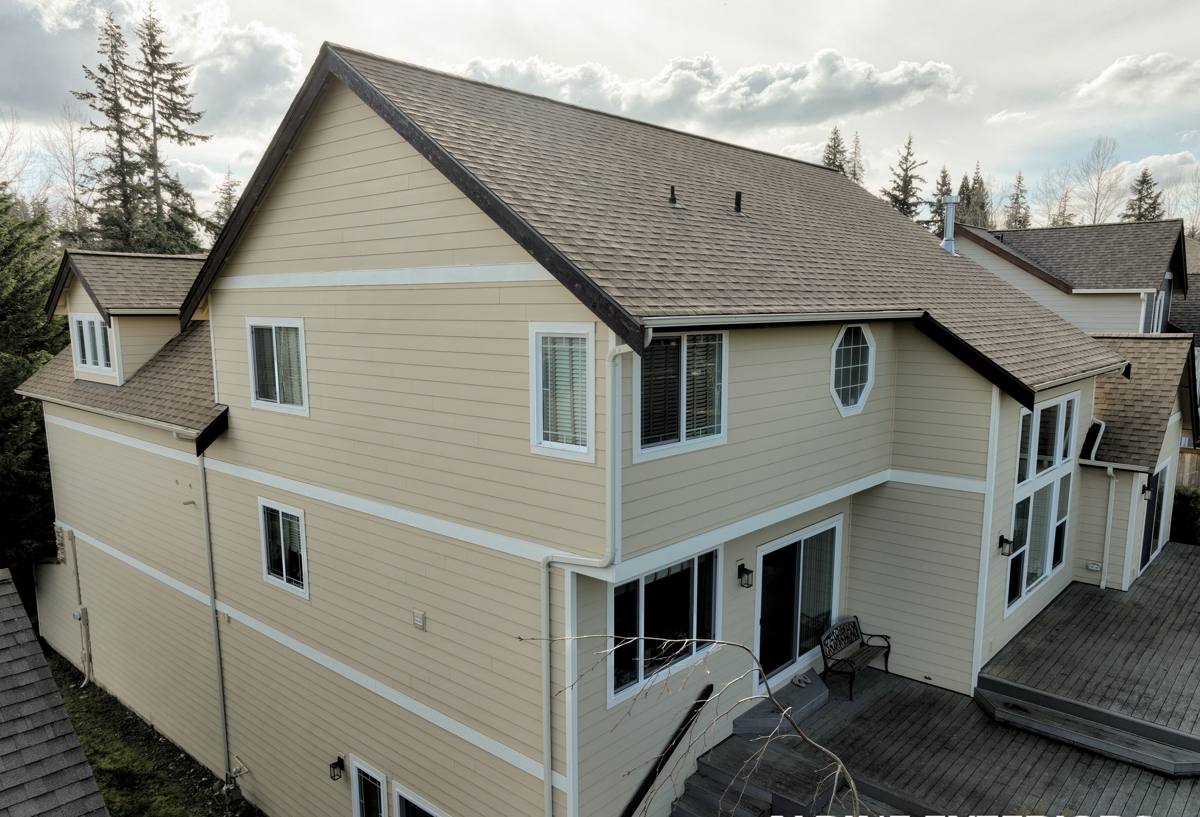
What "Energy-Efficient" Actually Means Here
The label gets used loosely. For a Lynden home, an energy-efficient window needs to do three specific jobs, not just carry an ENERGY STAR sticker:
- Keep conductive heat loss down — a low U-factor so warm indoor air isn't constantly bleeding out through the glass and frame during our long heating season.
- Manage condensation — proper glazing and spacer design so moisture doesn't collect on the interior glass or, worse, inside the frame cavity where you can't see it.
- Seal against wind-driven rain — Whatcom County storms come in sideways off the water often enough that a window's air and water sealing matters as much as its insulation rating.
A window can have a good U-factor on paper and still perform poorly here if it's installed with weak flashing or a sloppy sill pan. Performance is a combination of the product and the install — we treat both as equally important.
U-Factor, SHGC, and What They Mean for This Area
Two numbers matter most in our climate zone:
- U-Factor — lower is better for insulation. This is the number that matters most for Lynden, since our climate is dominated by heat retention, not cooling load.
- Solar Heat Gain Coefficient (SHGC) — how much solar heat passes through the glass. Given how little direct sun Whatcom County gets much of the year, we generally don't push homeowners toward aggressively low-SHGC glass unless a specific room has heavy west or south exposure. A window that blocks solar heat gain in a climate that's starved for sun in January isn't doing you a favor.
Signs Lynden Homeowners Should Watch For
Because our winters are long and wet, window failure here tends to show up as moisture problems before it shows up as a comfort complaint. Common signs we get called out for:
- Fogging or moisture trapped between panes — the seal has failed and the gas fill is gone.
- Soft or discolored wood at the sill or corners of the frame, often first noticed on the interior.
- Persistent condensation on the inside of the glass, especially in bedrooms and bathrooms during cold snaps.
- Visible moss or dark streaking on wood trim around the window exterior — a sign the area stays wet longer than it should.
- Drafts you can feel with a hand near the frame, even with the window latched.
- Difficulty opening, closing, or latching — frames can swell and warp after repeated wet-dry cycles.
Any one of these on its own isn't an emergency. Several together, or wood damage at the sill, usually means it's time to stop patching and start planning a replacement.
What a Correct Installation Involves
Most window failures we get called to fix in this region aren't product failures — they're installation shortcuts that let water get behind the window instead of over it. A correct install includes:
- Removing the old unit carefully and inspecting the rough opening for hidden rot before anything new goes in.
- Sill pan flashing that directs any water that does get past the window back outside, not into the wall cavity.
- Proper flashing sequencing — sill, then window, then jamb flashing, then head flashing, each lapped correctly so water always sheds downward and outward.
- Air sealing with the right materials — low-expansion foam or backer rod and sealant around the frame, not just caulk smeared over gaps.
- Correct shimming and fastening so the frame stays square and the sash operates smoothly for years, not just on install day.
- Interior and exterior trim finished properly so the whole assembly sheds water and looks right from both sides.
Skipping any one of these steps is how a brand-new, high-efficiency window ends up with rot behind the trim within a few wet seasons. We treat flashing and sealing as the non-negotiable part of the job, not an afterthought.
Comparing Window Options for Lynden Homes
| Frame Material | How It Handles Our Climate | Maintenance | Typical Fit |
|---|---|---|---|
| Vinyl | Good moisture resistance, won't rot; performs well in wet climates | Low — occasional cleaning | Most Lynden homes, best value-to-performance |
| Fiberglass | Excellent stability in temperature and moisture swings, very low expansion/contraction | Low | Homes wanting a premium, long-service-life window |
| Wood-clad | Attractive interior wood look; clad exterior protects against our rain if sealed and maintained | Higher — exterior clad joints need periodic inspection | Older or historic-style homes where wood interior trim matters |
| Aluminum | Prone to condensation and heat loss without thermal breaks; generally a poor fit for our climate | Moderate | Rarely recommended for residential use here |
We'll walk through the honest trade-offs for your specific home rather than push one material across the board. Budget, the home's age, and how exposed the window openings are to wind and rain all factor in.
Our Process for Lynden Projects
1. On-Site Assessment
We look at each window individually — frame condition, sill condition, current performance, and how exposed that side of the house is to prevailing wind and rain. Not every window on a home needs the same solution.
2. Straightforward Quote
You get a written estimate that spells out product, install scope, and what's included — no vague allowances that turn into surprise add-ons later.
3. Install, Done Right
Flashing and sealing get the same attention regardless of how visible the finished trim is. We'd rather spend the extra time on the parts you'll never see than have you dealing with rot in five years.
4. Follow-Up
New window frames and trim can settle slightly in their first year through a full wet season. We're available to check seals and adjust hardware if something needs it after the first winter.
Cost Factors to Expect
We won't quote a number without seeing the actual openings, but here's what tends to move the price for Lynden homeowners:
- Frame material — vinyl is typically the most affordable, fiberglass and wood-clad cost more upfront.
- Number of windows and sizes — larger openings and specialty shapes (bay, arched) cost more than standard rectangular units.
- Extent of rot repair needed — if the sill or framing is damaged, that repair work is separate from the window itself.
- Full-frame replacement vs. insert replacement — insert replacement (new window into the existing frame) is cheaper but only appropriate when the existing frame is sound; full-frame replacement costs more but is the right call when there's frame damage or you want to correct a poor original install.
- Trim and finish work — matching existing interior or exterior trim profiles can add labor.
Why Hire a Crew That Already Works in Lynden
Window performance in Whatcom County isn't the same problem you'd be solving in a dry climate. A crew that mostly works drier regions may not think twice about flashing details that are critical here, where driving rain and a long moss season punish any shortcut within a couple of winters. We work this area regularly, we've seen how local homes age in this weather, and we build every install assuming it needs to shed water for decades, not just pass a walkthrough on install day. That also means if something needs a look after the fact, we're not far away and not hard to reach.
If your windows are drafty, fogged, or showing wear around the frames, we're happy to take a look and give you a straightforward, no-pressure estimate — just fill out the form below.