 Blaine Siding
 Composite Decking Built for Lynden's Wet Season, Not Against It
Lynden sits inland from Blaine but shares the same Whatcom County weather pattern that wears down outdoor structures faster than most homeowners expect: long stretches of driving rain from fall through spring, humid air that never fully dries out the ground, and a moss season that can run six months or more on any surface that stays shaded and damp. A deck in Lynden isn't judged by how it looks on a dry August afternoon — it's judged by how it holds up in February, when the boards have been wet for weeks straight and the yard hasn't seen direct sun in days.
Composite decking exists largely because wood struggles with exactly this kind of climate. It doesn't mean composite is maintenance-free or foolproof — it means the material and the installation both have to be matched to how water actually moves through a Lynden backyard across a full year, not just how the deck looks the day it's finished.
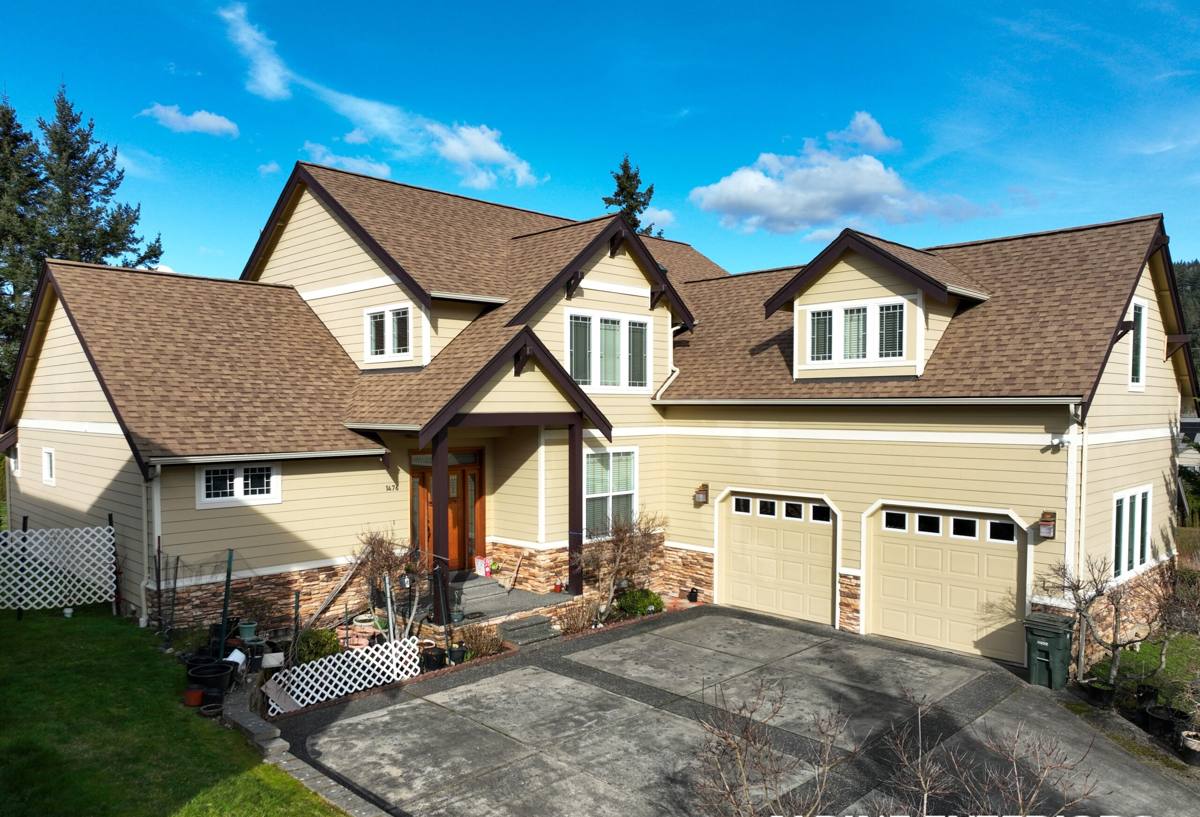
What Lynden's Climate Actually Does to a Deck
Moisture That Doesn't Let Up
Whatcom County's rainy season means a deck surface can stay damp for days at a time, and the underside of the joist structure often stays damp even longer since it's shielded from wind and sun. Composite boards resist rot, but the framing underneath — and the fasteners holding everything together — still need to be built to shed water, not trap it.
Moss and Algae Growth
Shaded decks, decks under trees, and decks on the north side of a house are the first to grow moss in this climate. Moss holds moisture against the board surface and makes composite decking slick, which is a real safety issue on stairs and near door thresholds. Board spacing, airflow underneath the deck, and surface texture all affect how fast moss takes hold.
Salt-Influenced Air
Lynden is far enough inland to avoid direct salt spray, but the broader region's marine air still carries some salt content, and it accelerates corrosion on lower-grade fasteners and hardware over time. Fastener choice matters more here than in a dry inland climate.
Freeze-Thaw Cycling
Whatcom County winters aren't extreme, but they're not stable either — nights near freezing followed by wet, warmer days are common. That cycling stresses any gaps, seams, or fastener points that weren't installed with proper expansion room.
Where Composite Decks Actually Fail in This Climate
When we get called out to look at a problem deck in this area, it's rarely the composite boards themselves that failed. It's almost always one of these:
- Joists or ledger boards that were never properly flashed, so water tracked behind the house siding for months before anyone noticed
- Boards installed tight against each other with no expansion gap, leading to buckling as they absorb ambient moisture
- Fasteners that corroded and stained the board surface, or worked loose under freeze-thaw movement
- Low or no ventilation underneath the deck, trapping moisture and accelerating moss and mildew on the underside
- A ledger connection to the house that wasn't sealed correctly, creating a hidden rot problem in the wall framing behind it
Every one of these is preventable with correct installation. None of them show up as a defect in the composite material itself — they show up as a defect in how the deck was built.
What a Correct Composite Deck Build Involves
Ledger and Flashing Detail
If the deck attaches to the house, the ledger board connection is the single highest-risk point for hidden water damage. Proper flashing — installed so water is directed out and away from the house framing rather than behind it — is not optional in a climate that sees this much sustained rainfall.
Framing Layout and Spacing
Composite boards have manufacturer-specified joist spacing requirements, and those specs get tighter for angled or picture-frame layouts. Undersized joist spacing is a common shortcut that leads to noticeable board flex and, over years, fastener stress.
Ventilation Underneath
Open or properly vented skirting keeps air moving under the deck, which speeds up drying after rain and slows moss growth on the underside of the boards and the tops of the joists. A fully enclosed, unvented deck skirt in this climate is asking for a damp, moss-prone cavity.
Fastening System
Hidden fastener clip systems are standard on most composite lines now, and they matter more here than the fastener spec sheet suggests — a corrosion-resistant, properly rated clip system avoids the surface staining and loosening that shows up within a few winters when cheaper fasteners are used.
Expansion Gaps
Composite boards move with temperature and moisture, less than wood but not zero. Correct gapping at board ends, around posts, and at any transitions keeps that movement from telegraphing into buckled or pinched boards later.
Comparing Decking Approaches for a Lynden Property
| Factor | Pressure-Treated Wood | Composite Decking |
|---|---|---|
| Moisture resistance in wet winters | Requires ongoing sealing to resist rot | Resists rot without sealing; core still needs proper drainage detailing |
| Moss and algae resistance | Porous surface holds moisture, moss establishes quickly | Denser surface slows moss but doesn't prevent it in shaded, unventilated spots |
| Annual maintenance | Cleaning, sealing/staining every 1-2 years | Periodic washing; no sealing or staining needed |
| Long-term cost | Lower upfront, higher lifetime maintenance cost | Higher upfront, lower lifetime maintenance cost |
| Sensitivity to installation errors | More forgiving of minor framing shortcuts | Less forgiving — spacing and ventilation errors show up as buckling or moss |
Neither material is automatically "better" — the right call depends on the homeowner's tolerance for upkeep and how the deck sits relative to shade, drainage, and sun exposure on the specific property.
Our Process for a Composite Deck Build in Lynden
- Site assessment: We look at drainage slope, existing shade cover, proximity to the house's siding and grade, and how water currently moves across the yard before any framing goes in.
- Framing and ledger work: Joists, beams, and any ledger attachment are built to the load and spacing specs for the composite line being installed, with flashing done properly at every point that touches the house.
- Ventilation planning: Skirting and underside airflow are planned in at this stage, not added as an afterthought once the deck is done.
- Board installation: Boards go down with correct expansion gaps and a corrosion-resistant hidden fastener system, laid out to minimize seams in high-traffic areas.
- Final walkthrough: We check stair and rail hardware, confirm drainage is directing water away from the foundation, and go over basic seasonal care with the homeowner.
Why Local Installation Experience Matters Here
A composite deck installed to spec in a dry, low-humidity region can get away with looser detailing than one built in Whatcom County. Crews who don't regularly work in this climate sometimes under-build ventilation, skip flashing details because "it doesn't rain that much where they usually work," or spec fasteners that are fine in a dry state but corrode here within a few winters. A crew that works Lynden and the surrounding Blaine area routinely sees how these decks perform after two, five, and ten wet seasons — not just how they look on installation day. That feedback loop is what separates a deck that still looks and functions right in year eight from one that's already showing moss stains and loose boards by year three.
Maintaining a Composite Deck Through a Whatcom County Winter
- Sweep leaves and debris off the deck regularly in fall — trapped organic matter under leaves is what starts most moss growth
- Rinse the deck surface periodically through the wet season, especially in shaded corners
- Keep gutters and downspouts near the deck clear so runoff isn't dumping directly onto or under the deck structure
- Check that skirting vents aren't blocked by stored items, mulch, or overgrown landscaping
- Inspect stair treads and rail connections once a year for any looseness after freeze-thaw cycles
None of this is heavy maintenance compared to a wood deck, but composite decking in this climate still benefits from a few minutes of seasonal attention rather than being treated as truly set-and-forget.
Get a Straight Answer for Your Property
Every lot in Lynden drains differently and gets a different mix of sun and shade, which changes how a deck should be framed, vented, and fastened. If you're planning a new composite deck or want a second opinion on an existing one, we're happy to take a look and give you a straightforward, no-pressure estimate — just fill out the form below.