 Blaine Siding
 Why Roofs Near Lynden Wear Down Differently
Ask any roofer who's worked Whatcom County for a while and they'll tell you the same thing: it's not any single storm that wrecks a roof out here, it's the accumulation. Homes in and around Lynden sit under a marine-influenced climate that pulls in moisture-laden air off the coast for months at a time. That air doesn't just bring rain — it brings long stretches of damp, overcast days where a roof surface never fully dries out between weather systems. Add driving rain that comes in at an angle during fall and winter storms, and you've got conditions that test every seam, nail, and flashing detail a roof has.
Then there's moss. Whatcom County's moss season isn't a few weeks in spring — it's most of the year. Shaded roof slopes, north-facing exposures, and anything near overhanging trees stay wet long enough for moss and algae to take hold and spread. Left alone, that growth holds moisture against the shingle surface, works its way under tabs, and shortens the life of even a well-installed roof. None of this means asphalt shingle roofing is a bad fit for this area — it's one of the most practical, cost-effective options available. It just means the installation has to be done with this specific climate in mind, not treated like a generic reroof.
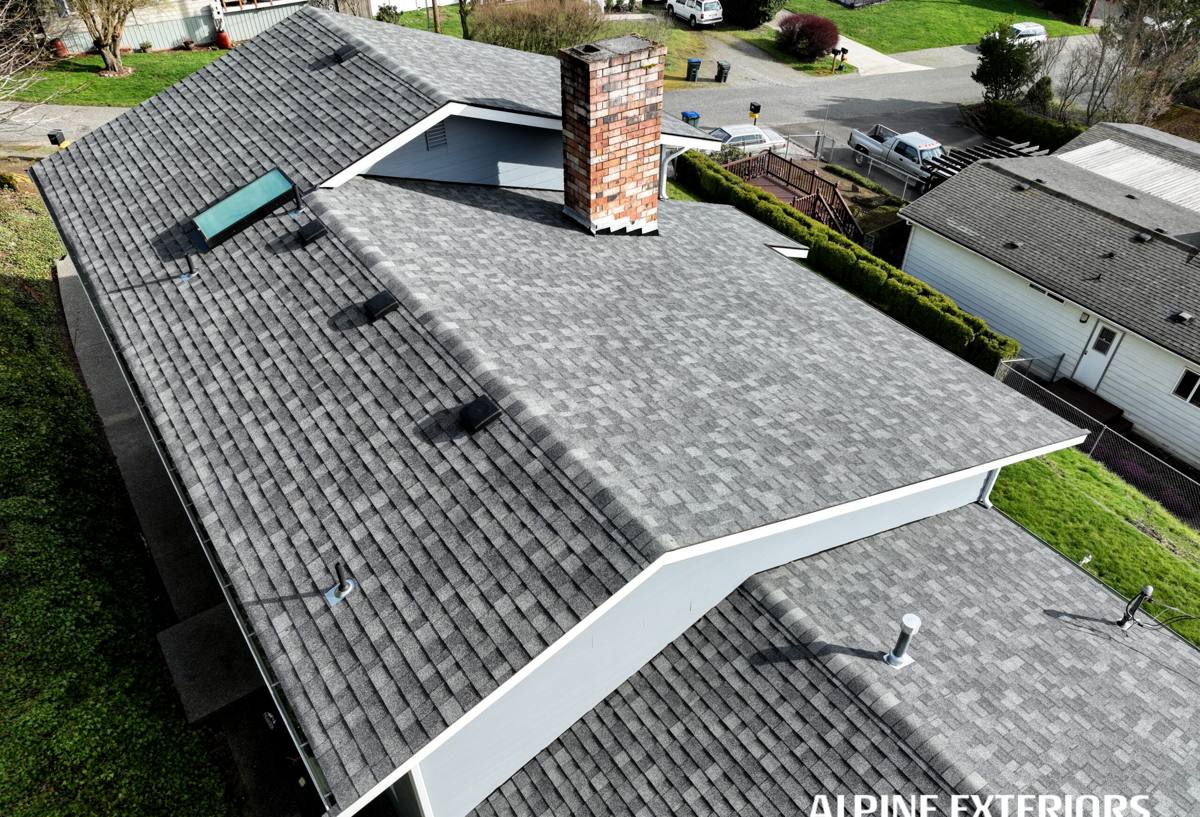
What a Correctly Installed Asphalt Shingle Roof Needs Here
A shingle roof that holds up in Whatcom County isn't just about the shingle itself. The shingle is the visible layer, but the system underneath it does most of the real work of keeping a house dry.
Underlayment and Water Barrier at the Vulnerable Points
In a climate with sustained wet weather, we treat underlayment as a real second line of defense, not a formality. Eaves, valleys, and areas prone to wind-driven rain get self-adhering waterproof membrane, not just felt paper. Valleys in particular take a beating here — they funnel more water than any other part of the roof, and a valley that's under-protected is usually the first place a Lynden roof starts to leak.
Ventilation Isn't Optional
A roof deck that can't breathe stays damp from the underside even when the shingles above it are doing their job. Balanced intake at the eaves and exhaust at the ridge keeps air moving through the attic space, which controls moisture buildup, reduces the risk of rot in the decking, and helps shingles shed heat and moisture evenly. Skipping or shortchanging ventilation is one of the most common reasons a shingle roof underperforms its expected lifespan in this climate, regardless of how good the shingle itself is.
Flashing Details Matter More Than the Shingle Brand
Chimneys, skylights, sidewalls, and roof-to-wall transitions are where most leaks actually start — not in the open field of shingles. Step flashing, counter-flashing, and proper kick-out flashing at roof-to-wall intersections need to be installed correctly and integrated with the underlayment, not just caulked and hoped for. A premium shingle installed over sloppy flashing work will still leak.
Choosing a Shingle for This Climate
Not every asphalt shingle is built the same way, and in a market with long wet seasons and heavy moss pressure, the differences matter more than they would in a drier region.
| Shingle Type | Typical Lifespan | Algae/Moss Resistance | Best Fit |
|---|---|---|---|
| Standard 3-tab | 15–20 years | Low unless treated | Budget-conscious reroofs, simple roof lines |
| Architectural (laminated) | 25–30 years | Moderate | Most homes; better wind rating and appearance |
| Algae-resistant architectural | 25–30+ years | High (copper/zinc granules) | Shaded roofs, north slopes, tree-heavy lots |
For most Lynden-area homes, we lean toward an architectural shingle with algae-resistant granules, especially on any slope that sits in shade for a good part of the day. It costs a bit more up front than a basic 3-tab, but it directly addresses the moss and streaking problem this climate creates, and it carries a stronger wind rating for the gusty storms that roll through in the winter months.
Signs Your Roof Needs a Closer Look
Because so much of the damage in this climate happens gradually, a lot of homeowners don't realize how much wear has built up until something fails. Worth checking for:
- Dark streaking or green-black growth concentrated on shaded slopes
- Granules collecting in gutters or at the base of downspouts
- Shingle edges that look curled, cupped, or lifted
- Soft spots or slight sagging when walked (or visible from a ladder)
- Daylight visible through the attic roof deck, or damp insulation below it
- Moss thick enough that you can't see the shingle surface underneath it
- Flashing around chimneys or vents that looks separated, rusted, or caulked-over repeatedly
Any one of these on its own might not mean an urgent problem. Several together, especially on a roof that's 15+ years old, usually means it's worth having someone take a real look rather than waiting for an active leak to show up inside the house.
Our Process, Start to Finish
We keep the process straightforward and try not to make homeowners guess what's happening at each stage.
- On-site assessment. We walk the roof (or use a drone/ladder inspection where a walk isn't safe), check the decking condition, ventilation setup, and flashing points, and take measurements.
- Written estimate. A clear scope of work and price, including what shingle and underlayment system we're recommending and why, based on that specific roof's exposure and slope.
- Tear-off and deck inspection. Old roofing is fully removed so we can inspect the deck itself — this is where hidden rot from years of moisture gets found and addressed before it's covered back up.
- Underlayment and flashing installation. Waterproof membrane at eaves and valleys, new flashing at all penetrations and transitions, and balanced ventilation components.
- Shingle installation. Installed to manufacturer nailing specifications, which matters for both wind performance and warranty validity.
- Cleanup and final walkthrough. Magnetic sweep for nails, gutter and yard cleanup, and a walkthrough so you can see the finished work and ask questions.
What Drives the Cost of a Reroof
Every roof is different, and the honest answer to "what will it cost" is always "it depends on the roof." That said, these are the factors that move the price up or down the most:
| Factor | Why It Matters |
|---|---|
| Roof size and number of layers to remove | More tear-off labor and disposal cost |
| Roof pitch and accessibility | Steeper or harder-to-access roofs require more safety equipment and time |
| Decking condition | Rotted plywood found during tear-off needs replacement before shingles go on |
| Ventilation upgrades | Adding proper intake/exhaust venting where none existed adds material and labor |
| Shingle tier selected | Algae-resistant and higher wind-rated shingles cost more per square than basic 3-tab |
| Number of penetrations and valleys | Chimneys, skylights, and complex roof lines require more flashing work |
A general range for a full asphalt shingle reroof on a typical single-family home in this area runs from roughly the high single thousands into the mid-teens of thousands, but a roof with extensive decking repair, steep pitch, or a complicated roofline can run higher. The only way to get a real number is a specific on-site look — we'd rather give you an accurate estimate than a low number that changes once we're up on the roof.
Moss, Algae, and the Maintenance Reality
Even a well-installed, algae-resistant shingle roof will need some ongoing attention in a climate this wet. Zinc or copper strips installed near the ridge help suppress new moss growth as rainwater carries trace metal down the slope. Keeping nearby tree branches trimmed back reduces both shade and the leaf debris that traps moisture on the roof surface. Gutters need to be checked more often here than in drier climates, since moss and granule buildup can clog them faster, and a clogged gutter backs water up under the roof edge. None of this is heavy maintenance — it's a once or twice a year check — but skipping it is how a roof that should last 25-plus years starts showing problems at year 12 or 15.
Why a Crew That Already Works in Lynden Matters
A roofer who works this area regularly already knows which slopes in this part of Whatcom County tend to hold moisture longest, which shingle lines actually perform well against sustained damp and moss pressure, and what flashing and ventilation details tend to get overlooked on older homes here. That's not something you get from a national installer running a standard spec sheet written for a different climate. It also means faster response if a storm causes damage and you need someone out to look at it, and a crew that isn't guessing at permitting or inspection expectations for the area. For a system as exposed to weather as a roof, that local familiarity shows up in how long the work actually lasts, not just how it looks the day it's finished.
Warranty: What's Actually Covered
Asphalt shingle roofs typically carry two separate warranties, and it's worth understanding the difference. The manufacturer's warranty covers defects in the shingle material itself — granule loss, cracking, or other product failures — and usually runs for decades, though coverage often steps down over time. The workmanship warranty, provided by the installing contractor, covers the installation itself: flashing, nailing, underlayment, and the details that determine whether the roof actually keeps water out. A shingle with a long manufacturer warranty installed poorly still leaks. We stand behind the installation work directly, and we'll walk through exactly what's covered and for how long before any work starts, in writing.
Ready When You Are
If you're noticing moss buildup, granule loss, or just aren't sure how much life is left in your current roof, we're happy to come take a look. There's no pressure and no obligation — just a straight assessment of what's actually going on up there and what it would take to fix it right for this climate. Use the form below to request a free estimate.