 Blaine Siding
 Siding Built for Grandview's Coastal Exposure
Homes in the Grandview area of Blaine sit close enough to Semiahmoo Bay and the Strait of Georgia that salt air is a daily fact of life, not an occasional nuisance. Add Whatcom County's long wet season and the deep shade that keeps moss going strong for months at a time, and you have one of the more demanding siding environments in the Pacific Northwest. Siding installation here isn't just about appearance — it's about choosing a product and installation method that can stand up to salt, standing moisture, and organic growth year after year.
We install exclusively James Hardie fiber cement siding, and Grandview is exactly the kind of neighborhood that shows why that choice matters. This page covers what the climate does to siding in this area, what a correct installation actually involves, and how our process is built around the conditions Grandview homes face.
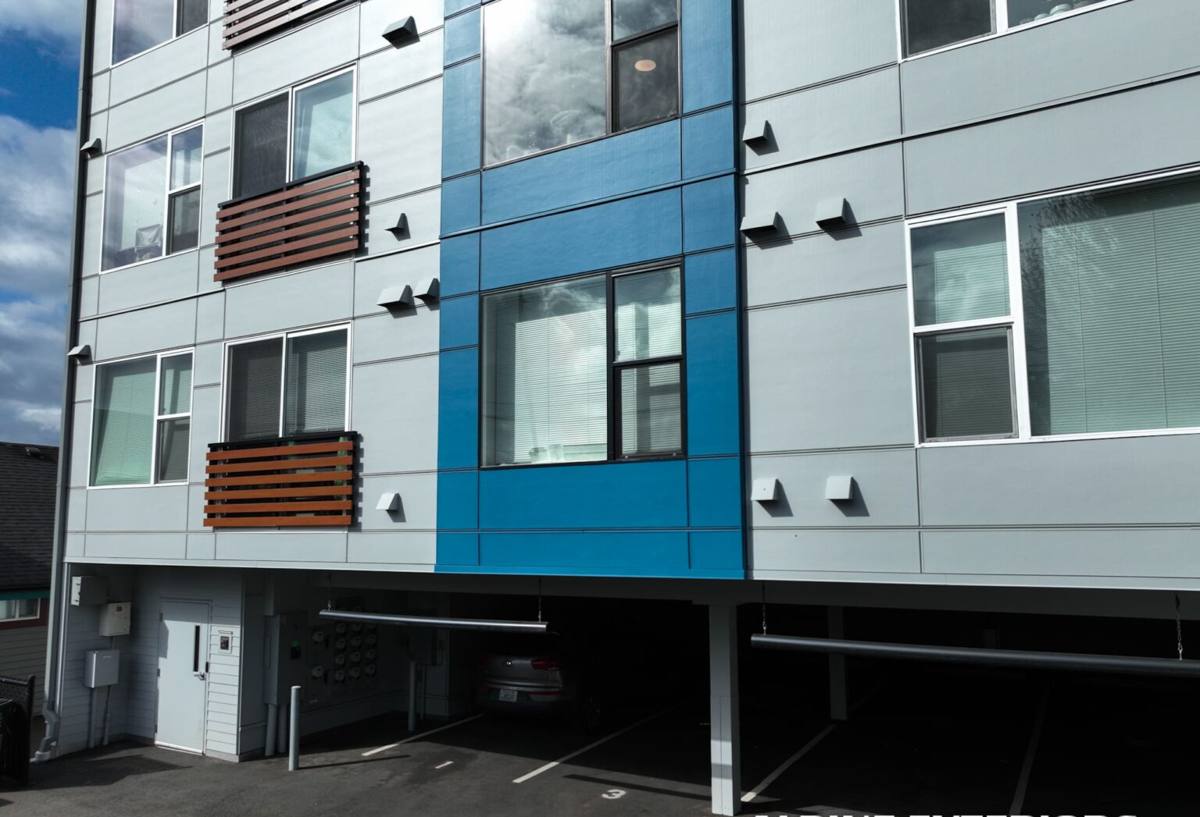
What Blaine's Climate Does to Siding Over Time
Salt Air
Airborne salt from the bay settles on exterior surfaces and accelerates corrosion of fasteners, trim, and any metal components in a siding system. It also breaks down certain coatings faster than manufacturers' inland test data would suggest, which is part of why finish quality on a coastal-adjacent home matters more than it would fifty miles inland.
Driving Rain
Blaine gets wind-driven rain off the water, not just straight-down rainfall. Driving rain finds every gap, unsealed seam, and poorly lapped joint in a siding system and pushes water sideways behind the cladding — which is where most real siding failures actually start, not on the visible face of the material.
Moss Season
Shaded, north- and west-facing walls in Grandview can stay damp for weeks at a stretch during fall and winter. Moss and algae take hold on any surface that holds moisture, and on the wrong siding material that growth can trap water against the substrate long enough to cause real damage underneath.
Grandview's mix of wooded lots and open, wind-exposed stretches closer to the water means two homes a short distance apart can face fairly different conditions — part of why a generic, one-size-fits-all installation approach doesn't always hold up as well as one that's adjusted to the specific lot.
What a Correct Siding Installation Actually Involves
The siding material itself is only part of the system. Most siding failures we see on older Grandview homes trace back to installation shortcuts, not the material. A correct job includes several things a homeowner can't always see once it's finished:
Weather-Resistive Barrier and Flashing
A continuous weather-resistive barrier goes on before any siding, with flashing detailed at every window, door, and penetration so water that does get behind the cladding has somewhere to drain instead of pooling against the sheathing.
Proper Fastening
Fiber cement siding has specific nailing patterns and fastener requirements. Over- or under-driven nails, wrong fastener spacing, or the wrong fastener material entirely are common shortcuts that show up as cracking, buckling, or premature corrosion within a few years.
Clearances and Gaps
Siding needs proper clearance from the ground, roofline, and any hardscaping, plus correctly sized gaps at butt joints and trim to allow for expansion and drainage. Tight, caulked-shut joints look clean on installation day but trap moisture over a wet Whatcom County winter.
Corner, Trim, and Penetration Details
Corner boards, trim around windows and doors, and every point where something penetrates the wall — vent hoods, hose bibs, light fixtures — are where water intrusion actually starts on most homes, not on the open field of the siding itself. Cut ends of Hardie board need to be sealed per manufacturer instructions, and trim needs to be back-primed and properly flashed rather than simply caulked at the face. Skipping these details is one of the most common ways an otherwise decent siding job fails early in a wet, salt-exposed climate like this one.
Why James Hardie Fits This Climate
We standardized on James Hardie fiber cement because it's engineered for exactly the conditions Grandview homes deal with. It's non-combustible, doesn't rot, and doesn't feed moss growth the way wood-based products can. Hardie's HZ5 product line is engineered for climates with extended damp seasons like ours. The ColorPlus factory finish is baked on under controlled conditions and holds up to sun and salt exposure noticeably better than field-applied paint, which matters on a home fighting airborne salt year-round.
We don't install vinyl, LP SmartSide, or primed wood siding. Each of those products has its place, but none holds up the same way to the specific combination of salt air, driving rain, and sustained moss pressure that Grandview homes face. That's a professional judgment call we've made, not a knock on every homeowner's past choice — plenty of homes in this area were built with other materials that did the job for a good while. We just won't install something we don't believe will hold up here long term.
James Hardie backs its siding with a long, transferable limited warranty that stays with the home if it sells, which is worth something in a coastal market where turnover happens. The ColorPlus finish carries its own separate warranty against fading and flaking, which matters most in a climate that's hard on painted surfaces.
Our Installation Process for Grandview Homes
- Assessment: We walk the exterior, check the existing wall assembly, and identify problem areas — shaded walls, wind exposure, drainage patterns — specific to the home's position on the lot.
- Prep and moisture check: Old siding comes off, sheathing is inspected for hidden rot or moisture damage, and any needed repairs happen before anything new goes up.
- Weather barrier and flashing: A continuous drainage plane goes on with flashing at every opening and penetration.
- Hardie installation: Panels or plank siding go up to manufacturer spec — correct fastener type, spacing, and clearances throughout.
- Trim, caulking, and touch-up: Trim and joints are finished per Hardie's application guidelines, with ColorPlus-matched materials where required.
- Final walkthrough: We review the finished job with the homeowner and point out any maintenance notes specific to the home's exposure.
Maintenance Grandview Homeowners Should Expect After Installation
Even correctly installed Hardie siding benefits from a little routine attention, especially this close to the water. A light rinse once or twice a year clears salt film and early moss growth before it takes hold. It's worth walking the exterior after the wettest stretch of winter to check caulk lines at trim and joints, since caulk is the one component that ages faster than the siding itself and is cheap to touch up before it becomes a moisture path. Because ColorPlus is factory-applied, homeowners generally aren't repainting on the same schedule as wood or field-painted siding, which is one of the bigger practical advantages in a climate this hard on finishes.
Signs Your Grandview Home May Need New Siding
- Persistent moss or algae streaking that returns within a season of cleaning
- Soft spots, bubbling, or visible warping, especially on shaded or water-facing walls
- Cracked or separating caulk lines at joints and trim
- Peeling or chalking paint that needs redoing more often than every 7-10 years
- Visible gaps, loose panels, or fastener corrosion staining the surface
- Rising energy bills that may point to a compromised weather barrier behind the siding
Cost Factors for Siding Installation in Grandview
Siding installation costs for a home this size in this area generally fall within a broad range depending on the factors below. We walk every property in person and give a real number based on what we find, not a phone quote based on square footage alone.
| Factor | Why It Matters Here |
|---|---|
| Home size and wall complexity | More corners, gables, and dormers mean more cutting, flashing, and trim work |
| Old siding removal and disposal | Tear-off adds labor, especially if hidden moisture damage turns up underneath |
| Siding profile and trim detail | Lap siding, panel systems, and shingle-style Hardie products carry different labor and material costs |
| Site access and exposure | Wind-exposed or tight-access lots can affect scaffolding, staging, and crew time |
| Sheathing repair needs | Rot or moisture damage found during tear-off has to be repaired before new siding goes on |
Every Grandview property is a little different, which is why we walk the home in person before giving a real number rather than quoting off a square-footage formula.
Why Hire a Crew That Already Works in Grandview
A contractor who already works in this part of Blaine knows which walls in this kind of neighborhood tend to hold moisture, how much salt exposure to plan for depending on how close a lot sits to the water, and what permitting and inspection expectations look like in Whatcom County. That local pattern recognition matters more with fiber cement than with a lot of other trades, because so much of siding's long-term performance depends on details you can't see once the job is finished — flashing behind the cladding, fastener choice, gap sizing at joints.
It also means less guesswork on timeline. A crew that already works this area knows the realistic weather windows for exterior work here and plans installation around them, rather than pushing a job through in conditions that make it harder to get a clean, dry install. A licensed, insured contractor with an established local track record will also be upfront about permitting requirements and will pull the right permits rather than skipping that step.
If your Grandview home's siding is showing its age, or you're planning ahead of a repaint, we're happy to take a look and give you a straightforward, no-pressure estimate — just fill out the form below.