 Blaine Siding
 Why Roofs in Grandview Take a Different Kind of Beating
Grandview sits close enough to the water that homes here deal with a combination most inland Whatcom County roofs never see: salt-laden air, wind-driven rain that gets pushed sideways under flashing and shingle tabs, and a moss season that runs far longer than most homeowners expect. None of these problems are dramatic on their own. What they do is work slowly, so a roof that looks fine from the ground can already be losing granules, corroding fasteners, or holding moisture against the deck.
Salt air is the one people underestimate most. It doesn't just affect siding and trim metal — it accelerates corrosion on nail heads, drip edge, valley metal, and any exposed fastener. Once a fastener starts to rust, the seal around it weakens, and that's a slow leak that can take years to show up as a stain on the ceiling.
Add in moss, which in this part of Whatcom County can stay active nearly nine months out of the year on north-facing and shaded slopes, and you get a roof surface that's frequently damp, holding organic debris in the shingle keyways, and losing its ability to shed water efficiently. That's the combination a Grandview roof replacement has to be built to handle — not a generic install.
Repair or Replace? Reading the Signs on a Grandview Roof
Not every problem roof needs a full tear-off. But there's a point where patching individual leaks costs more over a few years than doing the job right once. Here's what usually tips the decision toward replacement rather than repair:
- Granule loss heavy enough that you can see bare, shiny patches on multiple slopes, not just one spot
- Moss or algae covering more than a small section, especially where it's pushed up under shingle edges rather than just sitting on the surface
- Multiple past repairs in different areas, which usually means the underlayment and decking are failing, not just the shingles
- Curling, cracking, or brittle shingles — a sign the material has reached the end of its service life regardless of how it looks from the street
- Visible rust streaking from nail heads, flashing, or valley metal
- Soft spots or sagging when walked on, which points to deck damage from long-term moisture
- The roof is nearing or past the manufacturer's expected lifespan for the material installed
If you're only seeing one or two of these and the roof is still relatively young, a targeted repair may be the honest answer. We'll tell you that. If several of these are present, repair becomes a short-term patch on a roof that's already failing underneath.
What a Correct Roof Replacement Actually Involves
Tear-Off and Deck Inspection
A full tear-off is non-negotiable in this climate. Roofing over an existing layer traps moisture that's already worked its way into aging shingles, and in a damp, moss-prone environment that's a guaranteed problem down the road. Once the old roofing is off, the deck gets inspected board by board. Any soft, delaminated, or water-stained sheathing gets replaced before anything new goes down — this is where a lot of corner-cutting happens on cheap jobs, and it's the single biggest factor in how long a new roof actually lasts.
Underlayment and Water Barrier
Given how much wind-driven rain Grandview gets off the water, we don't treat underlayment as an afterthought. Self-adhered ice-and-water barrier goes at eaves, valleys, and any low-slope transition where wind can drive rain uphill under the shingles. The rest of the deck gets a synthetic underlayment rated for the exposure, not the cheapest roll available.
Flashing Details
Flashing is where most roof leaks actually start, not in the field of the roof itself. Chimneys, sidewalls, valleys, and any roof penetration get new metal flashing — never reused old flashing, which is almost always corroded from years of salt exposure by the time a roof is due for replacement. Valleys in particular get extra attention, since they carry the most concentrated water volume during heavy rain.
Ventilation
A roof that can't breathe traps moisture in the attic, which shows up as premature deck rot and, ironically, worse moss growth from the underside out. We check intake and exhaust balance on every replacement and correct it when it's inadequate, which is common on older Grandview homes built before current ventilation standards were typical.
Choosing Materials for a Salt-Air, High-Moss Climate
There's no single "best" roofing material for every home — it depends on budget, roof pitch, and how much maintenance a homeowner wants to take on. Here's how the common options actually perform in this specific climate:
| Material | Moss & Moisture Behavior | Salt Air Durability | Typical Lifespan |
|---|---|---|---|
| Architectural asphalt shingle | Prone to moss without zinc/copper strips or regular cleaning; good water shedding when installed correctly | Good, as long as flashing and fasteners are corrosion-resistant | 25–30 years |
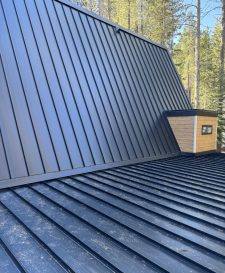
| Standing seam metal | Sheds moss and debris well due to smooth, steep-shedding surface; minimal organic buildup | Very good with coated or coastal-rated finishes | 40–50+ years |
| Composite/synthetic shingle | Resists moisture absorption better than organic-based materials; still benefits from zinc strips | Good | 30–50 years |
| Basic 3-tab asphalt | Least resistant to moss and granule loss over time | Fair — more fastener exposure over the roof's life | 15–20 years |
For most Grandview homes, a mid-to-upper-tier architectural asphalt shingle with a moss-resistant treatment strikes the right balance of cost and performance. Homes closer to the water or with heavy tree cover often do better with metal, purely because of how much less maintenance it demands over its life. We'll walk through the honest trade-offs for your specific roof rather than pushing one material across the board.
Our Process for a Grandview Roof Replacement
- On-site inspection of the current roof, attic ventilation, and any visible deck or flashing issues
- Written estimate that breaks down material choice, tear-off scope, and any deck repair allowances — no vague lump-sum numbers
- Scheduling that accounts for weather windows, since we don't tear off a roof ahead of a stretch of driving rain
- Full tear-off, deck inspection and repair, then new underlayment, flashing, and roofing material installed to manufacturer spec
- Final walkthrough covering what was replaced, what warranty applies, and basic maintenance expectations for this climate
Moss and Algae: Managing It After the New Roof Is On
Even a correctly installed roof will face moss pressure again eventually in this part of Whatcom County — that's the nature of the climate, not a defect in the work. What changes with a proper install is how much of a problem it becomes. Zinc or copper control strips near the ridge let rainwater carry trace metal down the slope, which suppresses new moss growth over time. Beyond that, occasional soft washing (never pressure washing, which strips granules and shortens shingle life) and keeping overhanging branches trimmed back go a long way. We can walk you through a simple maintenance rhythm during the final walkthrough so the new roof stays ahead of the moss instead of fighting it from day one.
Why a Crew That Already Works Grandview Matters
A roof replacement isn't just about the materials — it's about judgment calls made on-site, in real conditions. A crew that already works this area knows which slopes tend to hold moisture longest, how exposed a given roof is to wind off the water, and what deck condition to expect on homes of a certain age around here. That familiarity shows up in fewer surprises mid-job and fewer callbacks after. It also means permitting and inspection with local jurisdiction is a routine part of the process, not something figured out on the fly.
What Drives the Cost of a Grandview Roof Replacement
Every roof is priced on its own specifics, but the same handful of factors move the number up or down on almost every job:
- Roof size and number of squares (100 sq ft units) being replaced
- Pitch and accessibility — steep or complex rooflines take longer and require more safety setup
- Number of layers being torn off and disposed of
- Amount of deck repair needed once the old roofing is removed
- Material selected — asphalt, composite, and metal carry different material and labor costs
- Complexity of flashing details: valleys, chimneys, skylights, and dormers all add time
- Ventilation corrections, if the current attic system is undersized
Because deck condition and complexity vary so much house to house, we don't quote a roof over the phone — an honest number comes from actually seeing the roof.
If your roof in Grandview is showing its age, or you just want a straight opinion on repair versus replacement, we're glad to take a look. Use the form below for a free, no-pressure estimate.