 Blaine Siding
 Building a Deck That Actually Holds Up in Grandview
Grandview sits close enough to the water that every outdoor structure on your property deals with the same three things year-round: salt-laden air, long stretches of driving rain, and a moss season that can run from fall clear through spring. A deck built with generic, one-size-fits-all methods might look fine the first summer. By year three or four, homeowners start noticing soft spots near the house, rust streaks bleeding from fastener heads, and a walking surface that's slick more months than it's dry. None of that is inevitable — it's usually the result of a deck that was built for a drier climate and installed here anyway.
We build decks specifically for this stretch of Whatcom County, which means every material choice, fastener, and flashing detail is picked with Grandview's actual weather in mind, not a national average.
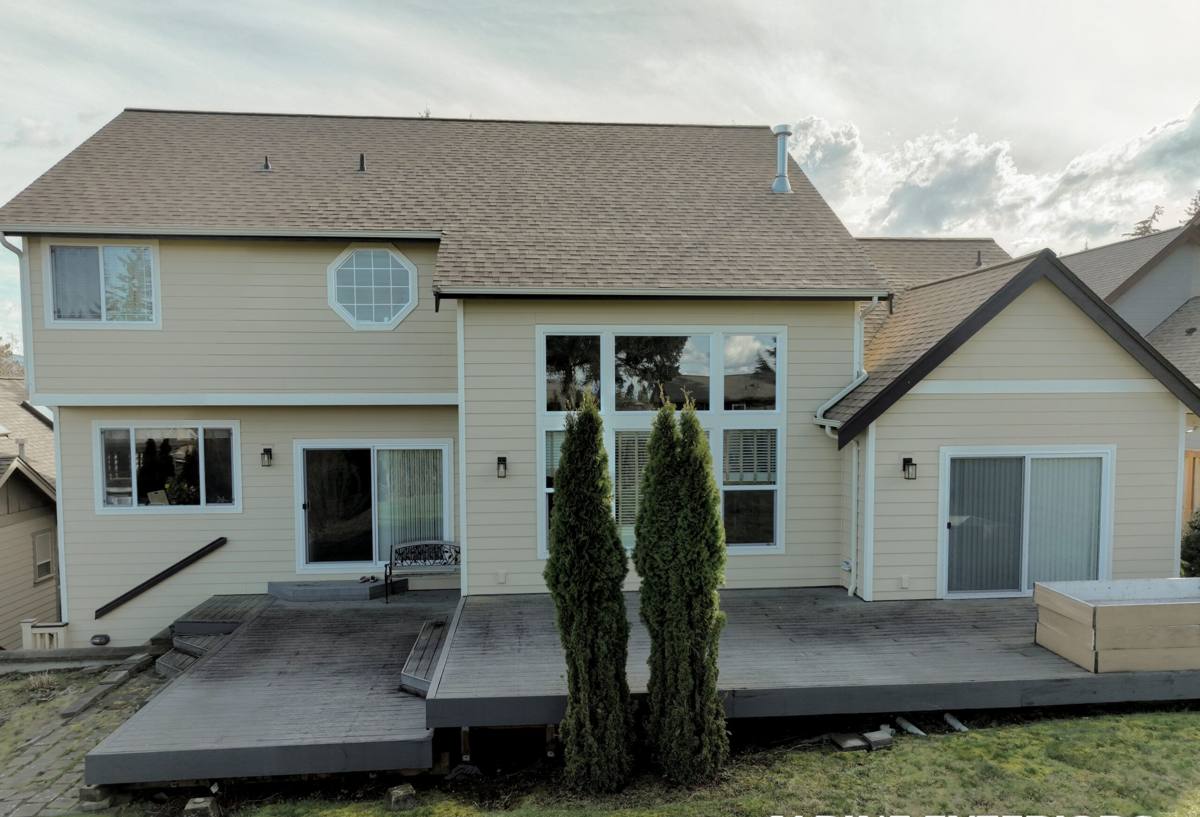
What This Climate Does to a Deck Over Time
Salt Air and Hardware
Proximity to Semiahmoo Bay and the Strait of Georgia means airborne salt is a constant, low-level presence. It doesn't just affect boats and cars — it accelerates corrosion on any exposed metal, including the joist hangers, screws, and bolts holding your deck together. Standard electro-galvanized hardware can start showing rust bleed within a couple of seasons in a coastal zone like this. Once a fastener corrodes, it loses holding strength long before it looks obviously bad, which is part of why deck hardware deserves more attention here than it would inland.
Driving Rain and the Ledger Connection
The point where a deck attaches to your house — the ledger board — is the single most important, and most commonly mis-flashed, connection on the whole structure. Blaine's rain doesn't fall straight down; wind-driven rain gets pushed sideways and upward under trim and siding if the flashing isn't detailed correctly. A poorly flashed ledger is one of the most common sources of hidden rot we find on older decks in this area, and it's almost always invisible until the damage has already spread into the house framing.
Moss, Algae, and Walking Surfaces
Shade, moisture, and mild temperatures are exactly what moss and algae need to thrive, and Grandview gets all three for a good chunk of the year. On decking surfaces, that growth isn't just a cosmetic nuisance — it holds moisture against the boards and turns stairs and low-traffic areas into a slip hazard. The right decking material, board spacing, and surface texture make a real difference in how much moss takes hold and how easy it is to keep clear.
Choosing the Right Decking Material for This Neighborhood
There's no single "best" decking material — there's a best material for your budget, your maintenance appetite, and how much shade and moisture your specific lot gets. Here's how the common options actually perform in a marine climate like Blaine's:
| Material | Moisture & Moss Resistance | Maintenance | Typical Lifespan Here |
|---|---|---|---|
| Pressure-treated wood | Good if sealed regularly; grain can trap moss | Annual cleaning and re-sealing recommended | 15–20 years with upkeep |
| Cedar | Naturally moisture-resistant; still needs finish upkeep | Periodic staining/sealing to hold color and resist graying | 15–20 years with upkeep |
| Capped composite | Excellent; shrugs off moisture and resists moss buildup | Occasional washing, no sealing or staining | 25–30+ years |
| PVC decking | Excellent; fully synthetic, no organic material to feed moss | Lowest maintenance of the group | 25–30+ years |
Wood costs less up front and has a warmer, traditional look that fits a lot of Grandview homes. Capped composite and PVC cost more initially but hold up better against exactly the conditions that cause the most trouble here — repeated wetting, shade, and organic growth — and they don't need refinishing every couple of years. We'll walk you through the honest trade-offs for your specific yard rather than pushing one option across the board.
The Structural Details That Actually Matter
The decking surface is what you see, but the parts you don't see are what determine whether the deck is still solid in fifteen years. For this climate, we pay particular attention to:
- Ledger flashing: Properly lapped, sealed flashing at the house connection to keep wind-driven rain out of the rim joist and wall framing.
- Fastener grade: Stainless steel or high-grade coated hardware rated for coastal exposure, not standard interior-grade fasteners.
- Joist protection: Flashing tape on top of joists so standing water doesn't sit directly against cut lumber.
- Footing depth and drainage: Footings sized and set for our soil and frost conditions, with attention to drainage so water doesn't pool around posts.
- Board spacing and airflow: Gaps and substructure ventilation that let the deck actually dry out between rain events instead of staying damp.
Skipping any one of these doesn't usually cause an obvious problem on day one — it shows up two, three, or five years later as rot, rust, or a spongy board, which is exactly why these details matter more than they seem to during construction.
Our Deck-Building Process
Whether we're replacing an aging deck or building new, the process follows the same order:
- On-site assessment. We look at sun exposure, drainage, existing structure (if any), and how the space will actually be used — dining, grilling, hot tub, stairs to the yard.
- Design and material selection. We talk through decking material, railing style, and layout, with honest pros and cons for each given your budget and how much upkeep you want to take on.
- Permitting. We handle the permit application and inspections required for the project through the local jurisdiction.
- Demolition (if replacing). Removal of the old structure, checking the ledger and framing behind it for hidden moisture damage before anything new goes up.
- Framing and flashing. Footings, posts, beams, joists, and ledger flashing built to hold up under coastal conditions, not just pass a quick inspection.
- Decking and railing installation. Careful attention to fastening pattern, board spacing, and railing anchor points.
- Final walkthrough. We go over care and maintenance specific to whatever material you chose, so you know what upkeep actually looks like.
Permits and Local Considerations
Deck projects in Whatcom County typically require a building permit once the structure exceeds a certain size or height off grade, and there can be additional review if your property is near shoreline or environmentally sensitive areas — which applies to a fair number of lots in and around Grandview. Setback requirements and site-specific conditions vary property to property, so rather than guess at your situation here, we confirm exact requirements with the local building department as part of the design phase and handle the paperwork so you don't have to chase it down yourself.
Keeping a Deck Healthy in a Marine Climate
Even a well-built deck needs some seasonal attention in this climate. A simple annual routine goes a long way:
- Sweep debris and standing leaves off the surface before fall rains set in — trapped organic matter is what feeds moss growth.
- Rinse or lightly scrub decking in early spring to knock back any moss or algae before it gets established.
- Check railing posts and stair connections for movement once a year.
- Inspect visible fasteners for rust bleed or corrosion, especially near the ledger.
- Reseal or re-stain wood decking on the schedule recommended for the specific product used.
- Confirm gutters and downspouts near the deck aren't dumping extra water onto the structure.
None of this requires special equipment or a big time commitment — it's the difference between a deck that looks and performs well for decades and one that starts showing problems within a few years.
Why It Matters to Hire a Crew That Already Works in Grandview
A contractor who mostly builds decks in drier inland areas may not think twice about ledger flashing detail or fastener grade, because in their normal working conditions, cutting that corner doesn't fail as quickly. Out here, it does. Working regularly in Blaine and the surrounding Whatcom County coastline means we're not guessing at how salt air, driving rain, and moss affect a deck over time — we see it directly in the repair and replacement calls we get for decks that were built without those conditions in mind. Building it right the first time costs less over the life of the deck than fixing rot damage or replacing corroded hardware a few years in.
Get a Straightforward Estimate
If you're weighing a new deck or thinking about replacing one that's past its prime, we're happy to take a look and walk you through your options honestly — no pressure, no upsell script. Use the form below to request a free estimate for your Grandview property.