 Blaine Siding
 Why California Creek Siding Has to Work Harder
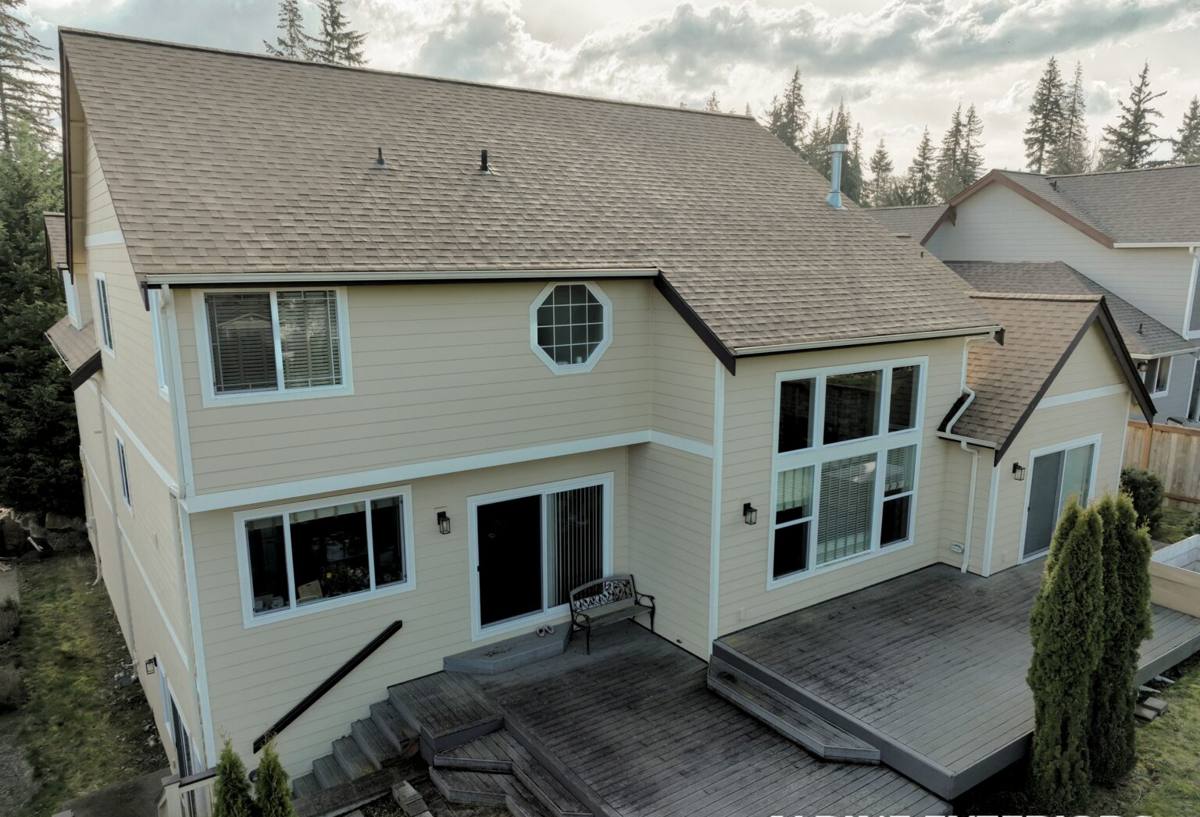
California Creek sits in one of Blaine's more exposed pockets of Whatcom County, close enough to the water that salt-laden air, wind-driven rain, and heavy tree cover all leave their mark on a home's exterior. Siding here doesn't just need to look good on installation day — it needs to hold up through decades of marine weather without cupping, rotting, or feeding the moss that thrives in this climate. That's a different job than siding a house twenty miles inland, and it's why we treat California Creek as its own project, not a copy-paste of a generic siding job.
This page is about one product, in one place: James Hardie fiber cement siding, installed correctly, on homes in California Creek. If you're comparing materials or trying to understand what "correct installation" actually means for a house in this specific microclimate, this is the detail that matters.
What Blaine's Marine Climate Does to Siding Over Time
Salt Air and Corrosion
Homes near the Strait of Georgia and Semiahmoo Bay live in a low-grade salt fog most of the year. Salt air doesn't damage fiber cement the way it damages bare metal, but it does accelerate corrosion in the wrong fasteners, flashing, and trim hardware. A siding job that uses the wrong fastener spec or unprotected trim metal in California Creek will show rust streaks and failure points years before an identical job would fail somewhere drier and further from the water.
Driving Rain and Wind-Driven Moisture
Blaine gets rain that doesn't fall straight down — it comes sideways off the water, driven by wind, and it finds every gap, seam, and undercaulked joint on an exterior wall. Siding materials that swell, wick moisture, or rely on paint film to stay watertight are put under constant stress in this pattern. The water management behind the siding — house wrap, flashing, and drainage gaps — matters as much as the siding itself.
A Long Moss Season
Tree cover and persistent damp keep shaded exterior walls wet longer here than in most of the county, and that means a moss and algae season that runs much of the year, not just the wet months. Any siding product with a porous or textured surface becomes a moss magnet over time. How a product's factory finish handles that — or fails to — shows up clearly on north-facing and shaded walls within a few seasons.
Why We Install Only James Hardie Fiber Cement
We standardized on James Hardie for every job we do, including California Creek, and we don't install LP SmartSide, vinyl, Cemplank, Allura, primed spruce, or cedar. That's not brand loyalty — it's a decision built around exactly the conditions described above. Hardie's fiber cement is non-combustible, dimensionally stable in wet-dry cycling, and available in HZ5 formulations engineered specifically for wetter, cooler climate zones like the Pacific Northwest. The ColorPlus factory finish is baked on under controlled conditions rather than field-applied, which gives it better resistance to fading, chalking, and moisture-driven finish failure than paint applied on-site after installation. For a neighborhood dealing with salt air, driving rain, and a long moss season all at once, that combination is the reason we put Hardie on these homes and stand behind it with a strong transferable warranty.
What a Correct Installation Involves in California Creek
Weather-Resistive Barrier and Rainscreen Gap
Correct installation starts before a single piece of siding goes up. A properly lapped weather-resistive barrier and a drainage gap behind the siding (a rainscreen) let any moisture that gets past the surface drain and dry out instead of sitting against the sheathing. In a driving-rain environment like California Creek, this detail is not optional — it's the difference between siding that sheds incidental moisture and a wall assembly that slowly rots from the inside.
Fastening, Clearances, and Caulk Joints
Fastener type, spacing, and depth all affect how the siding performs over 30-plus years, and in a salt-air setting the fastener material matters even more than usual. Hardie specifies minimum clearances from grade, roofing, and decks so water can't wick up into the board ends — clearances that get ignored on rushed jobs and cause premature rot right where it's hardest to spot. Caulk joints at butt seams and trim need the right product and the right prep, or they become the first failure point in wind-driven rain.
Flashing and Trim Details
Every window, door, and roofline intersection needs flashing that directs water out and away from the wall assembly, not just caulk covering a gap. This is the single most common place we see prior installations fail on older California Creek homes — caulk was used to paper over a flashing detail that was never built correctly, and it inevitably opens back up.
| Detail | Correct Practice | Common Shortcut |
|---|---|---|
| Water barrier | Properly lapped WRB with drainage gap behind siding | Barrier stapled flat against sheathing, no drainage path |
| Fasteners | Corrosion-resistant, correct length and spacing per spec | Whatever's on hand, spaced by eye |
| Board clearance | Minimum gap maintained above grade, roofing, and decks | Siding run tight to grade or roof surfaces |
| Window and door flashing | Integrated flashing directs water outward | Caulk relied on as the primary seal |
| Butt joints | Sealed per manufacturer spec, back-primed cut edges | Unsealed or painted-over cut edges |
Choosing the Right Hardie Products for This Neighborhood
Not every Hardie product fits every home, and part of doing this job right is matching the product line to the house and its exposure. HardiePlank lap siding is the most common choice for California Creek homes and performs well across most wall exposures. HardiePanel with battens suits homes going for a more vertical or board-and-batten look. HardieShingle is an option for homes wanting a shingle-style accent without the moisture sensitivity of actual wood shingles in this climate.
| Product | Best Use | Why It Fits California Creek |
|---|---|---|
| HardiePlank lap siding | Full exterior, most home styles | Proven track record in wind-driven rain exposure |
| HardiePanel | Modern or board-and-batten style | Clean vertical lines, same climate-engineered core |
| HardieShingle | Accent gables, dormers | Shingle look without cedar's moisture and moss issues |
| HardieTrim | Corners, fascia, window trim | Matches siding durability at the most exposed edges |
All of these come in HZ5 formulations built for climates like ours, and all are available in ColorPlus factory finishes, which matters more here than in a drier climate because it removes the weak point of a field-applied paint job breaking down under constant damp.
Our Process for California Creek Jobs
- On-site walkthrough to assess current siding condition, water damage, and exposure on each wall
- Written estimate covering product line, finish color, and the specific water-management work behind the siding
- Removal of old siding with an inspection of sheathing for rot or moisture damage before anything new goes up
- Installation of weather-resistive barrier and rainscreen gap, then Hardie siding, trim, and flashing to manufacturer spec
- Final walkthrough with the homeowner before we consider the job done
Maintenance That Actually Matters Here
Correctly installed Hardie siding is low-maintenance, not no-maintenance, especially in a salt air and moss-prone setting. A short annual routine keeps it performing the way it's designed to:
- Rinse salt residue and grime off exterior walls once or twice a year, especially walls facing the water
- Keep gutters clear so overflow doesn't run down the siding face and feed moss growth
- Trim back vegetation and tree cover that keeps shaded walls damp longer than necessary
- Check caulk joints at trim and butt seams every year or two and re-caulk any that have opened up
- Address any moss or algae on the surface early with a gentle wash rather than letting it establish
- Watch for any siding near grade, decks, or rooflines that isn't maintaining its clearance gap
Why Hiring a Crew That Already Works California Creek Matters
A siding job in California Creek isn't the same job as one ten minutes inland. A crew that already works this part of Blaine knows how exposed each wall typically is to wind-driven rain, understands the moss pressure on shaded sides of a lot, and doesn't have to guess at fastener and flashing choices that hold up against salt air. That local familiarity shows up in fewer surprises during the job and fewer callbacks after it — the flashing details get built right the first time because the crew has already seen what happens when they aren't. It also means someone local who can answer questions after the job is done, not a crew that installed a handful of houses in the area once and moved on.
Cost Factors for a California Creek Siding Project
| Factor | Why It Affects Cost |
|---|---|
| Current siding removal | Extra labor and disposal if old siding and any damaged sheathing must come off first |
| Sheathing repair | Rot found during removal needs to be repaired before new siding goes on |
| Home size and wall complexity | More corners, gables, and trim lines mean more labor and material |
| Product line and finish | Lap siding, panel, and shingle accents price differently, as do ColorPlus color choices |
| Site access | Tight lots, slopes, or limited staging area near the water can add labor time |
Every California Creek home is different, and the only way to get real numbers is a walkthrough of your specific house and its exposure. If you're weighing a siding replacement or repair in this neighborhood, we're glad to come take a look and put together a free, no-pressure estimate — no obligation, just a straight answer about what your home needs.