 Blaine Siding
 Why Ferndale Roofs Wear Differently Than Roofs Inland
Ferndale sits close enough to the water that the same salt-laden marine air moving through Blaine and the rest of Whatcom County reaches homes here too. That air carries fine salt and moisture that settles into shingle granules, exposed fasteners, and flashing seams. Add the region's long stretch of driving rain from fall through spring, and a roof here is doing more work than the same roof would be doing in a drier inland climate. Then there's moss. Whatcom County's combination of shade, moisture, and mild temperatures gives moss a season that runs most of the year, not just a few weeks in spring.
None of this means a roof in Ferndale needs to be exotic or overbuilt. It means the details that get skipped on a rushed job — proper underlayment, correct fastening, real ventilation, flashing that's actually sealed instead of just caulked — matter more here than they would somewhere with a milder, drier climate. A new roof installed correctly for this area should outperform one installed to a generic national spec.
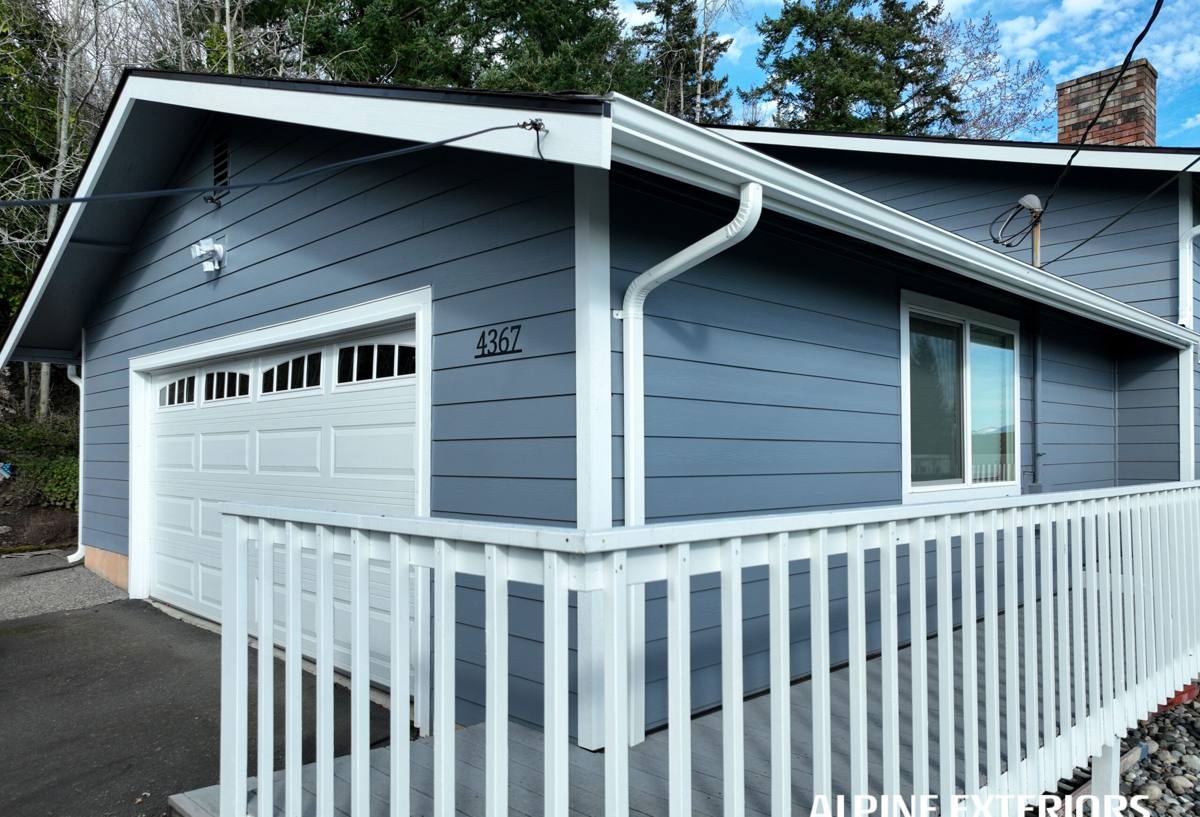
Signs a Ferndale Home Needs a New Roof, Not Another Repair
Homeowners often ask us to patch a problem that's actually a sign the roof is at the end of its service life. A few honest markers:
Age and material condition
Standard asphalt shingle roofs in this climate generally hold up for 18-25 years depending on the product, the original installation quality, and how much shade and moss exposure the roof gets. If your roof is in that range and you're calling for repairs more than once a year, replacement is usually the more cost-effective path.
Granule loss and curling
Shingles that are losing granules (you'll often see this as grit collecting in gutters) or starting to curl at the edges have lost their ability to shed water and block UV and salt exposure. This shows up faster on roof faces that stay shaded and damp longer.
Moss and moisture damage under the surface
Moss itself isn't just cosmetic — its root structure lifts shingle edges and holds moisture against the roof deck. By the time moss is visible in patches, there's a good chance the decking underneath has already started absorbing water. A full tear-off is the only way to actually see and address that.
What a Correct Roof Installation Actually Involves
A new roof is more than shingles nailed to plywood. The parts you don't see are what determine whether the roof performs for the next two decades or starts failing in five years.
Full tear-off and deck inspection
We remove the old roofing down to the deck rather than layering over it. This is the only way to find soft spots, rot, or delamination caused by long-term moisture — problems that are common on Ferndale roofs that have been holding moss or standing water in low spots for years. Any damaged decking gets replaced before anything new goes down.
Underlayment and water barrier
Given how much sustained rain this area gets, we use a synthetic underlayment rated for the coverage, with self-adhered ice-and-water barrier at eaves, valleys, and any low-slope transitions — the spots where wind-driven rain is most likely to find a way in.
Flashing done right
Flashing around chimneys, skylights, walls, and valleys is where most leaks actually start, not in the field of the roof. Correct flashing is step-flashed and counter-flashed into the surrounding material, not just caulked over old metal. Caulk is a maintenance item, not a repair strategy.
Ventilation that matches the home
Proper intake at the eaves and exhaust at the ridge keeps the attic dry and temperature-balanced, which slows moss regrowth on the roof surface and prevents condensation damage from the inside. A lot of older Whatcom County homes were built with minimal or mismatched ventilation, and we address that as part of the reroof rather than leaving it as-is.
Choosing a Roofing Material for This Climate
There's no single "best" material — the right choice depends on your budget, your roof's slope and shade exposure, and how much long-term maintenance you want to take on. Here's how the common options actually compare for a coastal Whatcom County home:
| Material | Typical Lifespan Here | Moss & Moisture Behavior | Trade-offs |
|---|---|---|---|
| Architectural asphalt shingle | 20-25 years | Good with proper ventilation; needs periodic moss treatment on shaded slopes | Best balance of cost, availability, and warranty support |
| 3-tab asphalt shingle | 15-18 years | More prone to curling and granule loss in sustained damp conditions | Lower upfront cost, shorter service life |
| Metal (standing seam) | 40+ years | Sheds moisture and resists moss growth very well | Higher upfront cost; installation quality matters even more due to fewer forgiving layers |
| Cedar shake | Varies widely | Attractive but absorbs moisture and requires consistent upkeep in a wet, shaded climate | We're honest with clients that upkeep demands here are real and ongoing |
On cedar specifically: it's a good-looking product, but in a climate with this much sustained moisture and moss pressure, it asks for a maintenance commitment — regular cleaning, treatment, and inspection — that a lot of homeowners underestimate going in. We'll install it if that's what you want, but we'll also walk you through what ongoing care actually looks like before you commit.
How Our Installation Process Works
- On-site assessment — we inspect the existing roof, decking condition (where visible), attic ventilation, and any problem areas you've noticed.
- Written estimate — materials, labor, and any deck repair allowance spelled out, no vague line items.
- Tear-off and deck check — old roofing removed, decking inspected and repaired as needed.
- Underlayment and flashing installation — water barrier, flashing, and ventilation components installed before any final roofing material goes down.
- Roofing material installation — installed to manufacturer spec, which is also what keeps your material warranty valid.
- Final walkthrough — we go over the finished roof with you, including gutters and any debris cleanup.
What Affects the Cost of a New Roof in Ferndale
Every roof is priced on its own specifics, but the same handful of factors drive most of the variation we see:
| Factor | Why It Matters |
|---|---|
| Roof size and pitch | Steeper roofs take longer to work safely and use more material for the same footprint |
| Number of layers being removed | Tear-off of multiple old layers takes more labor and disposal cost than a single layer |
| Decking condition | Rot or soft spots found during tear-off require plywood replacement — this is the most common reason a final cost shifts from the initial estimate |
| Material choice | Asphalt, metal, and cedar carry very different material and labor costs |
| Roof complexity | Valleys, dormers, chimneys, and skylights each add flashing work |
We'd rather give you a realistic range up front and flag possible deck repair costs before we start than surprise you with add-ons partway through the job.
After Installation: Keeping Moss and Salt Exposure in Check
A correctly installed roof still benefits from some basic upkeep in this climate. A short seasonal routine goes a long way:
- Clear gutters and downspouts at least twice a year so water isn't backing up under the roof edge
- Keep overhanging branches trimmed back to reduce shade and debris buildup on north-facing slopes
- Have moss growth treated before it establishes rather than after it's visibly thick
- Do a visual check of flashing around chimneys and skylights each fall, before the heavy rain sets in
- Rinse off accumulated debris and grime periodically rather than pressure-washing, which can strip granules
Why It Matters to Hire a Crew That Already Works in Ferndale
Roofing crews that mostly work drier or inland climates sometimes under-spec ventilation or skip the extra underlayment coverage that this area's rain and moss season actually calls for — not out of carelessness, but because it's not what their usual jobs require. Working regularly in Blaine, Ferndale, and the rest of Whatcom County means we're specifying and installing roofs for the conditions that are actually here: sustained rain, salt-laden air, and moss pressure that doesn't let up for months at a time. That's the standard we hold every installation to, whether it's a straightforward asphalt reroof or a more complex metal installation.
If you're weighing a repair against a full replacement, or just want an honest read on how much life is left in your current roof, we're happy to take a look. Reach out for a free, no-pressure estimate — the form below gets you started.