 Blaine Siding
 Building a Deck That Actually Holds Up in Ferndale
Ferndale sits close enough to the water and low enough in the Nooksack valley that decks here take a different kind of beating than decks inland. Salt-laden air off the Strait works into fasteners and hardware over time. Driving rain off the water doesn't just fall straight down — it gets pushed sideways into railings, ledger boards, and any joint that isn't properly flashed. And Whatcom County's long, damp shoulder seasons mean moss and algae get months to establish themselves on any surface that stays shaded or slow to dry. A deck built the same way you'd build one in a dry inland climate will show problems here faster: soft spots, black staining, loose railings, rust streaks around screws. Building for Ferndale means building around those three things from the footings up, not adding a coat of sealer after the fact and hoping it holds.
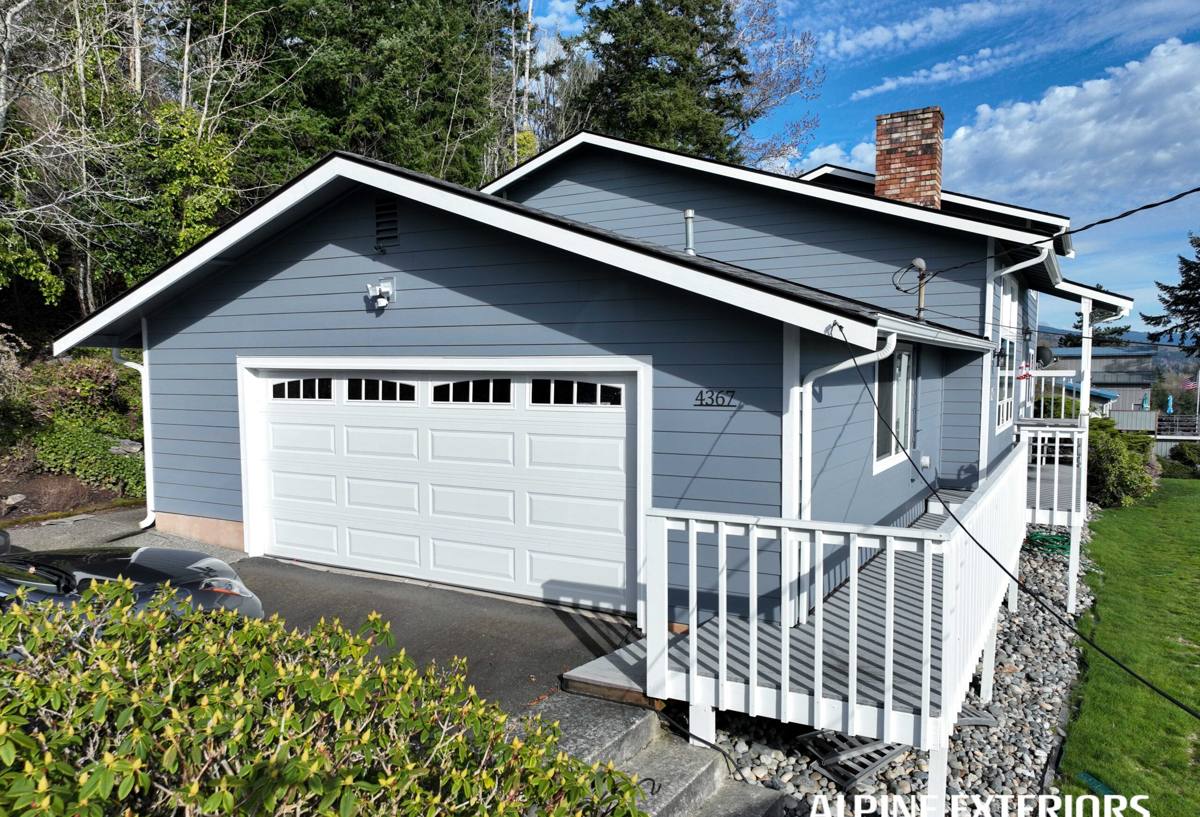
Choosing the Right Decking Material for This Climate
There's no single "best" decking material — there's a best material for your budget, your maintenance appetite, and how much sun or shade your deck actually gets. Here's how the common options hold up under Whatcom County conditions specifically.
| Material | How it handles salt air & rain | Moss/algae resistance | Maintenance |
|---|---|---|---|
| Pressure-treated wood | Good if fasteners and hardware are rated for treated lumber; standard-grade hardware corrodes faster near the water | Low — needs regular cleaning and re-sealing to resist growth | Annual cleaning, sealing every 1-2 years |
| Cedar | Naturally rot-resistant but still needs sealed end grain and good airflow underneath | Moderate — still greens up in shaded, damp spots | Periodic cleaning and re-oiling to keep color and protection |
| Composite decking | Handles moisture and salt air well; won't rot or splinter | Moderate to good depending on the board — surface texture affects how easily moss gets a foothold | Occasional washing; no sealing or staining |
| PVC/capped decking | Best moisture performance of the group; fully sealed surface | Good — smoothest surface, least for spores to grip | Lowest — soap and water as needed |
We'll talk through this honestly during an estimate rather than push whatever has the best margin. A shaded, north-facing deck under trees is a different decision than one that gets full afternoon sun, even on the same street.
Fasteners and Hardware Matter as Much as the Boards
This is the part homeowners rarely think about until it fails. Standard galvanized screws and joist hangers corrode noticeably faster in coastal-influenced air like Ferndale gets. We use stainless steel or coated fasteners rated for treated lumber and marine-adjacent exposure, and we make sure joist hangers, post bases, and ledger hardware match — mixing metals at a connection point speeds up corrosion on both.
What a Correctly Built Deck Involves
A deck that lasts starts below grade, not with the decking boards. The parts that don't show are the parts that determine whether the deck is still solid in fifteen years.
- Footings sized and set below frost depth, on undisturbed or properly compacted soil
- A ledger board attached to the house with proper flashing that sheds water away from the rim joist and wall sheathing — this is the single most common failure point on older decks we're asked to rebuild
- Joists spaced and sized for the actual span and load, not just "what the last deck had"
- Hardware rated for treated lumber and coastal exposure, consistent metal type throughout
- Gaps between boards sized to let water drain and air move underneath, not tight-fit for looks
- Railings and stair connections built to current code, not just what passes a casual glance
Skipping or shortcutting any one of these doesn't usually show up in year one. It shows up in year five or six as a soft ledger board, a wobbly rail post, or standing water that never quite dries between rains.
Moss, Mildew, and Drainage — Ferndale's Extra Challenge
Whatcom County's moss season runs long — realistically fall through spring, and sometimes it never fully lets up on a shaded deck. Moss and algae aren't just cosmetic; they hold moisture against the board surface and make decking genuinely slick underfoot, which matters on stairs. Good deck building fights this with design, not just cleaning products after the fact.
That means orienting board spacing and structure to encourage drainage and airflow underneath, keeping the deck surface a consistent distance off grade so air can circulate, and being thoughtful about how close overhanging trees or shrubs sit to the deck edge. On decking materials, texture matters too — a heavily embossed wood-grain composite can actually hold more moisture and debris in its grooves than a smoother board, which affects how quickly moss gets started in shaded areas.
Our Deck Building Process
- On-site assessment — we look at sun exposure, drainage, existing structure if it's a rebuild, and how the deck connects to the house
- Material and layout discussion — honest trade-offs between wood, composite, and PVC based on your budget and how much upkeep you want to do
- Permit and code check — Whatcom County and City of Ferndale have specific requirements for footings, railings, and stairs depending on deck height and size
- Framing and structural work — footings, ledger flashing, joists, and hardware built to hold up under coastal moisture
- Decking, railing, and stair installation — with attention to drainage gaps and fastener consistency
- Final walkthrough — we go over maintenance expectations specific to the material you chose so there are no surprises
Common Problems We See on Ferndale Deck Rebuilds
Most of the decks we're called to replace or repair in this area fail for a small handful of repeatable reasons, not bad luck:
- Ledger board attached without flashing, letting water track behind it into the rim joist
- Mismatched or standard-grade hardware that corroded well before the lumber wore out
- Board spacing too tight, trapping moisture and debris that feeds moss growth
- Footings too shallow or set on unstable fill, leading to settling and a deck that's no longer level
- Railings that were structurally adequate when built but no longer meet current code
None of these are dramatic mistakes — they're the kind that get missed when a deck is framed quickly without accounting for how much moisture this area actually sees over a full year.
Permits and Code in Whatcom County
Most new decks and many deck rebuilds in Ferndale and the surrounding county require a building permit, particularly once you're above a certain height off grade or attaching structurally to the house. Requirements cover footing depth, railing height and baluster spacing, stair geometry, and ledger attachment. We handle the permit process as part of the job rather than leaving it for the homeowner to sort out, and we build to current code even on smaller decks that might technically fall under a permit threshold — code minimums exist because they reflect what actually holds up.
Maintenance Checklist to Keep a Ferndale Deck Looking and Performing Well
- Sweep debris out of board gaps regularly, especially in fall when leaves and needles accumulate
- Wash the surface at least once a year to interrupt moss and algae before it establishes
- Check and re-seal wood decking on the schedule appropriate to the product — don't wait until it looks dry and gray
- Inspect fasteners and railing connections annually for corrosion or looseness
- Trim back overhanging vegetation that's keeping sections of the deck shaded and slow to dry
- Confirm gutters and downspouts near the deck aren't dumping extra water onto or under it
Why Hire a Crew That Already Works in Ferndale
A deck builder who mostly works drier, inland jobs isn't necessarily thinking about salt-air hardware corrosion or moss-season drainage by default — it's just not what shows up in their usual conditions. We build decks throughout the Blaine and Ferndale area and see the same climate stresses repeat job after job: the ledger flashing that has to be right, the fastener grade that actually holds up near the water, the board spacing that keeps moss from taking over by December. That's not a sales pitch — it's just what happens when the same conditions come up on every project. It means fewer surprises for you and a deck that's built for the weather it will actually see, not the weather a generic spec sheet assumes.
If you're planning a new deck or need an honest look at an aging one, we're happy to come take a look. Reach out for a free, no-pressure estimate using the form below.