 Blaine Siding
 Windows Built for the Peace Arch Microclimate
Homes near the Peace Arch border area sit right where marine air off Semiahmoo Bay and Drayton Harbor meets whatever weather is moving down from the Strait of Georgia. That combination is harder on windows than most homeowners realize. It isn't one dramatic storm that causes trouble — it's the slow, steady exposure. Salt-laden air corrodes hardware and finishes faster than it would twenty or thirty miles inland. Driving rain, pushed sideways by wind off the water, finds its way into any gap in flashing or sealant that a drier climate would never expose. And the long, damp shoulder seasons here mean moss and algae get a real foothold on sills, tracks, and exterior trim if a window's drainage isn't doing its job.
None of that means Peace Arch homes need anything exotic. It means the details that get skipped on a rushed install — proper flashing, correct sealant choice, hardware rated for coastal exposure — matter more here than they would in a lot of other parts of Whatcom County. That's the lens we bring to every window job in this area.
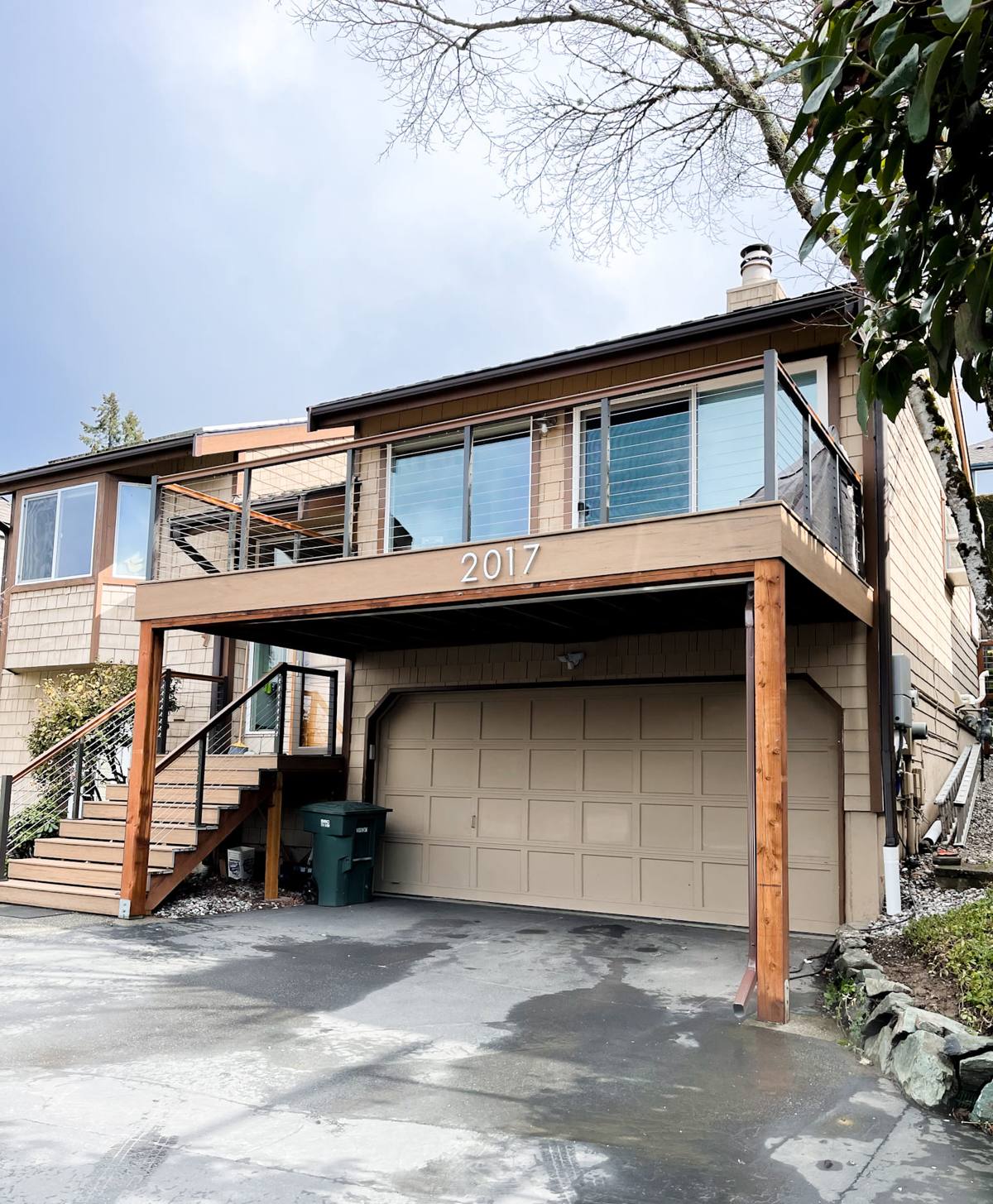
What "Energy-Efficient" Should Actually Mean Here
Energy efficiency gets marketed around U-factor and glass coatings, and those numbers matter. But in a coastal, high-moisture climate like Blaine's, efficiency and durability are the same conversation. A window that loses its seal in three years because the frame material couldn't handle the salt air isn't efficient — it's a window you'll be replacing early, energy performance or not.
The Three Things We Actually Weigh
- Glass package — double-pane with a low-E coating is the practical baseline for this climate; triple-pane can make sense on exposed, wind-facing walls but adds weight and cost that isn't always worth it on a sheltered elevation.
- Frame material and finish — how it holds up to salt air and constant damp cycling, not just its rated R-value on a spec sheet.
- Drainage and weep system design — whether water that gets into the frame track (and in driving rain, some always will) has a clear path back out, instead of sitting and feeding moss or rot.
Frame Material Comparison for Coastal Whatcom County Homes
| Material | Salt Air / Moisture Behavior | Maintenance | Where It Fits Best |
|---|---|---|---|
| Vinyl | Won't corrode or rust; performs consistently in salt air | Low — occasional rinse to clear salt film | Most Peace Arch homes, especially wind-exposed elevations |
| Fiberglass | Very stable, minimal expansion/contraction with damp cycling | Low | Homes wanting a more rigid frame or larger window units |
| Wood (clad exterior) | Interior wood warmth with a protected exterior face, but the wood core is still vulnerable if the exterior seal ever fails | Moderate to high — needs the exterior finish inspected regularly | Homeowners prioritizing an interior wood look who accept the upkeep trade-off |
| Aluminum | Conducts cold and can corrode over time without a marine-grade finish | Moderate | Rarely our first recommendation for this climate |
We're not going to tell you one material is "bad." Each has a legitimate use case. What we will tell you honestly is which one fits a specific wall, exposure, and budget — and where a material choice creates a maintenance commitment you should know about before you sign off on it.
Signs Your Current Windows Are Working Against You
A lot of Peace Arch homeowners call us after noticing a problem that's been building for a while, not something sudden. Worth checking your own windows against this list:
- Visible condensation or fog trapped between panes — the seal has failed and the insulating gas is gone
- Black or green growth collecting in the bottom track or on the sill, even after cleaning
- Drafts you can feel with a hand near the frame on a windy day
- Hardware (latches, cranks, locks) that's stiff, corroded, or won't fully engage
- Wood trim or sill that feels soft or shows staining below the window
- Noticeably higher heating bills in winter compared to similar-sized homes nearby
- Frames that have visibly warped, discolored, or chalked from UV and salt exposure
Any one of these on its own isn't necessarily urgent. Several of them together, especially fogged glass plus sill staining, usually means the window has been letting moisture in for a while and it's worth having someone look before it becomes a bigger repair.
What a Correct Installation Actually Involves
The window unit itself is maybe half the job. The other half — the part that determines whether it performs well in five years or fails in two — is how it's installed. In a climate with this much wind-driven rain, we treat the following as non-negotiable, not upsells:
Flashing and Weather Barrier Integration
The window has to be integrated into the wall's water management system, not just caulked into an opening. That means proper sill pan flashing, correctly lapped house wrap or weather-resistant barrier, and head flashing that sheds water outward instead of behind the siding.
Sealant Selection
Not every sealant is rated for constant damp/dry cycling and UV exposure. We use products chosen for coastal durability, applied at the specific points that need it — not smeared everywhere as a substitute for correct flashing.
Level, Plumb, and Properly Shimmed
A window that's out of square puts uneven stress on the frame and hardware, which shows up later as operation problems or premature seal failure — often well before it would in a drier, calmer climate.
Insulation Around the Frame
Low-expansion foam or backer rod and sealant around the rough opening, sized correctly so it doesn't bow the frame. Skipping this step is a common source of drafts that a new window shouldn't have.
Our Process for Peace Arch Window Projects
- On-site assessment. We look at your current windows, the exposure of each wall (wind-facing sides near the water get evaluated differently than sheltered sides), and any existing moisture or rot issues.
- Honest recommendation. We'll tell you which openings genuinely need replacement now, which can wait, and which frame/glass combination fits your budget and exposure — not the most expensive option by default.
- Written estimate. Clear scope, materials, and timeline before any work starts.
- Careful removal. Old units come out without unnecessary damage to surrounding siding or trim, and we check the opening for hidden water damage before anything new goes in.
- Correct installation. Flashing, weather barrier, sealant, shimming, and insulation done to the standard described above — every window, every time.
- Final walkthrough. We test operation, check seals, and make sure you know how to maintain the new windows in this climate.
Cost Factors for Peace Arch Homeowners
Every quote is different, but the factors that actually move the price are consistent. Rather than quote a number that won't match your home, here's what drives cost up or down:
| Factor | Effect on Cost |
|---|---|
| Number and size of window openings | Larger unit count and oversized openings raise material and labor cost |
| Frame material chosen | Vinyl is typically the most budget-friendly; fiberglass and clad wood run higher |
| Glass package (double vs. triple-pane) | Triple-pane adds cost; usually worth targeting at wind-exposed elevations rather than the whole house |
| Condition of the existing opening | Hidden rot or water damage found during removal adds repair scope before the new window goes in |
| Access and site conditions | Second-story or hard-to-reach openings take more labor time |
Why Hiring a Crew That Already Works This Area Matters
A window installer who mostly works dry, inland jobs will still install a technically correct window — but they may not automatically account for how much wind-driven rain a Peace Arch-facing wall takes, or why weep holes and drainage matter more here than they would twenty miles from the water. A crew that regularly works Blaine and the surrounding Whatcom County coastline has already seen how salt air ages hardware, how moss establishes on north-facing sills, and which flashing details actually hold up over a few wet winters versus which ones look fine on install day and fail later. That local pattern recognition is part of what you're paying for, not just the labor to set the window in the opening.
Maintaining Your Windows in a Salt Air, Moss-Prone Climate
A correctly installed, quality window still benefits from a little seasonal attention in this climate:
- Rinse frames and tracks periodically to clear salt residue, especially on wind-facing elevations
- Clear debris and moss growth from sills and weep holes so drainage paths stay open
- Check and lightly lubricate hardware (locks, cranks) once or twice a year so corrosion doesn't set in unnoticed
- Inspect exterior caulking annually, particularly after the first winter in a new install, and touch up if it's cracked or pulling away
- Keep an eye out for condensation between panes — it's the clearest early sign of seal failure
None of this is heavy maintenance, but skipping it in a coastal climate shortens a window's useful life more than it would somewhere drier.
If your windows in the Peace Arch area are drafty, fogged, or just due for an honest evaluation, we're glad to come take a look. The estimate is free, there's no pressure, and you'll get a straight answer about what your home actually needs — use the form below to get started.