 Blaine Siding
 Why Everson Homes Put Extra Demands on Windows
Everson sits inland along the Nooksack River in Whatcom County, but "inland" in this part of Washington doesn't mean dry. The same weather system that soaks Blaine and the coastline pushes east across the county too — driving rain that hits siding and window trim sideways, long stretches of damp gray months where moss and algae get a foothold on anything that stays wet, and on windy days, coastal air can carry enough salt with it to speed up corrosion on unprotected hardware and fasteners. Windows take the brunt of all of it. They're the weakest point in an exterior wall for both air leakage and water intrusion, and a window that was fine when the house was built twenty or thirty years ago is often now the reason a room feels drafty in January and stuffy in July.
Energy-efficient windows done right solve two problems at once: they cut the amount of heat that escapes in winter and the amount of solar heat that builds up in summer, and — just as important in this climate — they keep water out of the wall cavity where it can rot framing and feed mold long before anyone notices a leak.
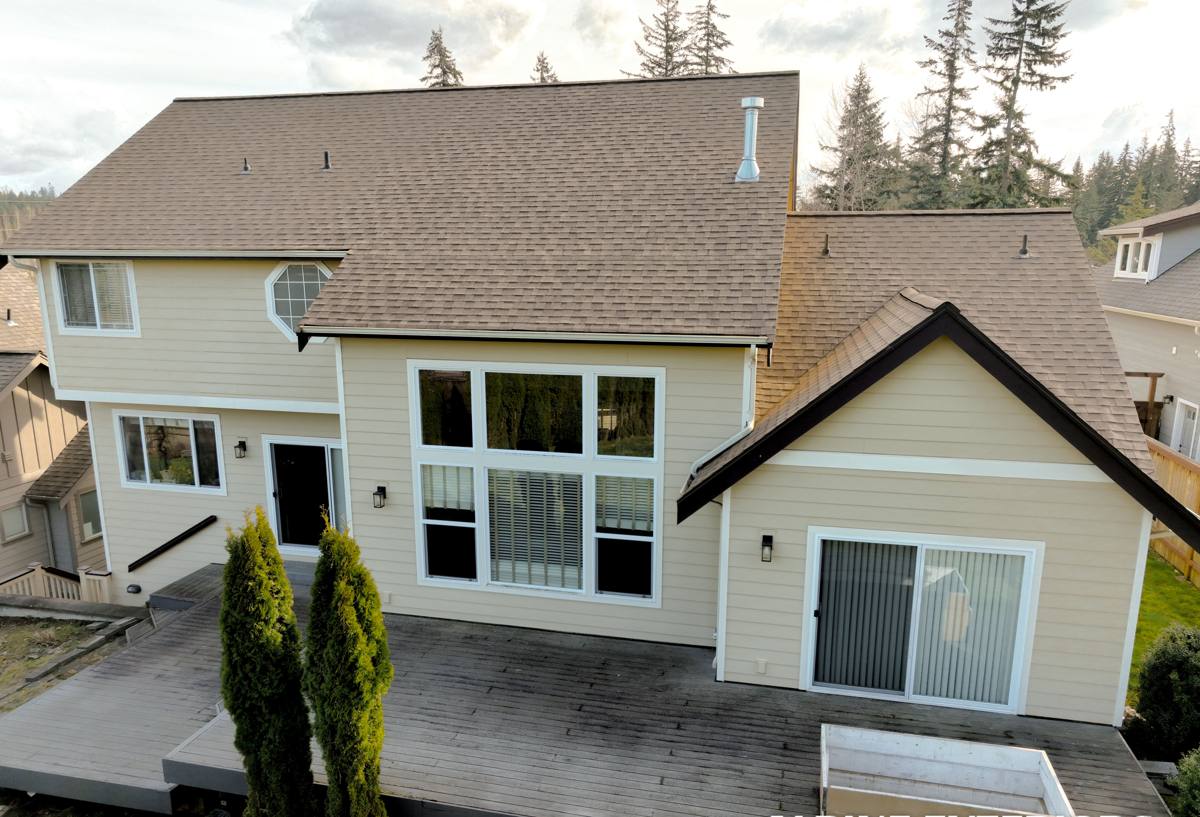
What "Energy-Efficient" Actually Means
The label gets used loosely, so it's worth being specific about what actually makes a window perform well in a Whatcom County winter.
U-Factor
This measures how much heat the window loses. Lower is better. In our climate, a U-factor in the 0.27–0.30 range or lower is a reasonable target for most homes — that's the number that determines how much your furnace has to work on a cold, wet night.
Solar Heat Gain Coefficient (SHGC)
This measures how much solar heat passes through the glass. Because Everson doesn't get brutal summer heat the way inland desert climates do, a moderate SHGC usually strikes the right balance — enough passive winter warmth from low-angle sun without overheating south-facing rooms in July.
Low-E Coatings and Gas Fills
A low-emissivity coating reflects heat back into the room in winter and blocks it from coming in during summer. Argon or krypton gas between panes slows heat transfer further. Double-pane with a good Low-E coating covers most homes here; triple-pane is worth considering on north-facing walls or rooms that never quite warm up.
| Frame Material | Energy Performance | Moisture Tolerance | Maintenance |
|---|---|---|---|
| Vinyl | Good, consistent | Excellent — won't rot or corrode | Low — occasional cleaning |
| Fiberglass | Very good, stable in temperature swings | Excellent | Low |
| Wood (clad exterior) | Good | Fair — exterior cladding protects it, but any breach lets moisture into the wood core | Higher — watch for cladding failure points |
| Aluminum | Poor unless thermally broken | Good structurally, but prone to condensation and corrosion near salt-influenced air | Moderate |
The Installation Details That Matter More Than the Glass
Homeowners often focus entirely on the window unit itself — brand, glass package, frame color — and that's understandable, but in this climate the installation is what determines whether the window actually performs for twenty years or starts leaking in three. A high-end window installed with sloppy flashing will fail before a mid-range window installed correctly.
Flashing and Water Management
Every window opening needs a flashing sequence that directs water down and out, never in and behind. That means correctly lapped sill pan flashing, side flashing, and head flashing integrated with the house wrap — not just caulk around the trim. Caulk is a backup, not the primary defense.
Air Sealing Without Trapping Moisture
The gap between the window frame and the rough opening needs to be sealed for air leakage, but with a material that still lets any incidental moisture dry out rather than get trapped in the wall. Low-expansion foam or backer rod and sealant, used correctly, does this. Packing the gap solid with the wrong material can actually cause problems.
Sill Slope and Drainage
The sill needs a slight outward slope so water sheds away from the house instead of pooling against the glass or trim — a detail that's easy to get wrong and hard to notice until moss or dark staining shows up on the sill a year or two later.
Common Window Problems We See in Whatcom County Homes
- Moss and algae buildup on sills and trim from long stretches of shade and dampness, which holds moisture against wood and paint far longer than it should sit.
- Condensation between panes, meaning the seal has failed and the insulating gas has escaped — the window is no longer doing its job even if the glass looks intact.
- Soft or discolored trim and sills from years of driving rain finding a gap in old caulk or flashing.
- Drafts around the frame from foam or weatherstripping that has compressed or degraded over time.
- Corroded hardware — locks, hinges, and cranks that stick or won't latch tight, often accelerated by the salt content in coastal-influenced air on windy days.
- Fogged or difficult-to-operate single-pane or early double-pane units original to older Whatcom County homes, which were never built for today's energy expectations.
Our Process for Everson Window Replacements
1. On-Site Assessment
We walk the exterior and interior of each window opening, checking for existing water damage, sill condition, and how the current flashing (if any) is integrated with the wall assembly. This tells us whether it's a straightforward retrofit or whether some framing or flashing repair needs to happen first.
2. Product Selection Based on Exposure
Not every window on a house faces the same conditions. A window on the weather side that takes direct driving rain gets treated differently than a sheltered window on the lee side — sometimes that means a different glass package, sometimes it just means extra attention to flashing detail.
3. Removal and Opening Prep
We remove the old unit, inspect the rough opening for rot or damage, and repair anything compromised before the new window goes in. Installing a new window into a wet or rotted opening just locks the problem behind new trim.
4. Installation and Flashing
New window, set level and square, full flashing sequence integrated with the house wrap, air sealing at the frame gap, and exterior trim and caulking finished to shed water.
5. Final Check
We test operation, check the seal, and walk the job with the homeowner before we call it done.
Choosing the Right Window for Your Home
There isn't one "best" window for every house — the right choice depends on the wall's sun and rain exposure, the home's age and construction, and the homeowner's priorities around maintenance and budget. A few practical guidelines:
- Vinyl or fiberglass frames are the lowest-maintenance choice for exposed, weather-side walls.
- Double-pane with Low-E glass covers most rooms; consider triple-pane for north-facing rooms or homes with persistent cold-spot complaints.
- Match hardware finishes rated for exterior/coastal-influenced exposure rather than standard interior-grade hardware.
- Don't oversize glass on a wall that already struggles with moisture and shade — bigger glass means more surface for condensation if the room isn't well ventilated.
Cost Factors to Expect
| Factor | Why It Matters |
|---|---|
| Frame material | Vinyl is typically the most budget-friendly; fiberglass and clad-wood cost more but offer different performance or appearance trade-offs |
| Glass package | Triple-pane and specialty coatings add cost but pay back in comfort and lower energy bills over time |
| Opening condition | Rot repair or reframing adds labor beyond the window unit itself |
| Number and size of openings | Whole-house replacement has better per-window pricing than one-off swaps |
| Trim and exterior finish work | Matching existing trim profiles or siding detail adds finishing time |
We give a broad, honest range during the on-site visit once we know the opening conditions and product tier you're leaning toward — not a number pulled from a brochure.
Why a Crew That Already Works Everson Matters
Whatcom County's weather isn't uniform — a crew that mostly installs in drier inland climates can miss how much flashing detail and moisture management actually matter here. We work throughout the region, from Blaine's coastline to inland communities like Everson, and we bring the same water-management standard to every job regardless of how far a house sits from open water. That consistency matters because the failure mode in this climate is rarely dramatic — it's a slow leak behind trim that isn't found until the sill is soft.
Maintaining Your Windows After Installation
- Rinse sills and tracks periodically to clear moss spores and organic debris before they take hold.
- Check exterior caulk lines once a year, especially after a hard winter, and re-caulk any cracked sections promptly.
- Keep gutters and downspouts clear so roof runoff isn't sheeting down over window openings.
- Operate locks and cranks a few times each season so hardware doesn't seize from disuse.
- Watch for condensation between panes — it's the clearest sign a seal has failed and the unit needs attention.
If your Everson home has drafty rooms, foggy glass, or trim that's starting to show its age, we're happy to take a look and give you a straightforward, no-pressure estimate — just fill out the form below.