 Blaine Siding
 Building a Deck That Actually Belongs on Sandy Point
Sandy Point sits close enough to the water that every deck built there is, in effect, a marine structure. The air carries salt, the wind drives rain sideways more often than straight down, and the shoulder seasons bring long stretches of damp, shaded weather that keeps wood wet for days at a time. A deck design that works fine a few miles inland in Blaine or elsewhere in Whatcom County can fail early here if it isn't built with those conditions in mind from the start.
This page is about one thing: building decks specifically for Sandy Point homes. Not a generic deck spec applied to a coastal address, but a set of material choices, fastener decisions, and detailing that account for what this particular stretch of coastline does to lumber, metal, and finishes over time.
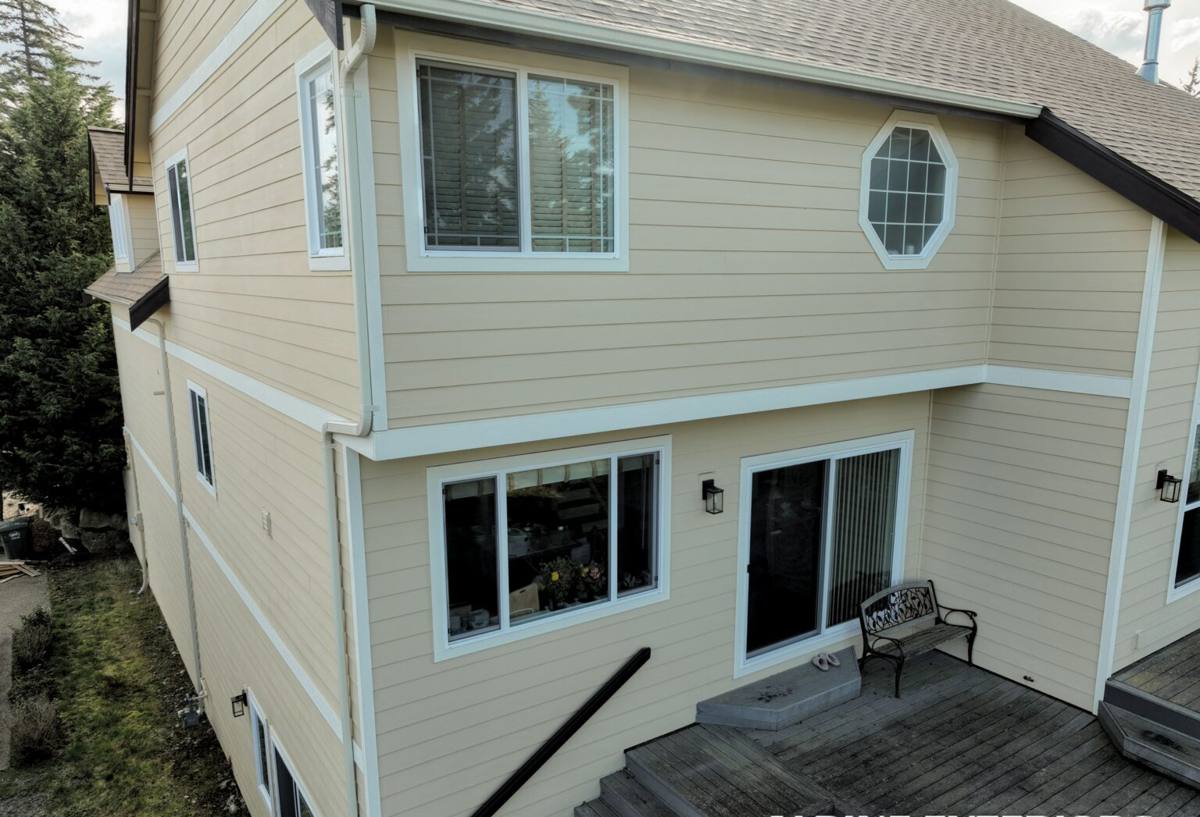
What Salt Air and Driving Rain Do to a Deck Over Time
Corrosion Is the Quiet Failure Mode
Most deck problems people notice are cosmetic — graying wood, a soft board, a squeaky rail. The failure that actually causes structural trouble is corrosion of the metal you can't see: joist hangers, structural screws, bolts, and ledger fasteners. Salt-laden air accelerates rust on standard hardware, and once a fastener starts to corrode, it loses holding strength well before it looks obviously bad from the surface.
Moisture That Doesn't Get a Chance to Dry
Driving rain off the water pushes moisture into places a straight-down rain wouldn't reach — under rail caps, behind fascia boards, into end grain at butt joints. Combined with the shade and humidity that settles in over a long moss season, boards in these areas can stay damp far longer than they would on a more sheltered, inland deck. Wood that stays wet longer rots faster, and it's also exactly where moss and algae get their start.
Moss Season Isn't Just an Appearance Problem
Moss and algae on decking are mostly thought of as a slip hazard and a cleaning chore, but they also hold moisture against the board surface, which speeds up the same decay process described above. A deck design that sheds water and dries quickly reduces how much moss ever gets a foothold in the first place — it's a lot easier to build that in up front than to fight it every winter afterward.
Choosing Decking Material for a Sandy Point Property
There's no single "right" decking material for every home — it depends on budget, how the deck will be used, and how much upkeep an owner wants to take on. What we won't do is recommend a product or install method that we know performs poorly in salt air and driving rain just because it's cheaper up front. Here's how the common options actually compare for this specific exposure:
| Material | Coastal Performance | Maintenance | Typical Trade-Off |
|---|---|---|---|
| Pressure-treated fir/hem-fir | Fair — needs consistent sealing to hold up to salt spray and rain | Annual cleaning and re-sealing recommended | Lowest material cost, highest ongoing upkeep |
| Cedar | Good natural rot resistance, but still needs finish maintenance near the water | Periodic cleaning, re-oiling every few years | Better look and feel than treated lumber, more maintenance than composite |
| Composite decking | Very good — doesn't absorb moisture or support rot the way wood does | Occasional washing to keep moss/algae from gripping the surface texture | Higher upfront cost, little upkeep after that |
| PVC decking | Excellent — fully synthetic, unaffected by moisture absorption or salt | Lowest — mainly rinsing off salt film and organic buildup | Highest upfront cost of the group |
For a Sandy Point home, we lean toward composite or PVC decking on the walking surface for most owners, simply because the maintenance burden of wood near the water is real and ongoing. That said, plenty of homeowners still want the look and feel of real wood, and we'll build that correctly — with the sealing schedule and detailing it needs — if that's the priority.
What's Underneath Matters More Than What You Walk On
Coastal-Grade Fasteners and Hardware
This is the single biggest difference between a deck built for Sandy Point and a deck built with standard inland specs. We use fasteners and structural hardware rated for coastal or high-corrosion environments — not because it's required everywhere, but because standard hot-dip galvanized or coated fasteners corrode noticeably faster this close to salt water. That includes joist hangers, structural screws, ledger bolts, and post connectors.
Ledger Attachment and Flashing
Where a deck attaches to the house, the ledger board and its flashing are doing the most important waterproofing work on the whole structure. Driving rain pushed by wind off the water finds gaps that a calmer, straight-down rain never would. We flash ledger connections to shed water away from the house framing, not just at the top edge but along the full run, and we treat that detail as non-negotiable regardless of what decking material sits on top.
Footings in Sandy, Low-Lying Ground
Soil near the water can behave differently than inland soil — drainage, compaction, and grade all affect how a footing performs over the long run. We size and set footings based on what the ground actually does on a given lot, not a one-size-fits-all assumption, and we make sure water is directed away from posts and footings rather than allowed to pool around them.
Railings and Hardware in a Salt Air Environment
Railing systems take direct wind and salt exposure more than almost any other part of the deck, since they're fully exposed on all sides. Metal balusters, cable rail hardware, and post connectors are all places where corrosion shows up early if the wrong grade of hardware is used. We spec railing hardware the same way we spec structural fasteners — for the environment the deck actually sits in, not a generic inland spec.
A Practical Checklist: What a Correctly Built Sandy Point Deck Should Have
- Decking material chosen with a realistic maintenance plan the homeowner is actually willing to keep up with
- Coastal-rated or equivalent corrosion-resistant fasteners and structural hardware throughout, not just at visible connections
- Properly flashed ledger attachment designed to shed wind-driven rain, not just vertical rain
- Footings sized and placed for the actual soil and drainage conditions on the lot
- Board spacing and airflow underneath the deck designed to let the structure dry out between rain events
- Railing hardware matched to the same corrosion standard as the structural fasteners
- A clear understanding, before we start, of what upkeep the chosen materials will actually require
How We Approach a Sandy Point Deck Project
We walk the site first, because the exposure on a Sandy Point lot can vary a fair amount depending on how open it is to wind and water versus tucked behind other structures or trees. That assessment shapes our material and hardware recommendations more than a standard template would. From there:
- We evaluate sun, wind, and rain exposure specific to the lot, along with existing drainage and soil conditions.
- We walk through decking, railing, and hardware options honestly, including real maintenance expectations for each — not just the upfront price.
- We handle permitting and design to meet current code, including structural sizing appropriate to the site.
- We build with corrosion-resistant hardware and coastal detailing as standard practice on every Sandy Point project, not as an upcharge.
- We walk the finished deck with the homeowner and explain exactly what maintenance schedule will keep it performing well.
Living With a Deck Through a Long Moss Season
Even a well-built deck needs some seasonal attention in this climate. The goal of good design and material choice is to reduce that workload, not eliminate it entirely. A periodic wash-down to clear moss and algae before it gets established, keeping gutters and downspouts clear so runoff isn't dumping extra water onto the deck surface, and a quick look at fastener heads and connections once a year go a long way. For wood decking, that also means keeping up with sealing on the schedule the product actually requires — skipping a year near the water costs more ground than skipping a year further inland would.
Why Local Experience in Sandy Point Actually Matters
A lot of deck-building advice online is written for a generic backyard, not for a beach community in Whatcom County dealing with salt air, wind-driven rain, and a genuinely long damp season. Building here means treating hardware grade, flashing detail, and material choice as core decisions rather than afterthoughts. A crew that has already worked on homes in this specific area has seen which details hold up over years in these conditions and which ones show problems early — and builds accordingly from the first footing.
If you're planning a new deck or replacing one that hasn't held up to the conditions out here, we're glad to come take a look and talk through what makes sense for your home. Reach out for a free, no-pressure estimate using the form below.