 Blaine Siding
 Building Decks for Blaine Harbor's Climate
Blaine Harbor sits right where the Salish Sea weather meets everyday life. Homes here take on salt-laden air off the water, long stretches of driving rain in the fall and winter, and a moss season that can run from October well into spring. A deck built without those three factors in mind will show problems within a few seasons — not because the homeowner did anything wrong, but because it was built to a generic spec instead of a Whatcom County waterfront spec.
We build and repair decks across Blaine, and Blaine Harbor is one of the areas we work most often. That matters for a deck project in a specific way: we already know which fastener finishes hold up near the water, which framing details shed rain instead of trapping it, and which surfaces stay walkable when moss and algae move in. This page covers what a Blaine Harbor deck actually needs, what we build into every project, and what to ask before you hire anyone for the job.
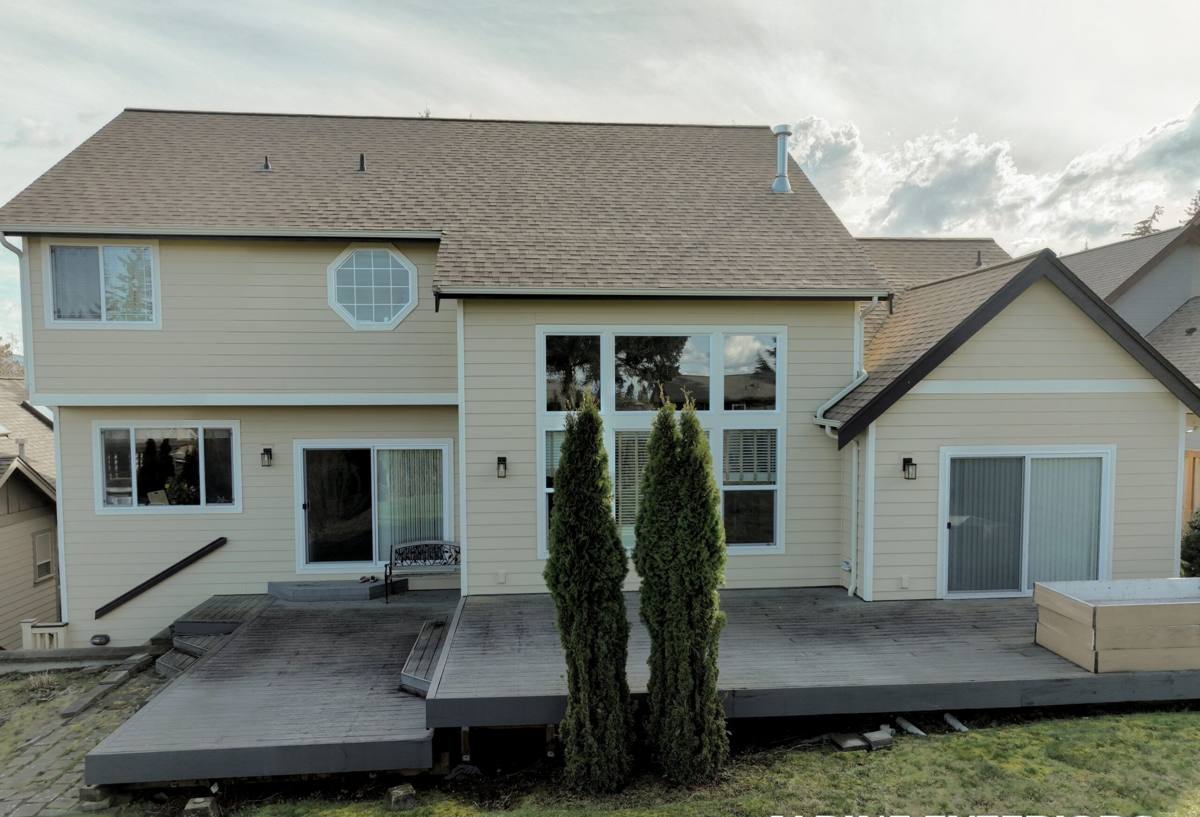
What Salt Air Does to a Deck Over Time
Salt air isn't just a coastal talking point — it's a corrosion accelerant. Airborne salt settles on every exposed metal surface on a deck: joist hangers, structural screws, railing brackets, post bases. Standard hot-dip galvanized hardware is built for general outdoor use, not for a property with regular salt exposure, and it can start showing rust streaks and pitting well before a comparable deck further inland.
Where salt exposure shows up first
- Joist hanger nails and screws — the first hardware to show rust bleed on the ledger board
- Railing post connections, especially where two metal surfaces meet and trap moisture
- Any exposed fastener head on the decking surface itself
- Stair stringer hardware, which sits low and catches more splash and runoff
The fix isn't complicated, but it does cost more upfront: stainless steel or marine-grade coated fasteners and connectors in the areas most exposed to salt air, rather than standard-grade hardware throughout. We spec that hardware as a baseline on Blaine Harbor jobs, not as an upsell.
Driving Rain and How Decks Actually Fail From Water
Most deck failures we see aren't dramatic — they're slow water damage in places nobody checks. Driving rain off the Strait doesn't fall straight down; it gets pushed sideways into ledger connections, under poorly flashed rim joists, and into end-grain cuts that were never sealed. Over a few wet seasons, that moisture works its way into framing lumber and the deck starts to soften from the inside before it ever looks bad on the surface.
The details that actually keep water out
- Proper ledger board flashing where the deck attaches to the house — this is the single most common failure point on older decks
- Joist tape on top of every joist to seal screw penetrations before decking goes down
- Correct decking gap width so water sheds through instead of pooling on the surface
- Sealed or capped end cuts on any lumber exposed to weather
- Positive slope away from the house on any solid-surface or covered deck areas
None of these add much to a project's cost when they're built in from the start. They cost a lot more to retrofit after a homeowner is already dealing with soft framing or a rotting ledger board.
Moss Season: The Part Homeowners Notice Most
Whatcom County's moss season is long, and Blaine Harbor's shaded, damp lots make it worse than most. Moss and algae don't just look bad on a deck surface — they hold moisture against the wood or composite surface and turn stairs and walkways slick and genuinely dangerous underfoot for months at a stretch.
Surface choice makes a real difference here. Composite and PVC decking resist moss growth better than wood, but they're not immune — moss will still take hold in shaded, poorly ventilated areas of any material if the deck can't dry out between rains. That's why airflow underneath the deck matters as much as what's on top.
| Deck Surface | Moss Resistance | Maintenance Reality |
|---|---|---|
| Pressure-treated wood | Low — moss takes hold quickly in shaded, damp spots | Needs annual cleaning and periodic sealing to resist rot and moss |
| Cedar | Moderate — naturally rot-resistant but still needs upkeep | Occasional cleaning and refinishing to maintain appearance and resistance |
| Composite decking | Good — dense surface resists moss root-in better than wood | Periodic washing; low upkeep otherwise |
| PVC decking | Best available option — non-porous surface | Occasional rinsing; the most moss-resistant surface we install |
We'll walk through these trade-offs honestly during an estimate — the right surface depends on your budget, how much shade the site gets, and how much upkeep you actually want to do.
What a Correct Deck Build Looks Like Here
A deck built for Blaine Harbor conditions starts below the surface, not with the decking material. Framing, fastener selection, and drainage details determine whether the deck is still solid in ten years — the decking on top is really the last decision, not the first.
Our standard build sequence
- Site and soil assessment, including footing depth appropriate for local frost and drainage conditions
- Ledger board attachment with full flashing, not just fasteners and caulk
- Framing with corrosion-resistant hardware sized for the exposure level of the specific site
- Joist tape and gap-spacing planned before the first decking board goes down
- Surface material installed to manufacturer spec, with fastener pattern matched to the material
- Railing and stair hardware finished last, checked for any metal-on-metal moisture traps
Skipping steps in that sequence is how decks end up needing major repair in year five instead of year twenty. We don't shortcut the framing stage to hit a lower number on a bid — it's the part of the job nobody sees again once the decking is down.
Repair, Rebuild, or New Build — How We Sort It Out
Not every deck problem in Blaine Harbor needs a full rebuild. We look at three things before recommending anything: the condition of the framing (this is the deciding factor), the age and condition of the ledger connection, and whether the existing footings are adequate for current code. If the framing is sound and it's really a surface and railing issue, a resurface can extend a deck's life for a fraction of a rebuild's cost. If the framing has soft spots, especially near the ledger, a rebuild is usually the more honest recommendation — patching a compromised structure just delays a bigger problem.
Signs it's time for a professional look
- Soft or spongy spots underfoot, especially near the house
- Visible rust streaking from fastener heads or hardware
- Persistent moss or algae that returns within weeks of cleaning
- Gaps or movement where the deck meets the house ledger
- Railings that flex or feel loose at the post connections
Why a Local Blaine Harbor Crew Matters
Deck-building rules of thumb that work in drier or more inland parts of Washington don't always hold up here. A crew that primarily builds decks away from the water can spec hardware and framing details that are fine elsewhere but undersized for Blaine Harbor's salt air and rain exposure. Working this specific area regularly means we're not guessing at exposure levels or relearning drainage lessons on your project — we've already seen how decks in this neighborhood age, and we build accordingly from the first day.
That local knowledge also means fewer surprises during permitting and inspection, since we're familiar with what Whatcom County and local jurisdiction requirements expect for footing depth, guard rail height, and stair geometry on residential decks.
Cost Factors on a Blaine Harbor Deck Project
Every deck quote is different, but the variables that move the price on a Blaine Harbor project are consistent. Rather than quote a number that won't mean much without context, here's what actually drives cost up or down:
| Factor | Effect on Cost |
|---|---|
| Deck size and shape complexity | Larger and multi-level designs increase material and labor |
| Height above grade / stair count | Taller decks need more structural framing and railing |
| Surface material chosen | PVC and premium composite cost more upfront than pressure-treated wood |
| Hardware grade specified | Stainless and marine-grade hardware costs more than standard galvanized |
| Site access and existing structure removal | Tear-off of an old deck and difficult site access add labor time |
We give straight, itemized numbers during the estimate rather than a vague range, so you know exactly what you're paying for and why.
Get a Free Estimate on Your Blaine Harbor Deck
Whether you're planning a new deck, need an honest opinion on whether an existing one needs repair or replacement, or just want a second look at a quote from another contractor, we're happy to come take a look. The estimate is free and there's no pressure — fill out the form below and we'll set up a time to walk your property.