 Blaine Siding
 Fiber Cement Siding for the Dakota Creek Area
Dakota Creek runs through the edge of Blaine on its way toward Drayton Harbor, and the properties along that corridor deal with a slightly different mix of conditions than a house sitting out in the open on a dry, sunny lot. You've got the same salt-tinged marine air and driving rain that hits the rest of Blaine, but creekside and creek-adjacent properties often add more tree cover, more shade, and ground that stays damp longer after a storm passes. That combination is hard on exterior siding, and it's exactly the kind of environment where the difference between a correctly installed fiber cement system and a cheaper alternative shows up fastest — usually within the first few wet seasons, not decades down the road.
We install James Hardie fiber cement siding, and only James Hardie fiber cement siding. This page is about that one product, in this one part of Blaine, because a Dakota Creek property doesn't need generic siding advice — it needs siding that's been thought through for salt air, sideways rain, and shaded, slow-drying wood and yard surfaces close to the house.
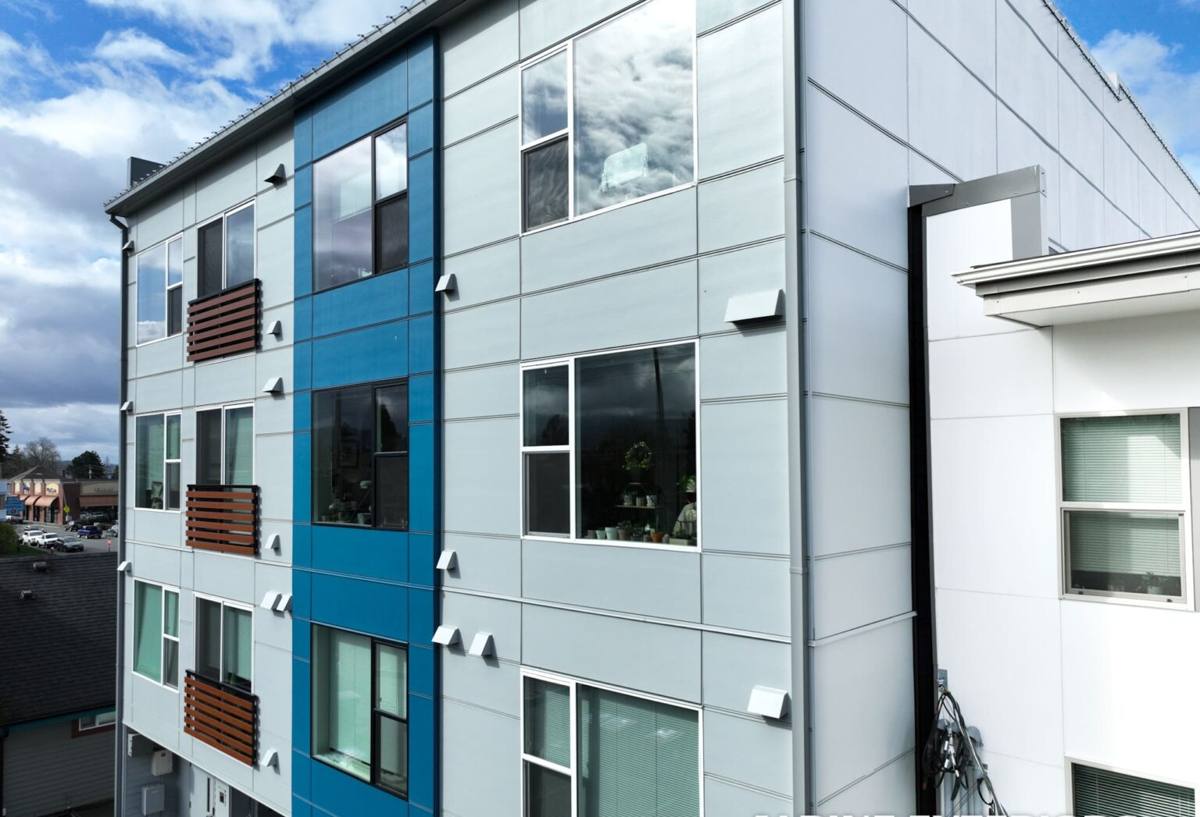
What Dakota Creek's Conditions Actually Do to Siding
Salt Air Off the Water
Blaine sits close enough to Semiahmoo Bay and Drayton Harbor that salt-laden air reaches most of the town, Dakota Creek included, even on properties without a direct water view. Salt accelerates corrosion on fasteners, flashing, and any exposed metal trim, and it breaks down lower-quality paints and coatings faster than a dry inland climate ever would. It's a slow, steady wear pattern rather than a dramatic one, which is part of why it gets underestimated until a homeowner is looking at rust streaks or a fastener that's failed years ahead of schedule.
Driving Rain
Storm systems coming off the water don't drop straight down — wind pushes rain sideways into wall assemblies, trim joints, and any gap around windows or penetrations. That sideways load finds weaknesses a light, straight-down rain never would, and it's a near-constant feature of Whatcom County winters. Siding that isn't detailed to shed wind-driven rain, rather than just vertical rain, is siding that's working at a disadvantage from day one.
Shade, Tree Cover, and Slow-Drying Ground
This is where a creek corridor property differs from a house on an open, sun-exposed lot elsewhere in Blaine. Mature trees along Dakota Creek mean more shaded wall area, more organic debris landing on siding and in gutters, and ground and understory vegetation that holds moisture longer after rain than an open yard would. Walls that stay shaded and damp longest are the first places moss, mildew, and algae take hold, and any siding material with even a little surface porosity becomes a growth surface over time. On a creekside lot, that moss season effectively runs longer than it does on a more exposed property just a few blocks away.
Why Fiber Cement — and Why James Hardie Specifically
Fiber cement as a material category is cement, sand, and cellulose fiber pressed into a dense, stable board. It doesn't absorb water the way wood-based products do, it doesn't feed a fire, and it holds its shape through wet-dry cycling instead of swelling and cupping. That's a good starting point for a shaded, moisture-heavy property like the ones along Dakota Creek. But not every fiber cement product is engineered or finished the same way, and we've made a professional decision to install one system rather than mix and match based on price.
- Climate-engineered HZ formulation: Hardie's HZ5 product line is specifically formulated for regions with sustained moisture and freeze-thaw cycling, which describes a shaded, creek-adjacent Blaine lot well.
- Factory-applied ColorPlus finish: The color and finish are baked on under controlled factory conditions, not brushed on in the field, so it resists fading and moisture intrusion longer than a job-site-applied coating would.
- Dimensional stability: Fiber cement doesn't swell or warp with repeated wet-dry cycles the way engineered wood siding products can, which matters on walls that spend more of the year damp than dry.
- Non-combustible core: A real consideration on wooded, tree-lined properties where wildfire risk and insurance underwriting both factor material choice into the conversation.
- Strong transferable warranty: Backed by Hardie, contingent on installation following their published spec — which is a large part of why installation quality matters as much as the product itself.
We don't install LP SmartSide, vinyl, Cemplank, Allura, primed spruce, or cedar. Each has its market and its fans. But on a shaded, moisture-retentive property near Dakota Creek, we'd rather stand fully behind one system than offer a lower-cost option that quietly shifts maintenance risk onto the homeowner a few wet seasons in.
Matching the Right Hardie Profile to a Dakota Creek Home
James Hardie makes several siding profiles, and the right choice depends on the home's style and how much of its wall area sits in shade versus direct sun. Lap siding is the most common choice and works well across most Dakota Creek home styles. Board and batten reads well on more contemporary or farmhouse-style homes and creates fewer horizontal laps for water to catch on shaded walls. Shingle-style panels suit homes going for a more traditional or coastal look. All three come through in HZ5 formulation and ColorPlus finish, so the decision usually comes down to appearance and the home's architecture rather than performance.
Color Considerations in a Shaded, Wet Environment
Darker colors show less streaking from tree debris and organic buildup on shaded walls, while lighter colors make moss and mildew more visually obvious sooner — which some homeowners actually prefer, since it flags a cleaning need before it becomes a bigger problem. Either way, ColorPlus finish holds its color far better under constant humidity and filtered sun than a field-applied paint job would, which matters more on a creek-corridor property than it does on an open, sun-drying lot.
What a Correct Installation Requires Here
Fiber cement only performs the way it's designed to when it's installed correctly, and on a shaded, moisture-retentive Dakota Creek lot, the installation details carry more weight than they would on a drier property. We don't treat these as optional:
- Rain screen gap: A drainage cavity behind the siding lets any moisture that gets past the exterior surface drain and evaporate instead of sitting against wall sheathing that's already slow to dry in shade.
- Correct fastener type and spacing: Corrosion-resistant fasteners placed to Hardie's spec, not spaced wider to save time — loose or wrong fasteners are one of the most common causes of early siding failure we find on tear-offs.
- Properly lapped house wrap and flashing: Every seam and penetration needs to direct water down and out, especially on walls catching wind-driven rain off the water.
- Sealed butt joints and trim transitions: Open or poorly sealed joints are where moisture finds its way behind siding first, and on a shaded wall, water that gets in stays longer before it can dry out.
- Adequate clearance above grade and vegetation: Siding installed too close to soil, mulch beds, or overgrown landscaping near a creek-adjacent yard invites splash-back and constant dampness at the bottom courses — a detail that's easy to shortcut and expensive to ignore.
None of this is unusual or exotic — it's Hardie's own published installation spec. The difference between a siding job that lasts and one that needs attention in five years usually comes down to whether that spec was actually followed on every wall, including the shaded ones nobody's looking at closely on install day.
How Our Process Works
1. On-Site Assessment
We walk the property, not just the siding that's easiest to see from the street. On a Dakota Creek lot, that means checking wall orientation relative to shade and tree cover, grade and drainage around the foundation, and any areas where existing siding already shows moss, staining, or soft spots that point to trapped moisture.
2. Tear-Off and Substrate Check
Once old siding comes off, we check the sheathing and house wrap underneath before anything new goes up. This is where hidden moisture damage from years of trapped water shows up, and it's not something an estimate from the street can predict — it has to be confirmed once the wall is actually open.
3. Correct Installation to Spec
Rain screen gap, fastener spacing, flashing laps, and clearance above grade all get handled to Hardie's published spec, with extra attention on shaded walls and any section of the home closest to tree cover or the creek corridor itself.
4. Final Walkthrough
We walk the finished job with the homeowner, checking trim transitions, caulking, and clearances before calling it done — not just from the driveway, but up close on the walls that will see the most moisture over the coming years.
Cost Factors for Dakota Creek Siding Projects
| Factor | What Drives It | Creek-Corridor Consideration |
|---|---|---|
| Home size and wall complexity | Square footage, number of gables, trim detail | More shaded, hard-to-reach wall sections on tree-lined lots |
| Tear-off vs. overlay | Condition of existing siding and sheathing | Higher likelihood of hidden moisture damage behind older siding in shaded areas |
| Substrate repair | Rot or damage found once old siding is removed | More common on walls that have stayed damp longest under tree cover |
| Profile and finish choice | Lap, board and batten, or shingle-style panels; ColorPlus color | Darker finishes show less organic streaking on shaded walls |
| Site access | Landscaping, fencing, slope, distance from street | Mature trees and creek-side landscaping can limit staging and scaffolding access |
These are general cost drivers, not a quote. Two homes on the same street near Dakota Creek can need very different scopes once old siding comes off and the substrate underneath is visible — which is why we walk every property in person before putting a real number on the work.
Signs a Dakota Creek Home May Need New Siding
- Moss or dark staining that returns quickly after cleaning, especially on shaded or tree-facing walls
- Soft or spongy siding near the base of the wall, close to grade or landscaping
- Rust staining around fasteners or trim, more noticeable this close to the water
- Peeling paint or visible warping on walls that stay damp longest under tree cover
- Gaps or separation at butt joints and trim transitions
- A musty smell or visible staining on interior walls that back up to shaded exterior siding
Why a Crew That Already Works Dakota Creek Matters
A shaded, creek-adjacent property doesn't behave like an open lot a few blocks away, and a crew that's worked this specific corner of Blaine knows where to expect trapped moisture, which walls need extra flashing attention, and how much clearance to leave given how slowly the ground actually dries out here. That's not something a generic installation approach accounts for — it comes from having actually pulled siding off walls like these and seen what was happening underneath. It's also part of why we install one fiber cement system to one consistent standard rather than offering a cheaper product that performs fine in a dry, open yard but struggles under sustained shade and moisture.
If you own a home along the Dakota Creek corridor in Blaine and you're dealing with moss that keeps coming back, siding that's starting to look tired, or you're simply planning ahead, we're glad to take a look and give you a straightforward, no-pressure assessment. Reach out using the form below to schedule a free estimate.