 Blaine Siding
 Building a Deck That Actually Holds Up in Dakota Creek
Dakota Creek sits close enough to the water that homes here deal with a different set of conditions than a deck builder faces further inland in Whatcom County. Salt-laden air moves in off the bay, rain doesn't just fall here — it drives sideways for days at a time, and moss finds a foothold on almost anything that stays damp and shaded for more than a season. A deck built with generic, big-box assumptions about "Pacific Northwest weather" tends to show its age fast in this specific corner of Blaine. One built with this site in mind can go decades before it needs real structural attention.
This page is about custom decks specifically for Dakota Creek homes — what the climate actually does to a deck here, what a correctly built one involves, and how we approach the work so it lasts.
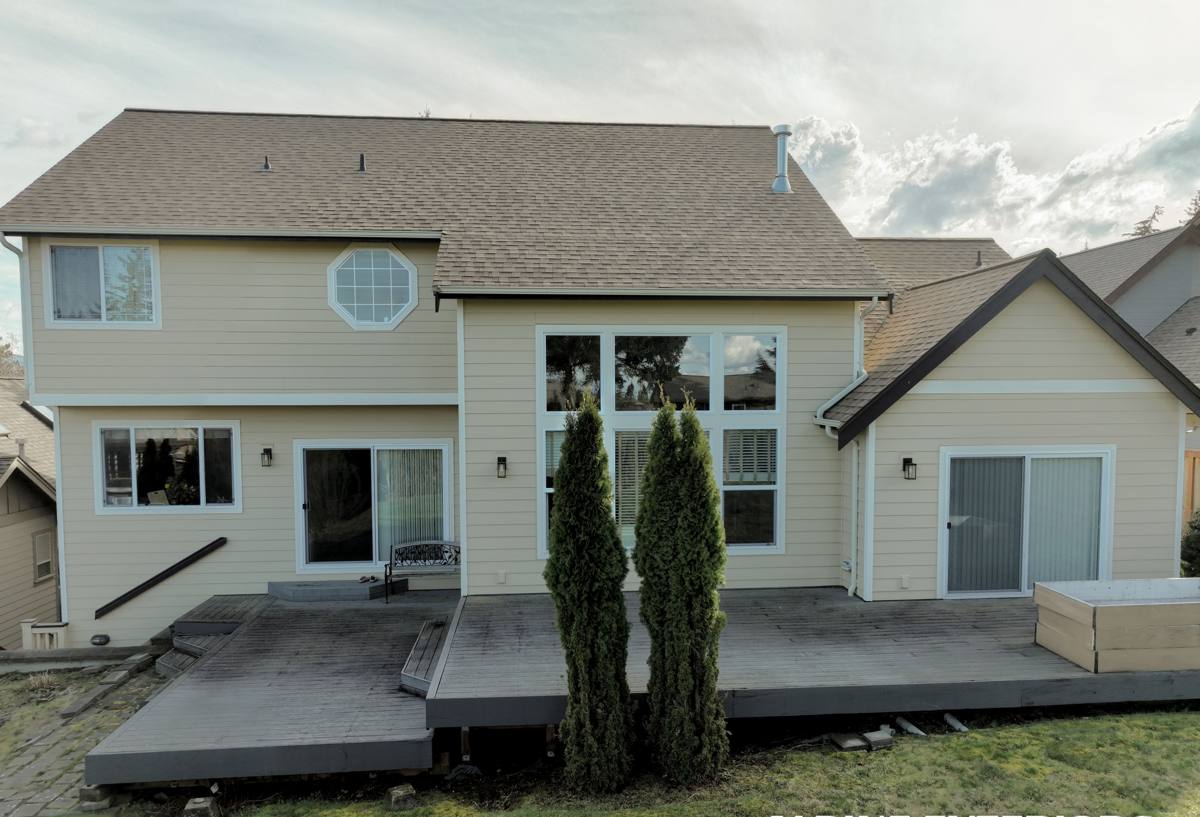
What Salt Air, Rain, and Moss Actually Do to a Deck
Salt Air and Hardware
Airborne salt accelerates corrosion on anything metal — fasteners, joist hangers, post bases, railing brackets. On a deck built with mismatched or under-rated hardware, this shows up as rust streaks, weakened connections, and eventually loose or failing framing hardware years before the decking itself wears out. Homes closer to the water feel this faster, but even a few blocks inland, salt-bearing wind still reaches exposed hardware over enough winters.
Driving Rain and Water Intrusion
Rain that comes in at an angle finds every gap a calm, straight-down rain would miss. The two places this matters most on a deck are the ledger board connection (where the deck attaches to the house) and any spot where a post, beam, or joist end is exposed. Water that gets behind a poorly flashed ledger board doesn't just damage the deck — it can work its way into the house's wall framing and sheathing, which is a far more expensive problem than a rotted deck board.
A Long Moss Season
Whatcom County's stretch of cool, damp weather runs long, and shaded or north-facing decks in Dakota Creek can stay wet for weeks at a time. Moss and algae growth on decking isn't just cosmetic — it holds moisture against the wood surface and makes boards genuinely slick and dangerous underfoot, especially on stairs. Deck orientation, ventilation underneath, and surface texture all affect how bad this gets.
Choosing Materials That Make Sense for This Site
There's no single "best" decking material for every home — the right choice depends on budget, how much upkeep you want to do, and how exposed the deck is to sun, shade, and wind off the water. We walk through these trade-offs honestly rather than pushing whatever has the highest margin.
| Material | Upfront Cost | Maintenance | Moisture & Salt-Air Behavior |
|---|---|---|---|
| Pressure-treated wood | Lowest | Needs regular cleaning and re-sealing to resist moss and rot | Performs fine if maintained; neglect shows quickly in this climate |
| Cedar | Moderate | Periodic cleaning and finish renewal for appearance and longevity | Naturally rot-resistant but still benefits from finish upkeep near salt air |
| Composite decking | Higher | Occasional washing; no staining or sealing | Doesn't rot, but surface can still grow moss/algae in shaded, damp spots — needs periodic cleaning |
| PVC/capped polymer | Highest | Lowest ongoing maintenance | Very stable in wet, salty conditions; some products handle full sun differently than shade |
Our professional standard is to match the material to the specific exposure of your lot — a deck tucked under mature trees on the shaded side of a Dakota Creek property needs a different plan than one facing open sky and wind off the water. We won't recommend a premium material where it isn't warranted, and we won't spec a budget material for a spot where it will fail early.
The Structural Details That Separate a Correct Build From a Problem Waiting to Happen
Ledger Flashing
Where the deck meets the house, correct flashing — installed in the right order, lapped correctly with the house's water-resistive barrier — is what keeps driving rain out of your wall framing. This is the single most common point of failure we see on older or poorly built decks in wet coastal climates, and it's not a place to cut corners or guess.
Joist Protection
Butyl flashing tape over the top of each joist keeps rainwater from wicking into the end grain and top surface of the framing lumber, which is where rot typically starts underneath a deck board — long before it's visible from above. In a climate with as much rainfall as Blaine sees, this detail pays for itself many times over.
Fasteners and Hardware
Given the salt exposure around Dakota Creek, we spec hot-dip galvanized or stainless connectors and fasteners rated for coastal or treated-lumber contact, not the cheapest hardware that happens to fit. Mixing incompatible metals accelerates corrosion at exactly the connections holding the structure together.
Footings and Framing for Wet Ground
Whatcom County soil holds moisture well into the dry months, and footing depth and drainage around posts need to account for that rather than assuming a quick-set footing will be enough. Proper footing depth, drainage gravel, and post-base standoff hardware keep posts from sitting in standing water after a heavy rain event.
Design Choices That Fit a Dakota Creek Property
Beyond materials and structure, a handful of design decisions make a real difference in how a deck performs here over time:
- Board orientation and gapping — proper spacing lets water shed and air circulate underneath instead of pooling on the surface.
- Under-deck ventilation — keeping airflow moving below the decking reduces the damp, shaded conditions moss thrives in.
- Railing and stair material — stairs are the highest-risk spot for slip hazards in a mossy climate; surface texture and railing placement matter more here than on a flat deck area.
- Wind exposure on open lots — homes with a more open view toward the water may need railing and post spacing that accounts for wind load, not just code minimums.
- Sun and shade patterns — where mature trees or the house itself cast long shade, we plan for extra drainage and easier-to-clean surfaces rather than fighting moss after the fact.
Our Process for a Custom Deck Build
We keep the process straightforward and don't ask you to make material or structural decisions you don't have context for:
- On-site walkthrough — we look at sun/shade exposure, drainage, existing structure (if replacing a deck), and how the space will actually be used.
- Design and material recommendation — a plan and materials list matched to your budget and this site's specific exposure, explained in plain terms.
- Permitting — most elevated decks in Blaine and unincorporated Whatcom County require a building permit; we handle that paperwork rather than leaving it to you.
- Framing and flashing — the structural work that doesn't show later but determines how long the deck lasts: ledger flashing, joist tape, correct hardware, proper footings.
- Decking, railing, and finish work — installed to the manufacturer's specifications so warranties (where applicable) stay valid.
- Final walkthrough — we go over care and maintenance specific to the material you chose before we consider the job done.
Living With a Deck in This Climate: Maintenance That Actually Matters
Even a well-built deck needs some seasonal attention in a climate like this. What that looks like depends on material, but the basics apply across the board:
- Clear leaves and debris from between boards and off stair treads regularly through fall and winter.
- Wash down surfaces at least once or twice a year to slow moss and algae buildup, more often on shaded sections.
- Check railing posts and stair connections annually for looseness — a sign hardware may be corroding or wood may be softening.
- Re-seal or re-stain wood decking on the schedule the product calls for; don't wait until it looks obviously weathered.
- Keep gutters and downspouts near the deck clear so runoff isn't dumping extra water onto or under the structure.
Why It Matters to Hire a Crew That Already Works This Area
A deck built to a generic regional standard and a deck built for Dakota Creek's specific mix of salt air, driving rain, and moss are not the same project, even if they look identical on the day they're finished. The difference shows up five, ten, fifteen years later — in whether the ledger flashing held, whether the hardware is still solid, whether the framing underneath is dry. We work on homes throughout Blaine and Whatcom County and build every deck with this area's climate as the starting assumption, not an afterthought.
If you're planning a new deck or replacing one that's showing its age, we're happy to walk the site with you and put together an honest plan — no pressure, no hard sell. Use the form below to request a free estimate.