 Blaine Siding
 Building Decks for the California Creek Area
Homes along California Creek, on the northwest edge of Whatcom County near Blaine, sit close to water in more ways than one. Between the tidal influence of Semiahmoo Bay and Drayton Harbor and the creek corridor itself, decks out here deal with a combination of salt air, heavy rainfall, and shaded, damp ground that a deck built for a drier inland lot simply isn't designed to handle. A deck that looks right on day one but wasn't built with this specific environment in mind will show it within a few wet seasons — soft boards, rusted fasteners, and a green film that never fully goes away.
We build custom decks in this area regularly enough to know which details matter here and which ones are just upsells. This page walks through what actually holds up near California Creek, what a correctly built deck involves, and how we approach the job from first visit to final walkthrough.
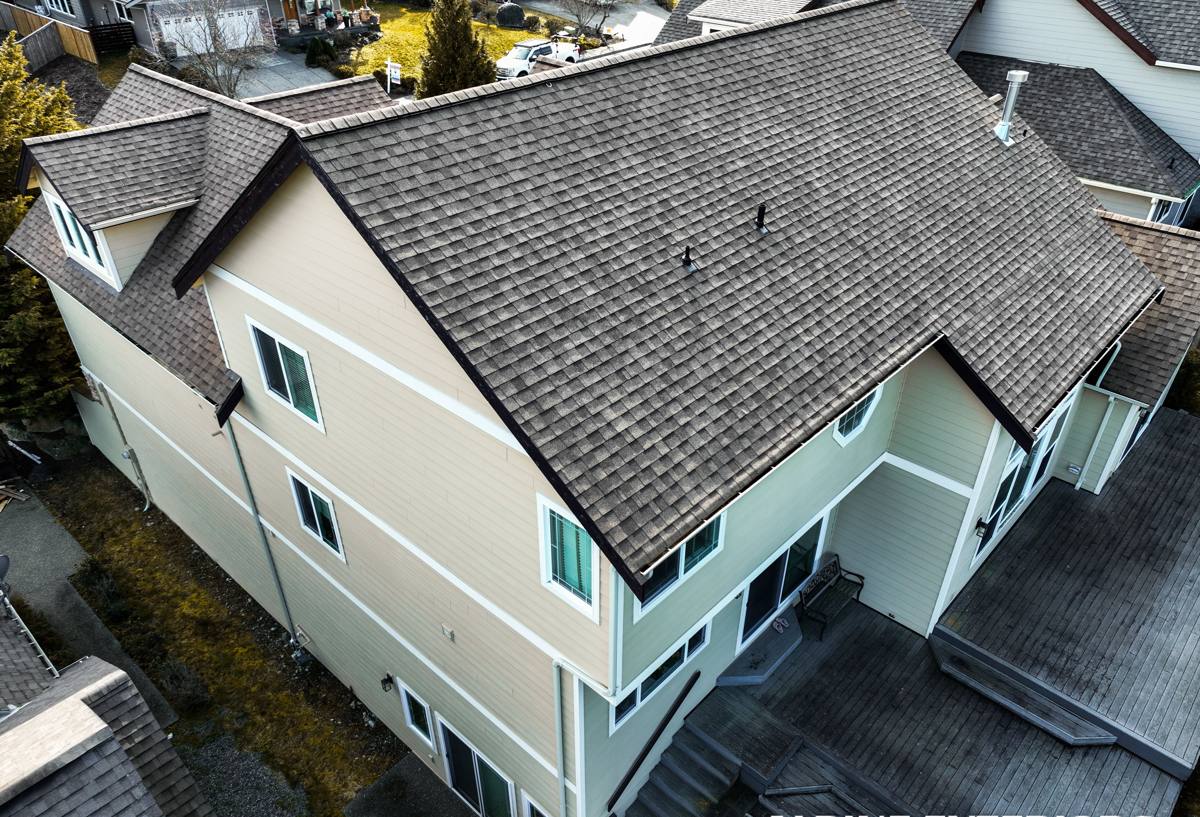
What Blaine's Climate Does to a Deck
Three things wear on a deck near California Creek more than almost anywhere else in Whatcom County:
Salt Air
Proximity to the bay means airborne salt reaches structures further inland than most homeowners expect. Salt accelerates corrosion on anything metal — fasteners, joist hangers, railing hardware — and it doesn't take a direct ocean view for it to matter. A deck built with standard hardware can start showing rust streaks and weakened connections well before the wood itself is a problem.
Driving Rain
Blaine gets a long, wet season, and wind off the water often pushes rain sideways instead of straight down. That matters for a deck because water doesn't just land on the top of the boards — it gets driven into ledger connections, under rail posts, and into any gap where flashing or sealant was skipped or done poorly.
Moss and Shade
Properties near the creek tend to have more tree cover and slower-drying ground than open lots elsewhere in Blaine. Combined with the region's long gray stretch of low sun, that means moss and algae growth on deck surfaces and framing that can start within a single season if the deck wasn't built with drainage and airflow in mind.
Choosing the Right Decking Material
There's no single "best" decking material for California Creek — there's a best material for a given lot, budget, and how much upkeep a homeowner actually wants to do. Here's how the common options compare for this specific environment:
| Material | How it handles salt air & rain | Moss/mildew resistance | Maintenance | Typical lifespan |
|---|---|---|---|---|
| Pressure-treated wood | Good if properly sealed and re-coated; fasteners are the weak point | Needs regular cleaning to stay ahead of it | Annual cleaning, re-sealing every 1-2 years | 15-20 years with upkeep |
| Cedar | Naturally rot-resistant, but still needs sealing near salt air | Better than treated pine, still needs cleaning | Periodic sealing, occasional cleaning | 20-25 years with upkeep |
| Capped composite | Doesn't absorb moisture the way wood does; hardware is still exposed to salt | Resists staining but surface film can still build up in shade | Occasional washing, no sealing | 25-30+ years |
| PVC decking | Fully moisture-resistant board itself | Best resistance to moss/algae staining of the group | Lowest — occasional washing | 30+ years |
The trade-off is mostly cost versus upkeep. Wood costs less up front and looks great when it's freshly maintained, but it asks for real ongoing attention in this climate. Composite and PVC cost more initially but take the maintenance burden off the table for the structural boards — though the framing underneath still needs to be built correctly regardless of what's on top.
Framing and Fasteners That Actually Hold Up
The part of a deck nobody sees is the part that fails first near the water. We treat framing hardware as non-negotiable, not an optional upgrade:
- Stainless steel or heavy hot-dip galvanized fasteners and joist hangers — standard electro-galvanized hardware corrodes too fast in salt air
- Joist tape or a comparable flashing membrane on top of every joist, so screw penetrations don't become entry points for water
- Pressure-treated or naturally rot-resistant framing lumber rated for ground contact where posts meet grade
- Post bases that keep wood off concrete and standing water, not just set directly on a slab or footing
- Hardware matched to the decking material's manufacturer specs — mixing incompatible metals can accelerate corrosion on both sides
None of this is visible once the deck is finished, which is exactly why it's the detail worth asking a contractor about directly rather than assuming it's handled.
Ledger Attachment: The Most Common Failure Point
Where a deck attaches to the house is the single most common source of long-term water damage, and it's a bigger issue in a driving-rain climate like this one than almost anywhere else. A correct ledger installation includes flashing that directs water out and away from the house band board, not just a bead of caulk behind the board. Done wrong, water works its way behind the ledger over a few wet seasons and rots the rim joist or sheathing before it's ever visible from the deck surface.
This is also the connection that carries the structural load of the whole deck, so it's not a place to cut corners for cost. If a contractor's plan for ledger flashing is "we'll seal it up good," that's worth a follow-up question.
Drainage, Grading, and Keeping Moss Off the Deck
Under-deck drainage matters more on shaded, creek-adjacent lots than on open, sunny ones. A few things go a long way toward keeping a California Creek deck drier and cleaner over time:
- Grading the ground under and around the deck so water moves away from posts and footings instead of pooling
- Leaving gaps between deck boards sized for proper drainage and airflow, rather than tight-fitting them for looks
- Keeping the underside of low-clearance decks ventilated rather than sealing it in, which traps moisture and speeds up moss growth
- Positioning the deck and any attached structures to get what sun exposure the lot allows, since full shade all day is what lets moss take hold fastest
None of these steps add much to the cost of a build, but skipping them is exactly how a deck ends up needing a pressure wash every few months just to stay usable.
Permits and Setbacks Near the Creek
Whatcom County requires permits for most new deck construction, and that process typically covers structural details like footing depth, ledger attachment, and guardrail height. Properties near a waterway like California Creek can also fall under the county's critical areas rules, which may affect how close a new structure can be built to the water and what documentation is needed before a permit is issued. This isn't the same on every lot — it depends on the parcel's specific proximity to the creek and how it's classified — so it's worth confirming directly with the county or with a contractor familiar with local permitting before finalizing a design.
We handle the permit application and inspection scheduling as part of a custom deck build, but on a creek-adjacent lot, we build in extra time up front to confirm what applies to that specific property before committing to a design.
Our Process for a Custom Deck Build
The process itself isn't complicated, but skipping steps is how projects near the creek go sideways. Here's how we approach it:
- On-site consult — we walk the lot, check drainage patterns, sun exposure, and how close the build sits to the creek or any critical area boundary
- Design and material selection — sizing, layout, and material recommendations based on your budget and how much upkeep you want to take on
- Permit application — submitted through Whatcom County, including any critical areas documentation if the parcel requires it
- Framing and structural work — footings, ledger flashing, joist protection, and hardware selected for this climate
- Decking, railing, and finish work — installed per manufacturer spec to keep material warranties intact
- Final walkthrough — we go over maintenance expectations specific to the material you chose so there are no surprises in year two
Why a Local Blaine Crew Makes a Difference Here
A deck built by a crew that doesn't normally work this close to the water tends to make the same avoidable mistakes: standard hardware instead of corrosion-resistant fasteners, tight board spacing that traps moisture, or a design that doesn't account for how much shade a creekside lot actually gets through the year. A crew that regularly builds in and around Blaine already knows how salt air, rain patterns, and moss pressure behave here, and has already been through the county's permitting process for lots near critical areas — which means fewer surprises and fewer redos.
If you're planning a custom deck near California Creek, we're happy to walk the site with you and give you a straightforward, no-pressure estimate — including what your specific lot needs and what it doesn't. Use the form below to get started.