 Blaine Siding
 Custer's Climate Puts Real Stress on Exterior Siding
Custer sits close enough to Semiahmoo Bay and the Strait of Georgia that salt-laden air is a constant, low-grade factor in how exterior materials age here. Add Whatcom County's wind-driven winter rain and a moss and algae season that can run eight months or longer in shaded, tree-lined yards, and you have a climate that punishes any siding product with a weak point in its finish, its fastening, or its water management. Homes in this area don't fail because owners neglected them. They fail because the siding, the flashing details, or the installation weren't matched to what this specific stretch of coastline actually does to a house year after year.
Salt air accelerates corrosion on fasteners and trim metal, and it slowly breaks down paint films that weren't engineered for coastal exposure. Driving rain finds any gap in flashing or caulking and pushes moisture behind the cladding rather than letting it run off the surface. And persistent damp, low-light conditions on the north and west sides of a property give moss and algae a long runway to take hold on siding that can't shed moisture quickly. None of this is unusual for Whatcom County — it's simply what siding installed here has to be built and installed to handle.
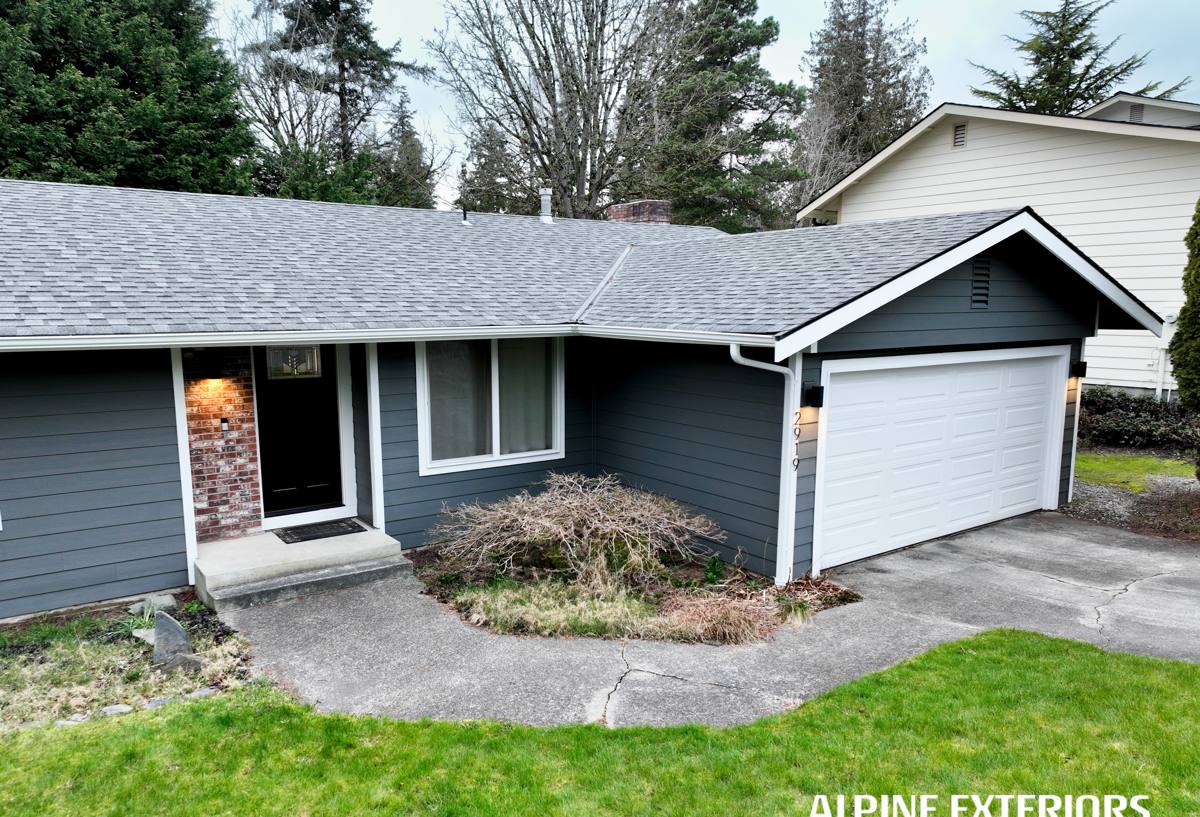
What Siding Installation for Custer Really Needs to Get Right
Water Management Before the Siding Ever Goes On
The siding itself is the least important part of keeping a Custer home dry. What matters more is the weather-resistant barrier underneath it, how flashing is integrated at windows, doors, and penetrations, and whether there's a drainage path for the small amount of water that inevitably gets behind any lap siding in driving rain. Skip this and even the best siding product on the market will trap moisture against the sheathing.
Fastening and Clearances That Respect Salt Air
Corrosion-resistant fasteners aren't optional this close to salt water — they're the difference between trim that holds for decades and trim that streaks and loosens within a few years. Proper ground clearance, deck and patio clearance, and gaps at inside corners also matter more here than in drier inland climates, because any spot where siding sits close to standing moisture becomes a long-term problem in a wet climate.
A Finish That Resists Moss and Algae Growth
Paint quality and how it's applied determine how much moss and algae takes hold on shaded elevations. A factory-cured, baked-on finish holds up differently than field-applied paint, especially on the north- and west-facing walls that stay damp longest through a Custer winter.
Why We Install Only James Hardie Fiber Cement Siding
We made the decision to install exclusively James Hardie fiber cement siding, and we don't install vinyl, LP SmartSide, Cemplank, Allura, or bare cedar or primed spruce. That's a deliberate professional standard, not a sales pitch, and it's worth explaining honestly.
Vinyl siding is affordable and low-maintenance in mild climates, but it's a plastic product that can warp in temperature swings and doesn't offer the same impact resistance or design flexibility as fiber cement — and in a climate with driving rain, seam integrity matters more than it does somewhere drier. Engineered wood products like LP SmartSide perform well when installation and maintenance are followed exactly, but they're wood-based, meaning any breach in the coating exposes the substrate to moisture and rot risk over time — a real concern given how long Custer stays wet each year. Bare or primed wood siding needs ongoing paint maintenance to hold up against coastal humidity, and that maintenance burden only grows the longer it goes deferred.
James Hardie fiber cement is a cement, sand, and cellulose fiber composite. It doesn't rot, it's non-combustible, and it holds paint and factory finishes differently than wood-based products because the substrate itself doesn't absorb and release moisture the way wood does. Hardie's ColorPlus finish is baked on and cured at the factory rather than applied on site, which produces more consistent color retention over time than field-applied paint, particularly on shaded, moss-prone elevations. Hardie also engineers specific product lines — including HZ5 formulations — for regions with harsher moisture and freeze-thaw exposure, which fits western Washington's coastal belt better than a one-size-fits-all product. It carries a strong, transferable manufacturer warranty when installed to spec, which matters for resale value on a Custer property years down the line.
None of this means other products are junk — plenty of homes around the country do fine with them. It means that, given what we've seen driving rain and salt air do to lesser water-management systems and softer finishes over the years, fiber cement installed correctly is what we're willing to put our name behind here.
How Siding Products Compare for Coastal Whatcom County Conditions
| Material | Moisture Resistance | Salt Air Durability | Maintenance | Fire Rating |
|---|---|---|---|---|
| James Hardie Fiber Cement | Excellent — doesn't rot or absorb moisture like wood | Strong with factory ColorPlus finish | Low — occasional wash, no repainting for years | Non-combustible |
| Vinyl | Good on flat surfaces, seams are a weak point | Can chalk and fade faster in coastal UV/salt exposure | Low, but limited repair options if damaged | Combustible, can warp near heat |
| LP SmartSide / Engineered Wood | Good if coating stays intact; vulnerable once breached | Moderate — depends on coating longevity | Moderate — coating and caulking need monitoring | Combustible |
| Cedar / Primed Wood | Fair — absorbs moisture, needs sealing | Lower without diligent upkeep | High — regular painting/staining required | Combustible |
Our Installation Process for Custer Homes
- On-site assessment: we look at exposure direction, moss and moisture patterns, existing damage, and how the current siding and trim have held up.
- Careful removal: old siding comes off without unnecessary damage to sheathing, and we check for hidden rot or moisture intrusion before covering anything back up.
- Weather barrier and flashing: a correctly lapped weather-resistant barrier and integrated flashing at every window, door, and penetration — this is the step that determines whether the wall stays dry.
- Hardie installation to manufacturer spec: correct fastener type and spacing, proper clearances at grade and roof lines, and joints treated the way Hardie's installation instructions require — not shortcuts that void the warranty.
- Trim, caulking, and finish check: sealed joints where water could otherwise track in, and a final walk-through so you know exactly what was done.
What Correct Installation Costs Depend On
| Factor | Why It Matters in Custer |
|---|---|
| Home size and wall complexity | More corners, gables, and trim details mean more flashing and cut work |
| Existing siding condition | Hidden rot or moisture damage found during tear-off adds repair scope |
| Hardie product line and profile | Lap width, texture, and color line affect material cost |
| Access and site conditions | Tree cover, slope, and setback affect labor time |
| Trim and accessory work | Corner boards, fascia, and soffit work often get replaced alongside siding |
A Practical Checklist Before You Hire
- Confirm the crew is licensed and insured to work in Washington State
- Ask specifically how they handle flashing at windows and doors, not just the siding itself
- Ask whether they're a certified or experienced James Hardie installer, and how they handle fastener spec near salt air
- Get a written scope that separates siding, trim, and any sheathing repair as line items
- Ask how they treat north- and west-facing walls differently given moss and shade exposure
- Confirm what warranty coverage applies to both material and labor
Why a Crew That Already Works in Custer Matters
Siding installation isn't one-size-fits-all across Whatcom County. A crew that regularly works Blaine and Custer already knows how far salt exposure reaches inland from the water, which elevations on a typical local lot hold moss longest, and how driving rain off the Strait behaves differently than a storm coming from the interior. That local pattern recognition shows up in small decisions — where to add extra flashing attention, which fastener spacing holds up best, how to sequence work around the region's wetter months — that a crew unfamiliar with this specific stretch of coastline might not think to make.
It also means we're a known, findable local business if a question comes up five or ten years after installation, not a crew that worked one job in the area and moved on.
Get a Straightforward Estimate
If your Custer home's siding is aging, showing moss buildup, or you're simply planning ahead, we're happy to take a look and walk you through what correct installation would involve for your specific property. Use the form below to request a free, no-pressure estimate.