 Blaine Siding
 Building a Deck That Actually Holds Up in Custer
Custer sits inland from Blaine but still lives under the same weather pattern as the rest of Whatcom County's coastal belt: long wet winters, a marine air layer that never fully dries out, and short, intense stretches of sun that can bake a deck surface just as hard as the rain can soak it. A deck built the same way you'd build one in Spokane or Boise won't make it out here. The framing, the fasteners, the drainage details, and the material choice all need to account for months of standing moisture and the moss and algae growth that comes with it.
We build and repair decks throughout the Custer area, and most of the calls we get aren't from people who skipped maintenance — they're from people whose deck was built without the local climate in mind in the first place. Get the bones right the first time and a deck out here can last decades. Get them wrong and you're looking at soft framing, failed ledger connections, and slick, moss-covered boards within a few winters.
What Custer Properties Typically Need From a Deck
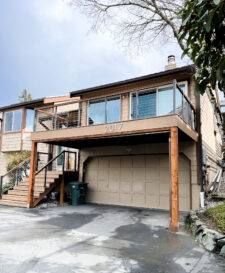
Custer is more rural and wooded than downtown Blaine, and that changes the calculus for a deck in a few real ways. Larger lots often mean more tree cover, which means more shade, more falling debris, and slower drying times after rain. A deck tucked under fir or cedar canopy needs better airflow underneath and more moss-resistant materials than one sitting in open sun. On the flip side, decks with more sun exposure deal with faster UV breakdown on wood and composite alike, so finish and fastener choices matter there too.
We also see a lot of older farmhouses and ranch-style homes in this area with decks that were added on later, sometimes without a permit or without proper ledger flashing. If you're replacing or expanding an existing deck, that history matters — we check the condition of the structure it's attached to before we ever talk about decking material.
Common Site Conditions We Plan Around
- Partial shade from mature trees, which slows drying and encourages moss on the north or east-facing sides
- Sloped or uneven yards common on larger rural lots, which affects footing depth and stair layout
- Older homes with ledger boards that were never properly flashed against the house
- Well and septic systems on some properties, which can affect where footings can be placed
Choosing the Right Decking Material for This Climate
There's no single "best" decking material — there's a best material for your budget, your sun exposure, and how much upkeep you're willing to do. Here's how the common options actually perform in a wet, moss-prone climate like ours.
| Material | Upfront Cost | Moisture & Moss Behavior | Maintenance | Typical Lifespan |
|---|---|---|---|---|
| Pressure-treated pine | Lowest | Absorbs moisture; needs a real drainage gap and airflow underneath to avoid rot and moss buildup | Annual cleaning, re-sealing every 1-2 years | 10-15 years with upkeep |
| Cedar | Moderate | Naturally rot- and insect-resistant, but still needs sealing to slow graying and moss | Cleaning and oil/sealer every 1-2 years | 15-20 years with upkeep |
| Capped composite | Highest | Doesn't absorb water or rot; still needs cleaning where moss and algae land on the surface | Periodic washing, no sealing needed | 25-30+ years, manufacturer-backed |
Pressure-Treated Wood
Still the most affordable option and a reasonable choice if you're willing to stay on top of it. The trade-off is that treated lumber only resists rot at the chemical treatment level — any cut ends, screw holes, or scratches expose untreated wood underneath, which is exactly where rot and moss get a foothold in our climate. We seal all field cuts and use the right fasteners to keep water out of those weak points.
Cedar
A step up in cost with a nicer look and better natural resistance to decay, which is part of why it's popular in the Pacific Northwest generally. It still needs regular sealing here — left bare, cedar grays and holds moisture just like any other wood, and shaded decks will still grow moss on cedar boards.
Composite Decking
The highest upfront cost but the lowest long-term maintenance, which is why we recommend it for shaded or hard-to-access decks where owners don't want to be out there scrubbing and re-sealing every year. It won't rot, cup, or splinter, though moss and algae can still grow on the surface in deep shade — it just doesn't damage the board when it does. We install with proper hidden fastener systems and spacing so water still sheds the way it's supposed to.
What a Correctly Built Deck Actually Involves
The decking material is the part homeowners see, but the framing underneath is what determines whether the deck is still safe and level in fifteen years. This is where a lot of corners get cut on cheaper builds, and it's the part that's hardest to inspect once the boards are down.
Footings and Framing
Footings need to be sized and set to Whatcom County's frost depth and soil-bearing requirements, not just poured to whatever looked deep enough. On the rural and sloped lots common around Custer, that sometimes means engineered footings or additional beams to handle uneven grade. Joists get spaced tighter than the material's minimum spec when we know a deck will see heavy shade and moisture — it reduces flex and gives boards better support as they age.
Ledger Board Flashing
This is the single most common failure point we find on older decks in this area. The ledger board — where the deck attaches to the house — has to be flashed correctly so rain running down the siding gets directed away from the house framing instead of pooling behind the ledger. Get this wrong and you get hidden rot in the house's rim joist, which is a far more expensive repair than the deck itself. We flash every ledger connection properly, every time, whether it's required by the inspector or not.
Fasteners and Hardware
Standard galvanized fasteners corrode faster than people expect in a salt-air, high-moisture climate. We use stainless steel or hot-dip galvanized hardware rated for ground contact and coastal exposure on structural connections, and hidden fastener systems on composite decking to avoid surface screw holes that trap water.
Railings, Stairs, and Permitting
Any deck built more than 30 inches above grade needs a code-compliant guardrail, and stair and railing spacing requirements are strict for a reason — they're the parts of a deck most likely to cause an injury if built wrong. Whatcom County requires permits for most new decks and significant rebuilds; we handle that process as part of the job, including scheduling the inspections, so you're not the one chasing down paperwork.
| Deck Height Above Grade | Guardrail Required | Typical Permit Needed |
|---|---|---|
| Under 30 inches | Not required by code, often added for safety anyway | Sometimes, depending on footprint |
| 30 inches and above | Yes, 36-42 inch height depending on use | Yes, in nearly all cases |
Our Deck Building Process
We keep the process straightforward because most people building a deck are doing it once and want to know what to expect.
- On-site assessment — we look at your existing structure (if there is one), the slope and drainage of the yard, sun and shade exposure, and how the deck will attach to the house.
- Material and design walkthrough — we talk through wood versus composite trade-offs honestly, based on how much shade and maintenance tolerance you're working with, not just what's cheapest to sell.
- Permit and engineering — we pull the required Whatcom County permits and handle any engineering needed for footings or spans.
- Construction — footings, framing, ledger flashing, decking, and railings, built in that order with inspections at the required stages.
- Final walkthrough — we go over the finished deck with you, including basic care so it holds up through its first wet season.
Maintenance in a Moss-Prone Climate
A well-built deck still needs seasonal attention out here — the climate doesn't let anything stay maintenance-free forever except capped composite, and even that benefits from an occasional wash. Moss and algae aren't just cosmetic; on wood decking they hold moisture against the board surface and accelerate decay, and on any material they make stairs and walking surfaces dangerously slick during our wet months.
- Sweep debris and leaves off the deck regularly, especially under tree cover, so they don't trap moisture against the boards
- Clean moss and algae off the surface at least once a year with a deck-safe cleaner, not just a pressure washer alone, which can damage wood fibers or composite caps if used incorrectly
- Check and clear the gaps between boards so water keeps draining instead of pooling
- Re-seal wood or cedar decking every 1-2 years depending on sun exposure
- Inspect the ledger board area and any visible framing once a year for soft spots, staining, or gaps in the flashing
- Check railing posts and stair stringers for looseness, which shows up faster in wet, shifting soil
Why Hire a Crew That Already Works in Custer
Deck building looks similar on paper everywhere, but the details that make a deck last in Whatcom County's climate aren't the same details that matter in a dry inland state. We already know the frost depth and soil conditions common on Custer's rural lots, we already have a working relationship with the county permitting process, and we've seen firsthand what happens to decks built without proper ledger flashing or fastener selection in this environment. That local familiarity shows up in fewer surprises during the build and a deck that's actually built for the weather it has to survive.
If you're planning a new deck or need to replace one that's showing its age, we're happy to come take a look and give you an honest read on what it needs. Reach out for a free, no-pressure estimate using the form below.