 Blaine Siding
 Building Decks for Custer's Climate, Not Against It
Custer sits just south of Blaine in Whatcom County, close enough to the water that the same salt air, driving rain, and long moss season that shape Blaine's exterior work shape Custer's just as much. It's a quieter, more rural stretch than downtown Blaine, with a mix of acreage properties, farmhouses, and newer builds set among open fields and tree lines. That mix matters for deck building, because a deck on an open, wind-exposed lot faces different conditions than one tucked under a stand of fir or cedar, and Custer has plenty of both.
We build custom decks across this part of Whatcom County, and Custer is regular territory for our crew. A deck is one of the few parts of a house that sits fully exposed to the weather on a horizontal plane, catching rain and moisture the way a wall never has to, which is exactly why decking material, framing, and fastener choices deserve more attention here than they would in a drier inland climate.
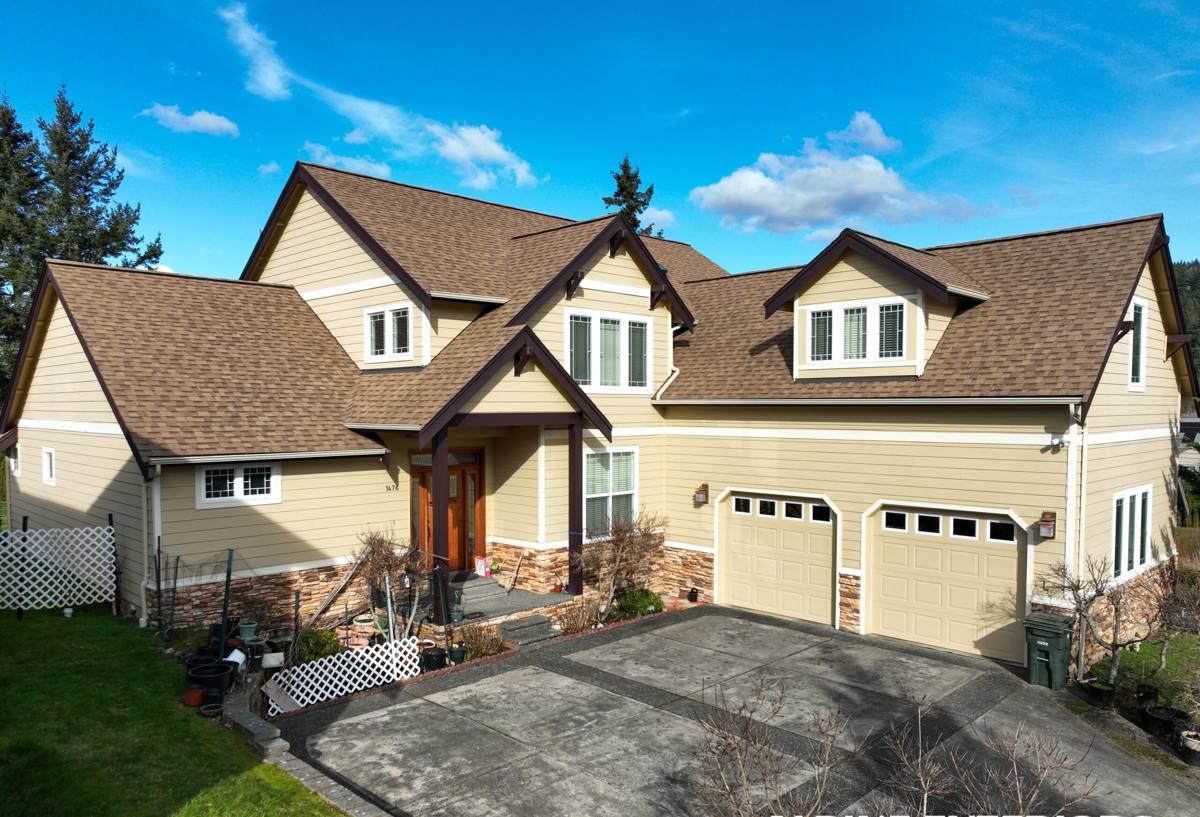
What Custer's Weather Does to an Unprotected Deck
Salt Air Off Semiahmoo Bay and the Strait
Custer isn't right on the water the way parts of Blaine are, but it's close enough that salt-laden air still reaches most properties, especially on days with wind off the Strait of Georgia or Semiahmoo Bay. Salt accelerates corrosion on any exposed metal — deck screws, joist hangers, railing hardware — faster than it would inland, and it wears down cheap coatings and finishes ahead of schedule. On a deck, where fasteners and connectors are structural, not just cosmetic, that corrosion risk is worth designing around from the start.
Driving Rain and Standing Moisture
Storms coming off the water push rain sideways as much as straight down, and a deck's horizontal surface takes that moisture directly, with nowhere for it to shed the way a steep roof or vertical wall does. Water pools in low spots, sits in tight board gaps, and works its way into any end grain that isn't sealed or protected. A deck built without real attention to drainage and airflow underneath will hold moisture far longer than one designed for it, and that moisture is what eventually causes rot, fastener failure, and soft boards.
A Long Moss Season
Whatcom County's mild, wet climate keeps surfaces damp for much of the year, and moss takes hold fastest on decking that stays shaded and moist — exactly the conditions common on tree-lined Custer lots. Moss isn't just an appearance issue on a deck; it holds moisture against the board surface and makes the walking surface slick and genuinely dangerous underfoot, especially on stairs. Decking material with even a little surface porosity becomes a growth surface over time, which is a real factor in what we recommend for Custer properties.
Decking Material: What Holds Up in This Climate
We build with composite decking as our primary recommendation for Custer homes, and that's a professional standard based on how different materials actually perform in coastal Whatcom County conditions, not a markup play.
- Cap-stock composite boards: A protective outer layer resists moisture absorption, staining, and mold growth far better than uncapped composite or wood, which matters directly in a long moss season.
- No sealing, staining, or annual refinishing: Composite doesn't need the yearly maintenance cycle that wood decking does, which is a real consideration for a material that spends most of the year wet.
- Consistent density and no grain to trap water: Wood's natural grain and knots create paths for moisture to enter and swell the board; composite's manufactured structure doesn't have that weak point.
- Strong fade and stain warranties: Manufacturers back composite decking with warranty terms that reflect how it performs in wet, humid climates, provided it's installed per spec.
We'll still install pressure-treated wood decking or cedar where a homeowner specifically wants that look and understands the maintenance commitment, and we'll say so plainly. But we don't pretend untreated or minimally treated wood performs the same as composite in a climate that keeps a deck wet for months at a stretch. That's a maintenance-burden and moisture-behavior conversation we have honestly, not a scare tactic.
Composite vs. Wood for a Custer Deck
| Factor | Composite Decking | Pressure-Treated Wood |
|---|---|---|
| Moisture resistance | Cap-stock resists absorption and swelling | Absorbs moisture; prone to swelling and splitting over time |
| Moss and mildew resistance | Low-porosity surface resists growth | More susceptible, especially in shaded areas |
| Annual maintenance | Occasional cleaning, no sealing or staining | Regular sealing or staining to maintain protection |
| Upfront cost | Higher material cost | Lower material cost |
| Long-term cost | Lower over the life of the deck | Higher once maintenance labor and materials are counted |
| Fastener corrosion risk | Same risk; requires corrosion-resistant hardware regardless | Same risk; requires corrosion-resistant hardware regardless |
Neither material eliminates the need for good hardware and correct framing underneath. The board surface is only part of what determines how long a Custer deck lasts.
What a Correct Deck Build Involves Here
The visible decking is the part homeowners see, but the framing and connections underneath are what actually determine how a deck holds up through Whatcom County winters. A few details we don't skip on Custer builds:
- Corrosion-resistant fasteners and connectors: Stainless steel or heavily coated hardware rated for ground contact and coastal exposure, since salt air accelerates ordinary fastener corrosion.
- Proper joist spacing for the decking material: Composite boards often require tighter joist spacing than wood to prevent flexing and long-term sagging; we build to the manufacturer's spec, not a generic layout.
- Board gapping for drainage and expansion: Correct spacing lets water drain through instead of pooling, and accounts for how the material expands and contracts with temperature and moisture.
- Ledger board flashing: Where a deck attaches to the house, proper flashing keeps wind-driven rain from tracking behind the ledger and into the wall framing — one of the more common failure points we find on older decks.
- Footings set below frost depth and on stable soil: Custer's mix of open fields and wooded lots means soil conditions vary property to property; footings get sized and set for the actual ground they're going into, not a one-size assumption.
- Airflow underneath the deck: Proper clearance and, where needed, venting keeps the framing drying out between storms instead of sitting damp against wet ground.
None of this is unusual or upgraded work. It's the baseline for a deck that's meant to last in a climate that keeps things wet for a good part of the year.
Railings, Stairs, and Fasteners for a Coastal Climate
Railings and stair components take a lot of direct hand contact and weather exposure at the same time, which makes material choice matter as much there as it does on the decking surface. Metal railing components need a corrosion-resistant finish that will actually hold up to salt air over years, not just look good on installation day. Composite or capped railing systems pair naturally with composite decking and avoid the same wood maintenance cycle. Stair treads deserve particular attention to slip resistance given how quickly moss and algae can build up on a shaded run of steps — this is a safety detail, not just a finish choice, and one we design around specifically for lots with heavier tree cover.
Sizing and Layout Considerations for Custer Properties
Custer's larger lots and acreage-style properties often give homeowners more flexibility on deck size and placement than a tighter in-town lot would. That's an opportunity, but it also means more decisions worth thinking through before a design is finalized:
- Sun exposure and shade patterns across the property, which affect both comfort and how fast moss becomes an issue on a given section
- Prevailing wind direction, especially on open, unsheltered lots where wind off the water can be a real factor in usable outdoor space
- Distance and grade change from the house, which affects stair design and whether a multi-level deck makes more sense than a single platform
- How the deck ties into existing landscaping, drainage patterns, or septic system layout common on Custer's more rural properties
- Whether the space needs to handle equipment, farm-adjacent use, or heavier day-to-day traffic than a typical suburban deck
We walk the property before finalizing a design, because a layout that works well on paper doesn't always account for how water moves across a specific lot or where the afternoon shade actually falls.
Cost Factors for a Custer Deck Project
| Factor | What Drives Cost | Custer/Coastal Consideration |
|---|---|---|
| Size and shape | Square footage, number of levels, custom angles | Larger acreage lots often support bigger footprints, which scales cost accordingly |
| Decking material | Composite grade vs. treated wood vs. cedar | Composite carries a higher upfront cost but less long-term maintenance in this climate |
| Framing and footings | Joist spacing, footing depth, soil conditions | Variable soil across open and wooded lots can affect footing requirements |
| Railing and stairs | Material, number of stairs, code-required height and spacing | Corrosion-resistant hardware adds modest cost but avoids early failure |
| Site access and prep | Grade, existing structure removal, distance from driveway | Rural lots sometimes need more site prep or longer material staging |
These are general cost drivers, not a quote. Every Custer property has its own grade, soil, and sun exposure, so we walk the site before putting a real number on a project. That in-person look is also how we catch things like soft existing framing or drainage problems before they become part of the budget conversation, rather than after.
Timing a Deck Build Around Whatcom County Weather
Late fall through winter is typically the wettest, windiest stretch in this part of Whatcom County, and it's not the ideal window for pouring footings or setting framing that needs to cure and dry properly. Spring and summer generally offer more stable, drier conditions for deck construction, which matters because concrete footings, framing lumber, and composite decking all install and settle in better under dry conditions than between storm systems. That said, an existing deck showing soft boards, loose railings, or rot doesn't need to wait for the ideal season — a safety issue is worth addressing on its own timeline.
Signs an Existing Custer Deck Needs Attention
- Boards that feel soft, spongy, or flex noticeably underfoot
- Moss or dark staining that returns quickly after cleaning, especially on shaded sections
- Rust streaking around fasteners or visibly corroded hardware
- Loose or wobbly railings and stair posts
- Gaps or separation where the deck attaches to the house at the ledger board
- Water pooling on the surface instead of draining through board gaps
- Visible sagging between joists or an uneven walking surface
Why a Local Crew Matters for a Custer Deck
A crew that builds decks across this part of Whatcom County regularly has a practical sense of how Custer's mix of open and wooded lots actually behaves through a full wet season — which sections of a property stay damp longest, where wind off the water hits hardest, and which fastener and framing choices are worth the extra time so a deck isn't showing problems within a few years. That local familiarity shapes real decisions on a build, not just a sales pitch: how footings get set for the soil on a given lot, where extra airflow underneath pays off, and how a design should account for shade patterns that aren't obvious until you've walked the property. Custer's rural, wind-exposed stretch of the county isn't identical to more sheltered inland areas, and building accordingly is part of what makes a deck last here.
Get a Free, No-Pressure Estimate
If you're planning a new deck or need an honest look at an existing one showing signs of wear, we're glad to walk your Custer property and give you a straightforward assessment built for this climate, not a generic one. Reach out using the form below to schedule a free, no-pressure estimate.